Ever found yourself staring at a friend’s phone, wondering why they’re screaming about a digital anime character? You ask, “What game is that?” and they mutter something about “pity rates” and “50/50s.” I used to be just as confused.
Then I realized that gacha games are basically those capsule toy machines (called gashapon in Japan) we saw in grocery stores as kids. You put in a quarter, twist the handle, and hope for the cool alien instead of the boring sticker. The only difference now is that the “quarter” is a credit card, and the “cool alien” is a powerful hero for your team.
I’ve spent way too many hours (and yes, a few dollars) navigating these systems. I’m going to walk you through exactly how they work, the terms you need to know, and the traps to avoid. Let’s break it down so you can decide if this genre is your next obsession or a hard pass.
Key Takeaways
Gacha games are virtual vending machines: You spend in-game currency (often bought with real money) to receive random virtual items like characters, weapons, or costumes.
The odds are rarely in your favor: Most top-tier characters have drop rates below 1%, meaning you often rely on “pity systems” that guarantee a reward after a set number of failures (usually 80-90 pulls).
They dominate the mobile market: Titles like Genshin Impact and Honkai: Star Rail generate billions by mixing free-to-play exploration with paid randomized rewards.
There are different types: From “Step-up” banners that give better rewards the more you pull, to the illegal “Kompu Gacha” that required completing a set to win.
It’s a legal grey area: While countries like Belgium have banned similar mechanics as gambling, the US mostly regulates them through app store disclosure rules rather than federal laws.
Table of Contents
What is a gacha game?
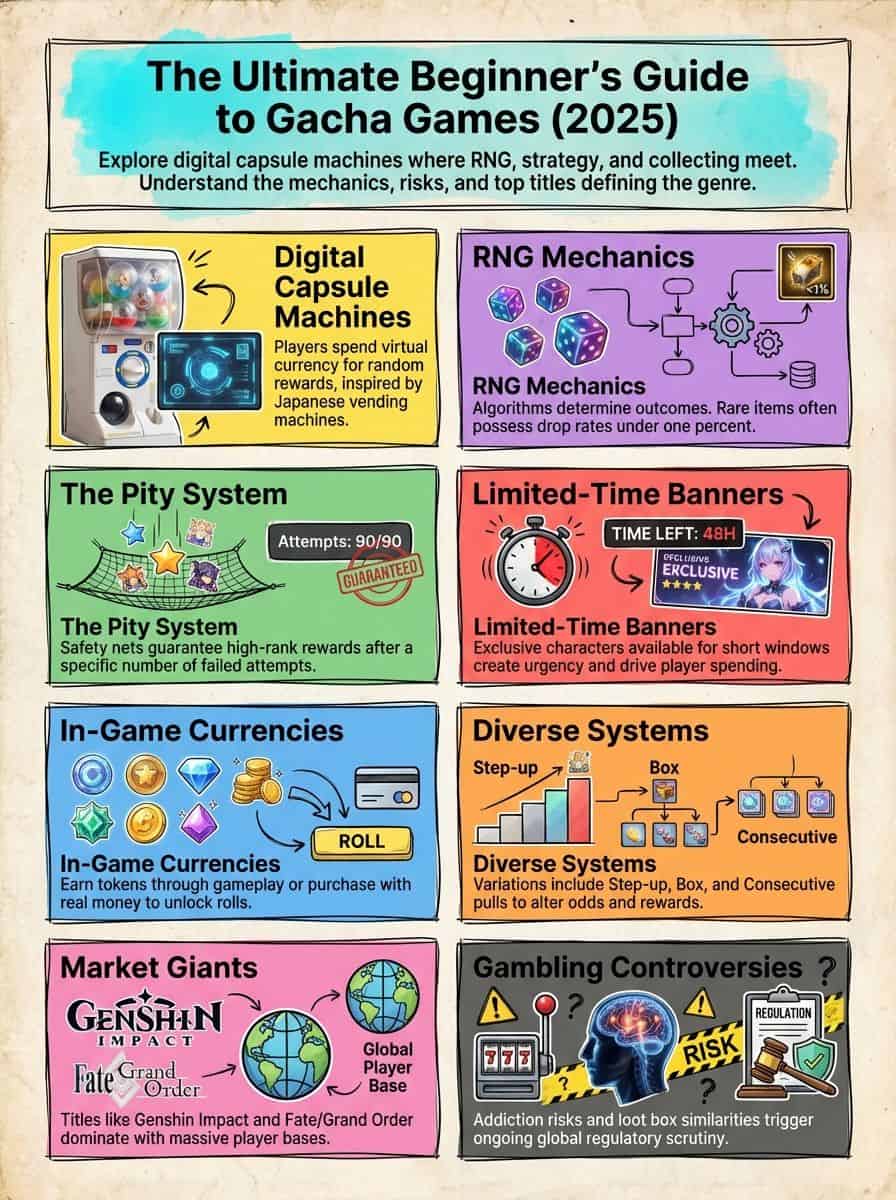
I call gacha games the “digital gachapon machines” of the gaming world. The name comes from the Japanese sound of the machine crank turning (“gacha”) and the capsule dropping (“pon”).
In these games, I don’t just buy the character I want directly. Instead, I spend in-game currency to “pull,” “roll,” or “wish” on a banner. It’s pure RNG (random number generation). Sometimes I get a useless 3-star weapon I’ve seen a thousand times, and sometimes—if the RNG gods are smiling—I get the limited 5-star unit that everyone is chasing.
Most of these titles are free-to-play. You can download Zenless Zone Zero or Wuthering Waves right now without paying a cent. But the developers are smart; they hook you with a great story and fun combat, then introduce a shiny new character that you really want but can only get through the gacha system.

The appeal of these systems is massive. According to data from the online betting site KTO, over 60% of players have engaged with these randomized reward systems. It hits the same dopamine receptors as opening a pack of Magic: The Gathering cards or a loot box in Overwatch.
However, this mechanic isn’t exclusive to the gaming world; it mirrors the “fast” formats seen in the gambling industry. A survey conducted by one of the legal online casinos in Brazil shows that fast casino games, such as slots, account for more than 93 percent of all activity on the platform. Both formats rely on instant gratification, which can encourage repetitive behavior if limits are not set.
Whether it is a casino slot or a character banner, the thrill of the unknown remains the primary driver. The excitement of the “win” is what keeps players coming back, but understanding that both formats rely on the same psychological triggers is key to staying in control of your play sessions.
“Gacha rolls are just today’s magic beans,” my friend once said during a wild Fire Emblem Heroes session. “You trade your cow (cash) hoping for a giant beanstalk (meta unit).”
Core mechanics of gacha games
Every gacha game operates on a loop: play the game to earn currency, use currency to pull for items, and use items to play harder content. It sounds simple, but there are layers of math and psychology designed to keep us spinning.
How do randomized rewards work in gacha games?
When I tap that “Summon” button, the game rolls a virtual die. This is the heart of the gacha system. Every item in the “banner” (the pool of available prizes) has a specific rarity tier, usually rated by stars.
Here is the reality of the math:
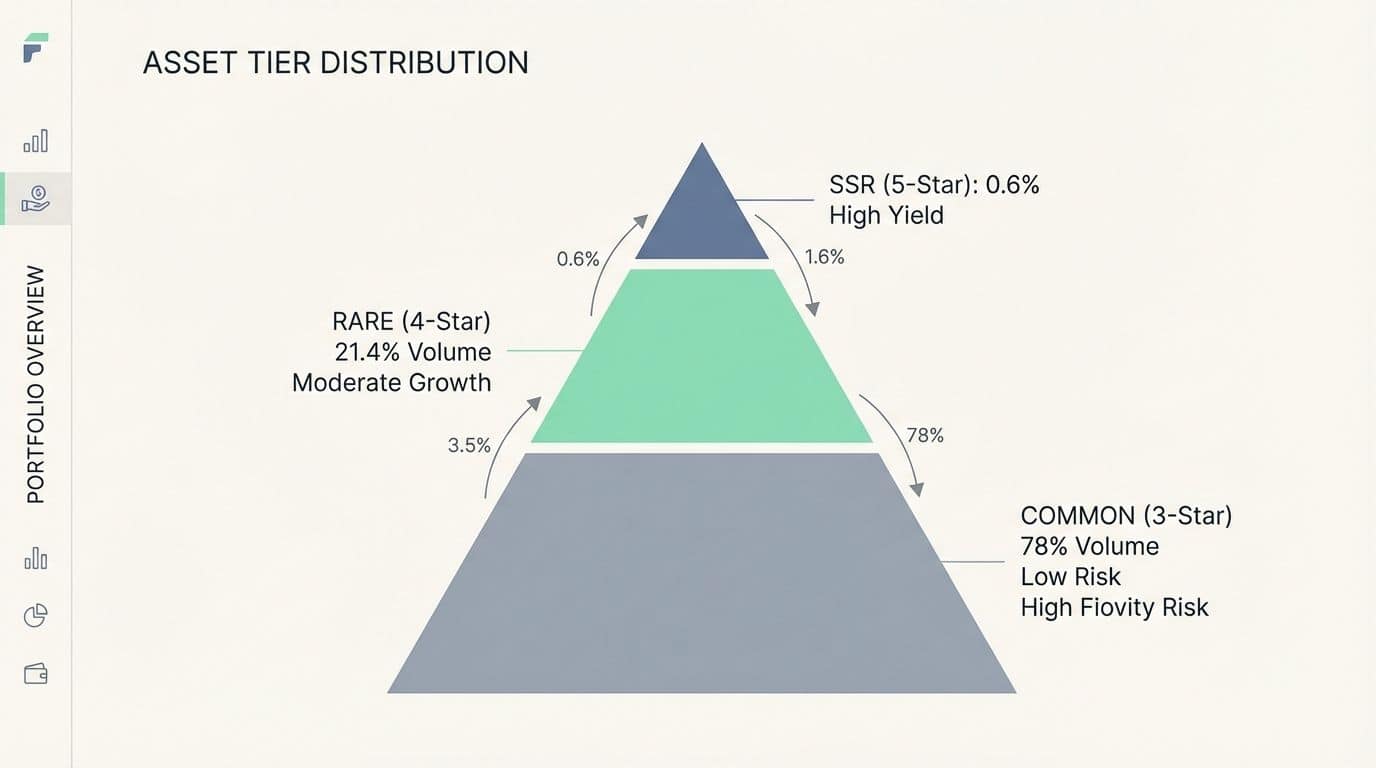
- R or 3-Star (Common): These are the trash pulls. You will get hundreds of them.
- SR or 4-Star (Rare): These are useful support units or gear. You usually get one guaranteed every 10 pulls.
- SSR or 5-Star (Super Rare): These are the jackpot. In games like Genshin Impact, the base probability of pulling one is just 0.6% per single attempt.
Transparency laws in countries like China have forced developers to publish these rates, which helps us know exactly how bad our odds are. I always check the “Details” tab on a banner before spending to see if the probability is worth the risk.
What is in-game currency in gacha games?
This is where things get tricky. Games rarely let you spend dollars directly on a pull. Instead, they use a confusing conversion system to detach you from the real value of your money.
In Honkai: Star Rail, for example, I buy “Oneiric Shards” with cash, convert those into “Stellar Jade,” and then trade Jade for a “Star Rail Pass.” By the time I’m pulling, I’ve forgotten that I just spent $20. Typically, a 10-pull costs the equivalent of $20 to $30 USD if you are buying the currency packs directly without any first-time bonuses.
However, nearly all games offer a “Monthly Pass” (like the Welkin Moon or Express Supply Pass) for around $5 USD. These drip-feed you currency every day for a month and offer the best value by far—usually giving you about $30 worth of pulls for just five bucks, provided you log in daily.
What are limited-time banners in gacha games?

Fear of Missing Out (FOMO) is the strongest weapon in a gacha developer’s arsenal. Limited-time banners usually run for only three weeks. Once that timer hits zero, the featured character disappears, sometimes for a year or more.
I remember saving for months for a specific character in Arknights because I knew she wouldn’t return for a long time. This scarcity forces you to make a choice: do I burn my saved resources now, or do I swipe my credit card because I don’t want to wait until 2026 for a rerun?
How does the pity system function in gacha games?
This is the safety net that stops me from quitting in rage. If you pull enough times without getting a high-rarity item, the game forces one to drop. This is called “hitting pity.”
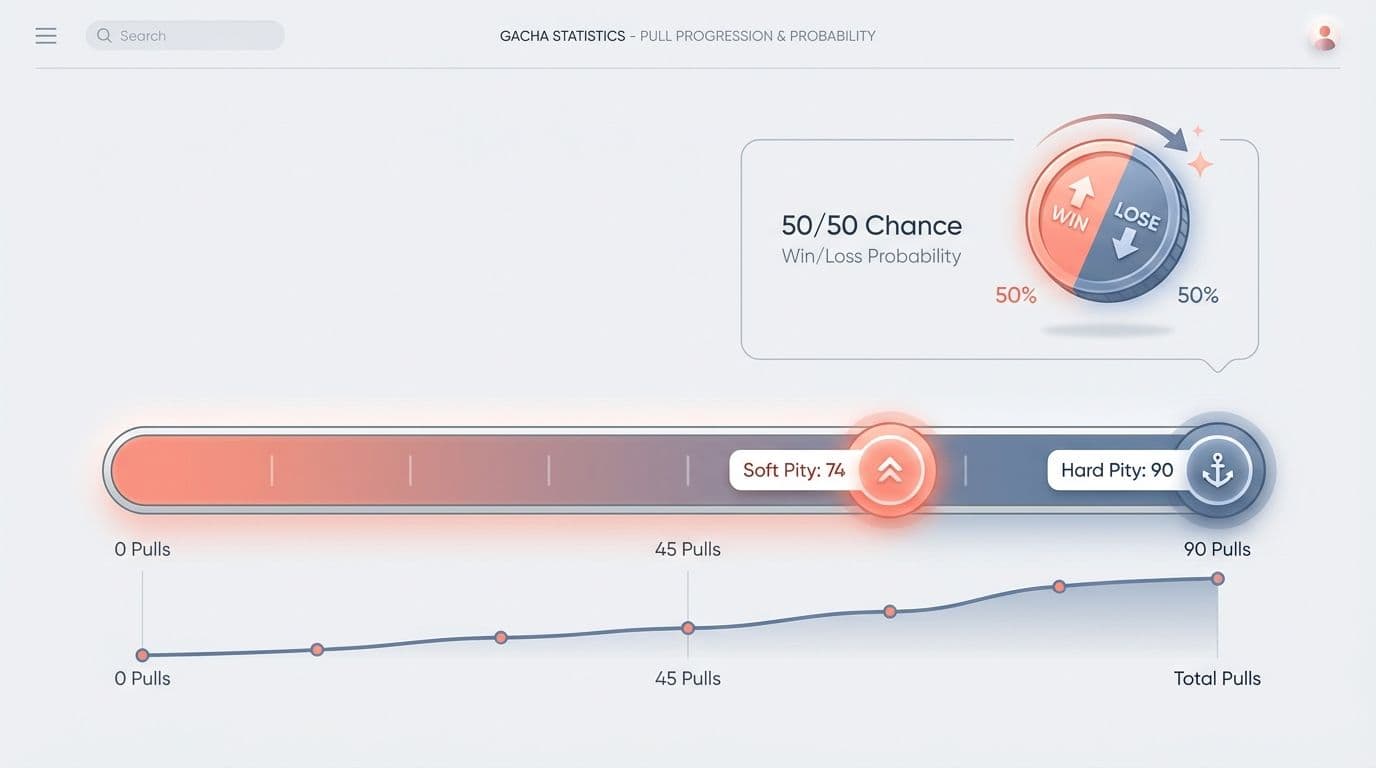
| Term | What It Means | Example (Genshin Impact) |
|---|---|---|
| Hard Pity | The maximum number of pulls before a 5-star is guaranteed. | 90 pulls. |
| Soft Pity | A hidden mechanic where odds drastically increase before the cap. | Starts around pull 74. |
| 50/50 | When you get a 5-star, there is a 50% chance it is the featured one, and a 50% chance it is a standard (often weaker) one. | Winning the coin flip vs. losing to Qiqi. |
Smart players “count pity.” I keep track of exactly how many pulls I’ve done since my last 5-star so I can predict when the next one is coming. Warning: Never “build pity” on a banner if you don’t want the featured character. You will accidentally get them and ruin your count.
Types of gacha systems
Not all digital slot machines are built the same. Over the years, developers have invented different ways to get us to open our wallets. Some are friendly; others are downright predatory.
What is Kompu (Complete) Gacha?
Kompu Gacha, or Complete Gacha, is the boogeyman of the industry. In this system, you had to collect a set of common items to “unlock” the grand prize. For example, you might need pieces A, B, C, and D to get the Super Robot.
The problem? The math was brutal. You would get A, B, and C easily, but piece D would have a microscopic drop rate. It felt like you were 99% done, so you’d keep spending.
This “Compu Gacha” setup got banned by Japan’s Consumer Affairs Agency in May 2012 after cases of minors spending thousands of dollars surfaced. You rarely see this mechanic explicitly used in major global games today because of that legal precedent, but variations like collecting “shards” to unlock a unit still exist in some RPGs.
How does Step-up Gacha work?
Step-up Gacha rewards commitment. It’s popular in games like Dragon Ball Legends. The banner has “steps,” and each time you pull, you move to the next tier.
Usually, the first step is discounted (maybe 500 currency instead of 1,000). The second step might give you bonus items. By the fifth step, you might get a guaranteed high-rarity character. I actually prefer this system because it gives me smaller rewards along the way, making the spending feel less like throwing money into a void.
What defines Box (Package) Gacha?
Imagine a box of 100 chocolates. One has a gold ticket. Every time you eat one, it’s gone from the box. Eventually, if you eat all 100, you must find the ticket. That is Box Gacha.
This system has a “finite pool.” Unlike standard banners where you could theoretically roll forever and never get the prize (without pity), Box Gacha guarantees a win if you clear the box. I see this often in event rewards for games like Fate/Grand Order, where dedicated grinding eventually empties the prize pool completely.
What is Consecutive Gacha?
This is the standard “10-pull” mechanic. Instead of pulling one by one, I spend bulk currency to roll 10 times at once. To encourage this, developers usually add a “4-star guarantee” to every 10-pull.
In modern gachas, this is effectively mandatory. Doing single pulls feels like a waste of time unless you are extremely close to hitting pity and want to save every last gem.
How does Sugoroku Gacha operate?
This is a rarer type that mixes gacha with a board game (Sugoroku). You pull to move a character across a board, unlocking rewards based on where they land. It adds a layer of visual progression to the gambling mechanic.
I find this system fun because it breaks up the monotony of just watching a chest open, but it can be dangerous. Seeing your character just one square away from the jackpot is a powerful psychological trigger to buy just one more roll.
Key characteristics of gacha games
Beyond the gambling mechanics, these games share a specific DNA. They are designed to be played every single day for years. I’ve logged into Genshin Impact for over 1,000 days straight—that is the retention power of this genre.
Why do gacha games use a free-to-play model?
The barrier to entry is zero. This allows millions of players to download the game, creating a massive community. The developers know that 95% of players might never spend a dime (the “F2P” players), and they are fine with that.
The game is supported by the “whales” (big spenders) and “dolphins” (moderate spenders). The F2P players populate the servers and create the hype that keeps the whales engaged. If you want tips on how to find the right game for your style before spending a dime, check out find the right game.
How do live service updates affect gacha games?
A gacha game is never “finished.” Developers like HoYoverse operate on a strict 6-week update cycle. Every six weeks, I get a new patch with new story quests, new map areas, and—most importantly—new banners.
This constant stream of content prevents “content droughts” and keeps the community active. If I stop playing for a month, I feel like I’ve fallen behind, which is exactly how they keep retention high.
What is collection-focused gameplay in gacha games?
It’s basically Pokémon but with anime waifus and husbandos. The drive isn’t just to beat the boss; it’s to fill out your “Archive” or “Gallery.” I know players who don’t even level up their characters; they just want to own them to unlock the voice lines and profile icons.
Popular gacha games
The landscape changes fast, but a few titans dominate the charts. If you are looking to start in 2025, these are the ones with the biggest communities.

What is Genshin Impact?
Launched in 2020, this game changed everything. It proved a gacha game could be a massive, open-world RPG with console-quality graphics. It plays like Breath of the Wild, but you gamble for the characters.
It’s the safest entry point for beginners because the difficulty is low, and you can explore the massive world of Teyvat completely for free. Just be warned: the weapon banner is notoriously unforgiving.
What makes Fate/Grand Order popular?
FGO is the grandfather of modern mobile hits. It’s ugly and clunky compared to newer games, but the story is written by visual novel legends. People play it for the narrative, which rivals actual fantasy novels in length and depth.
It’s also famous for having no pity system for years (though they finally added one recently). It generates billions purely on the love fans have for the Fate franchise characters.
What is Honkai: Star Rail?
If Genshin is fantasy action, Star Rail is sci-fi strategy. It’s a turn-based RPG that respects your time more than Genshin does (it has auto-battle!). The production value is absurdly high, and the story gets surprisingly dark. It won Best Mobile Game at The Game Awards recently for a reason.
Why is Arknights a popular gacha game?
Arknights is for the tower defense nerds. It’s grim, tactical, and incredibly stylish with its “techwear” aesthetic. The gacha is arguably fairer than HoYoverse games, and you can clear almost all content with low-rarity units if your brain is big enough.
What about the newcomers like Wuthering Waves?
Released in 2024, Wuthering Waves is the direct competitor to Genshin Impact. It focuses more on high-speed, difficult combat (think Devil May Cry). It also made waves by guaranteeing the weapon banner 100%—meaning if you pull a 5-star weapon, it is always the one you want. No 50/50 coin flips there.
How do gacha systems differ from loot boxes?
While they are cousins, I see a distinct difference in how they feel to play. Loot boxes are often cosmetic afterthoughts; gacha is the core progression.
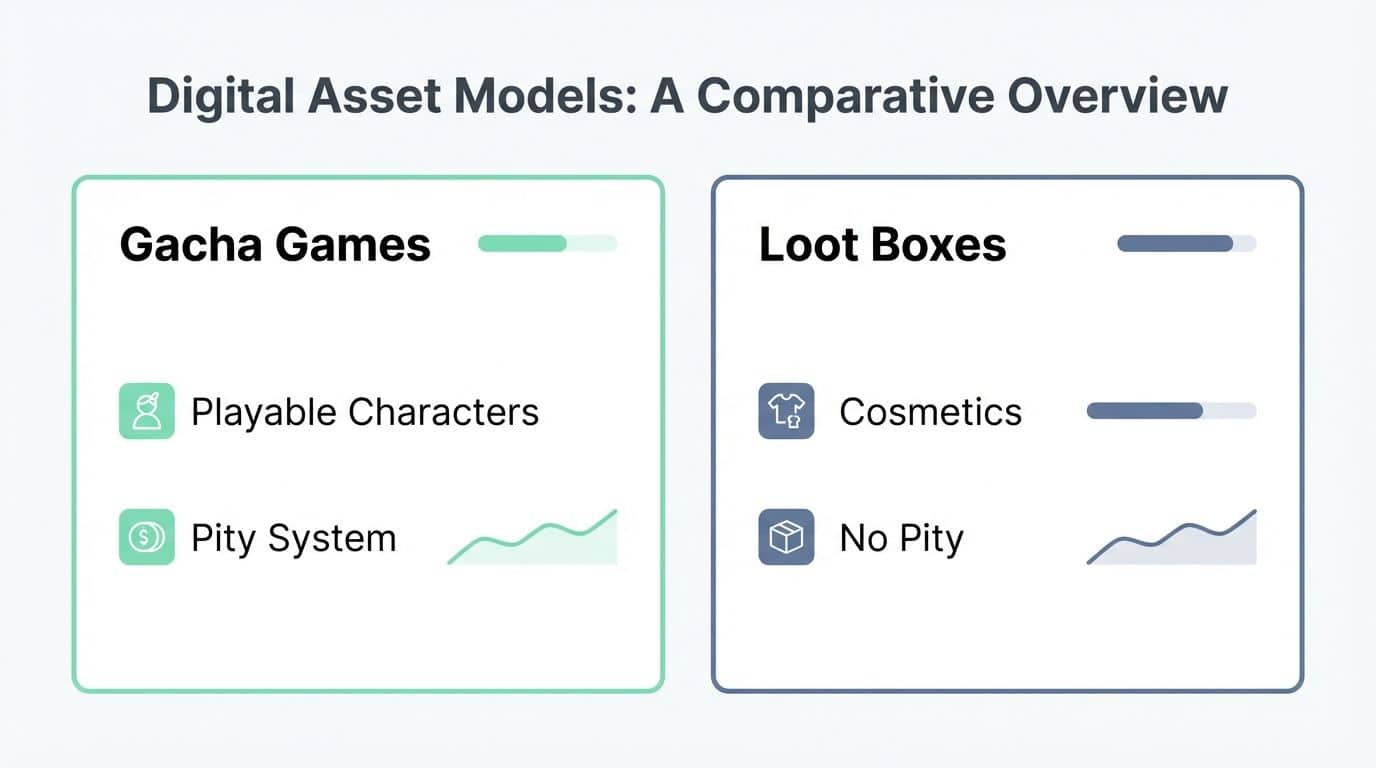
| Feature | Gacha Games (e.g., Genshin) | Loot Boxes (e.g., Overwatch 1) |
|---|---|---|
| Primary Reward | Playable characters/Weapons that affect stats. | Skins, sprays, voice lines (Cosmetic). |
| Impact on Gameplay | High. New units change how you play. | Low. No stat changes (usually). |
| Pity Systems | Standard and expected (e.g., guarantee at 90). | Rare. You can often get duplicates endlessly. |
What makes gacha games appealing?
It’s the thrill of the gamble mixed with genuine attachment to the characters. I don’t just pull for stats; I pull because I played a 10-hour story quest with that character and fell in love with their personality.
Why do players collect unique characters?
Rarity equals status. Having a C6 (maximum duplicate) 5-star character is the ultimate flex in co-op modes. But for many of us geeks, it’s about “waifu” or “husbando” culture. We want to build a team of our favorites, regardless of whether they are top-tier in the meta.
How do events increase engagement in gacha games?
Events are where the free currency is. During an Anniversary or Summer event, developers are generous. They give out free pulls, skins, and sometimes free 4-star characters. This generosity creates a festive atmosphere that brings lapsed players back into the fold.
What controversies surround gacha games?
We have to address the elephant in the room: is this gambling? Technically, legally, in the US? No, not yet. But functionally? Absolutely.
How are gacha games similar to gambling?
Spinning the gacha uses variable ratio enforcement—the same psychological trick used in slot machines. You win just enough to keep you hoping the next pull is the big one. Research suggests a strong link between loot box spending and problem gambling behaviors.
I have seen friends blow their rent money chasing a JPEG of an anime girl. It is a very real danger, and if you have an addictive personality, I strictly advise staying away from this genre.
What are the regulation concerns for gacha games?
Governments are catching up. In 2024 and 2025, we’ve seen more pushback:
- China: Requires strict disclosure of drop rates and has proposed caps on daily spending.
- Japan: Self-regulates heavily (Kompu gacha ban).
- Belgium/Netherlands: Have blocked certain games (like Diablo Immortal) due to loot box laws.
- USA: Apple and Google now require apps to disclose odds, but federal laws are still lagging behind the tech.
How will gacha games evolve in 2025?
Looking ahead, the line between “mobile game” and “AAA console game” is vanishing. Games like Infinity Nikki (an open-world dress-up adventure) and Arknights: Endfield (a 3D real-time strategy game) are pushing graphics to Unreal Engine 5 levels.
I also see a trend toward “friendlier” gacha. With competition heating up from Wuthering Waves and Azur Promilia, developers can’t afford to be stingy anymore. They are offering better pity rates and more freebies to keep us loyal. It’s a great time to be a player, as long as you keep your wallet closed and your impulse control high.
People Also Ask
What is a gacha game, and how does it work?
A gacha game is a video game that adapts the Japanese *gachapon* capsule toy mechanic, where you spend currency on “banners” to randomly summon characters like those in *Genshin Impact*. The core hook is the RNG (random number generation) system, which means you never know if you’ll get a common item or a rare 5-star unit until you hit that summon button.
Why do people enjoy playing gacha games so much?
We geeks love the dopamine hit that comes from the “variable ratio reinforcement” schedule, which is the fancy psychological term for why pulling a rare unit feels so good. It explains why titles like *Monopoly GO!* dominated the US mobile charts in 2024—that rush of hitting the jackpot is universally appealing.
Are all gacha games free to play?
Most titles are “Free-to-Play” (F2P), though they generate revenue by selling currency for “pulls” that typically cost about $2 to $3 USD each in the US store.
Can I succeed in a gacha game without paying anything?
You absolutely can, provided you take advantage of the “pity system,” a mechanic that guarantees a high-rarity drop after a specific number of failed attempts. I have played for years without spending a dime by simply completing daily missions and saving my currency for the specific characters I really want.
References
https://ceur-ws.org/Vol-4012/paper10.pdf
https://www.adjust.com/blog/gacha-mechanics-for-mobile-games-explained/ (2025-04-25)
https://store.epicgames.com/en-US/news/gacha-games-explained-banners-pulls-pity-systems-and-more (2025-01-14)
https://www.researchgate.net/publication/397764121_The_Impact_of_Gacha_Mechanics_on_Various_Aspects_of_Games (2025-11-21)
https://escholarship.org/content/qt47n870q2/qt47n870q2.pdf
https://www.ukm.my/apjitm/public/assets/article/2025/1401/04.pdf
https://www.icy-veins.com/honkai-star-rail/beginner-guide
https://madison-proceedings.com/index.php/aemr/article/view/2138
https://machinations.io/articles/an-in-depth-look-at-gacha-boxes
https://uu.diva-portal.org/smash/get/diva2:1665022/FULLTEXT01.pdf
https://www.tamug.edu/nautilus/articles/2024-gacha.html
https://adventuregamers.com/article/gacha-games-explained (2025-09-16)