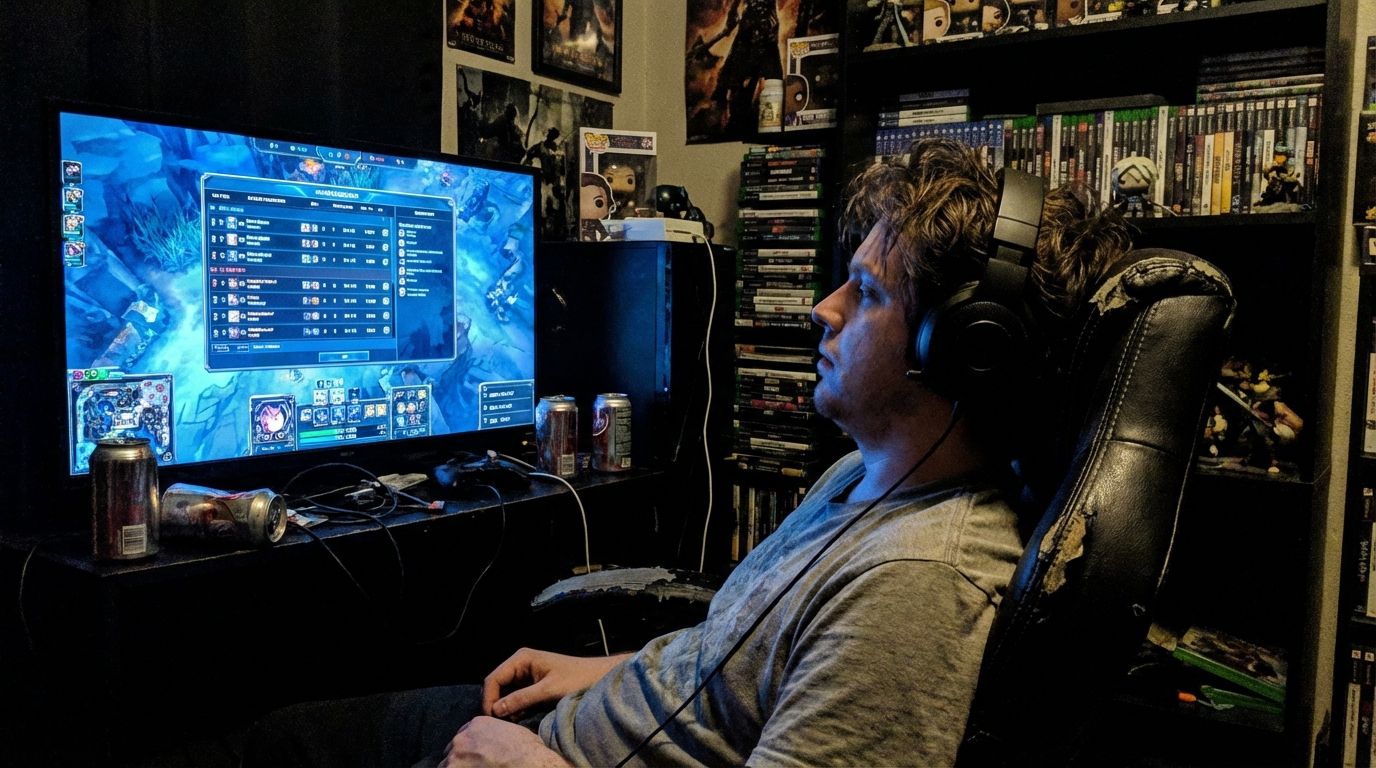
Ever wondered what to call someone who lives and breathes video games?
You’re not alone.
This question pops up everywhere, from Reddit threads to Discord servers. Most people picture someone glued to their console, grinding through epic boss battles. But there’s way more to the story than controllers and screen time.
The term “gamer” has sparked real debate over the years. Even the Oxford Dictionary keeps updating its gaming-related definitions. Merriam-Webster traces the word back to 1422, when it described gamblers and dice players in old English laws.
Today’s gaming world looks completely different. According to a 2025 Entertainment Software Association study, 52% of US gamers are now women. The average player is 36 years old, not the teenage stereotype most people imagine.
Let me walk you through what these labels really mean and help you find your answer fast.
Key Takeaways
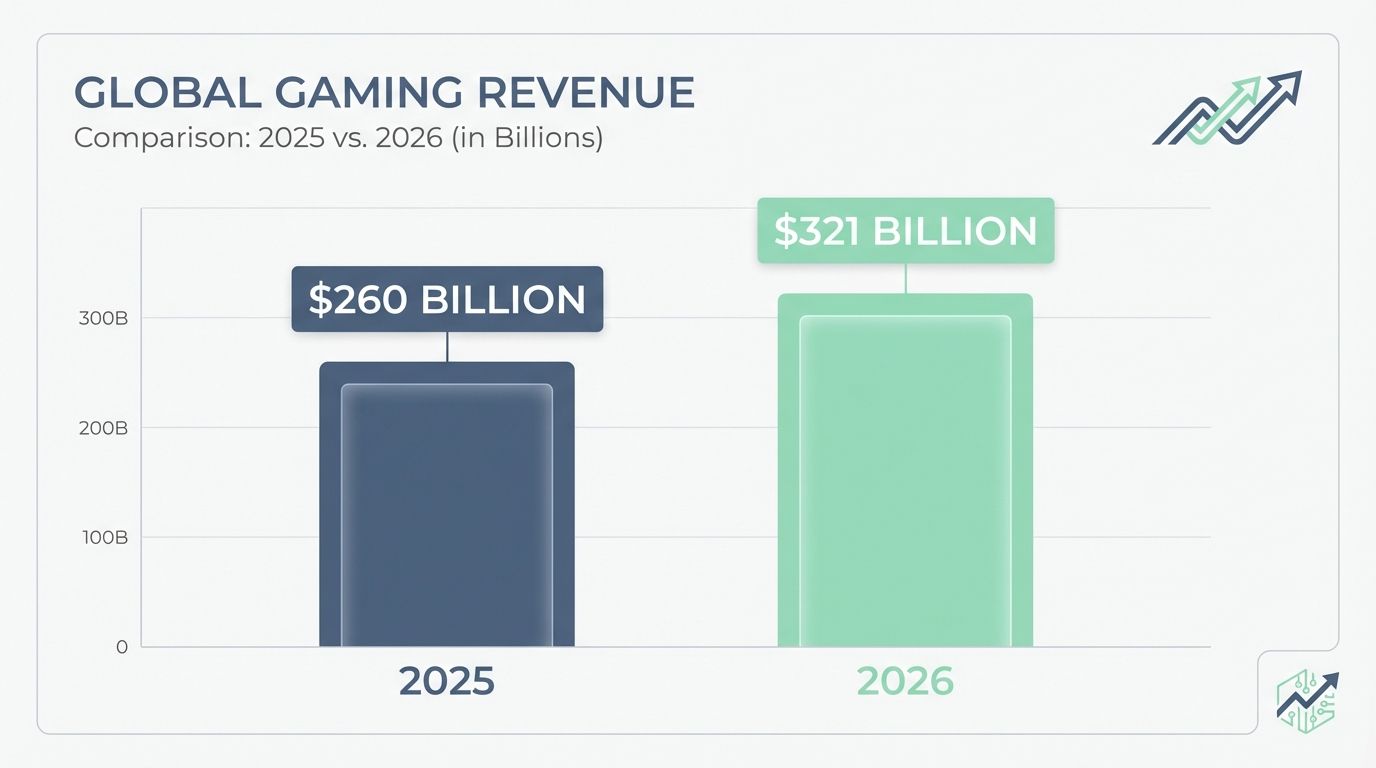
The gaming industry generated approximately $260 billion globally in 2025, with projections reaching $268-321 billion by 2026 according to multiple market research firms.
Women now make up roughly 46-52% of US gamers as of 2025, with the Entertainment Software Association reporting 52% female participation in their latest study.
Hardcore gamers comprise about 18% of the US gaming population (28.6 million people) and play an average of 42 hours per week, according to a 2024 Consumer Technology Association report.
Social gaming exploded during 2020-2021 COVID-19 lockdowns, with nearly half of young adults reporting they made long-term friends through gaming, based on 2025 research data.
The term “gamer” dates back to 1422 in English law, originally describing gamblers, but now encompasses players of video games, tabletop RPGs, and electronic games.
Table of Contents
Common Terms Used to Describe People Who Love Gaming
Gaming language keeps evolving. The US gaming market hit $68.9 billion in 2026 according to Mordor Intelligence, so it makes sense that we have tons of names for different play styles.
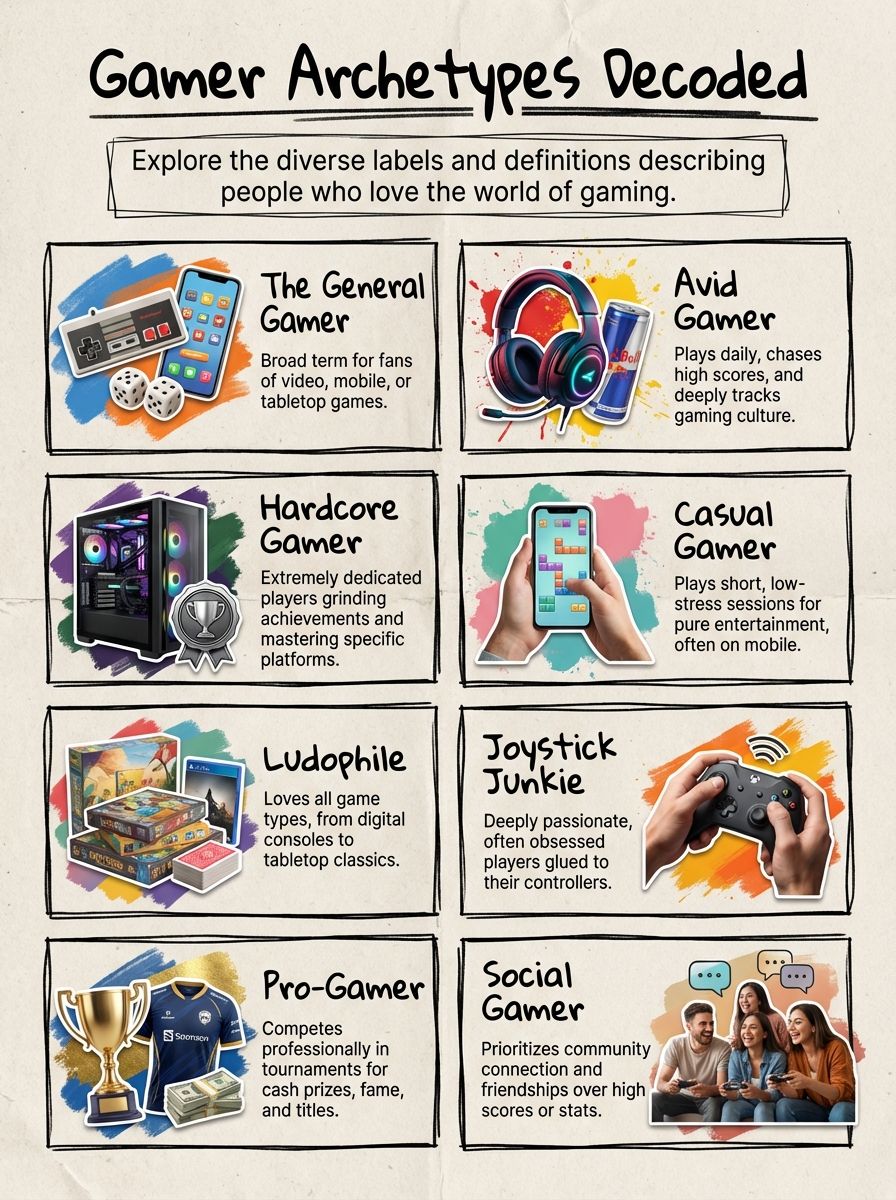
Whether you’re into retro classics like Nintendogs or streaming the latest AAA titles, there’s a term that fits you.
What Does the Term “Gamer” Mean?
A gamer is anyone who plays video games, from mobile puzzlers to deep tabletop RPGs.
I remember my high school weekends meant crowding around a Wii U with friends, passing controllers during classics like Dream Daddy: A Dad Dating Simulator. Those sessions made us all gamers, even if we only played a few hours each week.
The Oxford Dictionary includes fans of role-playing and electronic games in its definition. Merriam-Webster.com traces the word all the way back to 1422, where it first popped up in old English laws about gamblers.
Today, the term covers way more ground. According to 2025 data from Icon Era, there are 3.49 billion active players worldwide.
Fire up Nintendogs, join an audio game stream on Twitch, or play mobile games during lunch. You’re still a gamer. Some folks use “video gamer,” others might say “core gamers” or even “girl gamer,” but they all mean someone who loves playing digital or physical games.

Anyone enjoying the thrill of virtual worlds, whether it’s a few minutes with retro games or hours battling online bosses, is a gamer.
Who Is Considered an Avid Gamer?
An avid gamer spends large chunks of time playing video games. We’re talking two or three hours each day at minimum.
According to a 2024 Consumer Technology Association report, hardcore gamers in the US play an average of 42 hours per week. That’s more than a full-time job. These players turn gaming into their primary hobby, grinding ranked matches, playing live casino games at Betway, or tracking every esports event like legends such as Tom “Tsquared” Taylor did back in the Halo days.
Labels get tossed around for this commitment level:
- Hardcore gamer
- Obsessive gamer
- Gaming enthusiast
- Gameaholic (though this one leans more toward addiction concerns)
Being avid means more than logging screen time. These players chase high scores and join fandom communities. They chat using terms from sites like Merriam-Webster.com dictionary or through the Bartle taxonomy of player types.
Some compete as pro gamers or proudly wear labels from circles like the gaymer and LGBTQ community groups. The 2025 data from Esports Insider shows that around 17% of gamers identify as LGBTQ, though only a small fraction of professional players are openly out.
Their love for games runs deep. Sometimes it spills over into real life with Satoru Iwata tributes taped to monitors or doujin collections lining their shelves.
What Defines a Gaming Enthusiast?
A gaming enthusiast often spends more than two or three hours daily playing online games. Many seek top rankings in PvP or chase trophies.
You’ll find them in heated debates on Reddit and Discord. According to Newzoo’s 2019 research, about 13% of gamers fall into the “Ultimate Gamer” category, people who love nothing more than spending all their money and free time on games.
This group includes core or hardcore gamers who care about stats and trophy collections. Some even get dubbed “Cave Dwellers” for living deep in their hobby, surrounded by screens and gaming gear.
Others dive into community discussions using terms from the Bartle taxonomy of player types to explain their style. Jokes pop up too. Some middle-aged players get called “mid-life crisis gamer” or “boombanger.” But age doesn’t matter here.
What counts is focus:
- Tracking wins and losses
- Streaming gameplay like the pros
- Collecting rare skins and items
- Testing beta releases before launch
For many enthusiasts, being part of the conversation is half the fun. They build friendships across all backgrounds, even fighting stereotypes around gender expression and sexual preference in online game spaces. The gaming world in 2026 welcomes bisexual streamers, lesbian guild leaders, and transgender pros alongside everyone else.
What Is a Hardcore Gamer?
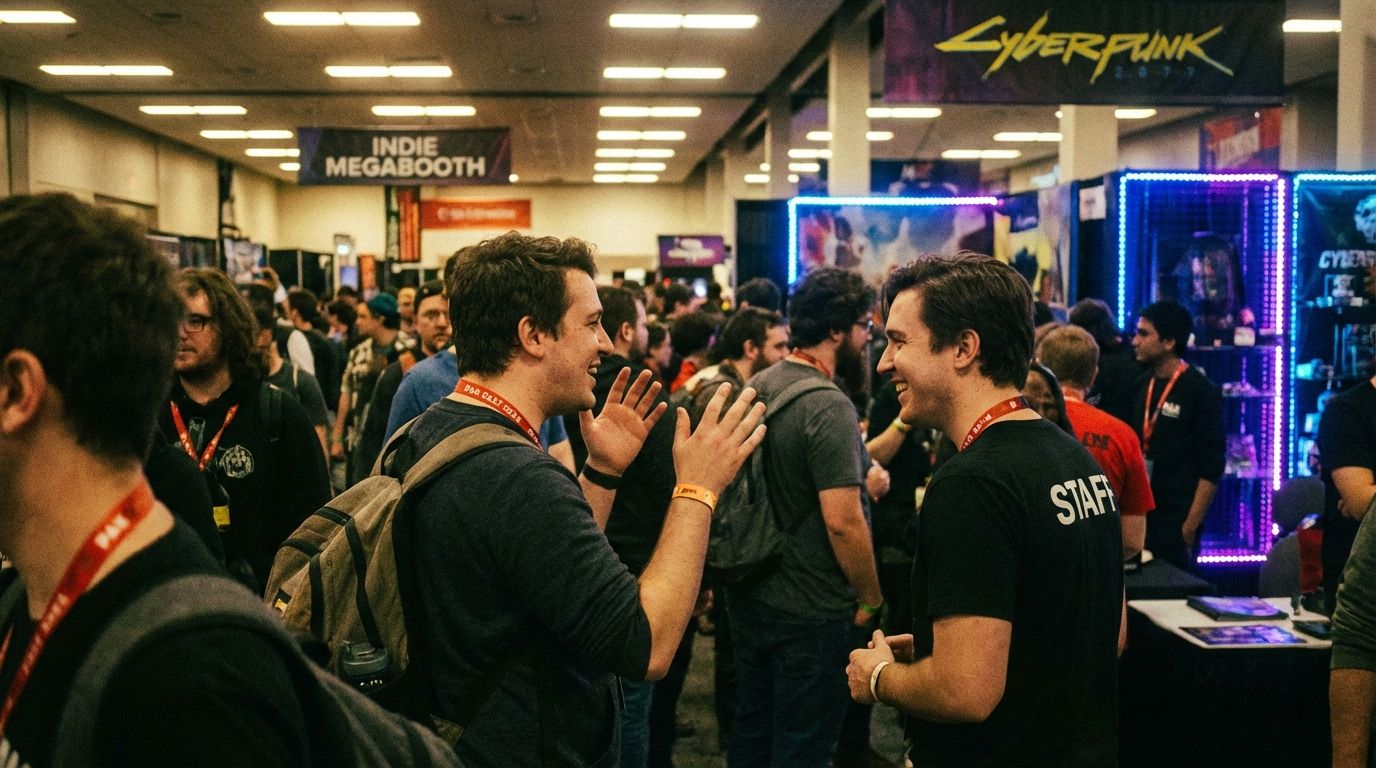
Hardcore gamers show extreme dedication. According to a 2024 Consumer Technology Association study, this group makes up about 18% of the US gaming population, roughly 28.6 million people.
These players clock in serious hours. The same CTA report found they average 42 hours per week, and 91% play on PC and consoles rather than mobile devices.
Many pick a platform like PC or PlayStation and stick with it for years. Some aim for high rankings in PvP matches or chase rare trophies until their thumbs ache. They might play one game series, such as Dark Souls or Call of Duty, over and over, grinding out every achievement possible.
Age, gender, sexuality? None of these limit who can be hardcore. According to the CTA data, 73% of hardcore gamers are men with an average age of 29 years, but the other 27% includes players of all identities.
Hardcore means you live and breathe your favorite titles, sharing that passion through every Discord message and late-night stream.
You might spot them by the passion in their voice when talking games at a comic con or in an online forum thread. This intense scene welcomes everyone: lesbian women rocking speedruns, transgender leaders running guilds, bisexual pros streaming matches, even cisgender players who just love the challenge.
Community chats on Discord and Reddit constantly debate what sets hardcore players apart. Engaged players can spend 20 hours a week or more battling boss fights or exploring open worlds.
Alternative Terms and Their Differences
Gaming labels go way beyond just “hardcore” and “casual.” The gaming community has created dozens of terms to capture different play styles.
Some fans call themselves video junkies, ludophiles, or joystick junkies. Each term tells a different story about how someone approaches games.
What Is a Casual Gamer?
Casual gamers play video games for fun but don’t spend hours each day glued to a screen.
According to a 2024 Consumer Technology Association report, casual gamers make up 36% of the US gaming population, about 55 million people. These players pick up their phone or console from time to time, maybe after work or on weekends. They might game while waiting in line at Starbucks or during lunch breaks.
The gaming industry calls them “casual” because they choose simple, easy-to-learn games like Candy Crush or Animal Crossing. Studies show casual gamers enjoy shorter sessions and care less about high scores or trophies than their hardcore counterparts.
As someone who’s spent nights swapping out RPGs for Mario Kart with family, I get the appeal:
- No pressure to perform
- No stress about rankings
- Just pure entertainment between life’s busy parts
A 2022 Google study found that about 63% of casual gamers play games just to pass the time. According to retro style games research from 2025, this group often makes quick decisions to try new games, with 59% of mobile gamers downloading a game the same day they discover it.
Data shows casual players were once ignored back in the early 2000s. Now they shape what companies make next. Their numbers keep growing every year, and interestingly, a 2024 CTA report notes that 69% of core gamers and 81% of casual gamers prefer “old” games that have been on the market for more than five years.
What Does Ludophile Mean?
A ludophile is someone who eats, sleeps, and breathes games. This person doesn’t limit their passion to PlayStation or Xbox.
They live for tabletop classics like Settlers of Catan and love a brain-tickling puzzle just as much. Most ludophiles crave the thrill of gaming communities, swapping stories about wild chess nights or epic board game marathons with friends.
Games are serious business for me. Card decks on rainy Sundays, puzzle apps on lunch breaks, never met a die I wouldn’t roll.
Some even call themselves gaming aficionados in online thesaurus groups. The term goes back decades but fits today’s world where professional gamers compete at big esports events while others still gather around old kitchen tables hunting for high scores in Tetris.
Being a ludophile can mean:
- Collecting rare editions from 1970s designers
- Bringing new card games to every party
- Spending weekends at local game stores
- Owning multiple versions of the same game
Why Are Some Called Video Junkies?
Some people get called “video junkies” because of how obsessed they seem with gaming. The term suggests a strong, almost addictive pull, much like drugs or sugar.
Nicholas Kardaras once named too much screen time “digital heroin” in his writing. According to his research, kids can spend up to 8 hours per day on screens, while teens might clock in around 11 hours daily.
Stories spread about gamers falling into what some call “catatonic stupors,” but many experts say such tales are misleading. Still, researchers have found some links between heavy gaming and mental health issues. The DSM even put Internet Gaming Disorder in its research appendix as a possible new disorder, though it isn’t official yet.
Critics debate whether games actually cause these problems or just show up alongside them. According to a 2023 ScienceDirect study on gender disparities in esports, toxic in-game culture and individual attributions like goal orientation play bigger roles than simple gaming hours.
For some outsiders looking in, words like video junkie fit anyone who makes their PlayStation feel more like home than their own bed. The average gamer globally spends about 7-8 hours per week playing according to 2025 Udonis data, though this varies widely between casual and hardcore players.
What Does Joystick Junkie Refer To?
Joystick Junkie describes someone glued to their controller, often spending long hours locked in epic battles with digital foes.
This phrase showed up as early as February 5, 2016, on the site Nuclear Hoagie. It points to deep passion and sometimes addictive behavior with gaming consoles or arcade sticks. Studies have found that this level of gaming ties closely to age and possible hints of addiction, though the relationship is complex.
You might hear people call women and men “joystick junkies” for racking up high scores or living for the next round in Street Fighter, Mario Kart, or indie hits. The term paints a clear picture: someone neck-deep in pixels and gameplay culture, chasing victories big and small.
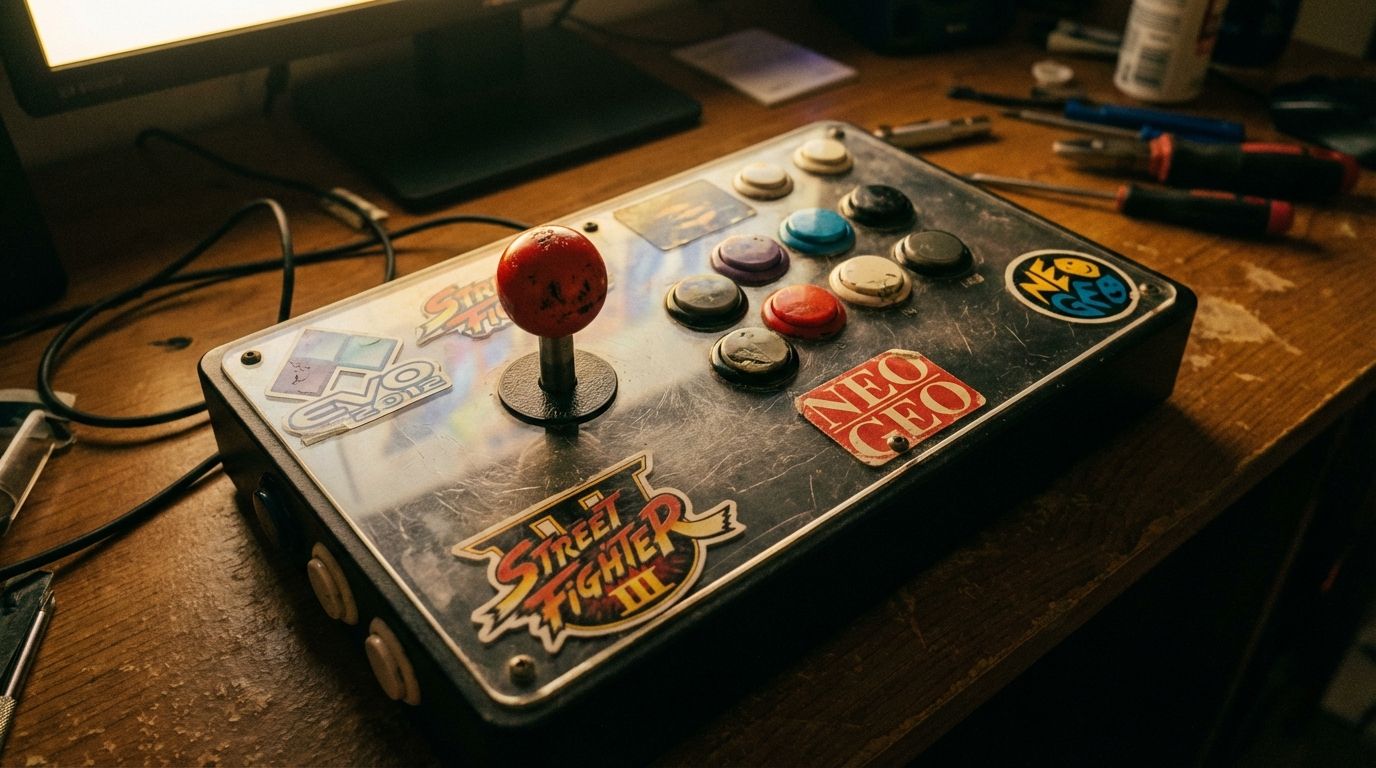
According to 2025 gaming trend research from Udonis, mobile gamers often open gaming apps roughly 4 times per day on average. Console players, by contrast, might have one longer session of about 2 hours rather than many short bursts. Both types can earn the joystick junkie label if they’re dedicated enough.
Professional and Competitive Gamers
Some players take gaming to the next level, turning skill into a paying job.
The global esports market generated substantial revenue in 2024, though it faced financial challenges alongside record viewership according to recent industry reports. These folks sweat it out in tournaments, chasing digital glory and big prize money on platforms like League of Legends or Fortnite.
What Is a Pro-Gamer?
A pro-gamer competes at the highest level in video or PC gaming, often for money, prizes, and fame.
These players join global tournaments like League of Legends Worlds or compete in FPS classics. They use tools like Discord and Twitch for practice and exposure. Success depends on skill, sharp reflexes, teamwork, and experience.
According to a 2023 review of 63 studies on elite esports athletes, most research focuses on competition level, professional status, and in-game achievements to define “pro” status. Interestingly, 71% of these studies skip strict “elite” standards altogether, showing how fuzzy the definition can be.
Not all players reach this level. Only a few gamers gain titles or big wins across top games like Overwatch or CS:GO. According to 2025 research from Esports Insider and multiple studies, about 74% of esports athletes are male. Women make up just under 3% of professional players, though recent data from Esports Charts shows female prize pools hit nearly $3.3 million in 2025, the highest ever.
Want to try your luck? Read more about joining these digital gladiators as an extreme online gamer to see if you have what it takes.
Who Are Esports Athletes?
Esports athletes join epic digital battles, solo or in teams, much like NBA players or soccer stars. They play for trophies and cash prizes at packed events full of fans.
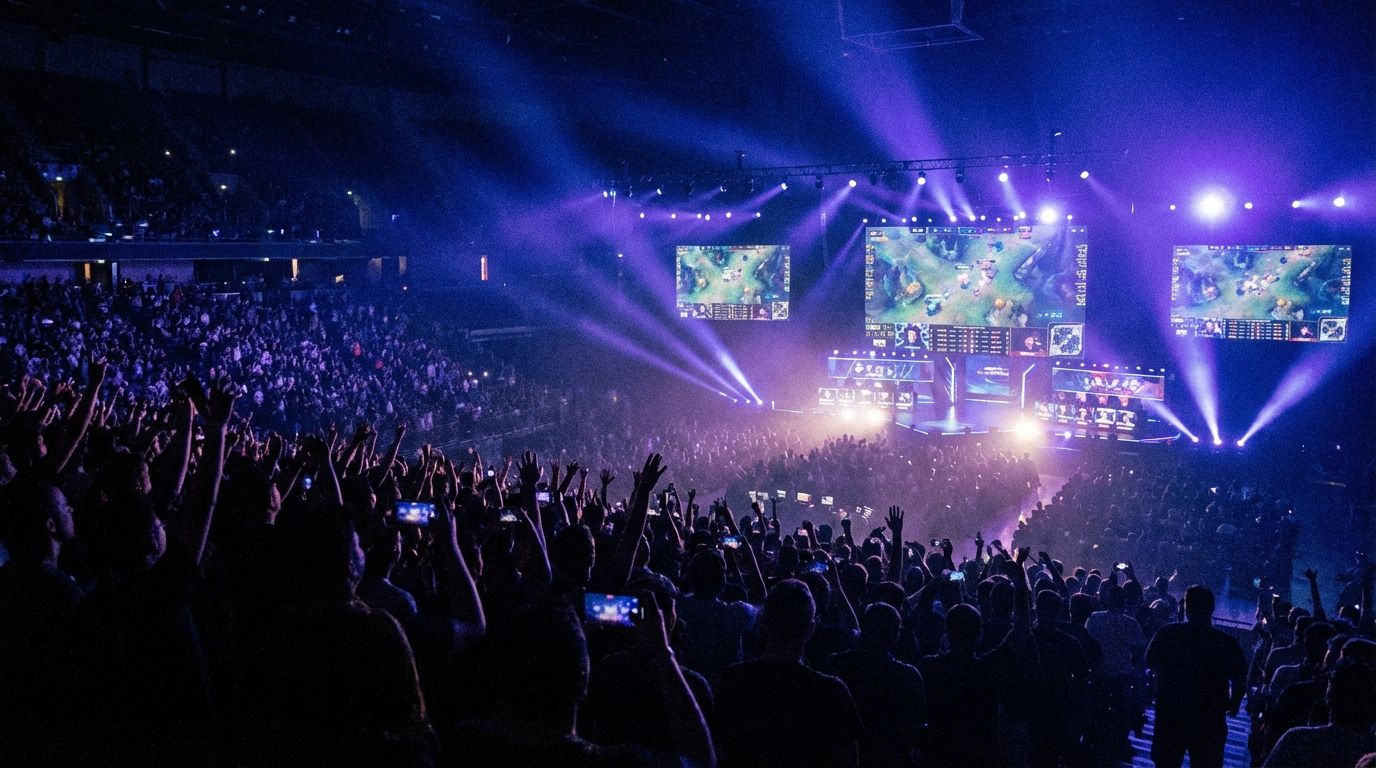
According to Esports Charts data from 2025, prize winnings reached new heights this year at $3.3 million for female esports alone. Elite esports athletes stand out by the level they compete at, their pro status, and their crazy in-game skills. Think Faker in League of Legends or SonicFox smashing fighting games.
There are many names for these competitors:
- Esports athlete
- Pro gamer
- Video game player
- Competitive player
Each term rides a wave inside this huge ecosystem. Across 63 studies on elite competitors, experts push for better ways to define who belongs at the top. Watching these pros live is wild. The crowd roars as if LeBron just dunked on someone.
Some gamers train eight hours a day with coaches and analysts helping them win big tournaments. According to Esports Earnings 2025 data, top female earner Sasha “Scarlett” Hostyn has made over $472,000 in prize money from StarCraft II. This isn’t just about bragging rights. Winners can walk home with six-figure checks and sponsorships from brands like Red Bull and Razer.
A 2024 Deloitte report notes that 67% of esports viewers are men, meaning only 33% are women. However, in Southeast Asia and Korea, female viewership hits 41%, showing regional differences in the audience.
Social and Community-Oriented Gamers
Games bring people together like magnets pulling in every kind of player.
According to a 2025 Glimpse trends report, nearly half of young adults say they made long-term friends while gaming. Some folks love the team spirit or chat more than pixels and high scores. You’ll spot them anywhere from Minecraft servers to Animal Crossing parties.
What Is a Social Gamer?
Social gamers focus on people, not just points or trophies. They hop online to play with friends, meet new folks, and stay connected.
Discord calls or in-game chats often buzz with laughter or light debates about favorite characters. According to a 2025 report from Business Research Insights, the global social gaming market hit $15.19 billion in 2024 and is expected to reach $44.45 billion by 2033, growing at 12.7% annually.
During the COVID-19 pandemic in 2020 and 2021, social gaming saved friendships for many who felt isolated inside four walls. Researchers found that playing Mario Kart with buddies mattered more than Zoom family meetings or chatting with coworkers.
Loneliness spiked during lockdowns, bringing mental health issues like anxiety up by almost 25% worldwide according to global health data. Social gamers fought back without leaving their rooms. They built community ties that helped everyone feel less alone.
Playing together boosted emotional well-being by creating space for real bonding moments and shared wins. A 2025 study from Udonis notes that Gen Z gamers are 33% more likely than older generations to play games for social reasons rather than solo entertainment. Even someone yelling at laggy Wi-Fi became part of the shared experience.
As restrictions lifted later on, the need to game socially stayed strong. Those digital friendships grew roots deeper than most chat threads could hold. According to 2025 data, at least 54% of US gamers now prefer to play as a team rather than solo.
Who Is a Gaming Aficionado?
A gaming aficionado lives and breathes games. This person doesn’t just play for fun. They dig deep into game mechanics, storylines, and music.
Often, a gaming aficionado takes part in online forums or local LAN parties like those run by groups such as Extra Life or Twitch communities. Some write guides on Steam or share strategies on Discord servers.
They might debate about:
- The best midcore title from 2022
- The rise of joystick junkie culture since the 1980s
- New mechanics in upcoming AAA releases
- The evolution of indie game design
Studies from social sciences show that aficionados become active members of gaming communities and connect with others over shared passions. Many follow research about how video games affect psychological well-being, including links to motivation and possible gaming disorder symptoms tracked by universities since the early 2000s.
Gaming aficionados talk openly about topics such as coming out in LGBTQ+ circles within virtual worlds. According to 2025 Esports Insider data, around 17% of gamers identify as LGBTQ, though they sometimes face homophobia. Most find support across platforms, even though the spaces are still dominated by heterosexual voices.
These dedicated players shape gaming culture through their deep knowledge and passionate engagement with every aspect of the medium.
How Will the Definition of a Gamer Evolve in 2026?
In 2026, people will use the word “gamer” to describe a much wider group.

A gamer might be a twelve-year-old Minecraft builder, a queer speedrunner on Twitch, or your grandma who crushes Candy Crush during breakfast. According to a 2025 Entertainment Software Association study of 24,216 gamers across 21 countries, 52% of US gamers are now women. Globally, the split is nearly even at 51% male and 48% female.
Gender stereotypes crumble fast. More women now play online games than at any point in history. Companies like Nintendo and Xbox have started showing all kinds of faces in their marketing to fight old ideas about who gets called a gamer. According to BCG’s 2025 Global Gaming Survey of approximately 3,000 gamers, about 45% are serious fans willing to buy games even at higher prices.
Psychology research says labels can weigh heavy. Old-school gatekeepers tried to enforce snobby rules about who “counts” as a real gamer. But those days are fading thanks to more open communities.
Gaming used to mean long hours spent alone with fancy gear. Today it’s about having fun, no matter how you play or identify yourself. According to 2025 market research, the average gamer is now 36 years old, with 30% of players aged 50 and above. This shows gaming’s broad intergenerational appeal.
People gather on Discord servers for Roblox roleplay sessions that last all night. Others join esports tournaments as pro-gamers or just watch them for thrills. The term “hardcore” covers anyone from strategy pros hashing out tactics in League of Legends scrims to folks playing competitive MMOs. Meanwhile, “casual” fits people playing mobile games between chores.
With new adjectives popping up each year and more voices claiming space in gaming chats, the definition keeps expanding. According to 2025 Esports Insider data, around 17% of gamers identify as LGBTQ, including gay men, bisexual players, lesbian streamers, and transgender competitors building safe spaces in the scene.
Even game studios create characters beyond old straight-male templates. A 2023 survey found that 54% of female gamers report that in-game character representation influences their gaming choices. Players want diversity both onscreen and offscreen these days.
By 2026, “gamer” will simply mean anyone who plays games, period. The industry projects $268 billion in revenue for 2026 according to Icon Era, with 3.49 billion active players worldwide. That massive number includes every identity, every age, and every play style under one simple label: gamer.
People Also Ask
What do you call a person who loves gaming?
Most folks simply call them a gamer, but you might hear terms like “hardcore gamer” if they are deeply committed to the hobby. In competitive circles, intense players who try everything to win are often playfully called a “sweat” or “tryhard.”
Is there a difference between a casual gamer and a hardcore gamer?
Casual gamers typically play a few hours a week to relax, while hardcore players often clock 20+ hours weekly to perfect their skills. The main difference lies in whether they play for quick entertainment or to master the game’s toughest challenges.
What about people who play games professionally?
These pros are known as esports athletes, and they compete for massive rewards like the $20 million prize pool seen at the 2024 Esports World Cup.
Can you call someone a gaming addict if they play too much?
True “Gaming Disorder” is a specific medical diagnosis recognized by the WHO that requires gaming to damage your daily life and relationships for at least a year. Most people who play frequently are just avid gamers with a passionate hobby, not addicts.
References
https://pmc.ncbi.nlm.nih.gov/articles/PMC10515229/
https://english.stackexchange.com/questions/146895/what-do-you-call-someone-who-is-obsessed-with-video-games (2014-01-19)
https://pmc.ncbi.nlm.nih.gov/articles/PMC8245691/
https://www.facebook.com/groups/862265767204274/posts/24468518119485707/
https://www.researchgate.net/publication/326349738_The_End_of_Casual_Long_Live_Casual
https://www.yourdictionary.com/ludophile
https://pmc.ncbi.nlm.nih.gov/articles/PMC9900197/
https://www.theverge.com/2016/8/30/12715848/new-york-post-internet-texting-addiction-irresponsible-hysteria (2016-08-30)
https://www.jakehalpern.com/nonfiction-books-fame-junkies
https://pmc.ncbi.nlm.nih.gov/articles/PMC3969752/
https://www.tandfonline.com/doi/full/10.1080/1750984X.2024.2386531
https://pmc.ncbi.nlm.nih.gov/articles/PMC10485553/
https://pmc.ncbi.nlm.nih.gov/articles/PMC9047596/
https://www.sciencedirect.com/science/article/pii/S1875952119301053