
I clearly remember the physical tension of dying in classic games like Doom or Ninja Gaiden. My palms sweat. My heart raced. As game developers and designers looking to master risk vs reward in game design, understanding exactly how simulated stakes trigger genuine physiological stress is your core objective. Virtual environments offer zero biological danger, yet our nervous systems process a digital death with very real adrenaline.
This happens because games are not merely interactive entertainment. They are highly tuned psychological validation engines. They operate as controlled laboratories where players can safely consume the neurochemical thrill of high stakes without ruining their actual lives.
You might assume that a purely digital consequence—where your physical body is perfectly safe—should fail to hack a rational human brain. But human logic is fragile. Game design bypasses the rational cortex entirely, targeting older hardware in the brain. We build mechanical loops that transform pixels into perceived life-or-death scenarios.
Table of Contents
Unlocking the neuroscience of simulated stakes
To engineer an engaging system, you have to understand the hardware you are programming for: the human nervous system. When a player faces a high-stakes decision in a game, their brain does not differentiate between actual danger and digital abstraction. Game mechanics weaponize this response.
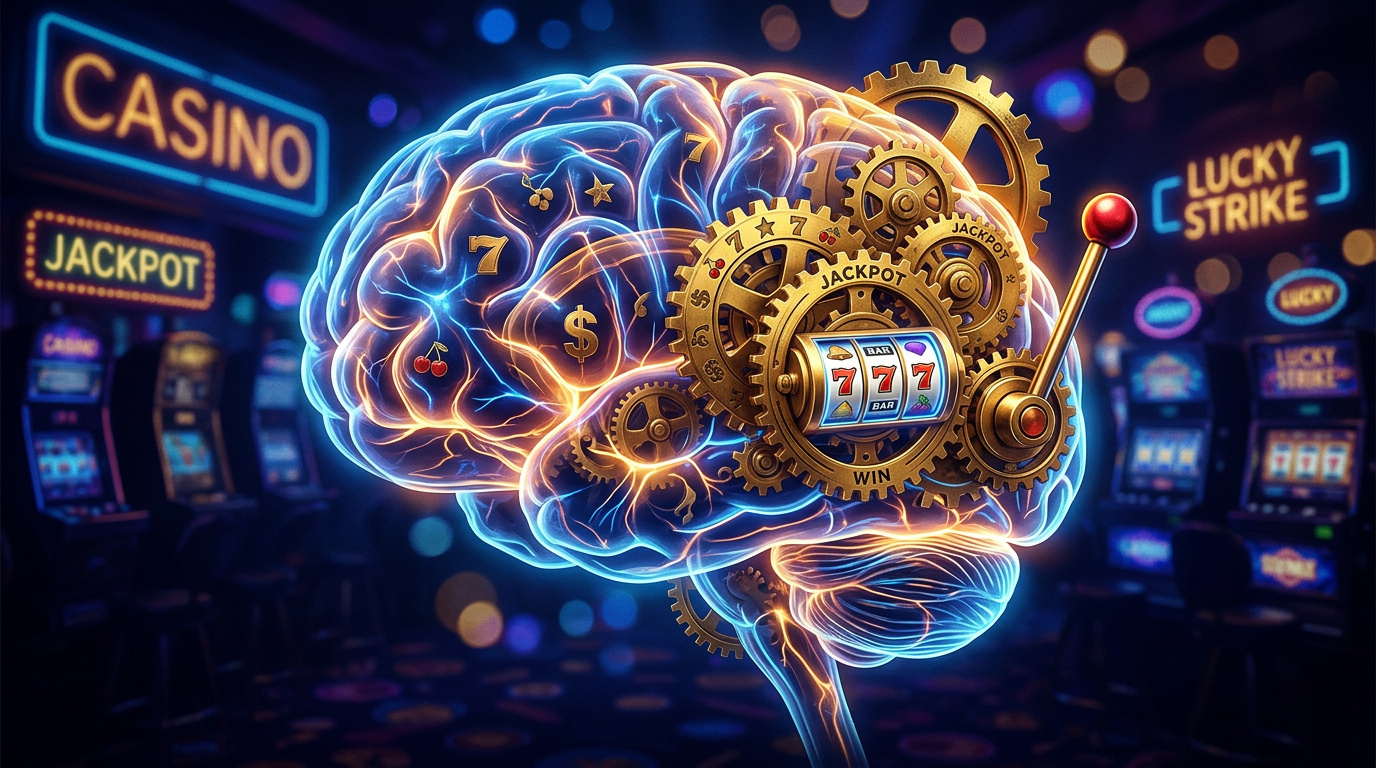
The primary tool here is dopamine. It is completely false that dopamine is simply the “pleasure” chemical. Functionally, it is the neurotransmitter of anticipation. When a player presses a button knowing a massive reward might drop, neural dopamine spikes before the result is even revealed. Unpredictability is the engine of this response. Game developers rely heavily on variable ratio reinforcement and dopamine anticipation to create this effect. By delivering positive outcomes through carefully calibrated randomness on an unpredictable schedule—a mechanic lifted directly from slot machines—the brain becomes locked in a highly reinforcing behavioral loop. It constantly chases the next activation.
As a player’s skill improves, raw difficulty stops triggering this response. To maintain the high, designers must rely on escalation stakes and dynamic difficulty. Rather than simply throwing more enemies at the player, the system subtly raises the potential cost of failure. Just as a gambler tries to master the art of parlay betting by chaining consecutive risks for a massive payout, games force players to risk accumulated progress for a shot at a rare tier of loot or a high-score multiplier.
Designing a punishing gauntlet is mathematically trivial. Designing one that actually commands the player’s psychology requires exploiting inherent flaws in human logic.
How cognitive biases shape risk vs reward
Mathematical odds dictate the outcome of a game, but the player’s flawed perception of those odds dictates their risk-taking behavior. High-level game UI design intentionally leverages our brain’s inherent biases to encourage engagement. These cognitive blind spots actively shape players’ risk attitudes long before the dice are even rolled.
Players calculate risk through an emotionally distorted lens. A core element of this is the emotional weight of a loss. Because of a cognitive bias known as loss aversion, losing $100 feels mathematically twice as bad psychologically as winning $100, and games must actively mask this reality to maintain engagement. This distortion is also largely caused by the availability heuristic and flawed risk perception. If a player recently achieved a massive critical hit or barely survived a boss fight, that vivid memory mathematically distorts their understanding of their actual chances going forward. They assume success is more common than the codebase dictates. This triggers the overconfidence effect, blinding them to objective risk assessment.
Counterintuitively, the most reckless player behavior occurs in systems that are transparently “fair.” You see this clearly in modern gambling-adjacent mechanics and digital betting platforms. Take the recent data surrounding the game Aviamasters. You can find raw community reactions to its mechanics easily online, often under chaotic forum titles like max win – give it a bash – avia maasters : legit? ? bruv. This game operates on a highly transparent, massive 97% Return to Player (RTP) metric.
When a game advertises a 97% RTP, it creates an expected value that borders on guaranteed safety. This link between perceived control and RTP disarms a player’s natural caution. High win rates establish a false sense of player invulnerability. When the odds feel entirely fair, players paradoxically adopt more aggressive, reckless betting behaviors than they would if the system felt rigged.
“When the odds feel entirely fair, players paradoxically adopt more aggressive, reckless betting behaviors than they would if the system felt rigged.”
Time as a weapon: how pacing modifies risk tolerance
Time is the heaviest variable in game feel. The speed at which probabilities are calculated changes everything about how a human interacts with them. Manipulating time and pacing is the stealthiest way developers bypass rational cognition.
If you analyze the relationship between temporal perception and speed modes in interactive design, you realize speed completely overwrites strategy. Many systemic gambling and strategy games divide their pacing explicitly into four distinct tiers: Tortoise, Man, Hare, and Lightning.
- Tortoise: The baseline. Plentiful time allows for analytical, math-based decision-making.
- Man: Standard pacing. Requires mild heuristic shortcuts to keep up but allows for general strategic planning.
- Hare: Accelerated friction. Forces reliance on muscle memory and recent event bias over raw probability.
- Lightning: Complete cognitive bypass. Instigates aggressive, impulsive risk-taking and highly reactive behavior.
Rapid pacing—whether in a frantic action combat sequence or a digital roulette spin—strips away cognitive friction. If a player is playing poker or slots at Lightning speed, their risk assessment centers entirely on survival and immediate dopamine. By actively toggling between these friction states, a designer tightly controls the player’s risk appetite without ever touching the actual win/loss mathematical arrays.
The invisible architecture of player archetypes
Games cannot survive by catering to only one psychological profile. An effective game loop must operate parallel architectures to engage wildly different demographics simultaneously.

Audiences naturally split into two camps: risk-averse and risk-seeking. Risk-averse personalities want predictable progression and baseline stability. Risk-seekers want catastrophic failure or monumental success. To appease both, developers have to architect a meticulous balance between reward frequency and reward magnitude.
- Frequent, low-magnitude rewards maintain the motivation of the risk-averse personality by providing a steady baseline of positive reinforcement.
- Infrequent, massive-magnitude rewards keep the risk-seeking player hunting for peak excitement spikes.
If you understand the core elements of esports and competitive multiplayer, you see this dynamic everywhere. To keep the risk-averse player from quitting permanently after a brutal loss, modern designs sneak in automated psychological safety nets. Think of configurable autoplay sequences with hard stop conditions, or discrete rank-protection mechanics. The player feels entirely in control of their risk threshold, while the underlying mathematical engine ensures they stay inside the engagement loop.
But architecture alone does not sell the thrill. To make a reward genuinely satisfying, the interface has to lie to you.
Sensory manipulation: amplifying the illusion of consequence
Numbers on a screen do not generate adrenaline. It is the game’s aesthetics and non-numerical sensory elements that artificially inflate the perceived value of an in-game reward.
When players parse common gamer lingo for concepts like “tilt” or “wipes,” they are describing intense emotional responses heavily manipulated by audio-visual feedback. If an action has zero real-world physical consequence, the game must simulate physical trauma to bridge the gap.
Developers accomplish this through purposeful UI friction and sensory overload. When you take massive damage, the controller vibration mimics physical impact. The camera shake simulates disorientation. Dynamic audio limits the frequency band to muffle the world, replicating actual sonic trauma. This brutal auditory and visual trauma isn’t just punitive; it serves as a stark contrast, artificially multiplying the dopamine release and perceived value of the ultimate win.
The most manipulative applications of this occur around failure. Games frequently pair intense visual flashes and highly tuned auditory cues with near-misses to alter your perception of a loss. If you fail an objective by a fraction of a second, the game plays a high-energy, escalating sound effect and flashes bright, warm colors. By surrounding a mathematical loss with the celebratory sensory data usually reserved for a win, the specific neural pathways for reward are temporarily hijacked. The brain processes the loss as a near-victory, immediately triggering the impulse to try again.
The fine line between healthy tension and extraction
Understanding the mechanics of simulated risk inevitably brings us to the boundary separating engaging design from predatory behavioral extraction.
There is a distinct difference between leveraging risk/reward for skill-building tension—like mastering an attack pattern—and utilizing casino-style mechanics designed for infinite behavioral loops. When developers track specific gameplay metrics—like chase-play ratios or session-length degradation—the data cleanly separates players who are happily challenged from those exhibiting compulsive gambling behaviors.
Organizations focused on ethical frameworks, such as the Escuela de emprendedores sostenibles working alongside Natura y Cultura, continually point out that manipulative design exploits human neurobiology rather than rewarding player agency. When you grant players the tools to intelligently assess a risk, face the simulated danger, and overcome it, you are delivering a deeply satisfying human experience. But when you strip away their perceived control and manipulate their neurology strictly to inflate playtime, you cross into extraction. Build games that respect the dopamine they trigger.
Frequently Asked Questions
Why do video games trigger dopamine spikes even when the gameplay is stressful or punishing?
Many people wrongly assume dopamine is simply the “pleasure” chemical, but neurologically, it functions as the neurotransmitter of anticipation. Games utilize variable ratio reinforcement to intentionally spike your dopamine right before an unknown reward drops. Your brain isn’t hooked on the actual stress of the encounter; it is chemically locked into chasing the thrill of unpredictability.
How does a high Return to Player (RTP) metric ironically cause gamers to make reckless decisions?
A massive 97% RTP disarms a player’s inherent caution by establishing a mathematical veil of safety. When the underlying odds feel incredibly transparent and fair, players unconsciously let down their guard and assume they are in control. This leads them to adopt vastly more aggressive, impulsive betting behaviors than they would if the system explicitly felt rigged against them.
What is the cognitive difference between ‘Tortoise’ and ‘Lightning’ pacing in level design?
Tortoise pacing provides enough time for your rational, math-based intellect to evaluate risk and calculate probability. Lightning pacing accelerates the friction so much that your rational cortex is entirely bypassed. In that hyper-fast state, designers strip away the time needed to process the emotional weight of a loss, forcing you into highly impulsive, survival-based risk-taking.
Can digital games successfully manipulate both cautious and highly aggressive players using the same system?
Yes, but doing so requires architecting a meticulous split between reward frequency and reward magnitude. Risk-averse demographics are kept inside the loop with frequent, low-impact rewards that simulate baseline stability and progress. Simultaneously, the system dangles rare, massive payouts to keep the aggressive risk-seekers constantly hunting for their next peak adrenaline spike.
Why does barely missing a high score or failing an objective often trigger an intense urge to try again?
This phenomenon occurs because UI designers intentionally dress up mechanical losses with celebratory audio-visual feedback. If you fail by a fraction of a second, the game blasts you with warm visual flashes and escalating sound effects normally reserved for a victory. Your brain’s reward centers are hijacked to process the objective loss as a near-victory, immediately prompting another attempt.
Where is the dividing line between engaging game difficulty and predatory behavioral extraction?
Engaging difficulty leverages risk to validate human agency, giving players the tools to intelligently master a challenge and earn their success. Extraction ignores player agency altogether, prioritizing casino-style behavioral loops strictly to inflate playtime. Once a game starts manipulating your neurobiology purely for retention metrics rather than rewarding actionable skill, it crosses into unethical territory.