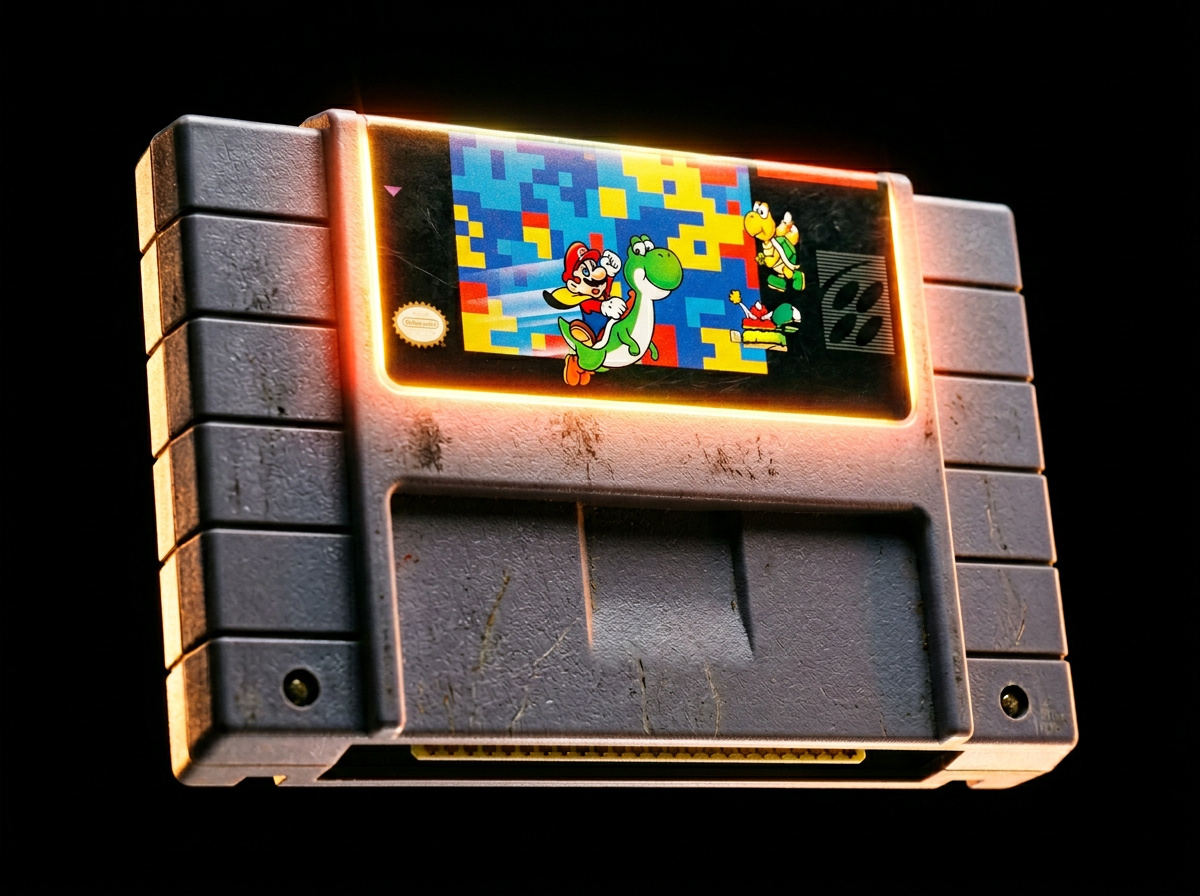
I’ve spent thousands of hours in production environments and just as many gaming, and figuring out why players prefer classic mechanics over modern AAA titles is remarkably simple. People play Retro Video Games because they are exhausted by the bloated, slow, and overly monetized software landscape.
Nostalgia is largely a lazy dismissal used by tech monopolies to invalidate older software. The industry pushes the nostalgic Wayback machine trope because acknowledging the objective gameplay superiority of old design threatens their live-service business models. Here at GeekExtreme, we analyze what actually works in interactive media, and it is rarely the 100-hour cinematic slogs.
The resurgence of classic titles acts as an active consumer rebellion against bad architecture. Modern studios prioritize retention loops over responsiveness. To understand why vintage platforms still hold up, you have to look down to the metal and recognize how severe hardware limits forced developers to write better code.
Table of Contents
How Atari 2600 constraints built timeless loops
Strict hardware limits on early systems like the Atari 2600 and Commodore 64 forced developers to perfect the underlying mechanics because visual spectacle simply was not an option. Technological constraints directly fueled design inventiveness.
You could not hide a broken jump mechanic behind a particle effect in 1981. Developers relying on early 8-bit CPUs had to build bulletproof logic loops to keep the player engaged. This purist approach to gameplay mechanics dominated the industry until id Software released Wolfenstein 3D.
That 1992 title triggered a massive industry pivot away from 2D logic like Muse Software’s Castle Wolfenstein and toward three-dimensional combat games. Whether adopting a third-person perspective or planting the camera squarely behind a digital gun barrel, subsequent hits like Doom and Quake established a hardware feedback loop where manufacturers pushed raw polygon throughput over playability. That persistent pivot to first-person shooters normalized masking shallow logic with high-resolution textures.
Why stylized abstraction outlasts hyper-realism
Stylized abstraction ages infinitely better than hyper-realistic simulation because clean, low-resolution sprites deliberately leave room for player imagination rather than attempting a 1:1 mirror of reality.
A visually simple game never looks entirely outdated because it never tried to accurately render human pores in the first place. This low-fidelity approach ensures you are not distracted by muddy textures or janky physics engines computing irrelevant debris. Instead, your brain focuses cleanly on the strict visual rules of the interaction.
The modern obsession with realism means titles from 2012 already look terrible on modern LCD/LED panels. In contrast, an 8-bit block dropping down a grid on a standard monitor functions—and looks—exactly as it was programmed to look.
Why Super Mario Bros offers better accessibility
Super Mario Bros completely avoids massive upfront time investments by using intuitive level geometry to teach players exactly how to play without a single tutorial screen. Pick-up-and-play mechanics naturally lower the cognitive load for everyone.

Modern design is plagued by feature creep. The artful simplification of jumping Mario over a fatal gap communicates the stakes immediately. Whether rolling a trackball, tapping a stylus, or just pushing a pair of action buttons, the input is obvious and the goal is clear.
This immediacy is exactly why online betting operators explicitly mimic classic mechanics today. If you look at platforms like Vegastars Casino in AU, developers rely heavily on stripped-down retro configurations to capture audiences quickly. Providing zero barriers to entry mathematically guarantees higher immediate engagement across all demographics.
How steep learning curves alienate casual players
Modern titles gatekeep their own entertainment value by requiring 20-hour tutorials, multi-button combos, and deep lore just to achieve base-level competency. This high friction effectively shuts out users who lack hours of free time.
You should not need to study a wiki page or watch external guides to execute a basic action in a new piece of software. As we covered recently in our breakdown of adult gaming demographics, modern players actively reject this enforced homework.
Older platforms let you slot a cartridge into place, hit the power switch, and immediately engage the core loop. By piling simulation mechanics on top of each other, complex modern systems simply filter out casual players entirely.
Retro games win with couch co-op multiplayer
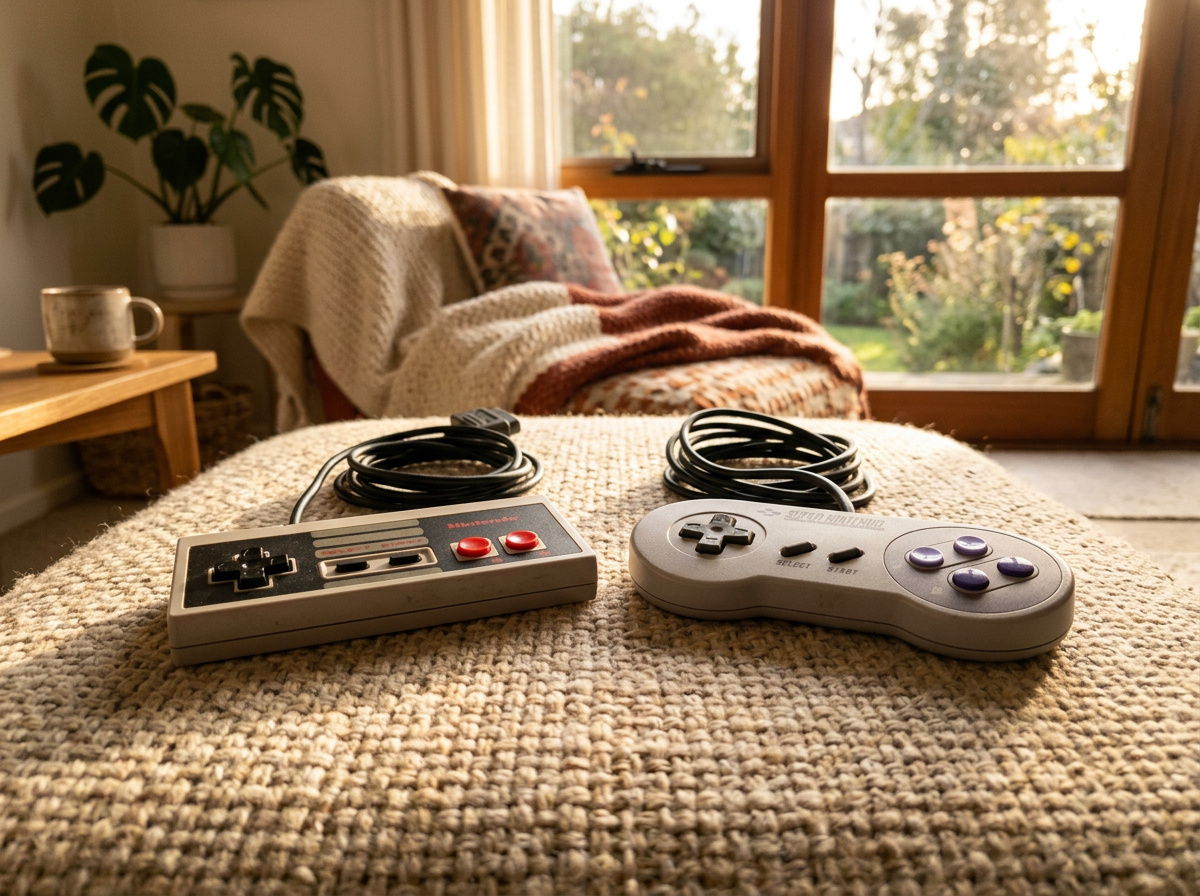
Short controller cords bolted to a central console forced immediate, face-to-face physical proximity, ensuring that couch co-op interactions naturally regulated bad player behavior. This local configuration inadvertently engineered significantly healthier human social dynamics.
Playing a four-player match meant your opponents were sitting within punching distance. The hardware made global networking impossible, so the social contract was tightly enforced by the people in the room.
Modern systems abandoned this local intimacy to scale user bases globally. We traded loud, joyful living room sessions for massive server clusters filled with angry strangers. Obsolete technology successfully mitigated a core human toxicity problem that gigabit internet continues to fail at.

“We traded loud, joyful living room sessions for massive server clusters filled with angry strangers.”
Are anonymous online lobbies inherently more toxic?
Removing face-to-face accountability guarantees that anonymous online play degrades into a hostile culture focused aggressively on trolling and ‘pwning n00bs,’ mirroring the absolute worst echo chambers of modern social media. Disinhibited digital environments inherently breed toxicity and harassment.
When you isolate players behind headsets, the lack of immediate physical consequences removes basic human empathy. Local matchmaking infrastructure abstracts the human element entirely. Instead of playing someone you know, the server connects you with a volatile, uninvested stranger.
This architecture fundamentally alters the stakes of the match from a shared social experience to aggressive extraction of dominance. Players exhausted by this dynamic naturally gravitate back to local multiplayer systems, where sitting next to your opponent keeps the interaction grounded.
Physical media vs games as a service
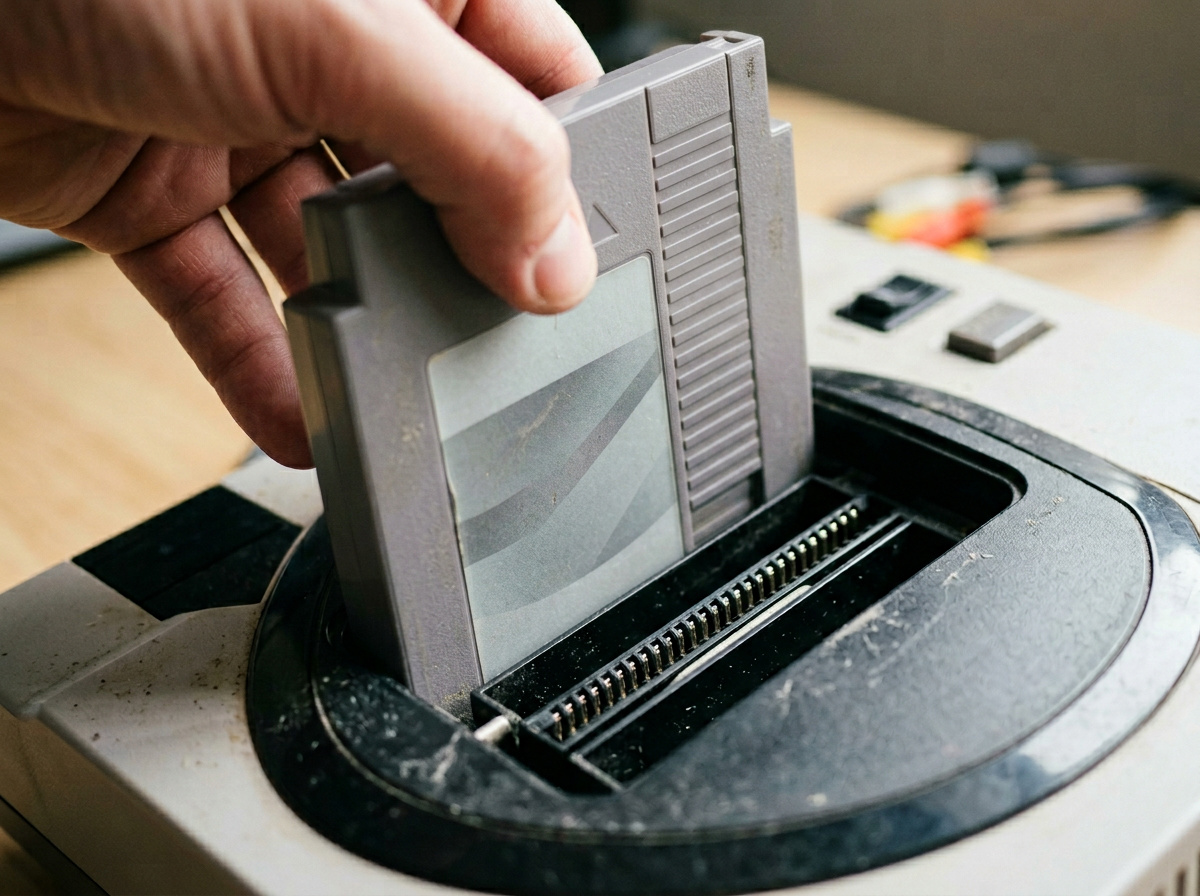
Much like the audiophile resurgence of vinyl records, physical media preservation guarantees permanent, offline ownership of your software, completely insulating players from the licensing disputes and server shutdowns that plague the modern games as a service model. Buying vintage NES Cartridges secures a permanent hardware asset.
When you purchase a SNES or Japanese Super Famicom game, you own the compiled code on that ROM chip outright. The tactile reality of maintaining vintage hardware is a major component of this reliability. Swapping out a dead 72 Pin Connector ensures that the hardware continues to bridge the gap between console and cartridge reliably.
Basic maintenance feels rewarding in a read-only ecosystem. Cleaning the cartridge contacts with a Sharpie eraser and rubbing alcohol guarantees that game will boot for decades. Modern digital economies, by contrast, force you to lease server infrastructure from tech monopolies across a fragile connection.
What happens when modern multiplayer servers die?
When modern multiplayer servers die, the persistent live-service game is permanently erased. When a parent company decides a title is no longer generating enough monthly recurring revenue, they terminate the servers, completely destroying the player’s initial investment.
Digital ownership without local execution files is a marketing lie. Titles strictly reliant on remote databases hosted by tech giants like Amazon.com mathematically cannot outlive their developer’s balance sheet. Once the studio pulls the plug, your client software becomes a useless brick consuming space on your solid-state drive.
This built-in expiration date drives furious consumers back to the fixed architecture of platforms like the original NES. A cartridge strictly executes local instructions and requires zero DNS resolution to function.
Does classic gaming stop tech manipulation?
By plugging in a read-only 16-bit console, players actively block the psychological manipulation built into modern platforms, sidestepping dark patterns designed to induce a Pavlovian response. It is literal consumer self-defense for both your wallet and your digital Privacy.
Modern app development is primarily an exercise in hijacking the rewards system of the brain, driving a cycle of ongoing Addiction. Today’s PC launchers and console dashboards often behave more like an intrusive web browser than a simple executable library. The technology is engineered for continuous revenue extraction. Targeted Advertising, telemetry trackers, and shady cookies infest modern UI dashboards.
Older hardware acts as an air-gapped safe harbor device. You interact purely with the game algorithms, completely insulated from a corporate analytics engine monitoring your session length.
Real cost of ownership without in-game upsells
The total cost of ownership for a vintage cartridge ends firmly at the point of sale, offering massive financial relief from the relentless in-game upsells that bloat modern gaming budgets.
The $70 sticker price of an AAA release is merely the entry fee to a persistent digital storefront. Battle passes, cosmetic skins, and premium currency constantly demand routine capital injections to keep the software relevant. For instance, a single seasonal battle pass or a bundle of digital cosmetics can easily add $20 to $30 every few months, pushing the actual baseline yearly expenditure well past $150 for just one active game.
A retro cartridge involves zero ongoing financial risk. Once you buy it, you possess the definitive version forever. This transparent exchange of fixed value feels vastly superior to current industry revenue models and recurring microtransaction forecasts.
Breakout and the appeal of kinesthetic gameplay
The tactile input of manipulating a distinct hardware controller directly dictates a game’s success, proving that pure kinesthetic feel routinely outperforms generation-defining graphics. Exacting gameplay mechanics demand heavy, responsive physical controls.
A brilliant visual interface cannot save a mushy input system. Back in the mid 70s, Steve Jobs famously worked on the hardware logic for the arcade hit Breakout for Atari before launching Apple. That program loop worked beautifully because using the Atari 2600 Paddle Controller’s internal potentiometer offered exact, satisfying rotational tracking.
Spinning that physical wheel to intercept a pixelated ball creates a reliable physical flow state and a remarkable sense of embodiment within the digital space. That objective physical satisfaction is why Pong and its successors command attention today.
Why Gen Z and Alpha prefer classic mechanics
Younger players are abandoning modern titles for retro files simply because the mechanical feedback loop of classic game design is objectively superior, proving this hardware trend is entirely divorced from nostalgia.
Kids born ten years after a console is discontinued are happily booting up Homebrew files on a C64 Mini or the Maxi. They hold zero nostalgic connection to these platforms or their original launch windows. Instead, massive online communities and thousands of dedicated Discord servers are filled with teenagers actively trading speedrun tactics for 1990s platformers, treating them as fiercely competitive e-sports rather than dusty historical artifacts.
They play them because hitting a tight jump in a side-scroller feels intrinsically good. Clean inputs and zero server lag result in a pure mechanical test of skill. Solid design logic is universally recognized regardless of when the user was born.
Escaping the myth of progress for gaming joy
Technological advancement in entertainment is largely a marketing narrative built around enforced obsolescence; stepping backward to older hardware is often the smartest way to reclaim genuine usability.
We are constantly conditioned to accept that newer graphics compute automatically yields a better user experience. This planned obsolescence keeps the myth of progress churning, but more moving parts just means more points of failure. As an engineer looking at the bloated latency and forced updates of modern rigs, I find the over-complexity exhausting.
Dropping an Intellivision 2 Power Supply into place and flipping a physical switch feels like a massive relief. I highly recommend grabbing a modern digital bridge like a RetroN 77 running a Stella Emulator, or just hunting down a heavy CRT television. Disconnect the Wi-Fi. Ignore the telemetry. Just run the code.
Frequently Asked Questions
Why do Gen Z and younger kids play retro games if they didn’t grow up with them?
Younger players gravitate to vintage titles because the underlying mechanics are objectively superior to modern software. Early games relied on tight controls, clean inputs, and zero server lag to stay fun, rather than crutching on flashy visuals. This entirely disproves the lazy developer excuse that the retro resurgence is just older gamers chasing nostalgia.
What happens to a modern live-service game when the publisher’s servers shut down?
The game dies completely, permanently wiping out the player’s initial financial investment and any purchased microtransactions. Unlike a vintage cartridge that natively executes local code, modern digital games are essentially temporary leases sitting on a tech giant’s server. Once the studio pulls the plug, your downloaded software becomes a useless digital brick consuming drive space.
What’s the difference between retro stylized abstraction and modern hyper-realism?
Stylized 8-bit abstraction ages beautifully because it never attempted to be a perfect mirror of physical reality. Modern hyper-realistic titles from just a decade ago already look terrible because modern screen resolutions quickly outpace their muddy textures. A visually simple pixel grid leaves room for player imagination, letting your brain focus purely on the gameplay rules instead of janky physics engines.
How does playing on older gaming consoles actually protect consumer privacy?
Vintage hardware functions as an air-gapped system, completely physically isolated from modern telemetry trackers and invasive analytics engines. There are no shady cookies, dark UI patterns, or targeted ads baked into a classic NES console. You are simply interacting with the game’s compiled algorithm without a corporation secretly harvesting your usage data in the background.
Why does retro couch co-op usually feel less toxic than modern online multiplayer?
Physically sitting next to your opponent acts as a massive biological deterrent to terrible behavior. Modern online infrastructure isolates players behind headsets, abstracting the human element and removing basic empathy from the interaction. Short controller cords forced a local social contract where bad sportsmanship carried immediate, face-to-face consequences within punching distance.
Is it still worth buying original physical game cartridges today?
Absolutely, because physical media guarantees permanent offline ownership of the software. A physical ROM chip holds the compiled code locally, insulating you entirely from volatile digital storefronts and sudden licensing disputes. As long as you perform basic maintenance, like swabbing the contacts with a Sharpie eraser and rubbing alcohol, the game will boot for decades.
Can I play classic games without tracking down an old CRT television?
Yes. While hunting down a heavy CRT provides an incredibly authentic hardware experience, you don’t strictly need one to play. You can use a modern digital bridge device like a RetroN 77 running a Stella Emulator to connect cleanly to current flat panels. The real goal is disconnecting from Wi-Fi and escaping modern software bloat, regardless of your display output.