Landing a SpaceX internship is no longer just an aerospace badge of honor—it is a time-sensitive pipeline to pre-IPO equity. You are about to get the definitive roadmap for cracking the notoriously brutal application process, surviving the technical interview gauntlet, and converting that term into a full-time engineering role.
Here at GeekExtreme, we run one of the best geek blogs online, and our readers are constantly asking how to bypass the hyper-competitive university filters and land a spot on the critical path. We cut through the marketing hype to show you how to overhaul your fundamental physics intuition, build an undeniable hardware portfolio, and actually survive the 80-hour workweeks waiting for you in Hawthorne or Boca Chica.
Key Takeaways
A deeply flawed physical hardware build where you can explain the failure modes heavily outweighs a perfect 4.0 GPA with no hands-on experience.
The technical interview loops, especially for niche domains like signal integrity, require you to derive physical equations on a whiteboard entirely from memory.
You are not assigned generic intern work; your code and components will natively integrate into actual flight paths bound for orbit.
Table of Contents
How to Prepare for a SpaceX Internship in the IPO Era
To prepare for a SpaceX internship in the IPO era, you must immediately establish a timeline to construct an undeniable hardware portfolio and mentally prepare for an environment that functions as a high-stakes stress test. With rumors of an upcoming IPO rapidly circulating, this internship has transitioned from a simple resume booster into a massive, career-making financial opportunity. The barrier to entry has scaled accordingly. You are competing against thousands of applicants who want a piece of the commercial Spaceflight expansion.
Whether your eventual goal is scaling civilian Spaceflight architectures or developing highly classified, military-grade Starshield satellites, the preparation timeline is identical. You need to stop worrying about standard behavioral interview prep and start treating your engineering knowledge as a physical toolkit. Take stock of your current projects and identify the gaps in your hands-on experience, because theory alone will get your resume immediately discarded by the hiring team.
Before you even think about applying, you must completely overhaul how you look at the fundamental laws of physics.
Master Engineering Fundamentals, Not Formulas
SpaceX does not enforce a strict minimum GPA or mandate a tier-one university degree; instead, they require candidates to demonstrate an absolute mastery of baseline physics rather than relying on textbook memorization. A 3.2 GPA from a state school coupled with incredible physical engineering intuition will beat a 4.0 from an Ivy League school every time. The hiring managers do not care if you can plug variables into a standard equation. They want to know if you understand what happens to that equation when the ambient pressure drops to zero.
The Necessity of Derivation
During your technical evaluation, you will be expected to walk up to a whiteboard and derive complex formulas from scratch without any reference materials. The engineering philosophy here is strictly rooted in challenging assumptions. If an interviewer asks you to calculate the sheer stress on a specific fastener, pulling a memorized formula out of thin air is insufficient. You need to draw the free body diagram, isolate the forces, and build the derivation from the ground up, proving you actually understand the physical reality of the component.
This is a filter to see how you handle unexpected variables. There are no textbooks in orbit. Taking a common engineering equation relevant to your major and practicing the derivation aloud is the best way to build this specific muscle memory. You do not need an Elon Musk’s IQ to pass this test; you just need to refuse to take engineering formulas at face value.
“There are no textbooks in orbit.”
Executing Multi-variable Trade Studies
Once you prove you can derive equations, you have to apply them to competing design philosophies. Engineers must break down physical realities using first principles before they can successfully execute the complex trade studies required to choose the right component. When you compare the systemic compromises of different design approaches, you must evaluate mass, thermal expansion, and manufacturability all at once. Every added ounce of weight has a cost, and every manufacturing shortcut introduces a potential failure point that you must account for mathematically.
You will be handed a scenario—like choosing a material for a thermal interface—and asked to defend your selection based on the physics you just derived. If you cannot explain the cascading systemic effects of your choice, your theoretical knowledge is effectively useless to the team building the rocket.
Theoretical mastery gets your foot in the door, but it is entirely useless unless you can prove you’ve built something that physically works.
Build an Undeniable Hardware and Project Portfolio
The personal projects that look best on a SpaceX engineering resume are ambitious, end-to-end physical hardware builds where you encountered severe failures, forcing you to document your troubleshooting and redesign process. Flawless, cookie-cutter software tutorials pulled from GitHub are completely useless in this context. A deeply flawed hardware project where you can perfectly explain the failure modes and why your subsequent redesign fixed them is valued far higher than an easy success.
The University Competition Filter
Participating in heavy collegiate engineering competitions like FSAE / Sounding Rocket clubs is the closest university-level proxy to managing the chaos of aerospace systems engineering. These student design teams act as the ultimate resume filter for recruiters because they prove you can integrate complex hardware on a tight budget when nothing goes according to plan. If you go to an underfunded state school, taking a leadership role in building an electric vehicle or a liquid-fueled rocket bypasses the traditional prestigious university filter entirely.
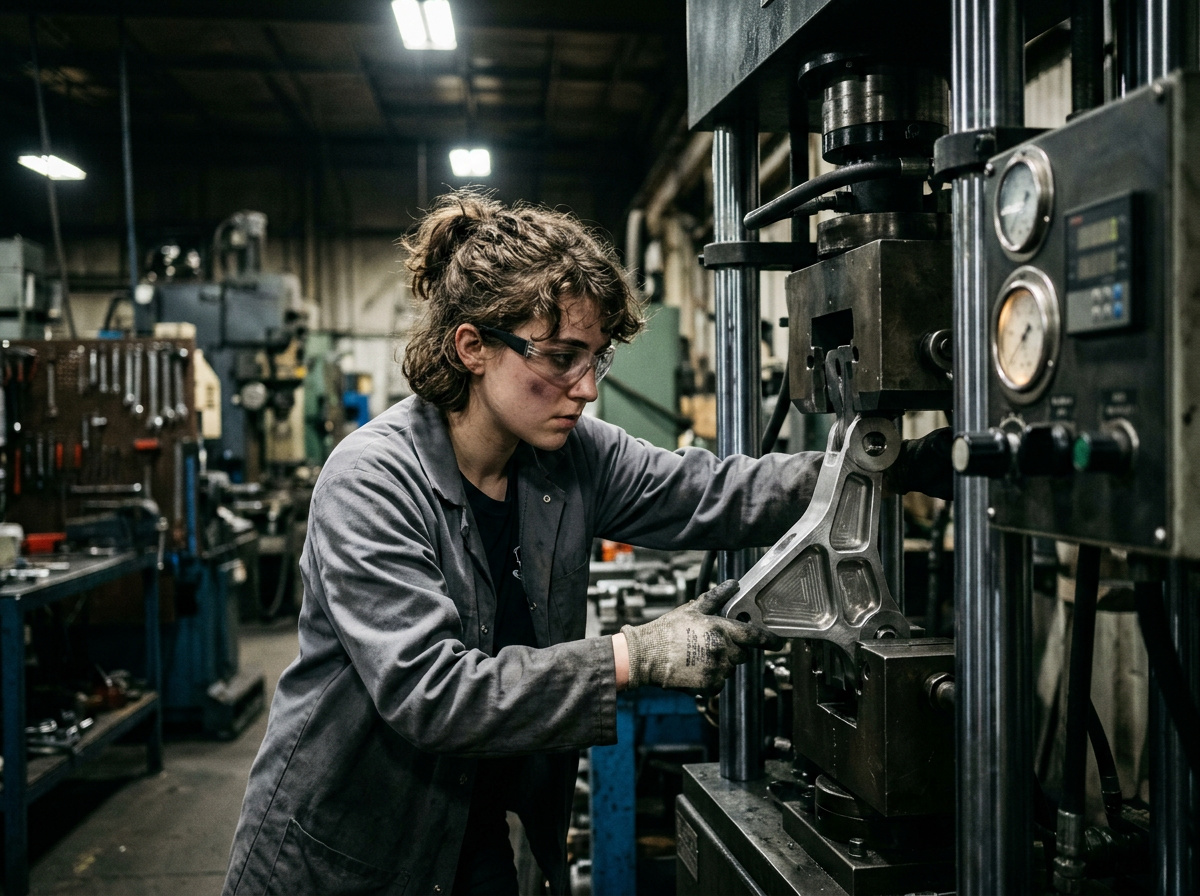
Hiring managers actively look for candidates who have machined their own parts, managed messy subsystem integrations, and pulled all-nighters fixing blown circuits. The physical reality of building a race car fundamentally rewires how you approach design constraints.
Documenting Personal Iteration
If you do not have access to an elite collegiate design team, you must construct a complex hardware project independently. The key is to actively maintain a detailed logbook that explicitly outlines all the failure modes you encountered. Whether you are building a custom drone flight controller or a rudimentary thruster, document the heat signatures, the structural weak points, and the exact engineering choices you made to resolve them.
When you sit down for an interview, this logbook becomes your proof of work. You can point directly to a charred circuit board and explain the math behind the failure and the redesign. That tangible evidence of your troubleshooting mindset proves you are ready for a professional engineering environment.
Once your hands-on portfolio is undeniable, it’s time to face the gauntlet of recruiters and senior engineers.
How to Prepare for the SpaceX Internship Interview Gauntlet
The SpaceX internship interview process works by aggressively filtering candidates through an initial recruiter screen, followed by live technical grilling by senior engineers, and finishing with a brutal peer review presentation. Every single stage is designed to introduce artificial stress to see if your engineering logic degrades when you are put directly on the spot by industry veterans.
Passing the Behavioral Screen
The initial behavioral screen is essentially an aggressive filter to ensure you are entirely mission-driven, as the company needs to know you can withstand grueling development cycles. The recruiter is looking for an overriding obsession with aerospace engineering and the mission to make humanity multiplanetary. Furthermore, because launch technology is legally classified as defense articles, you must clear International Traffic in Arms Regulations. These strict ITAR rules mandate that you must be a U.S. citizen or a lawful permanent resident to legally touch restricted guidance and telemetry data.

If you are just hunting for a prestigious name to put on your resume, the recruiter will sniff it out in five minutes. You need to convey genuine enthusiasm for solving impossibly hard technical problems, backing up every claim with a specific example of when you voluntarily took the harder path on a project.
Surviving the Live Technical Grill
For specialized avionics and electrical engineering tracks, candidates frequently turn to communities like Reddit and specifically the r/ECE subreddit to crowdsource the difficulty spike, referencing historical question logs like thread 1hse8io. In these technical loops, interviewers will drill into highly specific areas, asking exactly how your PCB routing decisions directly impact the overarching thermal dissipation in the vacuum of space. You cannot afford to be vague about signal integrity or power electronics.
Scraping these engineering forums is the best way to map out domain-specific historical questions. Once you find them, practice solving the logic puzzles aloud on a whiteboard. You have to clearly narrate your problem-solving process so the senior engineer on the other end of the phone can follow your spatial reasoning in real time.
If you survive the rapid-fire technical questions, you will be invited to the most notorious stage of the entire process.
Defend Your Design in the Technical Presentation
The specific technical questions asked in a SpaceX intern interview are intentionally open-ended, designed to push your design limits until you are forced to admit you do not know the answer. The final stage is a brute-force technical presentation that functions strictly as an aggressive design defense, where you present your most complex personal project to a room of seasoned engineers. This is not a test of your public speaking abilities; it is a stress test of your engineering compromises.
The interviewers will interrupt you constantly. They will ask why you chose a specific aluminum alloy over titanium, drill into the sheer margins of your mounting brackets, and question your thermal load assumptions. If you try to bluff your way through a question you do not know the answer to, you are immediately disqualified. The only correct response to hitting the edge of your knowledge is saying “I don’t know, but here is exactly how I would calculate it.” Rehearse this by presenting to experienced peers and explicitly instructing them to interrupt and aggressively question your design choices.
Getting the offer is one thing; surviving the actual internship is another entirely.

Survive the Extreme Intern Culture and Workload
SpaceX interns typically work 60 to 80 hours a week, operating natively on the exact same critical path as full-time mechanical and electrical engineers. There are zero safe, isolated “intern projects” here. The moment you complete your onboarding, you are assigned to a real-world problem that is currently blocking the production or launch pipeline. The learning curve is entirely vertical, and the responsibility is immediate.
Operating Natively on the Critical Path
Interns are famously given direct responsibility for flight hardware, demanding a culture of extreme ownership from the very first day on the floor. Whether you are touching environmental life-support components for the Dragon space capsule, integrating massive commercial payloads for the workhorse Falcon 9, or designing structural stage-separation brackets for the heavy-lift Falcon Heavy, your code and hardware could realistically fly to orbit during your term. Missions funded by civilians like Jared Isaacman rely on this exact hardware functioning flawlessly in the vacuum of space.
You are expected to adopt an uncompromising execution mindset prior to stepping into the facility. Accept absolute accountability for the success or failure of your assigned components. No one is going to hold your hand, but if you ask highly specific, well-researched questions, the senior engineers will move mountains to help you solve the problem.
Managing the Intense Hours and Failure Loops
The incredible pace of development is fundamentally driven by a test-to-failure methodology, which serves as the core engine for rapid iteration on the factory floor. Breaking hardware quickly is openly celebrated as a necessary mechanism to accelerate the overarching design loop. You will design a part, machine it, test it until it snaps, evaluate the telemetry, and have a redesigned version ready for production by the next morning.
To manage the intense hours without completely burning out, you have to mentally separate your self-worth from your prototype failures. Everyone breaks parts. The engineers who thrive are the ones who can reset their frustration instantly, read the data, and start the next iteration without hesitating.
Ultimately, the grueling hours and intense accountability are designed to filter for long-term potential.
The Ultimate ROI: Securing a Return Offer Pre-IPO
The ultimate goal of surviving this intense term is securing a return offer that translates directly into highly lucrative IPO equity. You must walk into day one executing an internship term explicitly engineered around solving enough baseline problems to make yourself un-fireable. The massive financial implications of the post-IPO compensation structure mean you must mentally shift from viewing this grueling work as a temporary resume builder to treating it as a career-making anchor event.
If you can integrate seamlessly into the intense culture, own your inevitable failures proudly, and continuously deliver working hardware to the production floor, you will be invited to stay. Surviving the crunch yields a full-time conversion, placing you at the forefront of the legacy commercial space era just as the financial reality of the company is rumored to change forever. Stay focused on the physics, build things that break, and never bluff a senior engineer.
Frequently Asked Questions
Why does SpaceX sometimes hire a 3.2 GPA candidate over a 4.0 Ivy League student?
SpaceX values physical engineering intuition far more than textbook memorization. Hiring managers don’t care if you can plug variables into a standard equation; they want to see if you understand how that equation fundamentally changes when ambient pressure drops to zero. A candidate with a lower GPA but extensive hands-on experience and first-principles reasoning will win the spot every time.
Are flawless hardware builds the best way to get a recruiter’s attention?
Counter-intuitively, no. SpaceX actively prefers ambitious, messy hardware builds where you encountered catastrophic failures, provided you meticulously documented the troubleshooting process. A charred circuit board paired with a mathematical explanation of the failure mode is infinitely more valuable than a cookie-cutter GitHub tutorial.
What happens if I don’t know the answer during the final technical presentation?
If you try to bluff your way through a senior engineer’s rigorous questioning, you will be immediately disqualified. The technical defense is specifically designed to relentlessly push you to the edge of your knowledge. The only correct response to a question you can’t answer is to admit it, followed immediately by explaining the exact mathematical steps you would take to calculate it.
How much impact do intern projects actually have on SpaceX flight paths?
There are no safe, isolated training projects at SpaceX—interns operate natively on the company’s critical path. You will be assigned real-world engineering problems that are currently blocking production or launch pipelines. The hardware you design during your 80-hour workweeks could realistically fly to orbit on a Falcon Heavy or Dragon capsule.
Can I intern at SpaceX as an international student?
No, unless you hold lawful permanent residency in the United States. Because rocket launch technology is legally classified as defense articles, the company must adhere to strict International Traffic in Arms Regulations (ITAR). You must be a U.S. citizen or a green card holder to legally access the restricted telemetry and guidance data required for the job.
How does the live technical interview test your physics fundamentals?
Interviewers will require you to stand at a whiteboard and derive complex physical equations entirely from memory. Pulling a memorized formula out of thin air isn’t enough; you must draw the free body diagrams, isolate forces, and build the derivation from the ground up. This verifies that you understand the underlying physical realities of a component rather than simply reciting textbooks.
What is the best way to bypass the prestigious university filter if my school is underfunded?
Heavy collegiate engineering competitions are the ultimate resume equalizer. Taking a leadership role in an FSAE race car build or a liquid-fueled sounding rocket club proves you can handle messy subsystem integrations on a tight budget. Recruiters look for these projects because they show you can actually machine parts and maneuver through real-world engineering chaos.

Wow! I can’t believe that a company as serious as this, would be offering an intern program. It’s a great thing for the young aspirant to work with the team as early as they can. 🙂 Great news!!!
Thanks for this piece of information. You are doing well.
SpaceX is currently seeking top talent to join our Intern Program. Our year-round program offers an unparalleled opportunity to play a direct role in transforming space exploration and helping us realize the next evolution of humanity as a multi-planetary species. This is very informative post.
Getting internships at SpaceX is something an engineering student would wish. It is also good that they offer paid internships.
Internship exposes learners to practical of what has been taught theoretically. Thanks for this piece of information.
At spacex, our interns are assigned real engineering work with real. Therefore we are looking for candidates who are ready to dive.
What I wanna know is how do you even get in here? Not saying that I can but what are the possible requirements at the minimum? Anyway it is an honor for sure as being on this field is rare.
SpaceX internship provides employment opportunities to people. It reduces the number of unemployed people.
I never knew space X was this big but by going through this article I now see that Elon did a very great job on this internships at SpaceX.
This will be a great program to participate in. Not just the type that loves to explore. But people that do will have great time in this program
The internships at SpaceX is a rigorous process and only those that meets the criteria get in. Heard of many people not getting in but now I know why. Cross your t’s and dot your i’s well .
I would like to miss this SpaceX internship at all. I will be applying immediately I get off reading this post. I’m in for this one
Amazing that Spacex provided internship with paid 7,25 per hour,it’s good opportunity to have job internship on this company
I agree!!!! SpaceX internships are rare that if one comes at your door grab it by all means. It is not for everyone but if a chance comes why not? Come on this is space. Honestly if a chance like this comes my way I will say yes. It is a good story to tell for sure.
Space X internship is really a great initiative. One thing really caught my eyes is the fact that interns will be paid , I think it is a really good one.
Good if Spacex internship really paid for worker,hope I can join this Spacex internship and can explore my skill
Space X internship requires Commitment, enthusiasm and Deligience.It’s of more advantage to be member of One of the Best innovative companies in the world-Space X .
SpaceX internship seems to be the new next challenge for any ambitious being. The recruitment process is concise and precise too; that way you know a working system. I wish the luck ones picked success and more knowledge being impacted on. How much SpaceX interns will be paid is still a mystery though. Thanks for this beautiful piece.
Thanks for enlightening us about SpaceX internships and what to expect. Glad I read through. Thanks
this is a very useful information..I never knew that the internships at SpaceX is a paid internship..my niece is an engineering student and may want to do his internship at the company..the three part hiring process doesn’t look complex though..I hope he gets in
This spaceX internships program sounds really Interesting. Imagine working in one of Elon Musk’s company, what a good way to start ones career.
Thanks to detox to rehab for sharing this helpful information it really widened my knowledge about SpaceX internship program
Great information here on how to have an internship at SpaceX . I will avail my self for this great opportunity
Quite an interesting read, very different from other internship programmes for sure.SpaceX internships will enjoy a lot of exposure and I believe a better experience given they get to be in touch with the leading company in space technology.how much does SpaceX pay for internships because the information about the federal law was quite confusing,are SpaceX internships paid or not?
With the situation of the country, a paid internship is a plus I tell you. internships at SpaceX is so competitive and career driven
Tou ask yourself, “how much does SpaceX pay for internships?”.. what? More than a $7 isn’t a child’s play when you are even learning baby. Means you are learning and getting paid…woww
What a great opportunity for individual who seek to enrol for an intern. Thanks for sharing this great opportunity
I am from Pakistan and the subject of space has always fascinated me. I would like to know whether or not the SpaceX internship is available for all the people in the world? I would also love to get paid for being an intern. How much does SpaceX pay for internships?