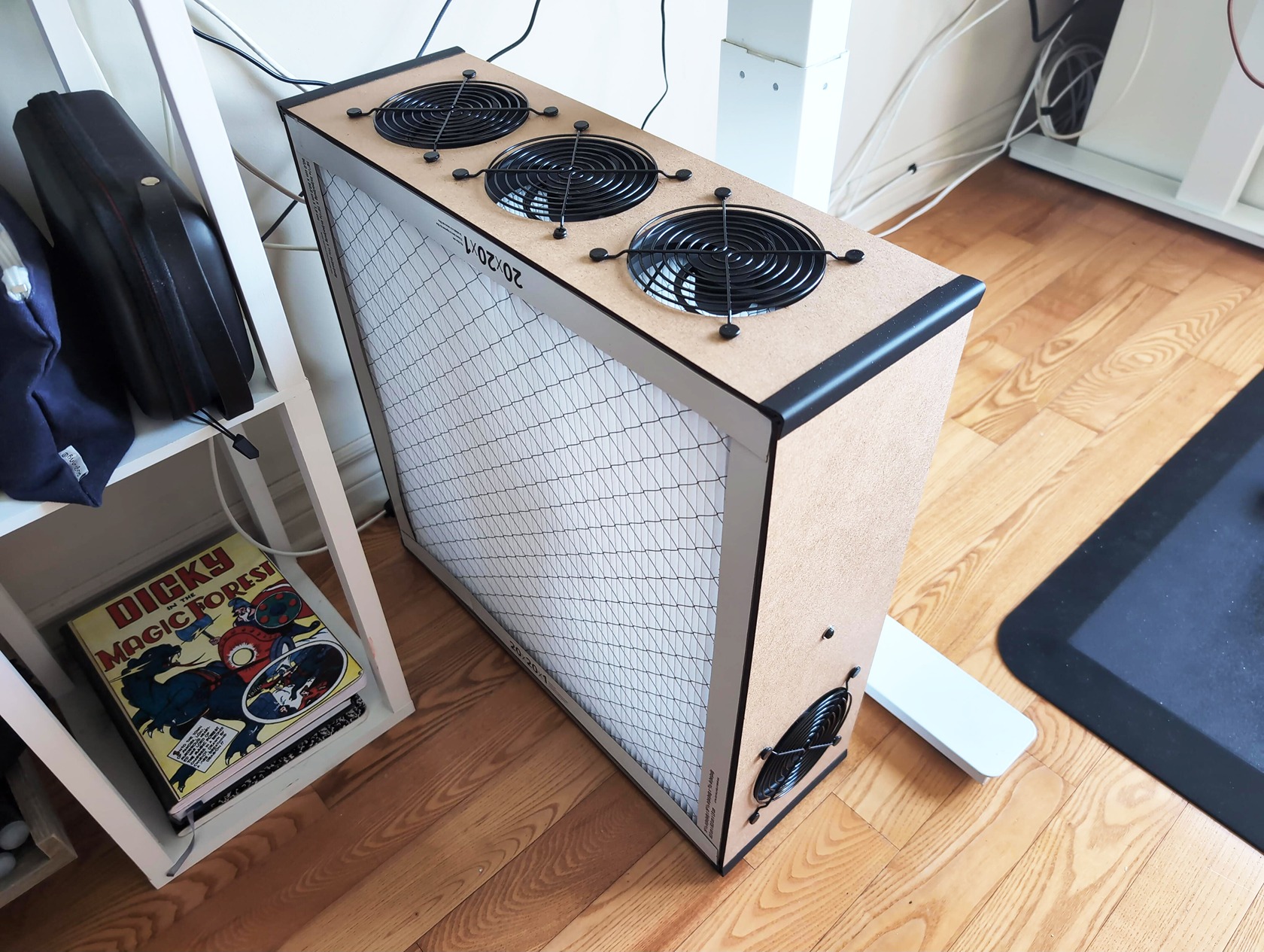
For years, I relied on a sleek Mila air purifier to defend my home against relentless wildfire and cooking smoke. It worked fine, but the dread of buying another massive, proprietary HEPA replacement block—a complex, tightly woven mat of fiberglass glued inside an unrecyclable plastic cage—eventually broke me. Mainstream air filtration traps you in a cycle of heavy plastic waste. This NorthBox 5X Classic review explores an open-architecture, PC-fan-powered alternative that shifts you from endless appliance consumption to sustainable hardware ownership.
Making the leap away from sleek, app-connected devices demands a deeper look at the hidden machinery we usually pay for. The true cost of mainstream air purifiers lies in the recurring filter tax, hiding silently behind a reasonable upfront device price.
Table of Contents
The razor-and-blades filter reality
Conventional air purifiers operate on the same tightly controlled business model as cheap printers and cartridge razors. You buy the attractive base unit at a slight premium, and then you sign an unwritten contract to purchase structurally complex, brand-locked replacement parts for the life of the machine.
The hidden cost of plastic waste
Every few months, standard commercial units ask you to throw a dense cylinder of rigid plastic and fiberglass into the trash. The environmental math is bleak. You are tossing durable housing materials just to replace the thin paper or synthetic membrane tasked with catching the dust.
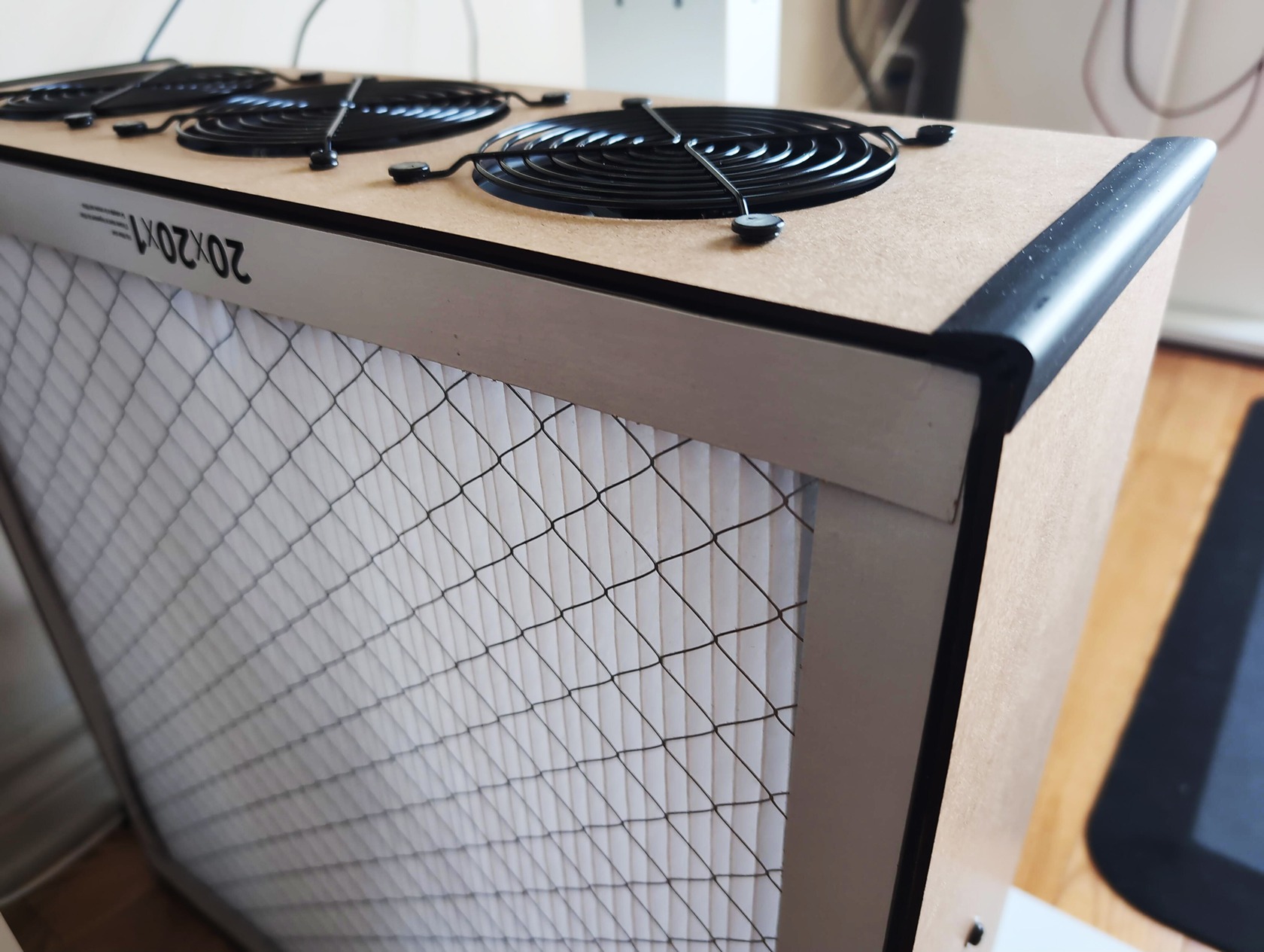
Open-architecture filtration is a hardware approach that uses standardized, non-proprietary components rather than custom brand-locked parts. The NorthBox completely bypasses the proprietary ecosystem by designing its chassis around standard off-the-shelf MERV13 furnace filters. According to the NorthBox Systems site, they recommend basic 20x20x1 or 20x20x2 filters, like the 3M Filtrete. When the filter chokes on airborne ash, you slide out a cheap cardboard-framed square and slide a new one in. You keep the motor, the frame, and your money.
Aesthetics versus sustainable utility
Moving from a highly curated cylindrical appliance like the Mila to a boxy unit with exposed fans introduces physical friction into a thoughtfully decorated room. The NorthBox 5X Classic embraces a raw, utilitarian aesthetic. It is built from natural HDF hardboard and sits on bolted-in rubber feet, carrying an undeniable DIY energy.
You trade seamless, glossy curves for raw performance and sustainability. Accepting the industrial look requires a shift in perspective. You have to start viewing clean air generation as a practical utility rather than an opportunity for interior design.
“You have to start viewing clean air generation as a practical utility rather than an opportunity for interior design.”
Do modular PC fans actually rival HEPA motors?
Once you accept the utilitarian hardboard chassis, the physical performance needs to justify the aesthetic compromise. Strapping a five-pack of computer fans to a furnace filter sounds like a basement science experiment, but the airflow metrics tell a highly competitive story.
Crushing smoke with PC fans
Effective purification relies on moving a massive volume of air across a tightly woven medium. Because true HEPA filtration requires forcing air through an exceptionally dense fibrous membrane to catch 99.97% of microscopic particles, commercial air purifiers typically rely on energy-hungry, high-wattage jet-engine motors to maintain that pressure. But an open-architecture approach doesn’t strictly need that massive overhead.
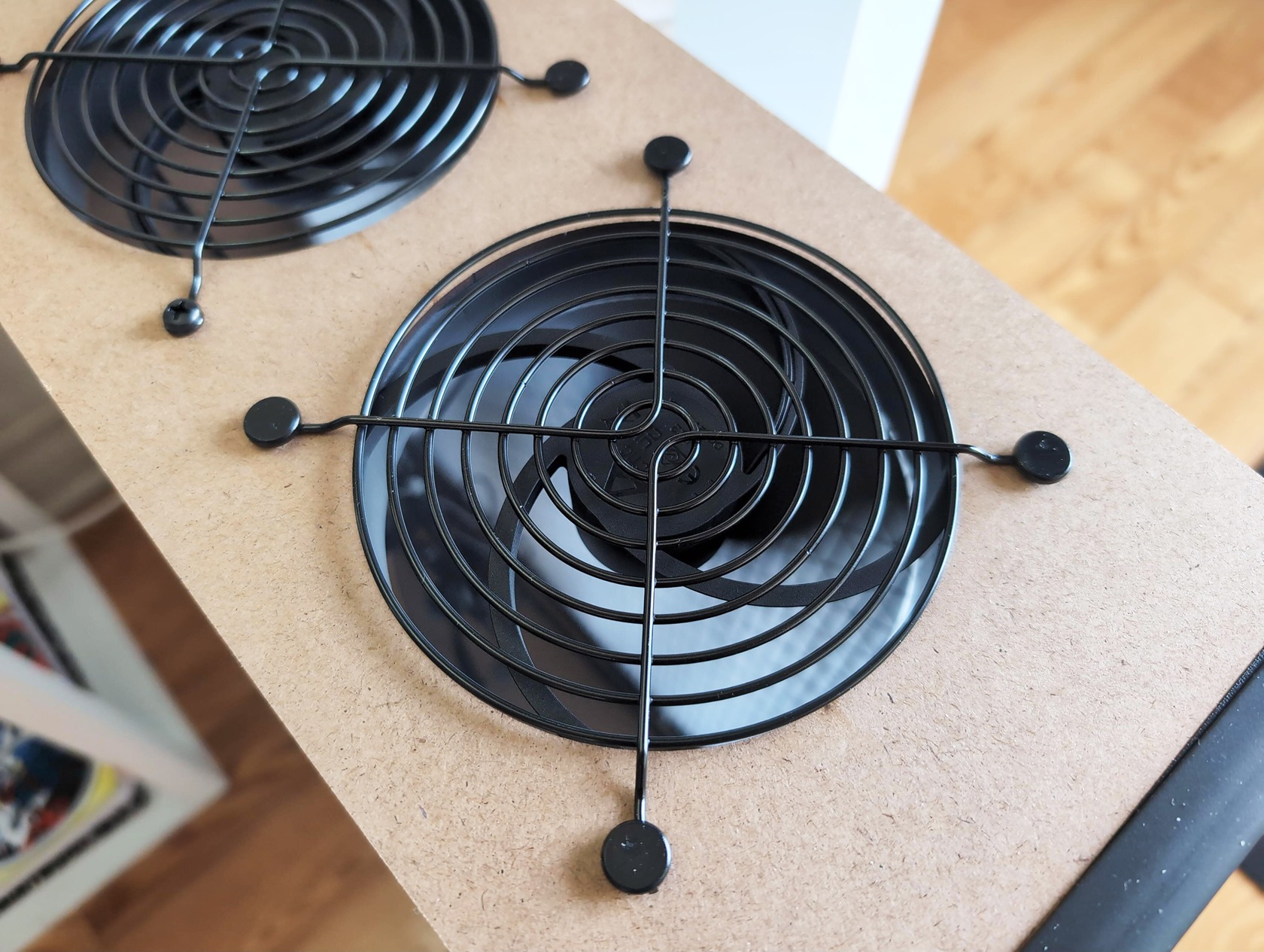
According to NorthBox Systems specifications, the 5X model achieves a Clean Air Delivery Rate (CADR) of 189 cubic feet per minute (cfm) for 2.5-micron particles, and 145 cfm for 1-micron smoke particles. That output clears enough airspace to achieve five full air changes per hour in a 280-square-foot room. Most impressively, the five Arctic P12 High Static Pressure fans pull a collective 9.6 watts. You match the daily throughput of a heavy commercial motor with a fraction of the energy footprint.
Repairable hardware design
The open-source clean air movement treats purifiers as adaptable hardware. Early DIY variants often relied on heavy packing tape to hold cardboard and fans together. The new tapeless NorthBox 5X replaces that messy aesthetic with an internal system of adjustable tension cords, securing the MERV13 filters snugly against the negative pressure of the fans.
The tiered buying system proves the durability logic. Sourcing replacement parts or building the unit entirely from scratch follows a straightforward sequence: 1. Purchase a basic frame kit without electronics if you already own excess PC hardware. 2. Select off-the-shelf 120mm fans—such as the Arctic P12 series—and mount them directly to the hardboard cutouts. 3. Wire the fan daisy-chain to a standard UL/C 12V power supply. 4. Secure the disposable MERV13 filters against the tension cords to seal the airflow path.
When a single commercial fan motor dies, the entire machine goes to a landfill. When an Arctic P12 fan develops a bearing rattle after three years, you unscrew it and plug in a ten-dollar replacement.
The acoustic truth about sleeping near PC fans
Moving hundreds of cubic feet of air through a dense filter medium requires physical force. That friction creates vibration and sound. Brands that promise completely silent, heavy-duty air purification are selling a physical impossibility.
Why absolute silence is a myth
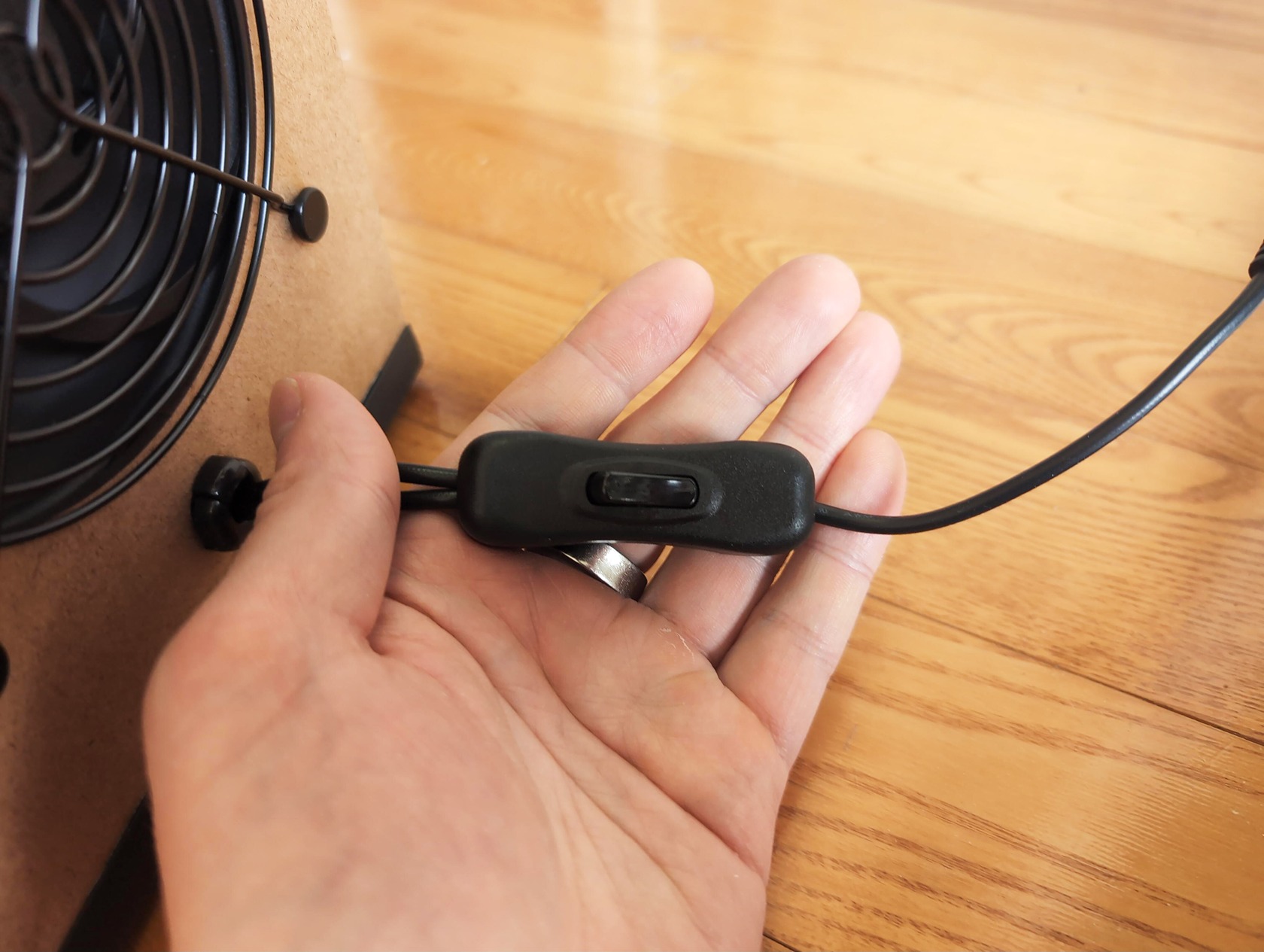
The 5X model hits 34.1 decibels during operation while the standard 6-fan Polaris model registers at 39.8 decibels. Commercial brands often market their lowest, least-effective fan speeds to claim whisper-quiet metrics. When you ramp those commercial single-motor units up high enough to actually scrub wildfire smoke from a bedroom, the mechanical whine becomes aggressive.
A high-static pressure PC fan array operates on a completely different acoustic profile. By distributing the required airflow across five smaller, slower-spinning impellers, the pitch drops.
The 24-hour noise acclimation
Acoustic habituation is the neurological process where the human brain stops registering continuous, unchanging background noise.
I set the 5X Classic up right beside my bed. The ambient mechanical sound actively annoyed me for the first 24 hours. I noticed the drone every time I walked into the room. Then, precisely a day later, my brain simply deleted the frequency. It faded into a soothing acoustic blanket. Complete silence in a sleeping environment is a marketing myth. The actual metric of success is generating an engineered, consistent white noise that the mind can easily ignore while securing the room’s air quality.
Tariffs, geopolitics, and open clean air
Securing affordable hardware introduces surprising international friction. The global supply chain strongly influences who gets to breathe cleanly at a reasonable price, exposing massive gaps in public health access.
Cross-border cooperation
A trade war heavily impacts the cross-border flow of health-centric hardware. According to the Canadian-based NorthBox website, Canadian manufacturers are currently forced to pre-pay specific tariffs and pass those costs to US buyers. This inflates the price of a hardboard and PC-fan kit to unreasonable levels.
Instead of hiding this markup or silently pocketing tight margins, NorthBox actively redirects American shoppers to a direct US competitor called Clean Air Kits. This remarkable “co-opetition” model bypasses competitive monopolies. Independent filter builders across different borders are cooperating to protect the buyer from exorbitant import fees.
Durability against sticky smoke
The open-source community rarely discusses the long-term degradation curve of PC fans subjected to dense environmental hazards. Standard computer chassis fans lack the heavy, sealed bearings found in pure industrial equipment.
The rough rule of thumb is that continuously pulling in sticky vapor—like atomized kitchen cooking grease or heavy, sap-rich wildfire ash—will eventually coat the exposed fan blades. Over years of heavy abuse, that added mass forces the small motors to work harder, subtly reducing their total lifespan. The open-architecture design acts as the ultimate failsafe here. A degraded blade profile on a proprietary sealed appliance is a death sentence for the machine. On the 5X Classic, it just means you eventually swap out a single cheap component using a screwdriver.
Final thoughts on the hardware shift
Taking control of your indoor air quality shouldn’t require subscribing to an ecosystem of heavy plastic waste and proprietary replacement locks. The transition from sleek brand-name devices to repairable, hardboard fan arrays demands a brief adjustment period—both to the industrial aesthetic and the steady acoustic hum.
What I genuinely recommend for anyone battling intense seasonal wildfire smoke or daily kitchen smog is to start by upgrading a high-traffic room with a modular build. The NorthBox 5X Classic delivers phenomenal, sustainable airflow without the plastic baggage. Stepping away from disposable appliances and into pure hardware ownership permanently changes the way you manage the air you breathe.
Frequently Asked Questions
What is open-architecture air filtration?
It is a hardware approach that ditches proprietary, brand-locked replacement parts. Instead of buying expensive plastic filter cylinders unique to one machine, systems like the NorthBox are built around standard, off-the-shelf MERV13 furnace filters. You keep the motor and chassis, and only throw away a cheap cardboard-framed square when it chokes on dust.
How does a PC fan air purifier compare to commercial HEPA motors?
They actually rival heavy-duty commercial motors by moving high volumes of air efficiently, but at a fraction of the energy cost. The NorthBox 5X uses five Arctic P12 High Static Pressure fans that collectively pull just 9.6 watts while clearing enough airspace to achieve five air changes per hour in a 280-square-foot room.
What’s the difference between a NorthBox filter and a Mila replacement block?
Commercial purifiers like the Mila trap you in a razor-and-blades model, forcing you to buy unrecyclable plastic cages of glued fiberglass at a premium. The NorthBox completely bypasses this ecosystem by utilizing off-the-shelf 20×20 MERV13 furnace filters that secure internally against tension cords. When it gets dirty, you simply toss a basic cardboard square instead of throwing away durable housing materials.
How much noise does a high-static pressure PC fan array actually make?
The 5X model registers at 34.1 decibels, completely abandoning the whisper-quiet marketing myth pushed by single-motor commercial brands. However, by distributing the required airflow across five smaller, slower-spinning impellers, the pitch drops into an engineered, soothing hum. It operates as a consistent white noise that the human brain naturally deletes from awareness within 24 hours.
Why does NorthBox actively redirect American shoppers to a competitor?
Trade war tariffs currently inflate the cost of Canadian-made hardware exported to the United States. Rather than silently pocketing tight margins or letting Americans foot the bill, NorthBox redirects them to Clean Air Kits, a direct US-based competitor. This co-opetition model intentionally bypasses exorbitant import fees so everyone can access affordable clean air hardware.
Is the NorthBox 5X worth the lack of a sleek, modern design?
Yes, if you prioritize raw performance and environmental sustainability over interior decorating. Moving to an exposed, hardboard chassis bolted onto rubber feet carries an undeniable DIY energy that introduces physical friction into a highly curated room. You simply have to shift perspectives and accept clean air generation as a practical utility rather than a seamless piece of decor.
Can I repair the NorthBox myself if a motor breaks down from heavy smoke?
Absolutely, and that is the entire point of the modular hardware shift. Sticky wildfire sap or atomized cooking grease will eventually degrade the unprotected PC fan blades over several years. But unlike a proprietary sealed appliance where a rattling bearing is a death sentence, you simply unscrew the dead fan and plug in a ten-dollar replacement.