
Ever feel like your relationship with Nintendo is a bit one-sided these days? You’re not the only one. In 2025, many long-time fans are looking at the gaming giant’s decisions and feeling a growing sense of frustration.
Let’s be real, we love the classics, but some of Nintendo’s recent habits are hard to ignore. This isn’t just about one bad game; it’s about a pattern of falling behind the times.
Here are five hard truths explaining why Nintendo sucks right now, from its dated hardware to its stubborn refusal to play by modern rules.
Key Takeaways
Nintendo’s hardware, powered by a 2015 mobile chip, struggles to run modern games, leading to poor performance and frequent frame drops.
The Switch Online service is barebones compared to competitors, lacking features like dedicated servers and a robust library of modern games.
The company overly relies on old franchises, with first-party games making up over 81% of its software revenue since the Switch launched.
First-party games and accessories are expensive, with titles like The Legend of Zelda: Tears of the Kingdom launching at $70 and rarely seeing significant discounts.
Nintendo maintains a strong family-friendly focus, which limits the availability of mature, M-rated games compared to other platforms.
Table of Contents
Why Nintendo Sucks: Underpowered Hardware

Nintendo’s hardware often feels like it’s a generation behind. While competitors push for 4K graphics and blazing-fast load times, the Switch is still chugging along with technology that was dated even at its launch.
Insufficient Processing Power
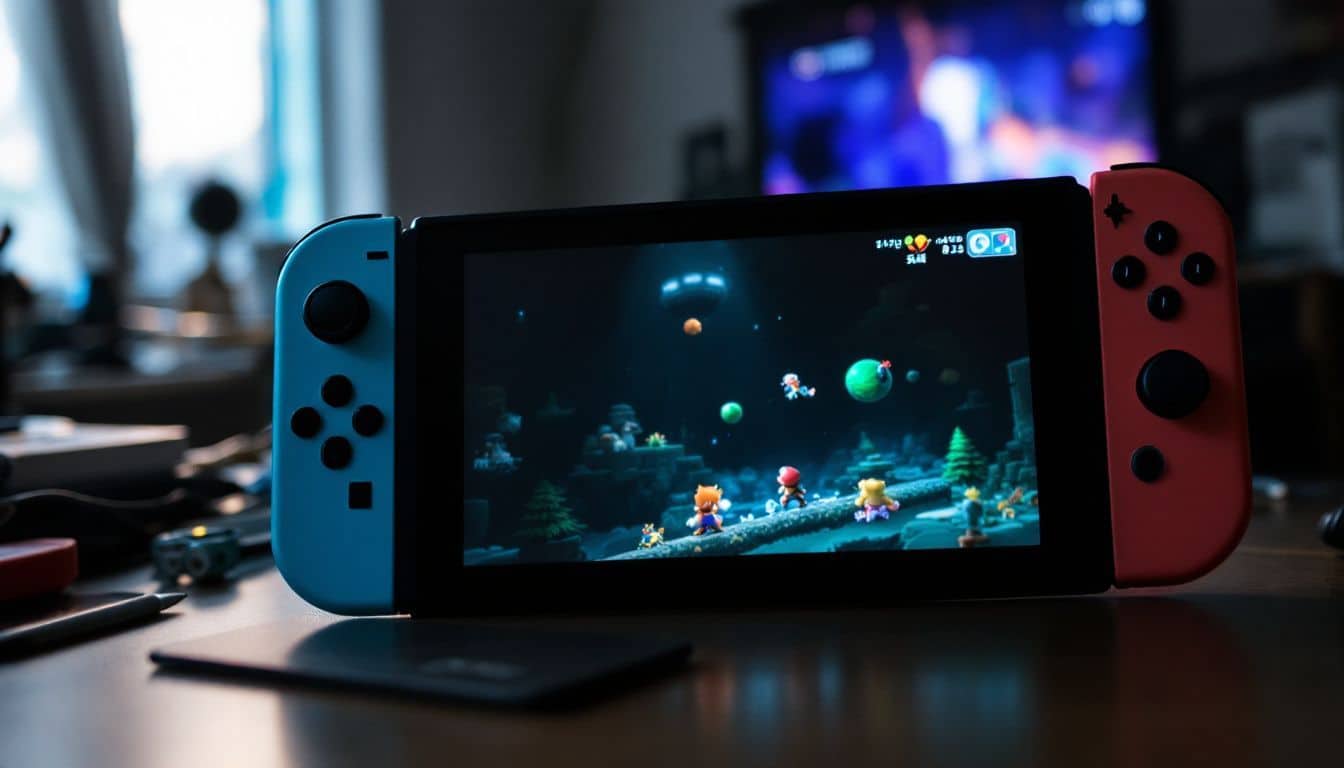
The Nintendo Switch is powered by a custom Nvidia Tegra X1 processor, a chip that was first introduced way back in 2015. For context, that’s two years before the Switch even launched. While it was a marvel of mobile efficiency at the time, in 2025, it’s severely underpowered.
This isn’t just about numbers on a spec sheet, it has a real impact on your gaming experience. It’s why many big, graphically intense games simply can’t run on the Switch, and the ones that do often come with major compromises.
- Choppy Gameplay: Games like Pokémon Scarlet and Violet and Hyrule Warriors: Age of Calamity are notorious for their significant frame rate drops, making action sequences feel sluggish and unresponsive.
- Blurry Graphics: To get complex games running, developers often have to dramatically lower the resolution. Ports like The Outer Worlds and Mortal Kombat 1 are famous examples, often criticized for their muddy, blurry visuals compared to other platforms.
- Long Load Times: The older processor and slower storage mean you’ll spend more time staring at loading screens compared to the near-instant loading on PlayStation 5 and Xbox Series X.
While the PS5 and Xbox Series X target 4K resolution at 60 frames per second, the Switch often struggles to maintain a stable 30 FPS at 720p in handheld mode. It’s not even in the same league.
Limited Support from Third-Party Developers
The hardware limitations directly lead to another huge problem: a lack of strong third-party support. Many of the biggest games of the year simply skip a Nintendo release altogether.
Think about some of the most acclaimed recent titles. Games like Baldur’s Gate 3, Alan Wake II, and Elden Ring were never released on the Switch because the hardware simply couldn’t handle them. This forces gamers to own a second console or a PC if they want to play the latest and greatest titles.
Even when developers try, the results can be rough. And now, some developers report that Nintendo is discouraging them from creating dedicated versions for new hardware, telling them to just rely on backward compatibility, which doesn’t help games that already push the limits of the original Switch.

Nintendo’s history of strict content rules and cartridge manufacturing control hasn’t helped either. Back in the day, these policies led Konami to create shell companies just to publish more games on the NES. While things have improved, the combination of weak hardware and a historically controlling attitude makes many developers think twice before investing in the platform.
Issues with Nintendo’s User Experience
Beyond the hardware, the day-to-day experience of using a Nintendo console feels frustratingly outdated. From online services to basic customization, Nintendo is miles behind the competition.
Subpar Online Services

Nintendo Switch Online is, to put it bluntly, a mess. In an age where Xbox Game Pass and PlayStation Plus offer hundreds of modern games, cloud streaming, and robust online features, Nintendo’s service feels like an afterthought.
The primary issue is the online performance itself. Many of Nintendo’s biggest multiplayer games, like Super Smash Bros. Ultimate, use a technology called delay-based netcode. This often results in laggy, stuttering matches if someone’s internet connection isn’t perfect, a problem largely solved by the “rollback netcode” used in most modern fighting games.
| Feature | Nintendo Switch Online | Xbox Game Pass Ultimate |
|---|---|---|
| Price | $19.99/year (Base) | $19.99/month |
| Online Play | Yes | Yes |
| Modern Game Library | No (Only classic NES/SNES/etc.) | Yes (Hundreds of games, including day-one releases) |
| Cloud Saves | Yes (on most titles) | Yes (Free for all users) |
| Voice Chat | Requires a separate smartphone app | Integrated into the console |
Even basic social features are a hassle. You still have to deal with the clunky Friend Code system, and voice chat is bizarrely routed through a separate smartphone app. Most gamers just use Discord instead, making Nintendo’s solution completely redundant.
Lack of Flexible User Options
Nintendo’s rigid control extends to the user interface and basic console features. The Switch home screen is a prime example of this frustrating simplicity.
Years after launch, there are still no folders to organize your games, no custom themes to personalize your background, and no basic media apps like Netflix or even a web browser. These are standard features that competitors have offered for over a decade.
Want to back up your game saves? You have to pay for Nintendo Switch Online. On Xbox, cloud saves are a free feature included with every account.
The eShop is another source of frustration. It’s often slow, and its discovery features are poor, making it difficult to find new games or sales. It feels less like a modern digital storefront and more like a simple list you have to scroll through endlessly.
Nintendo’s Conservative Approach to Gaming Innovation

For a company once synonymous with innovation, Nintendo has become remarkably conservative. They’ve found a comfortable formula and seem unwilling to deviate from it, relying on the same beloved characters to carry them generation after generation.
Reliance on Established Franchises
Nintendo’s business model is built on Mario, Zelda, and Pokémon. While these games are almost always excellent, the constant stream of sequels, remakes, and spin-offs leaves little room for new ideas.
The data backs this up. Since the Switch launched in 2017, first-party games have accounted for a staggering 81% of Nintendo’s total software revenue. They are not just leaning on their franchises, they are completely dependent on them.

While they have launched new series like Splatoon and ARMS, these are exceptions to the rule. For every new idea, there are a half-dozen more Mario sports titles or Pokémon remakes. Compare this to competitors like Sony, which has successfully launched major new franchises like Ghost of Tsushima and Horizon Zero Dawn in recent years.
Reluctance to Embrace Modern Gaming Trends

Nintendo often feels like it exists in a bubble, ignoring major trends that have defined modern gaming for years. This stubbornness means players miss out on features that are now considered standard everywhere else.
- No Achievement System: The Switch is the only modern console without a system-level achievement or trophy system, a feature that has been on Xbox since 2005 and PlayStation since 2008.
- Hesitant Cross-Play: While some third-party games support it, Nintendo has been slow to embrace cross-platform play in its own major titles.
- Ignoring Popular Genres: Nintendo largely avoids popular genres like battle royales or looter shooters, preferring to stick to its traditional platformers and action-adventure games.
This reluctance to adapt makes the Switch feel isolated from the broader gaming world. While their unique approach is sometimes a strength, it can also feel like they’re simply out of touch.
Limited Adult-Oriented Content
Nintendo’s family-friendly image is central to its brand, but this focus comes at a cost. The library of M-rated, mature games on the Switch is tiny compared to PlayStation and Xbox.
While there are some fantastic exceptions, like DOOM Eternal, The Witcher 3, and the Bayonetta series, they are just that, exceptions. The vast majority of the eShop is geared towards younger audiences.
This isn’t to say every game needs to be dark and gritty. But adult gamers who enjoy complex narratives, morally gray characters, and mature themes will find their options severely limited. By playing it safe, Nintendo is ignoring a huge and valuable portion of the gaming audience.
Price-to-Performance Concerns
Perhaps the most frustrating part of Nintendo’s strategy is that they charge premium prices for an often-subpar experience. From the console itself to games and accessories, your wallet will feel the pain.
Premium Pricing for Dated Technology
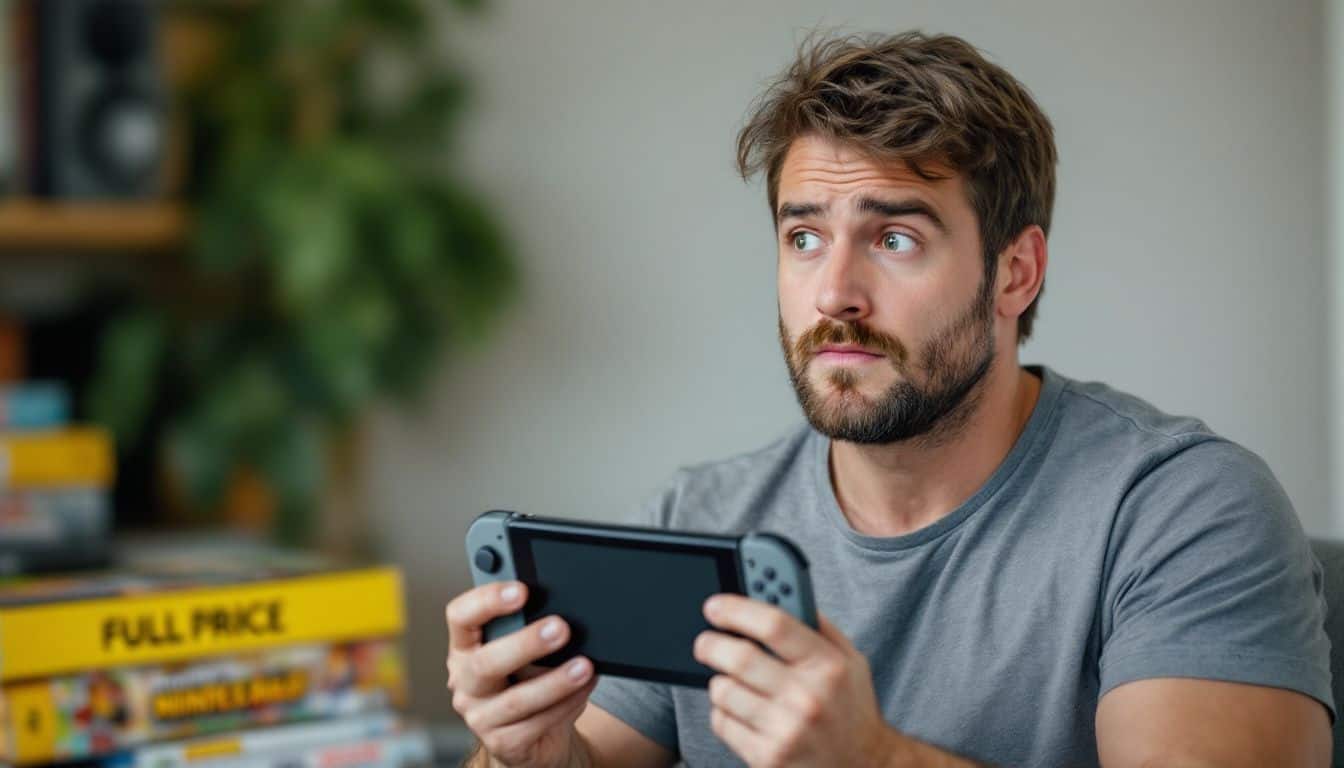
The Nintendo Switch OLED model launched in 2021 for $349.99. That’s $50 more than the Xbox Series S, a true next-gen console with vastly superior processing power that had already been on the market for a year.
You’re paying a premium for portability, but you’re getting hardware that is significantly less powerful than the competition’s budget option. The price simply doesn’t match the performance you get, especially when you can see other handhelds like the Steam Deck offering far more power for a similar price.
Expensive Accessories and Controllers
The costs don’t stop with the console. Nintendo’s accessories are notoriously expensive. A new pair of Joy-Con controllers will set you back a staggering $79.99, while a Pro Controller costs $69.99.
This is made worse by the infamous “Joy-Con drift” issue, a hardware defect that causes the analog sticks to register movement even when they aren’t being touched. The problem has been so widespread that it has led to multiple class-action lawsuits against the company. While Nintendo offers free repairs, having to send in your $80 controllers for a known defect is a massive hassle.
Interestingly, a May 2025 update to Nintendo’s End User License Agreement attempts to prevent users from joining class-action lawsuits, a move many see as a response to the ongoing Joy-Con drift fiasco.
Limited Sales and Discounts on First-Party Games
One of Nintendo’s most frustrating habits is its refusal to discount its own games. While titles on PlayStation and Xbox often see price drops to $20 or less within a year, Nintendo’s first-party games can remain at full price for years.
For example, The Legend of Zelda: Breath of the Wild, a game released in 2017, is still regularly sold for its original $59.99 price on the eShop. Even its sequel, Tears of the Kingdom, launched with a higher price tag of $69.99.
Sales are rare, and when they do happen, the discounts are often a meager 25-30% off. This “Nintendo tax” makes building a game library significantly more expensive than on any other platform, forcing many players to hunt for used physical copies to save money.
People Also Ask
Is Nintendo really falling behind in 2024?
In terms of raw power and online features, yes. The Switch’s Tegra X1 chip from 2015 can’t compete with the modern processors in the PS5 and Xbox Series X, leading to worse performance in multi-platform games. Its online service also lacks features that are standard on other platforms.
What’s the deal with Nintendo’s controllers?
The main issue is u0022Joy-Con drift,u0022 a widespread hardware defect where the analog sticks register input even when not being touched. This has led to multiple class-action lawsuits. Additionally, at $79.99 for a pair, they are among the most expensive standard controllers on the market.
Are Nintendo’s online services up to snuff?
No, not when compared to the competition. Nintendo Switch Online is cheaper, but it lacks key features like dedicated servers for many games (leading to lag), integrated voice chat (requiring a phone app), and a library of modern games like Xbox Game Pass offers.
Why does Nintendo ignore fan feedback?
Nintendo has a long history of following its own path, for better or worse. While this can lead to unique innovations, it also means they are slow to adopt industry standards like achievement systems or robust online features, even when fans have been asking for them for years.
Is Nintendo still innovating in game design?
Within their own franchises, yes. Games like u003cemu003eSuper Mario Odysseyu003c/emu003e and u003cemu003eTears of the Kingdomu003c/emu003e are masterpieces of design. However, the company is innovating less on creating new, major franchises and has been slow to adopt modern gaming trends like popular online genres or features like cross-play.

This doesn’t even begin to scratch the surface of why Nintendo sucks. I’d appreciate a revision detailing Nintendo f-ing everyone over with their copyright BS.
I fully agree!
Well said, but be aware of the Nintendo Defense Force, author/Xander.
They might not come after you now… but oh boy, do they hold a grudge. Can’t offend Godtendo in anyway!
Yes Nintendo is only evil company in the world. Unlike Companies like Activison, Blizzard, Ubisoft, Konami, Or Sony who happend does as bad.
Nintendo been trash since early 90s when Sega ruled, then PlayStation in 1995
Completely agree.
I Think you Trash.
What this website sudden hatred against Nintendo? You want them to stop making family games and want them be like Sony and Microsoft. It be boring it will all the same games. We need publisher market for kids. Also its fanbase are never tired of Mario and Zelda.