
The world runs on mobile. As of 2025, over 64% of all global web traffic now comes from mobile devices, a massive jump from just over 35% in 2015. This shift has completely reshaped how businesses operate online.
As digital platforms become more advanced and protective, understanding how mobile networks assign IP addresses is essential for anyone in data collection, automation, or e-commerce. At the heart of this is mobile IP rotation, the core mechanism that gives mobile proxies their incredible power and trustworthiness.
More people are now using tools like a mobile proxy to get around IP restrictions, keep their online identity safe, and manage multiple accounts without issues. While older proxy types use fixed servers, mobile proxies connect through real 4G and 5G mobile infrastructure. That single difference changes everything about how websites see your traffic and how easily you can get a new IP address.
Key Takeaways
Mobile Proxies Use Real Infrastructure: Unlike traditional proxies that rely on fixed servers, mobile proxies utilize actual 4G and 5G connections, allowing users to inherit the high trust levels of legitimate smartphone traffic.
CGNAT Makes Blocking Difficult: Carriers use Carrier-Grade Network Address Translation (CGNAT) to assign a single public IP to thousands of devices; websites rarely ban these IPs to avoid locking out real users.
Rotation Is Natural, Not Artificial: IP rotation happens organically as devices switch cell towers, lose signal, or reset connections, creating a fluid digital footprint that is harder to track or fingerprint.
Superior for Multi-Account Management: Because mobile IPs mimic organic user behavior so closely, they drastically reduce the risk of shadowbans, login challenges, and account suspensions on platforms like Instagram and Google.
4G vs. 5G Distinctions: While 4G proxies offer stability and wide coverage for general use, 5G proxies provide lower latency and faster rotation capabilities suited for high-volume scraping and automation.
Table of Contents
Why Mobile Networks Are So Unique in the Proxy World

To get why mobile IP rotation is so effective, you first need to understand the mobile networks themselves. Carriers like AT&T and T-Mobile manage huge, dynamic systems connecting millions of devices. Unlike your home internet, which might give you the same IP address for weeks, mobile networks are built for constant change.
Devices connect, disconnect, and move between cell towers, so IP addresses can’t stay the same. This natural, constant change is exactly what makes mobile proxies so powerful. They don’t fake IP changes; they inherit them from the network.
Here’s what makes this mobile behavior so important for proxy users:
- IPs are shared by thousands of real users. A single public mobile IP can be used by countless people in the same area, making it hard to single out one user.
- Carriers rotate IPs constantly through CGNAT. This system is designed to conserve IP addresses and naturally cycles them.
- Devices are always switching towers. Moving from one cell tower to another can trigger a new IP assignment.
- The infrastructure is fluid. 4G and 5G networks are not built on fixed, static IPs.
- IP rotation looks 100% natural. Because it is.
This creates the perfect environment for managing multiple profiles, collecting data, and protecting your online privacy.
Understanding CGNAT: The Heart of Mobile IP Rotation
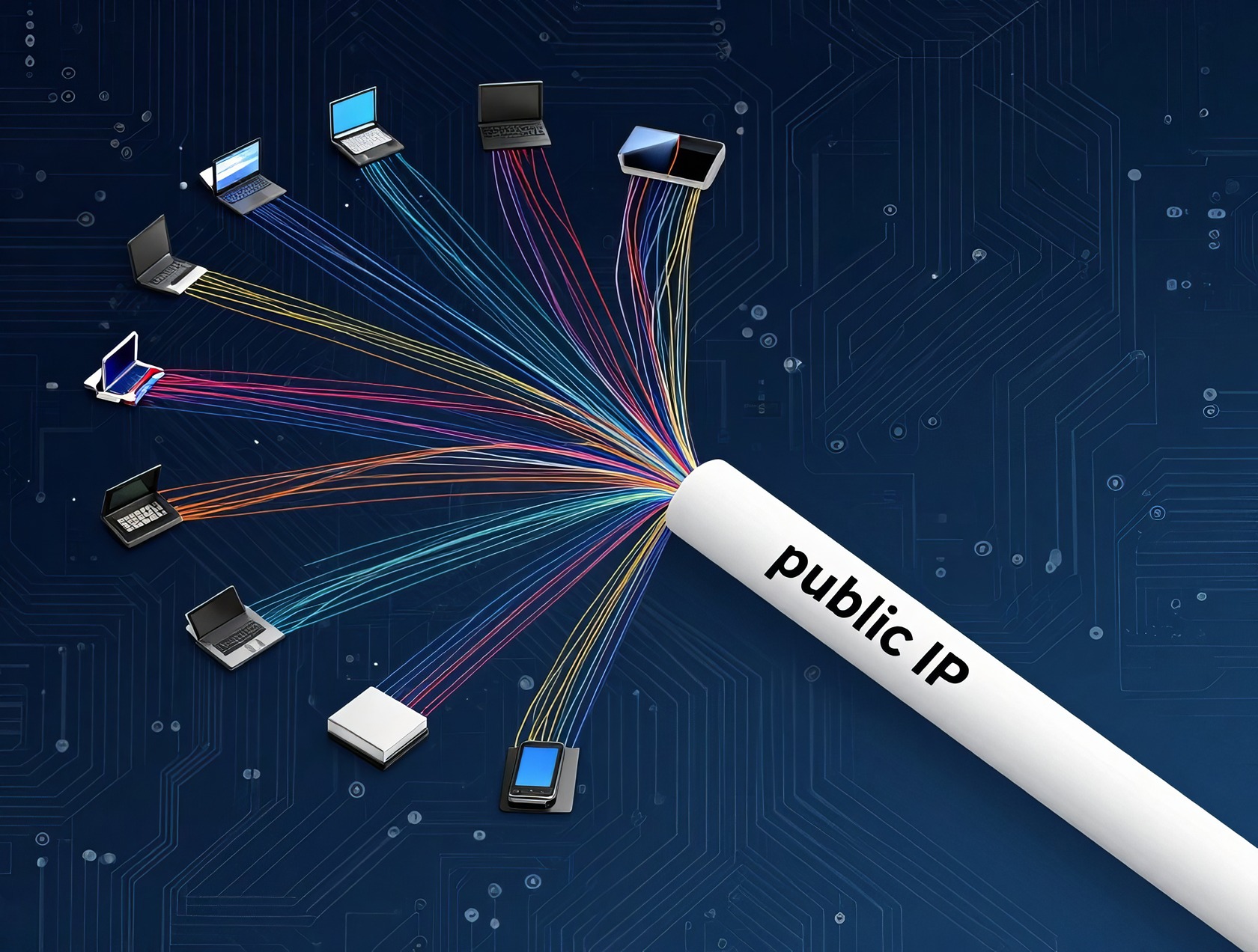
Carrier-Grade Network Address Translation, or CGNAT, is one of the most important yet least understood parts of any mobile network. It was developed to deal with the shortage of available IPv4 addresses.
To solve this, the Internet Engineering Task Force (IETF) outlined a system in a document known as RFC 6598. It allows carriers to assign a single public IP address to thousands of users at once by giving each user a private internal IP. Think of it like an office phone system: everyone has their own extension (private IP), but all outgoing calls show the main company number (public IP).
What CGNAT Actually Does
- A carrier assigns one public IP to serve thousands of devices in a region.
- Each phone or mobile device gets its own internal, private IP address.
- The CGNAT system translates the private address to the shared public IP when you access the internet.
- When the device reconnects, it might get routed through a completely different public IP.
- Carriers constantly recycle and reassign these public IPs to balance the load on their network.
To any website, a mobile IP looks like it’s being used by thousands of people, because it is. This is why mobile IPs are so trusted and difficult to ban. Blocking one could mean blocking an entire neighborhood of real, legitimate customers, a risk most platforms won’t take.
How 4G and 5G Devices Create Natural IP Rotation

Mobile proxies run on real hardware like smartphones, USB modems, or 4G/5G routers. These devices, often powered by modems from companies like Qualcomm or MediaTek, have a simple but powerful behavior: they get a fresh IP address every time they reconnect to the carrier’s network.
This happens naturally when:
- The signal drops and reconnects.
- The device moves between cell towers.
- The proxy software forces a modem reset.
- The carrier’s system automatically refreshes the connection.
Because these devices are constantly “handshaking” with cell towers, the IP environment is always in motion.
4G Networks and IP Behavior
4G LTE networks are very dependent on cell towers. When your device switches towers for a better signal, the carrier might assign a new IP if that tower uses a different routing pool. This creates a reliable and steady source of IP rotation.
5G Networks and IP Behavior
5G networks are even more dynamic. A 5G device can connect to multiple frequency bands at once, like the long-range sub-6GHz band and the ultra-fast mmWave band. This means IP states can shift more fluidly, often without you even moving. The result is an environment where IP changes are the norm, not the exception.
How Mobile Proxies Harness This Infrastructure

A mobile proxy provider puts a dedicated mobile device between you and the internet. Your connection is routed through that device’s SIM card, using its mobile data to give you a genuine mobile identity.
The proxy software gives you full control over this natural rotation. With a good provider, you can typically:
- Set timed rotations. You can get a new IP every 5, 10, or 30 minutes.
- Rotate manually. A single click or API call can trigger an instant IP change.
- Use “sticky” sessions. You can keep the same IP for an extended period, which is great for managing accounts that require a consistent login.
- Get a new IP on each request. This is perfect for high-volume data scraping where you need maximum anonymity.
Instead of trying to create a fake identity, a mobile proxy simply borrows a real, trusted one from the carrier network.
Why Mobile IP Rotation Is So Effective
1. Mobile IPs Look Genuine
Platforms like Google, Facebook, and Amazon are experts at spotting suspicious traffic. Their bot detection systems, like Cloudflare Bot Management or Akamai Account Protector, are built to flag datacenter IPs. However, mobile IPs from carriers like Vodafone or Verizon are highly trusted because they match the patterns of real users.
2. Frequent Rotation Reduces Fingerprinting
Because the IP address changes so often, it’s difficult for websites to connect your activities over time. This makes it harder to build a “fingerprint” of your online behavior, giving you greater privacy.
3. Harder to Block
As mentioned before, blocking a mobile IP is risky for any major website. It could mean cutting off service to hundreds or thousands of potential customers in a specific area. Platforms almost never take that chance.
4. Perfect for Multi-Account Management
With mobile proxies, each account you manage can appear as a different, real person on a unique device. This is a game-changer for managing multiple seller accounts on Amazon or running several ad campaigns on TikTok. It dramatically lowers the risk of login challenges, shadowbans, and account suspensions.
5. Excellent for Scraping and Market Research
Anti-bot systems are designed to spot and block traffic from datacenters. Since mobile IPs behave just like regular user traffic, they can often bypass these protections, allowing you to gather pricing data or perform market research without getting blocked.
6. Smooth Geo-Flexibility
Need to manage accounts that appear to be from different cities or states? With a mobile proxy provider, you just need to switch to a SIM card located in that area to get a new mobile footprint.
The Difference Between 4G and 5G Proxies
While 4G and 5G proxies operate on the same principles, their performance characteristics are quite different. Your choice depends on your specific needs.
Here’s a quick comparison to help you decide:
| Feature | 4G Proxies | 5G Proxies |
|---|---|---|
| Speed | Good (up to 100 Mbps) | Excellent (200 Mbps to 1 Gbps+) |
| Latency | Low (~30-50ms) | Ultra-Low (~5-10ms) |
| Stability | Very stable, wide coverage | Very fast, coverage still expanding |
| Best For | General account management, social media | High-volume scraping, low-latency tasks |
For most users, 4G offers a great balance of speed and reliability. However, if your work demands the absolute fastest response times, like for high-frequency data collection or testing, the investment in 5G is often worth it.
What to Look for in a Good Mobile Proxy Provider
Not all mobile proxy services are the same. Before you choose a provider, make sure they offer the key features that guarantee performance and reliability.
- Real SIM-based devices. The provider should use actual physical devices, not emulated or fake mobile IPs.
- Clean IP pools. Look for providers who monitor their IP addresses to ensure they haven’t been blacklisted or abused.
- Fast, on-demand rotation. You should be able to get a new IP instantly whenever you need one.
- Dedicated device options. For sensitive tasks, having a device dedicated solely to you prevents any “bad neighbor” effect.
- Multiple carriers and locations. A good provider will offer a choice of carriers (like AT&T, T-Mobile) and a wide range of geographic locations.
- API support for automation. If you’re running automated workflows, API access is non-negotiable for controlling IP rotations.
- Transparent bandwidth policies. Beware of “unlimited” plans with hidden throttling. A good provider is clear about data limits.
A reliable service is the key to avoiding blocks, keeping your accounts healthy, and operating smoothly across all your online tasks.
Final Thoughts on Mobile IP Rotation
As websites get smarter about spotting suspicious behavior, traditional datacenter proxies are becoming less effective. They are easy to detect and are often the first to get blocked.
Mobile proxies succeed because they don’t try to trick platforms. They use the real infrastructure, real SIM cards, and the natural IP rotation patterns that websites already know and trust.
Whether you’re focused on automation, analytics, account management, or just protecting your privacy, mobile IP rotation offers a powerful combination of safety and flexibility. It is the closest you can get to real mobile browsing without holding dozens of phones yourself.
If you want to explore mobile proxy options, analyze features, or compare connection methods, you can visit https://ltesocks.io/ to see available plans and locations.