
So I went looking for the lowest IQ billionaire in the world. It’s the kind of question you type into a search bar after a late-night debate with friends—who’s the least intellectually gifted person sitting on a ten-figure fortune? Seems like a straightforward ranking. Gather some test scores, order them, done.
Except it’s not straightforward at all. The answer is that no billionaire has a publicly verified IQ score. Guinness World Records removed its “Highest IQ” category in 1990 after deeming IQ tests unreliable for naming a single record holder. So instead of giving you a single name (which would be a lie), I’m going to show you why the question is broken—and why the data we do have is more interesting than any ranking.
Key Takeaways
Guinness World Records removed its “Highest IQ” category in 1990 after deeming IQ tests unreliable for naming a single record holder—Marilyn vos Savant scored 228 on one test and 186 on another, same person, different results.
The ten college majors with the lowest estimated average IQ (using SAT-score proxies) are all helping professions, like Social Work (103) and Early Childhood (104)—and no Forbes-listed billionaire comes from any of them.
William James Sidis, estimated IQ between 200 and 300, graduated Harvard at 16 and died in poverty at 46, proving extreme intelligence doesn’t guarantee wealth.
Table of Contents
Why the search for a low-IQ billionaire is a dead end
You can’t answer “which billionaire has the lowest IQ” because the question assumes we have data that doesn’t exist. Let me show you the three walls you hit.

IQ tests measure a narrow slice of intelligence
IQ tests are basically a specific kind of puzzle. They measure logical reasoning, problem-solving speed, and how quickly you can learn new information. That’s it. They don’t touch creativity, social skills, emotional intelligence, or practical wisdom—all the stuff that’s arguably more useful for building a company.
Critics argue that IQ tests are designed with a narrow demographic in mind and do not take into consideration class difference, ethnic diversity, and even gender. So even if a billionaire did take an IQ test and publish the result, it wouldn’t tell you much about why they succeeded.
To be fair, IQ tests can be a useful tool to identify children who may need extra help in school and evaluate the cognitive abilities of adults who may have learning disabilities or other cognitive impairments. But ranking billionaires? That’s not what it’s for.
Guinness abandoned the highest IQ category
Here’s the evidence that this whole pursuit is shaky. Listed under ‘Highest IQ’ in Guinness Book of World Records from 1985 to 1989. Entered Guinness Hall of Fame in 1988. Guinness removed the ‘Highest IQ’ category in 1990, concluding that IQ tests were not reliable enough to designate a single record holder.
And vos Savant herself is a perfect example of why. Her Stanford-Binet test (age 10) gave an IQ of 228. Her Mega Test (mid-1980s) gave an IQ of 186. Same person, two completely different results depending on the test. If the record-keepers themselves said “this doesn’t work,” then any list of billionaires by IQ is built on sand.
No billionaire has a verified IQ score
No billionaire alive or dead has taken an official, verifiable IQ test and published the results. Any ranking you see online is speculation—based on SAT scores, college majors, or public behavior. Even the biographies that estimate famous figures’ IQs (like Einstein or Tesla) rely on historical guesses. There’s no digital record of Jeff Bezos sitting down with a psychologist and getting a number. So the answer to “who has the lowest IQ billionaire” is: we don’t know, and we can’t know.
What “low IQ” actually means – thresholds and distribution
Before we can talk about “low IQ billionaires,” we need a map of the scale.
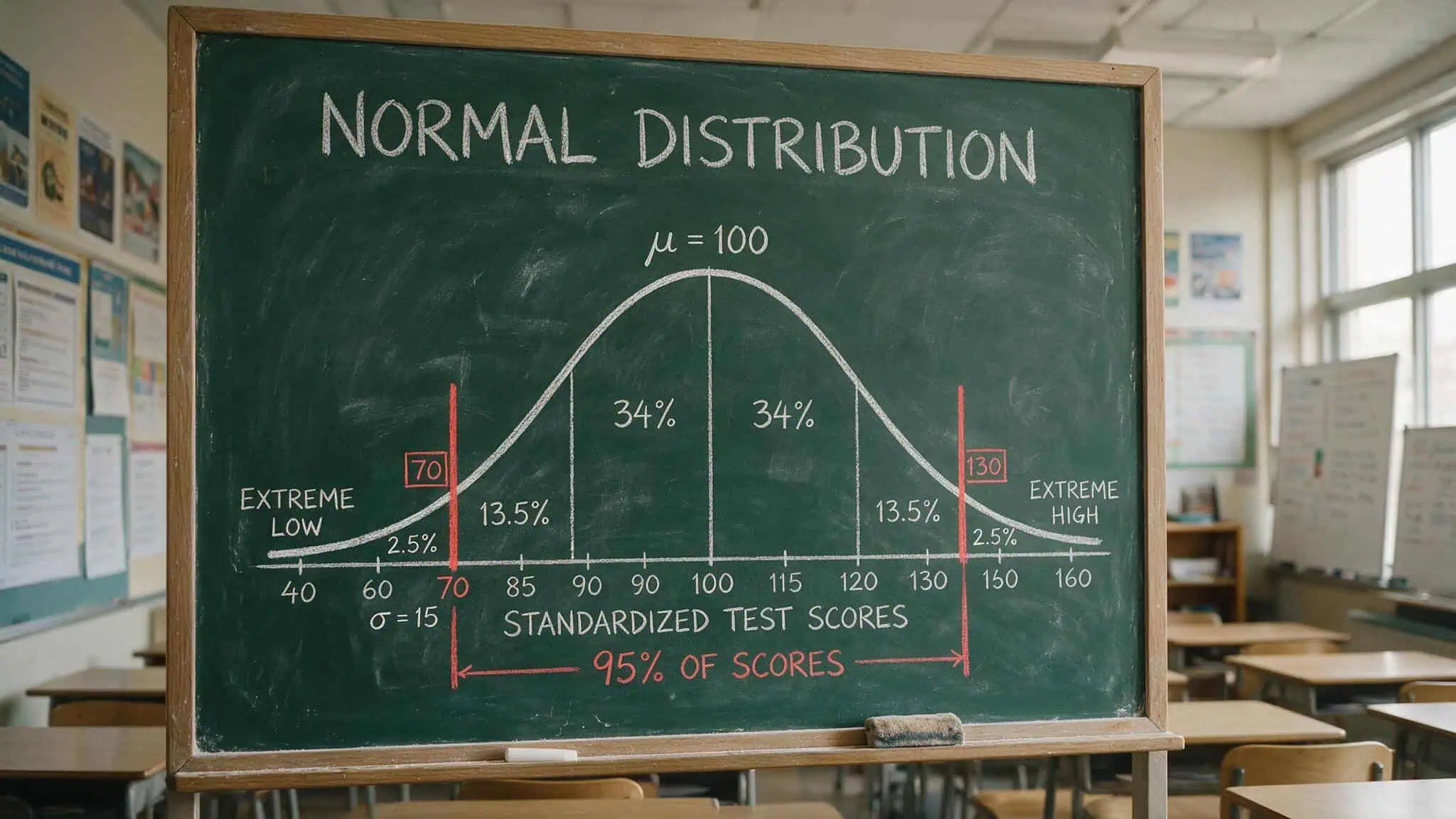
The bell curve: 95% of people score between 70 and 130
IQ follows a bell curve. 95% of IQ test takers score between 70 and 130. Below 70 is considered intellectual disability. Above 130 is considered gifted (top 2%), and qualifies for Mensa. The world average IQ is 82.12, and the average American IQ is 98. That’s already above the global average.
So when someone calls a billionaire “low IQ,” they’re likely using the term loosely—because a score below 70 would mean significant challenges in education and daily functioning. It’s impossible for someone at that level to build and run a billion-dollar company.
What it takes to join Mensa, Triple Nine, and Prometheus
For some concrete reference points at the high end:
- 130+ qualifies for Mensa (top 2%).
- 145+ qualifies for the Triple Nine Society (top 0.1%, about 1,225 members).
- 160+ qualifies for the Prometheus Society (about 121 members).
These thresholds matter because even the “lowest” billionaire probably scores above 100—still above the world average. The search for a truly low-IQ billionaire (someone below 70) is statistically nearly impossible given their educational and professional backgrounds, so the geekiest breakdown of billionaires with the highest estimated IQs puts their scores in stark perspective.
College majors and the path to a billion-dollar fortune
Since we don’t have direct IQ scores for billionaires, college-major data gives us a useful proxy.
How StatisticBrain.com estimated IQ by college major
StatisticBrain.com compiled IQ estimates by college major using SAT scores from Educational Testing Services. 57 fields of academic study were analyzed. SAT scores of students across 57 selected majors in the U.S. were averaged by category. These averages were then compared against each other to produce a list of the average IQ of a typical student in each field of study. It’s not perfect—it’s a rough proxy—but it’s a fascinating dataset.
The ten lowest-IQ college majors
The pattern is clear: all of these are helping professions—education, social work, counseling. Here are the estimated average IQs:
- Social Work: 103
- Early Childhood: 104
- Student Counseling: 105
- Special Education: 106
- Home Economics: 106
- Administration: 107
- Elementary Education: 108
- Other Education: 109
- Public Administration: 109
- Evaluation and Research: 109
Notice that even the lowest of these (Social Work at 103) is still above the world average of 82.12. These aren’t “low IQ” fields; they’re fields where SAT scores tend to be lower because the work relies on different skills.
Why billionaires don’t come from these majors
When you look at the educational backgrounds of Forbes-listed billionaires, they cluster in STEM, finance, and business majors—fields with higher average estimated IQs. No billionaire publicly studied Social Work, Early Childhood, or Home Economics. That doesn’t mean those fields are lesser; it means the path to a ten-figure fortune tends to go through different disciplines. The pattern suggests a minimum cognitive threshold for building an empire at that scale, but it’s a correlation, not a judgment.
The highest IQ non-billionaire: William James Sidis
This is the story in the whole investigation. It’s the counterexample that demolishes any IQ-to-wealth correlation.
William James Sidis: child prodigy who died in poverty. Estimated IQ of 200-300. Read New York Times by age 2, spoke eight languages by age 6. Accepted to Harvard at age 9, enrolled at 11, graduated at 16. Studied at Columbia University.
Died in 1944 at age 46 in poverty and obscurity.
If a guy with an IQ in the top 0.001% couldn’t turn his brain into a billion dollars, then intelligence isn’t a silver bullet. Sidis had the raw cognitive horsepower, but he lacked whatever combination of drive, social skills, timing, and luck it takes to build wealth. His life is a cautionary tale that high IQ doesn’t guarantee success—and, by extension, that low IQ doesn’t automatically prevent it (though the threshold is real).
Where are the billionaires from? The geography of IQ and wealth
Country-level IQ data adds another layer to the story.
The systemic factors behind low national IQ scores
Two different studies give different numbers for the same countries—which is itself a red flag for reliability. But the pattern is consistent: the countries with the lowest average IQ scores are also among the poorest, with limited access to education, malnutrition, conflict, and political instability.
Countries with the lowest average IQ (first list from BusinessDay):
- Nepal: 42.99,
- Liberia and Sierra Leone: 45.07,
- Guatemala: 47.72,
- Cape Verde: 52.5,
- Gambia: 52.68,
- Nicaragua: 52.69.
Countries with the lowest average IQ (second list from Tempo.co / World of Data Info):
- Nepal: 51,
- Sierra Leone: 52,
- Guatemala: 55,
- Gambia: 55,
- Equatorial Guinea: 56,
- Guinea: 56.
Notice Nepal? The first study says 42.99; the second says 51. That’s a huge difference—eight points. If the experts can’t agree on a country’s average IQ, how can we possibly rank billionaires?
Why no billionaires come from these countries
No billionaire on the Forbes list originates from any of the countries with the lowest average IQs. That’s not because the people there are less intelligent; it’s because geography, opportunity, infrastructure, and a functioning economy matter more than raw cognitive ability. The conditions for building extreme wealth simply don’t exist in those environments. So the low national IQ scores are a symptom of systemic problems, not a cause.
Can a billionaire have a below-average IQ?
This is the question readers really want answered.
The IQ floor: why below 70 is virtually impossible
Someone with an IQ below 70—the clinical threshold for intellectual disability—would face significant challenges in education, employment, and daily functioning. It’s extraordinarily unlikely that they could build and manage a billion-dollar enterprise. This isn’t speculation; it’s the reality of the threshold.
The “lowest” billionaire still likely scores above 100
Given that billionaires almost always have college degrees (often from competitive institutions) and work in fields that require analytical thinking, the lowest plausible IQ among them is still within the normal range—probably 100 to 110. The average IQ of a college graduate is 115, so a billionaire with a degree from a competitive university would likely score in that range. That’s not “low” in any meaningful sense. The phrase “low IQ billionaire” is a semantic trap: people use “low IQ” to mean “not off-the-charts smart,” but on the scale, even an IQ of 100 is average.
A speculative ranking: billionaires often mentioned in low-IQ discussions
I know you came for a list. So here’s what people speculate about online. none of these numbers are verified. They’re based on public comments, biographies, and internet chatter. Take them with a shaker of salt. SAT scores can serve as a rough proxy for IQ—StatisticBrain.com uses this methodology to estimate IQ by college major—and biographies sometimes mention SAT scores or academic achievements that could be used for estimation, though no billionaire has published a verified result.
- Elon Musk – Frequently comes up in forums. Some point to his occasional verbal gaffes and impulsive tweets as evidence of “low” IQ. But Musk studied physics and economics at Penn, and biographies mention high SAT scores. The speculation is entertainment.
- Donald Trump – Often cited. He has publicly claimed a high IQ, but there’s no test result. Some point to his non-technical background and occasional factual errors as indicators. Again: no data.
- Mark Zuckerberg – The other side of the coin. His coding ability and Harvard dropout status make him a frequent “high IQ” target, but no official score exists.
If you forced me to speculate based on the college-major data, a hypothetical billionaire with an education degree (say, Elementary Education at estimated 108 IQ) would be on the lower end. But we don’t have any billionaires with that background. The exercise is fun, but it’s not science.
The real lesson: wealth requires more than raw intelligence
So who is the lowest IQ billionaire in the world? The answer is: we don’t know, and the concept is flawed. IQ is one variable among many—emotional intelligence, risk tolerance, luck, timing, inheritance, industry, and plain old opportunity all matter more than a single test score. Emotional intelligence (EQ), risk tolerance, and social skills are traits that IQ tests miss entirely, yet they are often decisive in building a billion-dollar enterprise. A billionaire may have an average IQ but exceptional EQ or an appetite for risk that no test can capture.
Guinness World Records figured this out in 1990. If the institution that once crowned the “Highest IQ” abandoned the category because the metric doesn’t hold up, then any ranking of billionaires by IQ is built on sand.
The real story isn’t a name. It’s the question itself—and the fascinating dead ends you hit when you try to answer it. Next time someone asks you who the dumbest billionaire is, you can tell them: “The data doesn’t say, but here’s why that’s more interesting than a ranking.”
Frequently Asked Questions
Who has the world’s lowest IQ?
There is no single person with a verified ‘world’s lowest IQ’ because Guinness World Records removed its highest IQ category in 1990, concluding IQ tests are unreliable for naming a single record holder. IQ scores vary significantly depending on which test is used — Marilyn vos Savant scored 228 on one test and 186 on another. Any claim of a specific lowest IQ is based on speculation, not verified data.
Can a billionaire have a below-average IQ?
It’s extremely unlikely. The clinical threshold for intellectual disability is an IQ below 70, and someone at that level would face significant challenges in education and daily functioning — making it nearly impossible to build a billion-dollar company. Even the ‘lowest’ billionaire likely scores above 100, which is still above the world average of 82.12. The phrase ‘low IQ billionaire’ is misleading because people use it to mean ‘not off-the-charts smart,’ but average is not low.