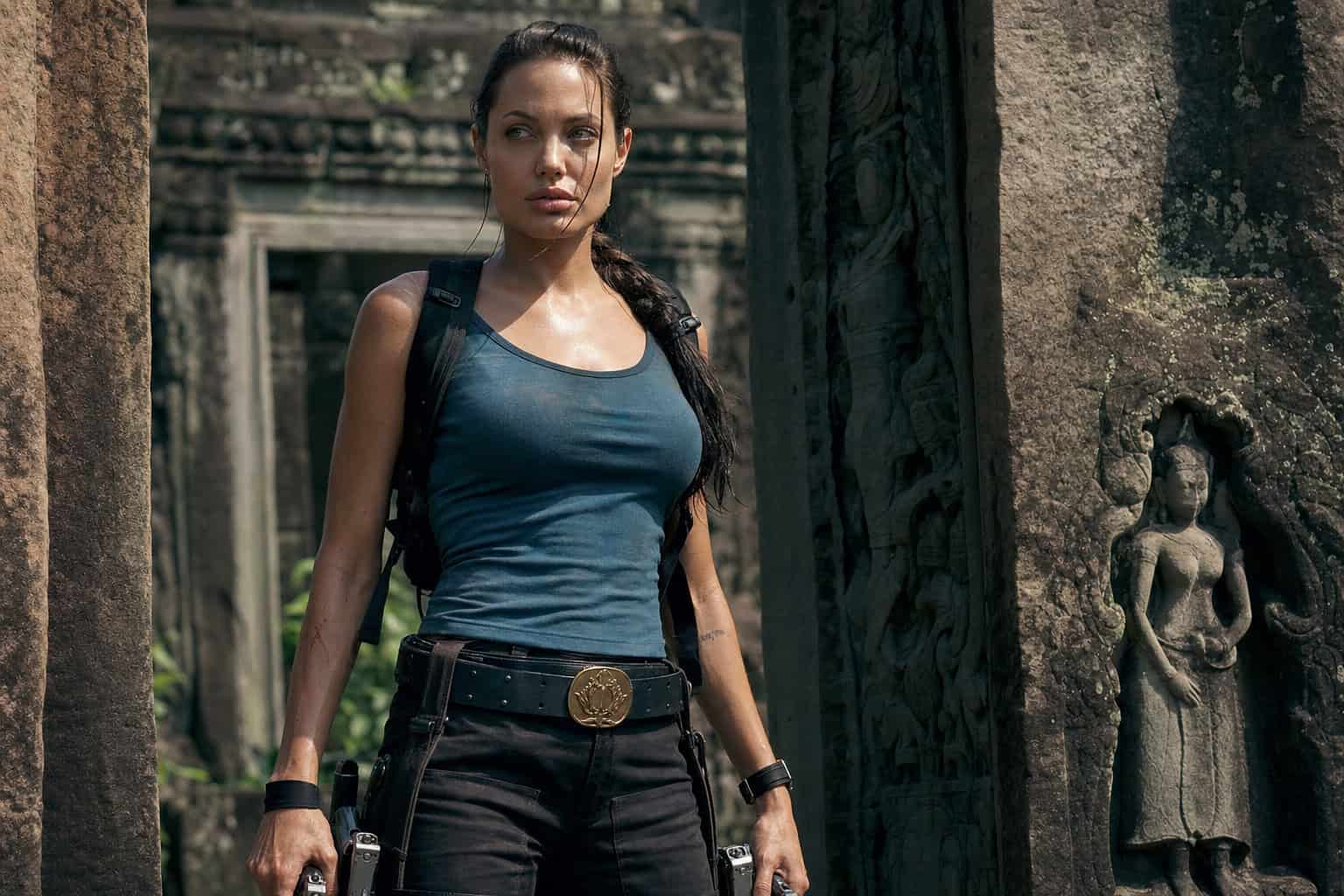
In 2001, Lara Croft: Tomb Raider arrived in theaters with a $115 million budget, a PG-13 rating, and an actor who had to wear a padded bra to bridge the gap between her natural 36C frame and the game character’s exaggerated double-D bust. This was a movie trying to honor one of gaming’s most recognizable silhouettes while making it work in a live-action, stunt-heavy, publisher-approved package.
The film got panned by critics (20 percent on Rotten Tomatoes, a 0.0 from IGN) but became a commercial landmark: a record-breaking opening weekend for a female-led action film, $274.7 million worldwide, and a cultural footprint that far outlasted the bad reviews. By 2023, Vulture described it as a rare instance where a big-budget video-game movie succeeded. That kind of turnaround doesn’t happen without durable design, and the outfits — designed early, shot on location, surviving the film’s famously chaotic post-production, turned out to be some of its most lasting elements.
Here’s a scene-by-scene catalog of what Lara wore, why she wore it, and how each outfit balanced the game’s iconic look against the realities of filmmaking.
Key Takeaways
The 2001 film replaced the game’s tight brown shorts with black cargo pants and scaled down Lara’s bust from double-D to 36D (with padding) due to Eidos Interactive‘s demand for reduced sex appeal and a PG-13 rating.
Three primary outfits defined Lara in the 2001 film: a blue tank top and cargo pants for training and temple scenes, a black evening gown for the Venice party, and a tactical vest and cargo pants for the Siberia finale — each chosen for a specific narrative function.
A rejected R-rated pitch from Brent V. Friedman that included gore and female nudity (based on the Egyptian Book of the Dead) helps explain why the final costumes are more modest than what the game might have suggested.
Table of Contents
The Three Key Outfits in Lara Croft: Tomb Raider (2001)
Of the many costumes Jolie wore in the film, three distinct outfits carry the narrative across training, social maneuvering, and combat.
Blue Tank Top and Cargo Pants (Training and Cambodia)
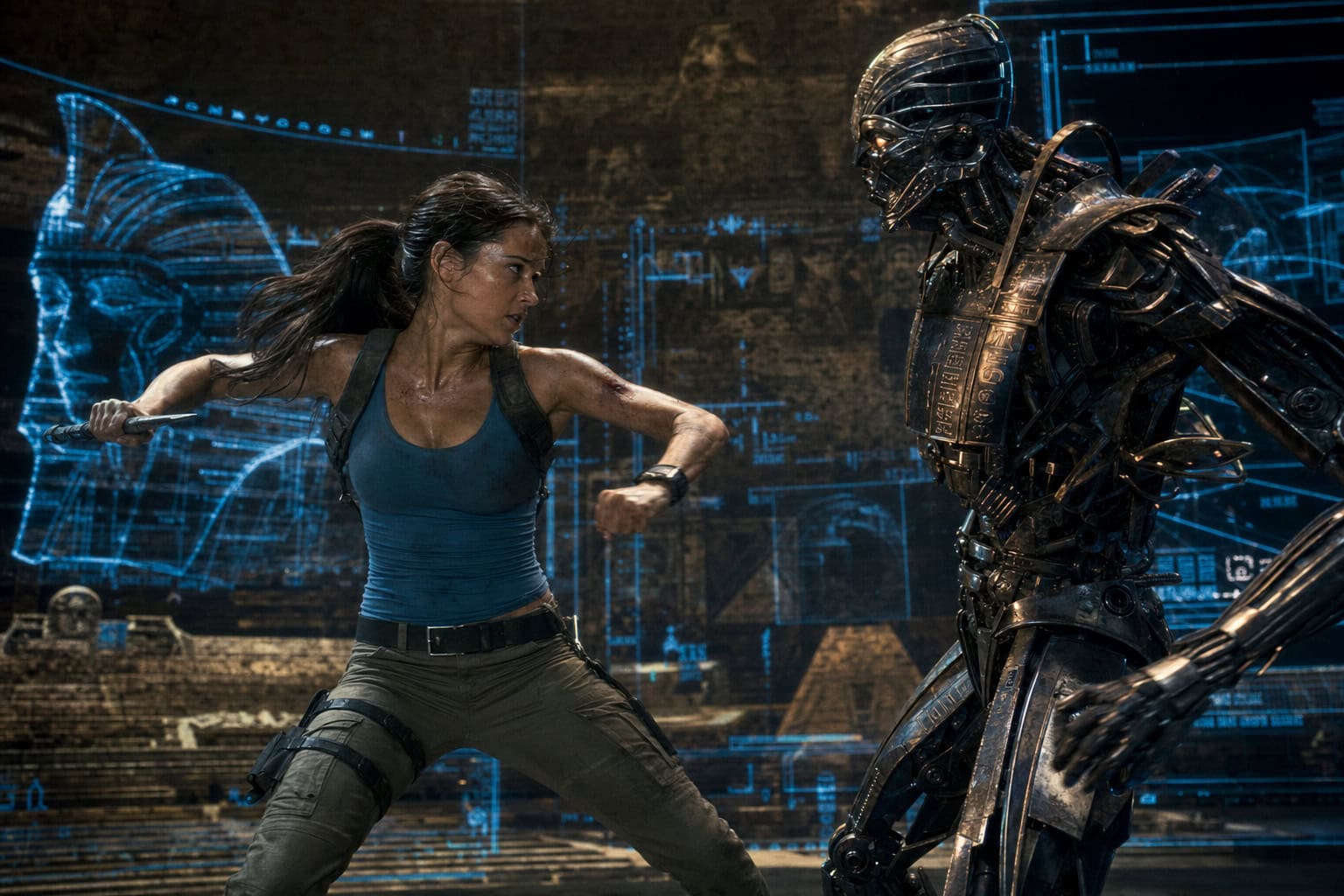
You know this one. It’s the closest the film gets to the game’s classic look: a blue tank top, black cargo pants instead of brown shorts, combat boots, holsters, and Lara’s signature braid. The outfit debuts in the opening training sequence — a simulated fight with a giant robot in an Egyptian tomb that turns out to be a hologram, and carries through the Angkor, Cambodia temple raid.
The changes from the game are all production decisions. Eidos Interactive pressured the filmmakers to scale back Lara’s sex appeal for a mainstream audience. The PG-13 rating meant no nudity and no highly revealing outfits. And practicality demanded it: cargo pants gave Jolie room to climb, fight, and do stunts that tight shorts wouldn’t allow. The padded bra brought the bust to a 36D — still less than the game’s exaggerated proportions, but enough to keep the silhouette recognizable.
The scene itself matters. The first time we see Lara in action, she’s not in a real tomb — she’s in a simulation. She’s dressed for work, not spectacle. The outfit signals competence before glamour, which is the opposite of how the game’s marketing usually framed her.
Black Evening Gown (Venice Party Scene)
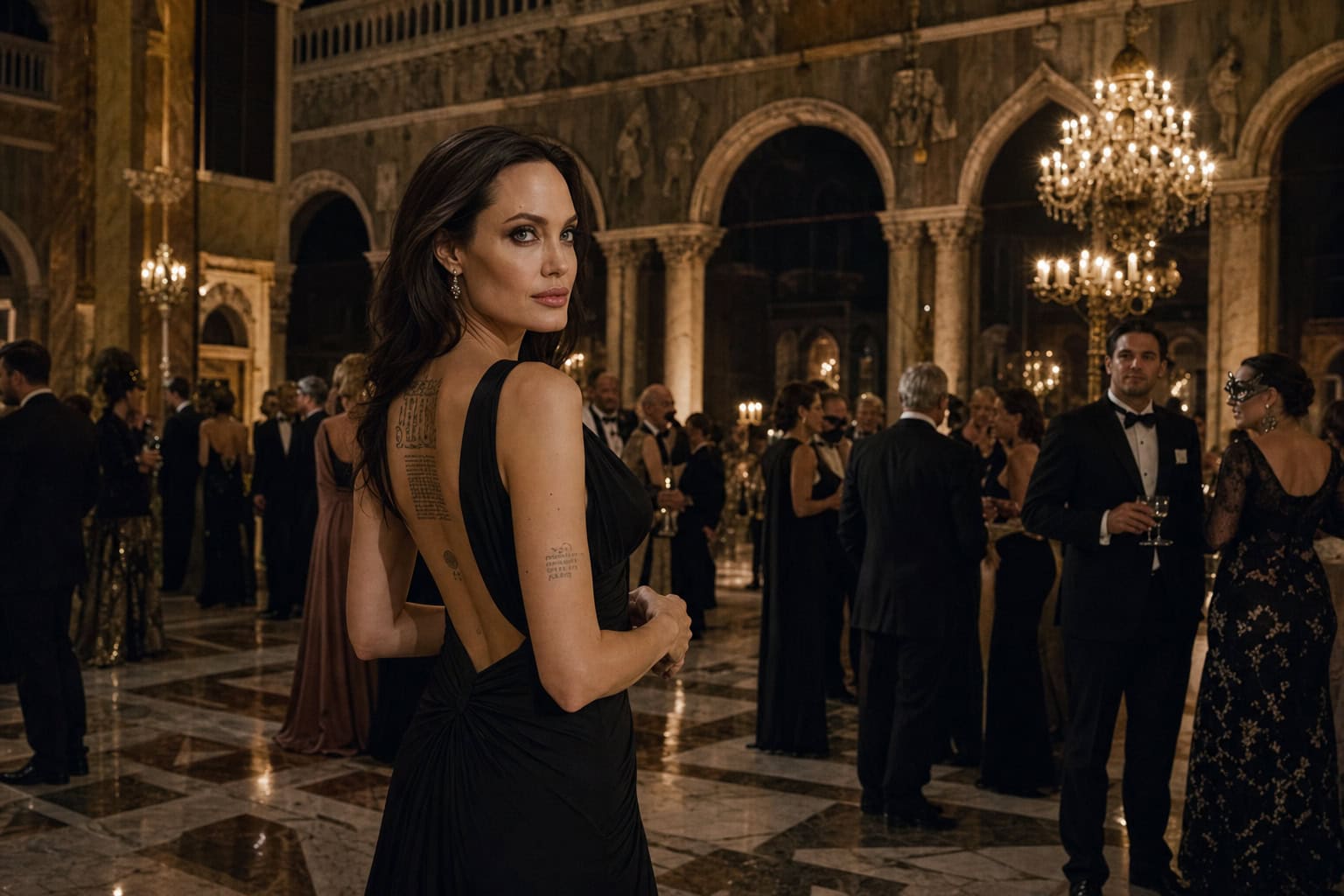
Midway through the film, Lara trades tactical gear for an elegant black evening gown at a party in Venice. The setting shifts from jungle temples to Italian palazzos, and the costume change signals a shift in tactics. She’s not here to fight; she’s here to gather intelligence on Powell and the Illuminati.
The gown still has to be functional — a slit for movement, likely hidden pockets, but its primary purpose is social. Lara walks into a room full of powerful people and immediately takes control of the conversation. The outfit says she can operate in any environment, not just tombs.
What keeps this from being a generic “glamorous moment” is the context. She’s not attending a party for fun. She’s using the social setting as a hunting ground, proposing a partnership with Powell while knowing exactly who she’s dealing with.
Tactical Vest and Gear (Siberia Finale)
The climactic outfit is the most utilitarian of the three: a black tank top, cargo pants with multiple pouches, a tactical vest, and combat boots. It’s worn during the Ukok Plateau, Siberia scenes, including the giant orrery sequence that required Jolie to climb, fight, and move freely through a massive practical set piece.
The vest adds storage without restricting motion. The layered materials balance protection with mobility. This is the outfit of someone who knows she’s heading into a fight and has prepared accordingly. It’s also the logical endpoint of Lara Croft, the fearless tomb raider and role model for young women, whose wardrobe progression started in a training simulation (preparation), moved to a formal event (social maneuvering), and now she’s fully geared for survival (action).
Each outfit strips away something the previous one prioritized — elegance, simplicity, in favor of pure function. The vest’s multiple pouches were designed to hold specific gear for the orrery sequence, with each pouch placed to avoid interfering with Jolie’s climbing and combat movements.
The Siberia tomb’s giant orrery is the film’s most ambitious set piece, and the outfit was designed specifically for that sequence. Every strap, pouch, and zipper serves a stunt or fight choreography need.
Behind the Seams: Production Choices That Shaped the Costumes
Publisher demands and rating requirements directly influenced what Lara wore on screen. The costumes were designed by Lindy Hemming.
The Eidos and PG-13 Mandate
The game’s original design — double-D bust, tight shorts, was a product of late-90s gaming culture. For the film, Eidos wanted to protect its franchise from being overly sexualized on a mainstream stage. That meant toning down the sex appeal. The PG-13 rating reinforced the constraint: no nudity, no highly revealing outfits. A shower scene with nudity was deleted to maintain the rating.
The result is a wardrobe that’s form-fitting but not revealing. The cargo pants were the most visible change — game players knew instantly that the classic brown shorts were gone. But the logic was straightforward: the film needed to be PG-13 to maximize its box office, and Eidos had final say over how Lara was portrayed. The costumes, whose Angelina Jolie Tomb Raider outfit cultural impact influenced fashion trends, cosplay, and the portrayal of female action heroes in cinema, were a compromise between publisher caution and fan expectation.
The Padded Bra Decision
Jolie’s padded bra is the most famous production detail about the costumes. In an interview, she said, that they’m not so flat chested to begin with … they’m a 36C. Lara, she’s a 36D. She was unbothered by the prosthetic — it was a practical solution to keep the character recognizable without asking for unrealistic body modifications. While the production scaled down the sex appeal, Jolie herself noted in an interview that she felt Lara ‘wasn’t sexy enough’ in the final film, showing the tension between actor and production over the character’s image.
The game’s double-D bust was an exaggerated visual shorthand in a medium where characters were defined by simple shapes. In live action, the same proportions would have looked cartoonish. The padding to 36D was a middle ground: enough to signal “this is Lara Croft” without breaking the film’s visual realism, a balance that Lara Croft fan art has often explored with even more creative freedom.
Field note: The shift from double-D to 36D is often cited as censorship, but it actually aligns the character with real-world stunt plausibility — a necessary trade-off for live action.
The Rejected R-Rated Pitch
Brent V. Friedman’s original pitch was an R-rated action horror with gore and female nudity, centered on the Egyptian Book of the Dead. It was rejected. Another abandoned draft had Lara hunting El Dorado with a black veil device. Neither made it to production.
This “what could have been” context makes the final design choices feel intentional rather than timid. The film we got could have been rawer, and the costumes would have reflected that.
Movie vs. Game: How the Outfits Changed
The film adaptation made deliberate adjustments to Lara’s look, balancing game-icon recognition with live-action plausibility.
Proportions and Silhouette
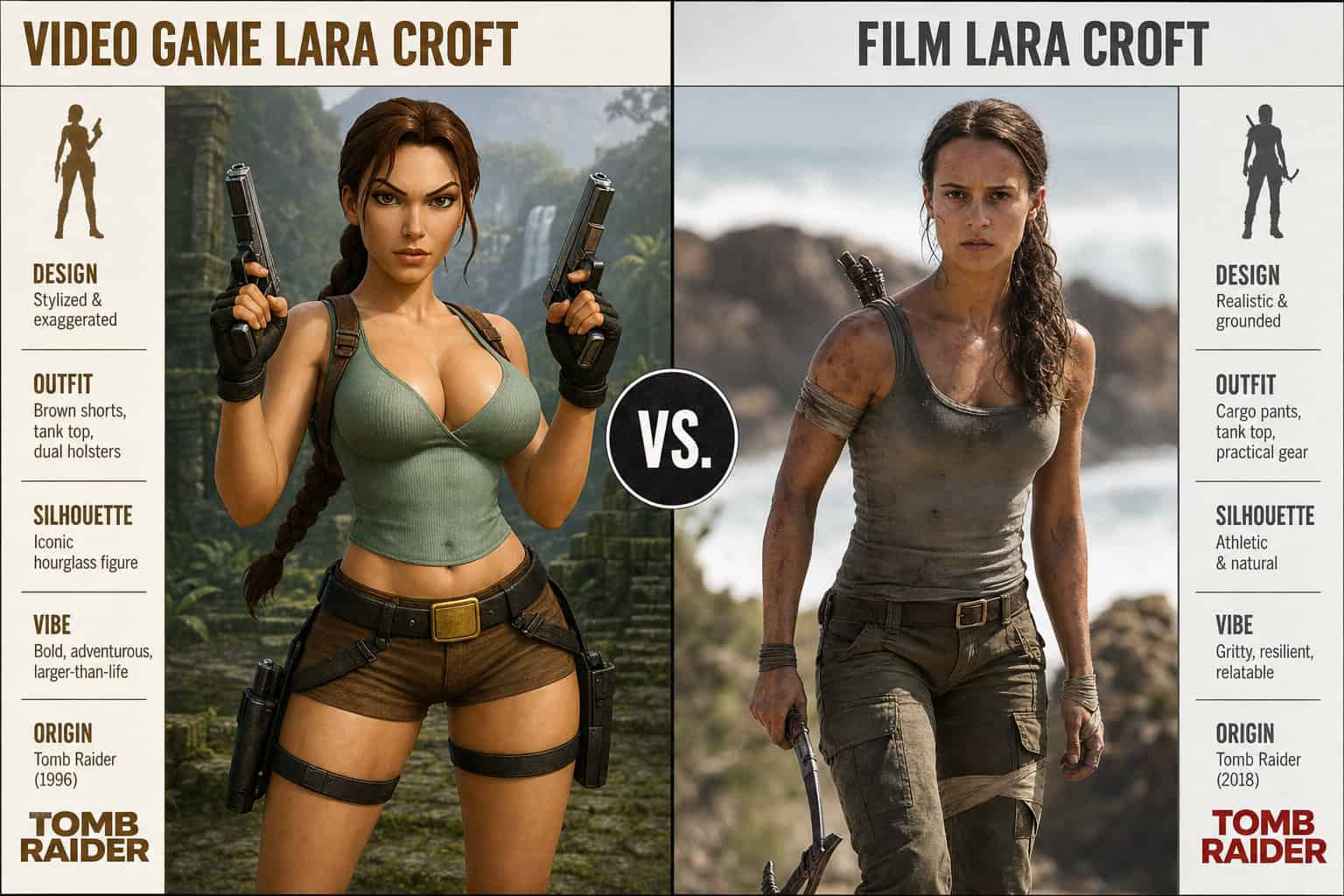
The game’s Lara had a double-D bust and an exaggerated hourglass shape. The film’s Lara, even with padding, was a 36D — measurable, comparable, and immediately understandable. The film used form-fitting but practical materials, evident in lara croft angelina jolie outfits: no leather, no latex, no extreme corsetry. The silhouette is recognizable as Lara Croft but grounded in a real human body.
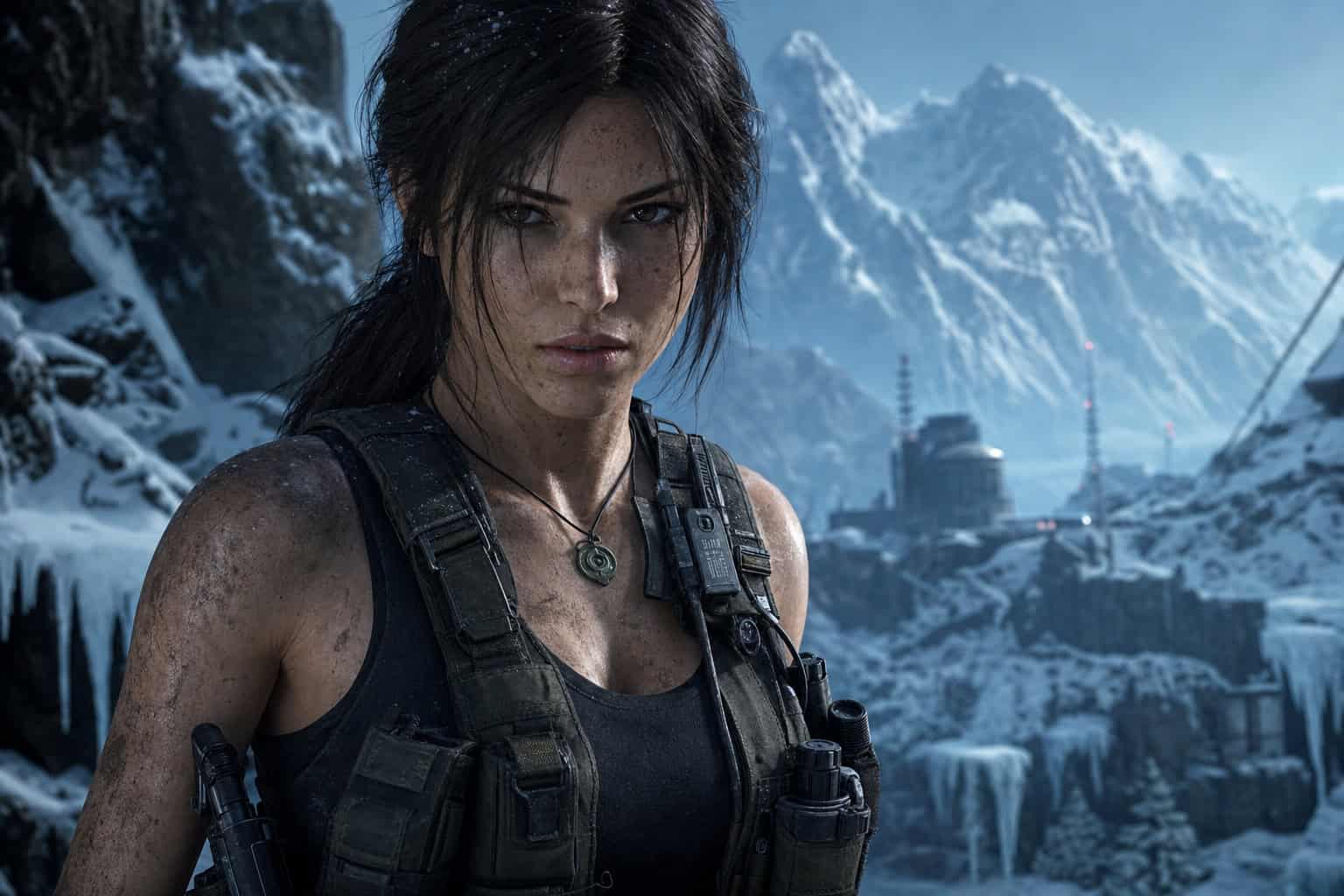
The philosophy is simple: the game was designed for visual impact in a pixelated environment where distinct silhouettes mattered more than realism. The film needed a body that could realistically climb, fight, and survive. The proportions had to change to make the action believable.
Components and Functionality
| Game | Movie |
|---|---|
| Blue tank top | Blue tank top (same) |
| Tight brown shorts | Black cargo pants with multiple pockets |
| Holsters | Holsters (same) |
| Braid | Braid (same) |
| No tactical gear | Tactical vest, pouches, combat boots |
The film swapped shorts for cargo pants with pouches, straps, and combat boots for realism and stunt safety. The braid is present in both, but the film version is more practical for action — less likely to get caught in machinery or pulled during fight choreography.
The game’s outfit is iconic, but the film version earned its own place in pop culture. Cosplayers who want to recreate the movie look need to know exactly what changed: the cargo pants are the key differentiator, along with the tactical vest for the finale scenes.
Beyond the First Film: The Sequel and Reboot
The franchise continued after the 2001 hit, with a direct sequel and a later reboot that each took Lara’s wardrobe in new directions.
Lara Croft: Tomb Raider – The Cradle of Life (2003)
The 2003 sequel introduced new environments — underwater sequences, desert landscapes, and brought new outfits: a wetsuit, desert gear, and some variations on the original look. Directed by Jan de Bont with a slightly larger budget, the film grossed $160 million, which was less than the first film but still a commercial success.
Here’s the honest answer: no official catalog of every outfit from Cradle of Life exists. Fans rely on screenshots and secondary sources to piece together the full wardrobe. The wetsuit is confirmed — underwater scenes demanded it, but beyond that, the documentation is thin. If you’re researching the sequel’s outfits for cosplay or comparison, you’ll need to work from the film itself rather than a published guide.
Tomb Raider (2018) – Alicia Vikander’s Survivalist Aesthetic
The 2018 reboot starring Alicia Vikander took a different approach entirely. Based on the 2013 video game reboot, which had a gritty survivalist tone, Vikander’s primary outfit was a tank top, cargo pants, climbing harness, and bow and arrows. The design philosophy was grounded, rougher, and less polished than Jolie’s films.
The climbing harness comes directly from the 2013 game’s gear, reflecting Lara’s transformation from novice to survivor. Where Jolie’s Lara was already a master adventurer from the opening scene, Vikander’s Lara was still learning. The outfits reflect that — they’re worn, dirty, utilitarian.
The reboot was critically better received than Jolie’s films but grossed less. The costumes fit the different tone: survivalist authenticity over adventure-movie glamour.
From Screen to Street: The Red Carpet Moment
At the 2001 premiere, Angelina Jolie channeled Lara Croft with a “cool girl look” — a leather skirt, a tight top, and attitude. It wasn’t a formal gown. It was casual, edgy, and character-appropriate. This is an early example of what’s now called “method dressing”, actors echoing their on-screen personas at promotional events, something we’ve seen recently with Zendaya for Dune and Margot Robbie for Barbie.
The specific choice matters: Jolie could have worn a traditional red carpet gown, but she chose a look that said this character is her, and she’s not dressing up for anyone.
The Legacy of Lara Croft’s Movie Wardrobe
The 2001 film went through a famously troubled post-production. Simon West’s first cut was 130 minutes. Stuart Baird recut it to 88 minutes. The original score by Michael Kamen was rejected and replaced in ten days by Graeme Revell.
Major effects shots were incomplete at release. The whole thing was a mess.
But the outfits survived that chaos. They were designed early, shot on location at places like Ta Prohm in Cambodia and Hatfield House in England, and they didn’t need VFX fixes. They just needed to work on camera — and they did.
Twenty-plus years later, Jolie’s blue tank top and cargo pants are still instantly recognizable. The film that couldn’t get its effects finished, that had its director kicked out of the editing room, that got a 0.0 from IGN — that film’s costumes are now part of gaming and movie iconography.
The documentation gap for the sequel means fans still have to work from memory and screenshots. But the first film’s three primary outfits — training tank top, Venice gown, Siberia tactical gear, are well-documented and well-remembered. They’re the durable legacy of a movie that, against all odds, became one of the few video game adaptations that worked.
Frequently Asked Questions
Can you change Lara Croft’s outfit in Tomb Raider?
In the 2001 film, yes — Lara changes outfits to match her environment and mission. She starts in a blue tank top and cargo pants for a training simulation and temple raid, switches to a black evening gown for social infiltration in Venice, and ends in tactical gear for the Siberia combat sequence. Each outfit serves a specific narrative purpose rather than being purely cosmetic.
Why did the 2001 Tomb Raider movie change Lara’s outfit from the game?
The filmmakers swapped the game’s tight brown shorts for black cargo pants and reduced the bust size from double-D to 36D (with padding) due to two constraints: Eidos Interactive demanded less sex appeal for a mainstream audience, and the PG-13 rating prohibited nudity or highly revealing outfits. The changes also made stunts and climbing believable for live action.
How was Angelina Jolie’s Lara Croft outfit different from the game’s design?
The film replaced the game’s exaggerated double-D bust and tight brown shorts with a 36D padded bra and black cargo pants with utility pouches. The silhouette stayed recognizable as Lara Croft, but the materials were practical cotton and nylon rather than the game’s leather or latex, and the braid was adjusted to be less likely to snag during stunts.
What did Lara Croft wear in the Venice party scene?
Lara wore a black evening gown with a slit for movement and likely hidden pockets for the Venice party scene. The outfit signaled a shift in tactics from combat to social infiltration — she wasn’t there to fight, but to gather intelligence on Powell and the Illuminati, showing she could operate in any environment, not just tombs.
Is the Tomb Raider movie outfit worth recreating for cosplay?
Yes, because the 2001 film’s three primary outfits are well-documented and instantly recognizable, despite the sequel having no official catalog. The key details to nail for the movie look are black cargo pants instead of brown shorts, a blue tank top or black tactical vest depending on the scene, and combat boots — the cargo pants are the main differentiator from the game’s costume.