
Yes, software development costs are deductible as ordinary and necessary business expenses under IRS Publication 535, but what the software is decides everything else. “Ordinary” means common in your industry and “necessary” means helpful to the business rather than lavish or personal. The gate is simple: would a reasonable dev look at the receipt and say “yeah, that’s a work expense”? The part nobody tells you is that the same $50K of code can be expensed in year one or stretched over 15 years depending entirely on its role.
And here’s the quantified stakes: every dollar of missed deduction costs roughly 30 to 40 cents in combined income and self-employment tax, most freelancers leave $3,000 to $10,000 per year on the table, and the swing between owing $50,000 in tax and owing $35,000 usually isn’t an aggressive position. It’s ordinary expenses nobody tracked.
So this is a translation guide. We write for devs who know their stack cold but not the tax code, and the tax code has a 2025 plot twist you need to know about before you file anything.
Key Takeaways
Client contract work is an ordinary §162 expense you deduct immediately; your own SaaS build is §174A domestic research, fully deductible domestically after the One Big Beautiful Bill Act (signed July 4, 2025) took effect for tax years starting after December 31, 2024.
If you capitalized development costs on 2022-2024 returns, switching to current expensing usually requires a method change filed on Form 3115, and doing nothing keeps you in the worse position.
Each missed deduction dollar costs 30-40 cents in combined income and self-employment tax, and freelancers commonly miss $3,000, $10,000 per year.
Table of Contents
The four buckets: how the software’s role decides the tax treatment
Client contract coding is an ordinary §162 business expense, while development of your own SaaS or product is §174A domestic research, and the two get completely different treatment. Building for clients versus building your thing is the fork in the road, and the IRS treats those as different activities even when the actual work looks identical from your IDE.
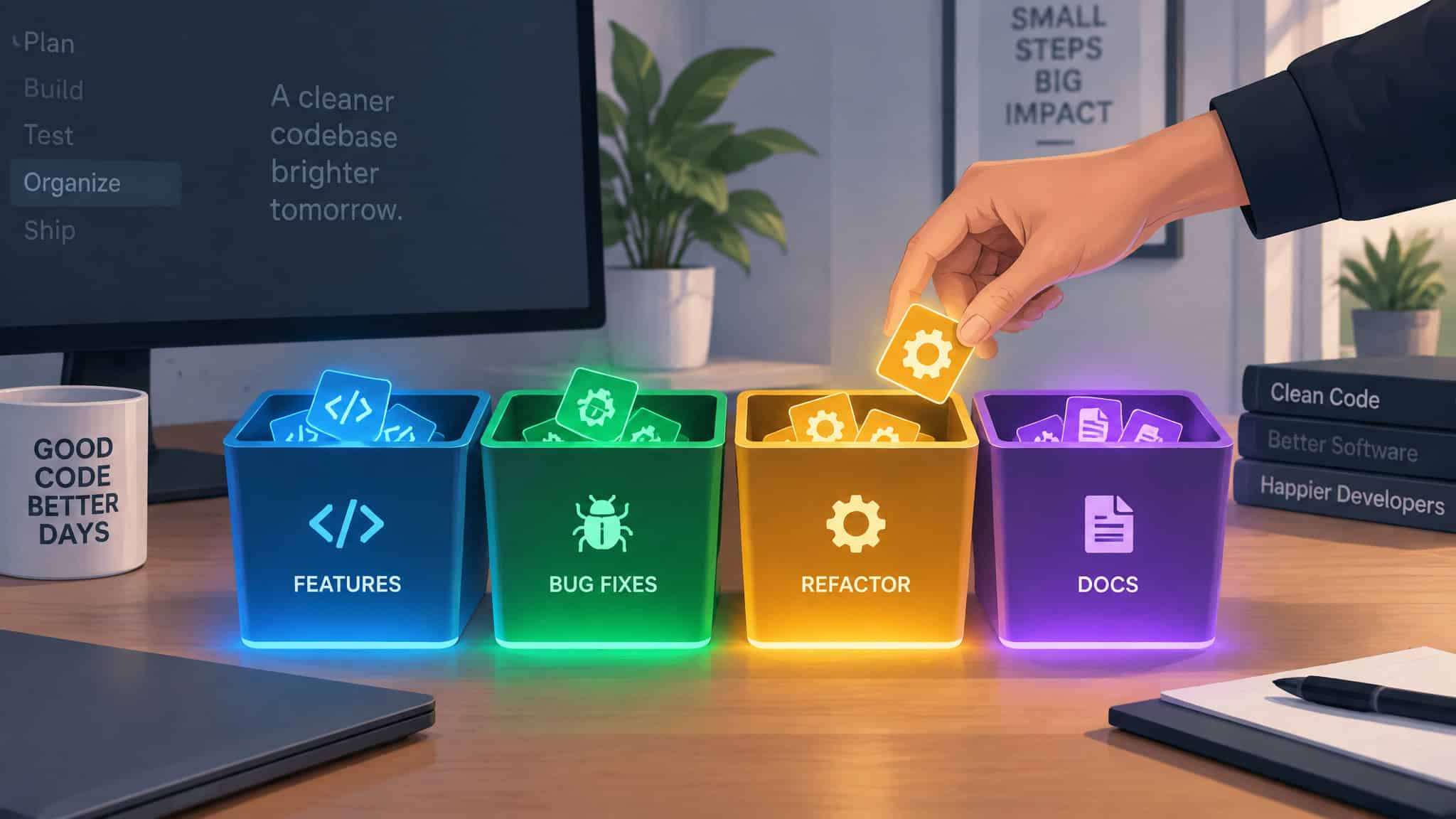
Here’s the map:
- A tool you use. Your Copilot subscription, your IDE, your cloud IDE of choice. Ordinary business expense, deduct it in the year you pay for it. This is the easy mode and we’ll cover it in the tools section below.
- A deliverable for a client. Contractor hours on a contract repo, costs of producing client work. Ordinary §162 expense. The client worries about capitalizing it on their side; that’s their problem, not yours.
- Your own product. Development of software you’ll sell, per Notice 2023-63, is §174A domestic research, a category carved out of the old §174, which forced capitalization from 2022 through 2024. Post-2025, that means immediate expensing for domestic work. More on the law change in a second, because it’s the biggest update here in years.
- A pre-revenue build. If nobody has paid you yet, your side-project SaaS falls under §195 startup rules: up to $5,000 deductible immediately if total startup costs are under $50,000, with the remainder amortized over 15 years. §174A kicks in prospectively once you have paying customers. The “did anyone pay you yet” line is genuinely the deciding variable.
Quick test: Ask whether the code has a paying customer — that single answer separates §195 startup treatment from §174A research expensing.
Two honest caveats. Mixed projects, like client work that also produces reusable IP you keep, need actual CPA judgment, because classification is judgment-dependent rather than automatic. And tax preparers regularly see first-time product builders dump client-project contractor payments and their own app costs into a single “software” line on their books, which mixes two buckets that need completely different treatment. Separate them from day one and future-you doing taxes will be grateful.
Section 174A and the OBBBA law change: expensing your own product build
Own-product development is currently deductible in full for domestic work. The 2025 reconciliation law, the One Big Beautiful Bill Act (P.L. 119-21), signed July 4, 2025, added §174A, restoring immediate expensing of domestic research and experimentation costs, software development included per Notice 2023-63, effective for tax years that begin after December 31, 2024. Research and development performed overseas is still amortized over 15 years, so where the work physically happens changes the answer.
Quick chronological reconciliation, because you’ve probably read contradictory articles: mandatory capitalization under the old §174 was the standard from 2022 through 2024, and OBBBA restored expensing for domestic work in 2025. One sentence, two eras.
The worked example
A $50,000 domestic SaaS build in 2026 is fully deductible in year one, worth roughly $16,000 in savings at a 32% rate, and it can stack with roughly $5,000 of R&D credit. Under the old capitalization regime, that same build would have gotten you a $5,000 year-one deduction and a long amortization tail. That’s the difference between the two regimes on identical code.
If you read rules last year, they’re obsolete
Any article telling you to capitalize domestic development costs is describing the 2022-2024 world. Say it plainly: don’t capitalize your domestic build based on pre-2025 advice.
If you capitalized costs on 2022-2024 returns: the Form 3115 cleanup
Here’s the pattern tax preparers see constantly: developers who filed under the old §174 rules assume the new expensing applies automatically to them, do nothing, and quietly stay in the inferior position for years. The new law doesn’t reach back and fix past returns on its own.

The missed step is that switching to current expensing means filing a method change, typically via Form 3115, coordinated with a CPA. Rev. Proc. 2025-32 comes up in that process. This is a CPA trigger, not a DIY checkbox, and nobody should promise you the automatic route for every taxpayer situation. But if you capitalized a meaningful build in 2022, 2023, or 2024, this is the one conversation to have before your next filing season. The cleanup is exactly the kind of thing that pays for the CPA fee several times over.
Deducting the tools: SaaS subscriptions, cloud bills, and equipment
SaaS and dev tooling subscriptions are immediately deductible as ordinary business expenses. GitHub Copilot, Cursor, JetBrains, ChatGPT Plus, plus the general stack: accounting software, project management, Zoom, Slack, Adobe, cloud storage. Typical solo-dev spend runs $200 to $500 a month, which is $2,400 to $6,000 a year, and yes, that’s real money. Even the boring stuff counts: a $55/month Zoom subscription is $1,980 over three years just from categorizing it correctly.

Tiny wizardry. Track software in its own category rather than lumping it into office expenses; when you’re pulling together a Schedule C, you want that line already clean.
The cloud-bill phase split
This is the one that catches indie devs: AWS for production hosting is an operating cost, but AWS for development and staging environments, and for pre-production load testing, is §174 research cost. The tell that your single-line “AWS” deduction is wrong is a bill that spikes during a build-out month; that spike is research activity, not hosting. The principle is the split by usage phase. Setting the actual allocation numbers is CPA territory, and no, you shouldn’t invent your own percentages.
Equipment: Section 179 and the bonus depreciation comeback
Section 179 lets you fully deduct qualifying equipment in the purchase year: computers, furniture, machinery, software, certain vehicles. One honest flag: our sources conflict on the 2026 limit, with one citing $2,560,000 (with a $4,090,000 phase-out) and another citing a likely stale $1,250,000. Verify the current limit against the IRS revenue procedure before you plan around it. Meanwhile, OBBBA permanently restored 100% bonus depreciation for property acquired after January 19, 2025; the phase-down only applies to property locked in under a binding contract dated before January 20, 2025, which most readers won’t hit. Used gear qualifies too, which is great news for the refurbished-market crowd.
The dream-setup example: an $8,500 bundle of MacBook Pro, ultrawide monitor, standing desk, and ergonomic chair is fully deductible. Let yourself have this one.
And a good-news beat for anyone with a desk full of gadgets: since TCJA took effect in 2018, computers, laptops, phones, tablets, monitors, and accessories aren’t “listed property” under §280F anymore. No special substantiation beyond your ordinary business records. Less logging, more coding. This bridges neatly to the next question: is software development tax deductible? Small purchases have their own even-simpler path.
The $2,500 rule: de minimis safe harbor
Items costing $2,500 or less can be expensed immediately under the de minimis safe harbor election, which requires a written accounting policy and an annual election. It’s a small paperwork trade for skipping depreciation schedules entirely on everything under the threshold, and honestly it’s one of the more elegant corners of the tax code.
Three numbers people constantly conflate, so let’s separate them:
- $2,500 is the de minimis safe harbor threshold per item.
- Section 179 is equipment-level expensing, a separate mechanism with its own annual limit.
- $600 is the Form 1099-NEC reporting threshold for payments to contractors. It has nothing to do with what you can deduct; it’s a reporting requirement.
The de minimis election is the one that quietly handles your dongles, your desk accessories, and most of your gadget bench without a depreciation schedule in sight.
Paying developers: contract labor, 1099-NEC, and classification risk
Payments to contract developers are fully deductible on Schedule C line 11, with Form 1099-NEC required for $600 or more paid to any single person or entity per calendar year, plus records of the services performed. That’s the upside. Now the other side of the same coin.
The classification risk is the flip side of the deduction
The deduction and the risk come from the same payment. The IRS test, consolidated under IRC §3121 and Rev. Rul. 87-41, boils down to three things: behavioral control, financial control, and relationship of the parties. Developer-specific tells that push someone toward employee status: a mandated 9am standup, company GitHub Enterprise accounts, enforced coding standards. If your contract reads like an employment relationship with a 1099 attached, it probably is one. If you’re the one being hired and you recognize your own contract in that list, you’re likely being treated as a contractor while working like an employee.
If the IRS reclassifies someone, the liability for back payroll taxes lands on the client, not the worker. There’s a safe harbor in Section 530 of the Revenue Act of 1978, it protects the business, not the worker, an asymmetry worth naming plainly. And most freelancers avoid filing Form SS-8 for reclassification because of client retaliation risk, which is why managing freelance taxes proactively matters. That’s the messy reality; we’re not going to pretend it isn’t.
The client-side math explains a lot of behavior you’ve probably encountered: $100,000 in W-2 wages costs a client roughly $108,000 all-in versus $100,000 flat for a 1099 contractor, because of the 7.65% employer FICA gap. That gap explains a lot of invoices. One legit middle path has grown post-COVID: hybrid staffing agencies that pay developers as W-2 employees while billing end clients. You trade business-expense deductibility for simpler taxes and actual benefits. A legit path, not a lesser one.
Schedule C vs business returns: where every software cost lands
Software subscriptions and development costs go on Schedule C, filed with Form 1040 for sole proprietors. Contract labor goes on line 11, depreciation on line 13, and software subscriptions under office expense or other expenses on line 27a. Schedule C is basically the freelancer’s expense form, 20-plus category slots, lines 8 through 27a, and deductions on it cut both your income tax and your self-employment tax. That second part is the one people forget.
The line map
The expense categories live on lines 8 through 27a, plus line 30 for the home office (computed on Form 8829 or the simplified method). A compact tour:
- Line 8: advertising
- Line 9: car and truck
- Line 10: commissions and fees
- Line 11: contract labor
- Line 12: depletion
- Line 13: depreciation
- Line 14: employee benefits
- Line 15: insurance
- Line 16a/b: interest
- Line 17: legal and professional services
- Line 18: office expense
- Line 20b: rent
- Line 27a: other expenses
Now the compressed coverage, with the numbers that make each one real. Coworking memberships and day passes are fully deductible as rent on line 20b: $300/month is $3,600/year, and drop-in passes run $25 to $50. One rule: a dedicated private office replaces, and can’t stack with, the home office deduction for the same business, though a home office plus coworking can coexist. Slightly counterintuitive, but that’s the rule.
Phone and internet are percentage games: 75% business use of a $100/month phone plan is $900/year, and full-time freelancers commonly and defensibly land in the 60-80% range. Payment processor fees are 100% deductible and the most consistently forgotten deduction on the form. $120,000 through Stripe at 2.9% plus $0.30 per transaction is roughly $3,780 in deductible fees, and processors send fee summaries in January, so the paperwork mostly does itself. Travel, meals, and gifts in compressed form: the overnight-away trigger gates travel deductions, meals are 50% deductible when they qualify, and client gifts cap at $25 per recipient per year (engraving and wrapping count; shipping doesn’t, a wonderfully arbitrary asymmetry).
The above-the-line items that never touch Schedule C
Half of your self-employment tax is deductible on Schedule 1 line 15 under §164(f), and it’s automatic if you fill out Schedule SE correctly. No extra homework, which is the tax code actually being nice for once, unlike the R&D tax credit, where how much you get depends on calculation methods and credit percentages you have to work out. The chain, so you see the mechanics: $180,000 profit × 0.9235 = $166,230 net SE earnings ? $25,434 SE tax ? $12,717 half-deduction ? $3,052 saved at a 24% rate.

Health insurance premiums go on Schedule 1 line 17 under §162(l): 100% of medical, dental, vision, and qualifying long-term care premiums for you, your spouse, and dependents. Above-the-line means you get it without itemizing, which is the win. The catch trips people up constantly: eligibility for employer-sponsored coverage disqualifies you, even a spouse’s plan you never enrolled in. A quick receipt check: $600/month health plus $50 dental plus $20 vision is $8,040 annually, saving $1,930 at 24%.
The SE tax itself, since it drives all of this: 15.3% on net SE earnings, made of 12.4% Social Security capped at the $184,500 2026 wage base and 2.9% Medicare uncapped, computed on profit × 0.9235. Heads up for higher earners: an extra 0.9% Medicare tax kicks in above $200,000 single or $250,000 married filing jointly, reported on Form 8959. And here’s the placement-error insight: the biggest misses aren’t exotic strategies, they’re deductions people skip because they only scan Schedule C, and each skipped dollar costs 30 to 40 cents.
Entity choice basics
If you’ve elected S-corp status via Form 2553, you file Form 1120-S instead of Schedule C. The Form 2553 election is due within 75 days of formation or tax-year start, or by March 15 for a January 1 effective date. Entity choice is a whole topic of its own, so let’s give it the room it deserves.
Entity choice: S-corp, QBI, and the R&D credit chain
Here’s the contrarian take: the S-corp question isn’t “will it save me money,” it’s do the numbers at my income clear the costs, and the answer flips at specific thresholds. Also, the S-corp election quietly unlocks a second deduction layer most devs don’t know exists, much like the gap between what Reddit says is tax-deductible for software developers and what the IRS actually allows.
S-corp mechanics and break-even math
After a Form 2553 election, the owner becomes a shareholder-employee: W-2 wages carry FICA, and K-1 distributions avoid self-employment tax. The whole chain at $180,000 profit: as a sole prop you’d owe $25,434 in SE tax; an S-corp with $80,000, $90,000 in wages yields $11,664, $13,194 in gross savings, roughly $5,000, $11,000 net after $3,000, $5,000 in payroll and filing costs. Break-even sits below $80,000, $100,000 of profit, where it’s marginal, and savings get substantial, $15,000, $45,000, at $250,000 and up.
Reasonable compensation and the hidden tradeoffs
The IRS requires market-rate owner compensation under IRC §3121 and case law including Watson v. Commissioner (8th Circuit, 2012, where $93,000 of distributions got reclassified as wages). Practical range: $80,000, $120,000 is defensible, $90,000, $110,000 is the sweet spot, and paying yourself under $50,000 on $180,000 of profit is an audit trigger. The honest tradeoffs: reduced Solo 401(k)/SEP-IRA capacity (roughly $57,500 on Schedule C versus $44,500, $47,000 at those wages), forfeited unemployment eligibility in most states, and an S-corp can’t deduct the owner’s home office directly. The legit workarounds for that last one are accountable-plan reimbursement or leasing space to the S-corp at market rates.
The QBI layer and the R&D credit unlock
This is the nerdiest, most consequential distinction in the whole article. Computer programming and software development are not a specified service business under Treas. Reg. §1.199A-5(b)(2)(xiv), but consulting is. SSTB activities under 10% of gross receipts don’t taint the whole business.
The 2026 QBI thresholds are $201,750 single and $403,500 married filing jointly. Above them, the S-corp W-2 wages activate the 50% wage limitation and preserve the QBI deduction, which is where the entity decision and QBI collide: $300,000 of QBI with no W-2 wages collapses to a $500 deduction limit, but with $80,000 of S-corp wages it’s a $40,000 deduction, $14,000 saved at 35%. The difference a payroll run makes. Positioning matters too: bill as software development services, use deliverable-based billing, document tangible code output, and avoid “consultant” labels on your own paperwork.
Now the non-obvious chain: sole proprietors can’t pay themselves W-2 wages, so the S-corp election is the access route to the §41 R&D credit. The credit runs 6-14% of qualified research expenses, the ASC method is preferred, first-time claimants get a 6% reduced rate, and it stacks with §174A expensing. Qualified small businesses, under $5 million in gross receipts with none in the prior 5 years, can apply up to $500,000 of it against payroll taxes under §41(h). Worked example: a solo S-corp developer with $80,000 in W-2 wages at 70% R&D time, $2,000 in supplies, and $5,000 in contractor payments ends up with $61,250 in QREs and a $3,675 year-one credit on Form 6765.
Honest limits: routine debugging and applying existing techniques don’t qualify, and documentation has to describe technical uncertainty, the alternatives you considered, your experimentation, and your conclusions. Basically a lab notebook, which devs already keep. Contingency firms charge 10-30%, which pencils out above roughly $50,000 of qualified research; below that, DIY it with your CPA. (We’ve got a whole piece on how much the R&D tax credit is worth if you want the calculation details.)
One more entity-adjacent item: pass-through entity tax elections in states like New York and California save $3,000, $15,000 federally, but sole props can’t use them, so this is another S-corp/LLC-only lever. Meanwhile the 2026 personal SALT cap is $40,400 under OBBBA, phasing down above $500,000 MAGI and reverting to $10,000 in 2030.
What’s not deductible, and what gets people in trouble
Short version: don’t try it.
The don’t-try-it list
Not deductible: commuting, non-uniform clothing, personal portions of mixed expenses, fines and penalties, political contributions, club memberships, and education for a new profession. The usual misclassification suspects: personal Netflix and Spotify dressed up as software subscriptions, family vacations filed as travel. Everyone’s tempted at least once; the categories don’t hold. Also, repeated multi-year losses can trigger hobby-loss scrutiny under §469, so a side project that never turns a profit needs a real business story. And foreign R&E stays on the “not deductible this year” boundary: it’s still stuck in the 15-year amortization lane even after §174A.
Documentation and audit posture
The IRS wants amount, date, business purpose, and payee for every expense, and bank statements alone don’t prove business purpose. The dev-specific move here is genuinely good news: your code commits, project trackers, and contractor invoices are the receipt equivalent. The audit question isn’t whether the expense was real, it’s whether your records tie each dollar to a specific build, and that’s the documentation you already produce daily. R&D documentation, the uncertainty-alternatives-experimentation-conclusions set, is the gold standard if you’re claiming the credit.
Home office deductions under §280A get audited at roughly twice the base rate for Schedule C filers, and exclusivity is the vulnerability: the desk that’s also the dinner table doesn’t count. Mercy rule, though: when receipts are missing, the IRS accepts reliable written evidence plus a business-purpose log. Keep records seven years, and capture receipts digitally and immediately. Photo now, thank yourself in April.
Timing: quarterly estimates, December moves, year-round capture
Learn the dates once and never panic again. Quarterly estimated taxes are required under §6654 and due April 15, June 15, September 15, and January 15. The safe harbor is paying the lesser of 90% of current-year tax or 100% of prior-year tax, 110% if prior AGI exceeded $150,000. The §6621 underpayment rate runs 8% annually through 2026, compounded daily; Form 2210 computes any penalty, and Schedule AI handles lumpy income. Quick state aside: California wants estimated payments 30/40/0/30 across the quarters, while most states do 25% each.
The December boss fight, as a tight list:
- Get equipment in service by December 31 for §179.
- Fund the Solo 401(k) employee deferral by December 31 (the employer share can wait until the filing deadline).
- Pay December expenses early.
- Use the invoice-timing lever: defer a December 28 invoice to January 2 in a high-income year, or accelerate the reverse in a low-income year.
- Compile your QRE documentation.
- Calendar Form 2553 by March 15 if an S-corp election is in play.
- Consider Roth conversions in low-income years.
Bookkeeping cadence, kept lightweight: a dedicated business bank account and card, weekly categorization, monthly review, quarterly reconciliation, and moving 30-35% of each paid invoice into a tax savings account. Automate that transfer and stop thinking about it. The real principle: deductions are captured in January, not found in April.
When to self-file vs talk to a CPA (and with what software)
The right answer isn’t a dollar threshold, it’s a trigger list. Talk to a professional when any of these apply: prior-year §174 capitalization needing a Form 3115 method change, R&D credit claims, S-corp election timing, mixed client-and-product work, or multi-state exposure. Professional help is typically warranted above $250,000, $500,000 of revenue, at $300, $800/month for managed bookkeeping. And the wrong CPA is a real risk: a W-2-focused CPA may never proactively ask about your home office, processor fees, or the de minimis election. You want someone who asks about your AWS bill’s shape.
The software landscape
For DIY filing, the field looks like this (prices may vary):
- H&R Block Self-Employed, $85 plus state fees, the best overall pick.
- TaxSlayer, $53, the most affordable.
- TaxAct Entrepreneur, $70, strong live expert support.
- TurboTax Expert Assist, $59, $209, with documented dynamic-pricing complaints; one example involved paying $120 or more despite a $59 advertised starting point, and self-employed filers generally can’t file free on TurboTax.
- Free options like FreeTaxUSA, Cash App Taxes, and Jackson Hewitt at $25 flat lack Schedule C guidance and imports, which is exactly what a freelancer needs.
For bookkeeping, QuickBooks Self-Employed at $7.50/month fits solo freelancers, and QuickBooks Online runs $12.50, $90/month for growing shops.
Closing: the classification is the strategy
The question was never really “is software development deductible.” It’s “which bucket is this dollar in,” and the bucket decides the answer. If you’re a tools-and-contractors filer, go check your Schedule 1 placements for the SE-tax half and health insurance. If you’re building your own product, the §174A and R&D credit questions are where the money is. And if you capitalized costs on 2022-2024 returns, the Form 3115 conversation with a CPA is the move.
Remember the swing: a $50,000 domestic build is worth roughly $16,000 more in savings under current expensing than under the old capitalization rules. Getting the bucket right is the whole game. This is decision guidance, not personalized tax advice, but it’s the decision guidance we wish someone had handed us before the first filing season.
Frequently Asked Questions
What’s the difference between the de minimis safe harbor, Section 179, and the 1099-NEC threshold?
Three numbers people constantly conflate. The $2,500 de minimis safe harbor is a per-item expensing threshold that skips depreciation schedules. Section 179 is equipment-level expensing — a separate mechanism with its own annual limit for computers, furniture, and qualifying gear. The $600 Form 1099-NEC threshold has nothing to do with what you can deduct; it’s purely a reporting requirement for contractor payments.
