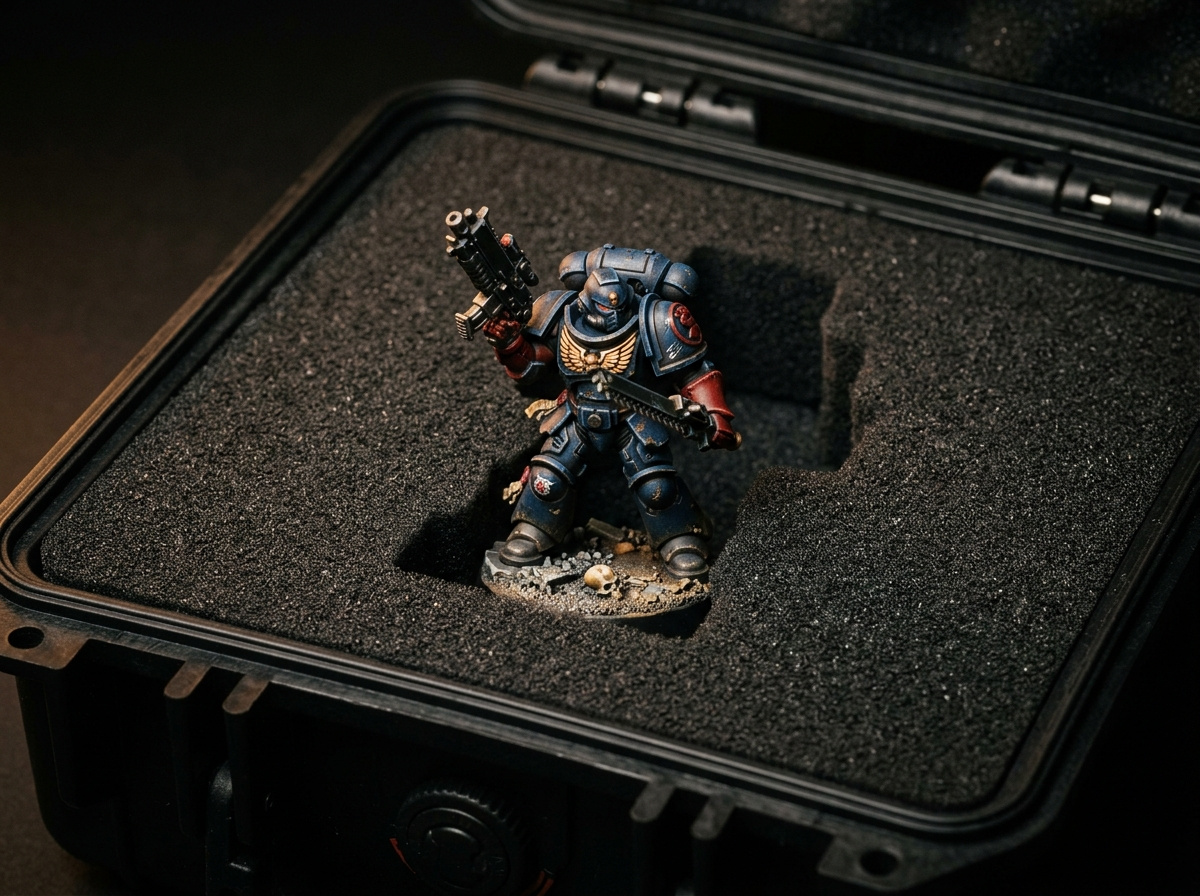
To safely pack and store valuable collectibles, you must shift your mindset from merely hiding things in boxes to executing strict archival preservation. Clearing physical household space to keep your very patient wife happy means relocating a painstakingly curated 20-year Warhammer collection to an external unit. But doing this wrong guarantees irreversible destruction.
Moving your life’s work out of a cozy, temperature-regulated home into a standard attic or cheap shed will turn decades of meticulous painting and assembly into cracked resin and peeling acrylic.
Here at GeekExtreme, we see too many folks lose thousands of dollars in vintage cardboard and plastic because they banked on a cheap plastic tub. Proper long-term storage is an engineering problem. It requires decontamination, archival packing, climate defense, and structural unit organization.
Let’s walk through the predictable, manageable chemistry and physics of keeping your hoard pristine. We will reference folks like Shanhammy95 from the r/DIY Forum who initially thought an uninsulated UK loft was a good idea to store Collectibles (it is not).
Table of Contents
Why pre-storage decontamination prevents surface decay
Storing an uncleaned collectible is dangerous because it forces an active chemical reaction to pause mid-process right on the artifact. You must completely remove dust, dirt, and latent human surface oils before anything goes into a box. Skipping this step means you are sealing reactive contaminants directly against delicate surfaces.
Natural skin oils and trapped dust will irrevocably eat into paints, plastics, and paper over a decade in the dark. This demonstrates exactly why surface oils and long-term etching go hand-in-hand, ruining otherwise perfectly stored artifacts. Decontamination ensures the item enters storage at a neutral, stable baseline.
How do you safely clean painted plastic collectibles?
To safely clean painted plastics like Warhammer 40k miniatures, strictly use dry, soft-bristled brushes rather than liquid chemical solvents. Liquid cleaners, even mild ones, strip acrylic tabletop paints right off the plastic base by re-activating the chemical binder.
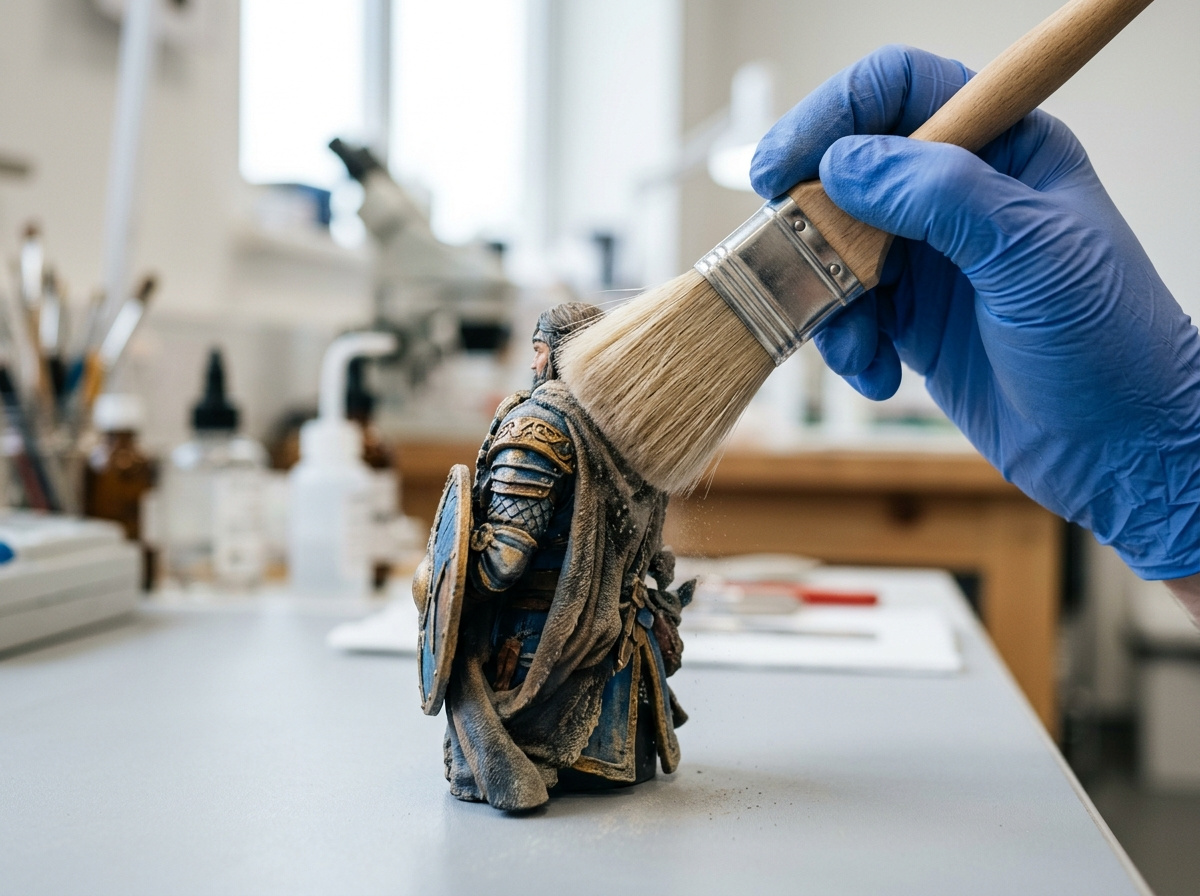
Instead, arm yourself with a dedicated hobby dusting brush—or simply repurpose a large, exceptionally soft makeup brush—and gently sweep away settled dust from the intricate recesses of your models. Do not scrub. Let the bristles do the mechanical lifting. If dust is heavily caked on, use compressed air at a safe 12-inch distance to blow it off the resin or plastic surface without causing kinetic stress.
Once clean, handle the bases of the miniatures only. Alternatively, wear nitrile gloves to avoid transferring fresh grease onto the newly prepped surface, ensuring the piece enters the box completely sterile.
What are the safe handling protocols for books and paper?
Heavy hardcover Books, delicate comics, and paper memorabilia require zero physical contact with bare skin to prevent destructive oil transfer during packing. Whether you are preserving thick, cloth-bound Books or flimsy retro manuals, always handle your artwork strictly by the edges rather than pinching the center of the asset.
Human fingers are inherently greasy, and that acidic grease transfers immediately to porous paper fibers. When prepping your Hello Storage Blog printouts, Scrapbooks, or rare graphic novels, wear clean cotton gloves. If a vintage book cover has severe dust buildup, light dusting is the only permissible action before sealing it inside its archival sleeve.
Never try to wipe a comic book cover with a damp cloth, because moisture introduction is fatal to organic collections. Wetting the paper initiates mold spores that will seamlessly incubate in dark storage.
Archival packing materials for physical collectible storage
Archival packing requires chemically neutral substrates like acid-free paper, completely ditching standard corrugated boxes and loose household wraps. Standard cardboard and cheap plastics actively degrade over time and release trace chemical fumes inside your closed containers.
This degradation process interacts disastrously with acrylic paints, vinyl grooves, and comic book inks. Because off-gassing degrades materials so aggressively, pairing proper external containers with specific archival sleeves is mandatory to isolate the items. The overarching goal is to engineer a secure, inert bubble around the physical item before it ever sees the inside of a moving box.
Glassine paper: How does it prevent surface adhesion on artwork?
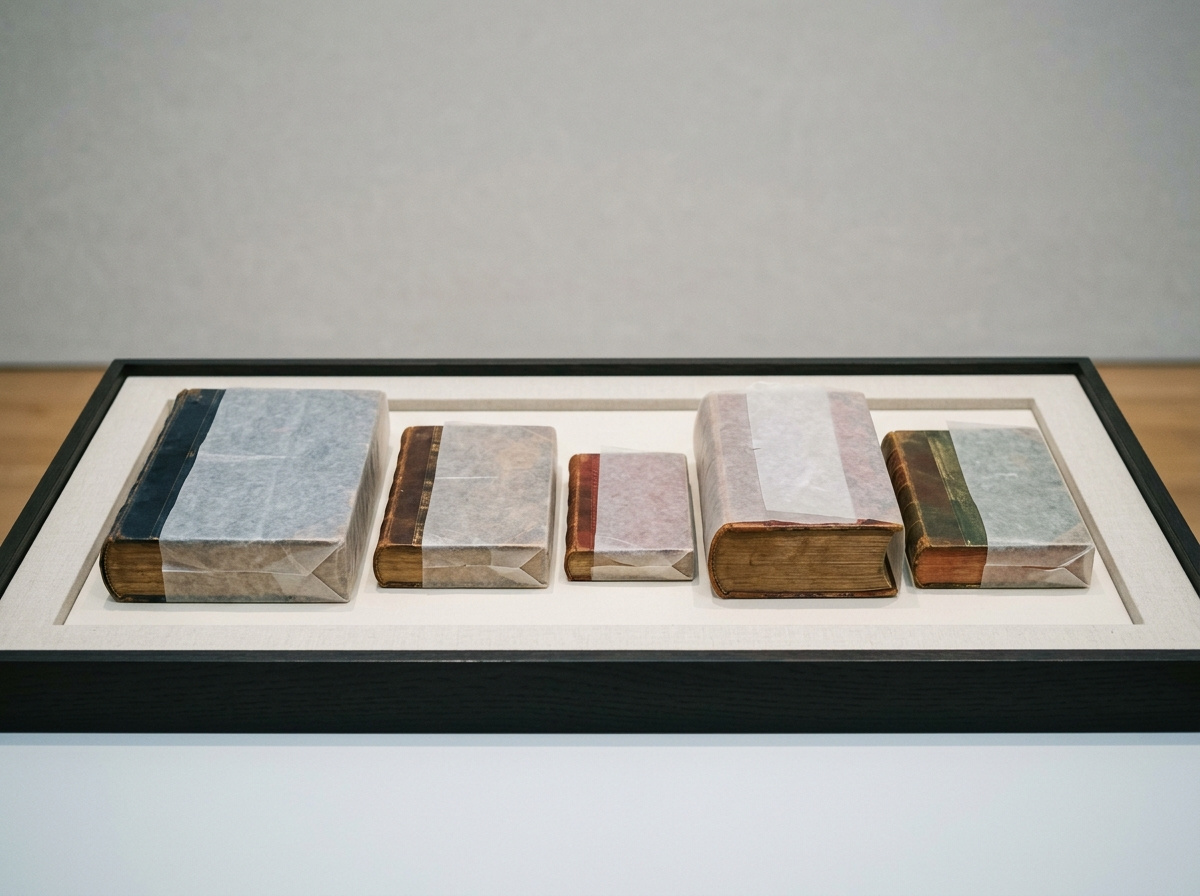
Glassine paper prevents surface adhesion by acting as a slippery, non-stick physical barrier that stops framed prints and painted surfaces from fusing to their outer wrappers. Standard bubble wrap often utilizes polymers like Polyethylene or includes Polyvinyl Chloride (PVC) which continuously outgas chemical softeners that easily melt into the clear coat of a miniature or the varnish of an oil painting over time. Glassine achieves its unique non-porous and grease-resistant properties through a mechanical pressing process called supercalendering, flattening the paper fibers entirely without relying on destructive chemical coatings.
By wrapping the item in glassine paper first, you establish a non-reactive defense layer. The combination of glassine paper and surface adhesion prevention stops the dreaded scenario where peeling the protective wrap rips the paint clean off your favorite Space Marine dreadnought. This method is heavily recommended for protecting Paintings and prints or Wooden antiques.
Acid-free paper: Why does it ensure chemical neutrality?
Acid-free paper ensures chemical neutrality by eliminating the acidic compounds that cause the long-term yellowing and breakdown of organic materials. Regular wrapping paper or newspaper is manufactured with inherent internal acids that inevitably break down. Specifically, standard wood-pulp papers contain high amounts of lignin, a rigid organic polymer that actively generates destructive acids as it reacts with oxygen and light over time.
Over decades in a box, this acid bleeds into whatever it touches, destroying Rare books or manuscripts. Employing actual acid-free paper, buffered with calcium carbonate to maintain a pH above 7.0, and chemical neutrality keeps your comic books and paper collections in suspended animation. According to records from the Better Business Bureau and the Canadian Self Storage Association, chemical degradation from poor packing materials is one of the leading causes of ruined collections in commercial storage. Skipping this step essentially fast-tracks the deterioration process, ensuring brittle pages later.
Custom foam matrixes for mixed-resin models
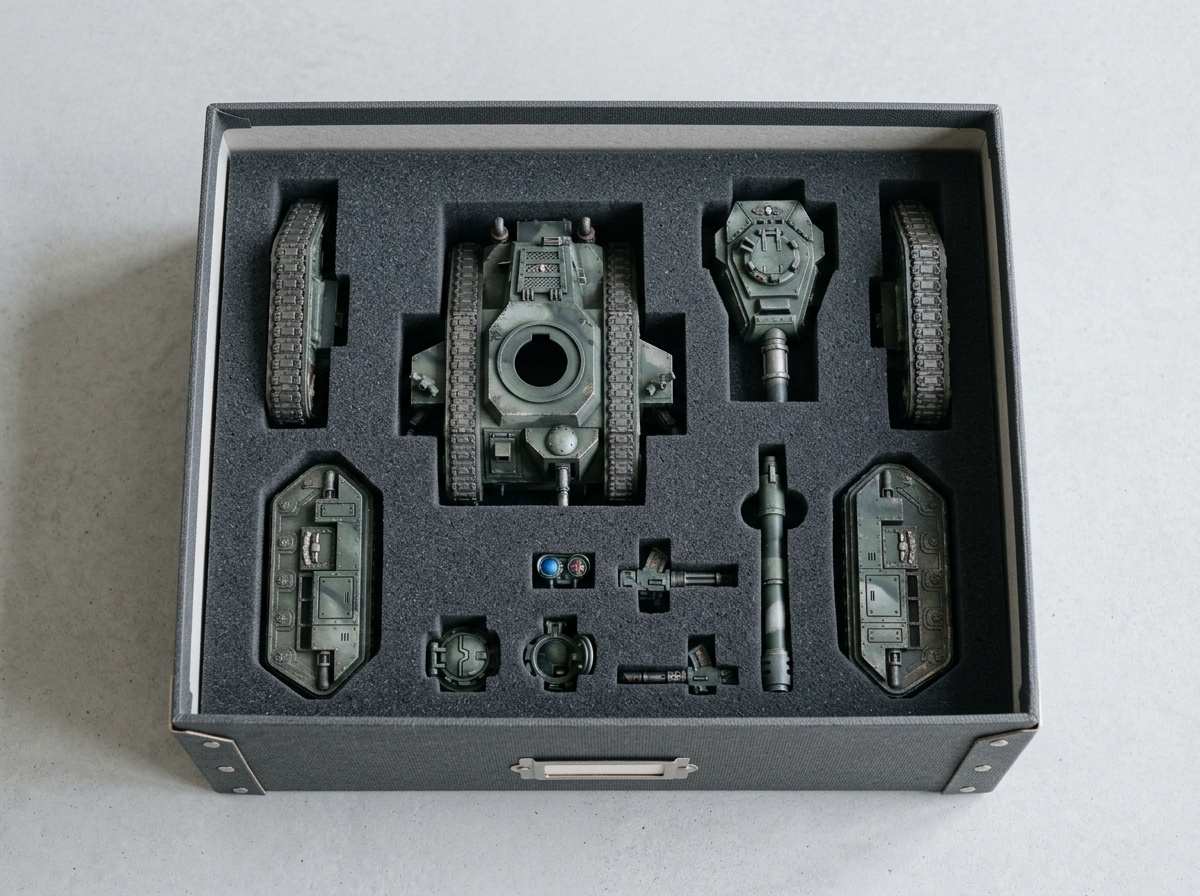
Mixed-resin models require rigid cardboard boxes lined with custom foam padding, precision-cut to support the model’s exact irregular geometry. You cannot simply toss multi-part pieces into a tub and hope for the best.
Fragile bits like antennae or weapon barrels will snap under their own weight during transit or from minor box vibrations on a hand truck. Buy specialized foam trays and carve out a custom matrix for each specific vehicle, squad, and monstrous creature. The tight foam completely isolates the piece from kinetic shocks and limits horizontal movement. Concurrently, the rigid cardboard boxes provide an external crash cage to deflect outside impacts. Read our guide on how to safely move collectibles for detailed transit protocols once everything is properly encased.
Climate-controlled storage environments and breathable barriers
You must pay for a strictly regulated, climate-controlled facility to stabilize temperature and prevent moisture retention across your collection. The “free storage” fallacy claims that a residential loft or an outdoor shed is a viable option for a massive paper or plastic collection.
It is not. Thermal cycling in non-regulated spaces guarantees the destruction of both financial and emotional value. GA-85 climate storage facilities or comparable regulated commercial environments ensure your items never experience thermal shock.
Sealing boxes airtight with household Cling Film creates a destructive micro-greenhouse that traps ambient moisture and rots paper and paint. When you restrict airflow entirely, you engineer a highly efficient fungal incubation chamber. Many consumer-grade wraps are manufactured using low-density Polyethylene or Polyvinyl Chloride (PVC), which completely lack vapor transmission capabilities and actively release corrosive plasticizer gases over time.
“When you restrict airflow entirely, you engineer a highly efficient fungal incubation chamber.”
This micro-climate trap and moisture retention occur because ambient humidity gets sealed definitively inside a non-breathable environment. Any subsequent drop in external temperature causes that trapped moisture to condense directly onto your Vinyl records, Board games, and paper goods. True archival storage actually requires chemical breathability, utilizing materials like woven Polypropylene blends, so the collection can acclimate safely to its stable surroundings without sweating inside a plastic wrapper.
Preventing climatic fluctuation and material fatigue
Stable temperature and humidity prevent the physical expansion and contraction that cracks resin, plastic, and solid wood over time. Temperature swings force materials to physically shift at the molecular level, destroying delicate bonds.
When your loft gets blazing hot, the plastic expands; when it freezes at night, it contracts. This climatic fluctuation combined with material fatigue causes the glued joints on Antiques or delicate tabletop models to snap spontaneously. Keeping everything in a dedicated 5×5 Storage Unit or a 10×10 Storage Unit with an unchanging climate stops this destructive thermal oscillation entirely. Wearable props also require strict climate controls, as detailed in our guide on how to store cosplay costumes.
Unit architecture and safe retrieval systems
The physical layout of your storage unit must be treated as a strict structural engineering project to prevent “box avalanches” and minimize manual rummaging. Once the chemistry and climate are managed, the final catastrophic threat is kinetic damage caused by poor interior organization.
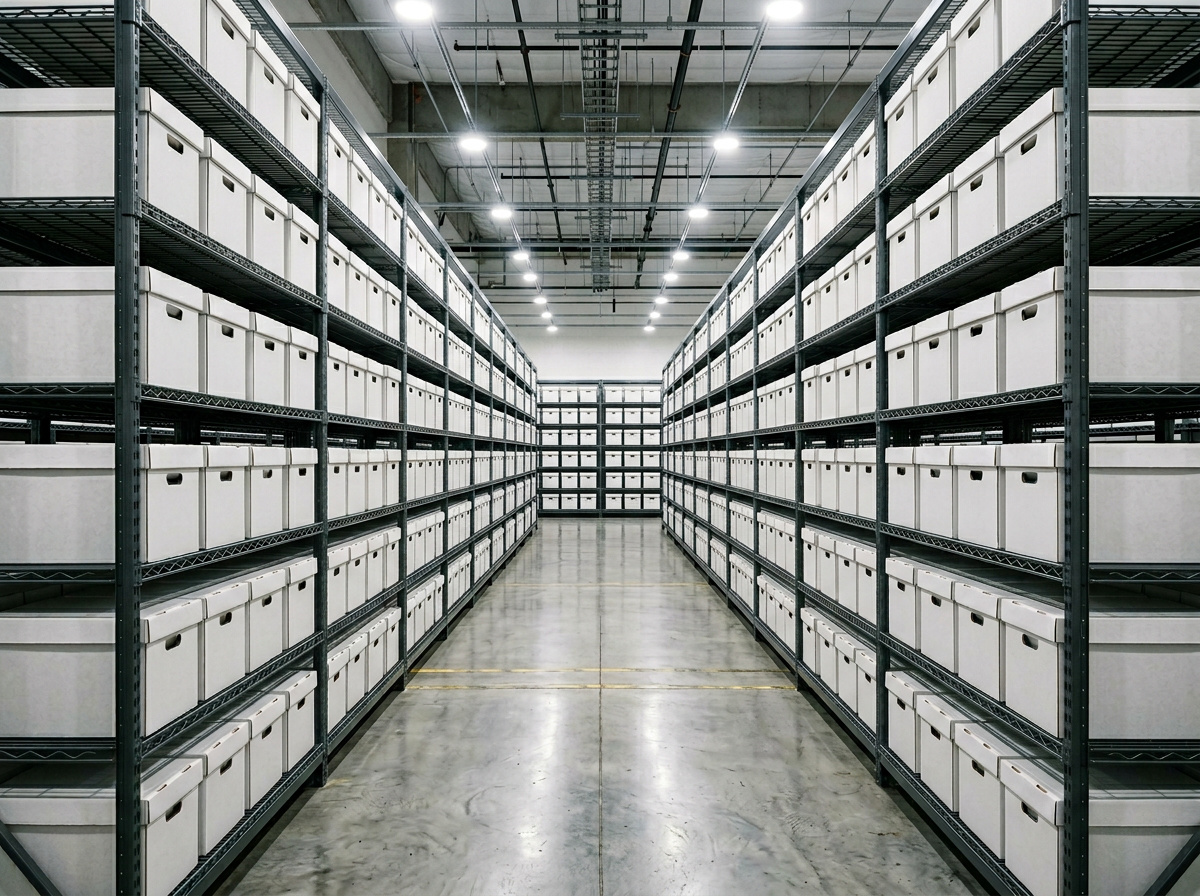
Stacking heavy boxes recklessly compromises the physical integrity of the bottom layer after months of static pressure. Whether you rent a massive 10×20 Storage Unit, or book smaller 5×8 Storage Unit setups or Sky Lockers for specialized electronics and video games, the architecture of your unit defines how safely you can pull items out a year later.
Why do visual inventory systems minimize retrieval handling?
A hyper-detailed visual and descriptive inventory eliminates the need to dig aimlessly through sealed boxes later, radically reducing the risk of accidental drops. You fundamentally want to minimize physical contact with your archived assets once they are stored.
Before you close a single lid, photograph the contents. Instead of just mentioning a precise spreadsheet, modernize your tracking methods by generating unique QR codes to affix to the exterior of your airtight bins. Using collector-specific database apps, you can safely scan these codes to instantly pull up a visual gallery of a box’s contents without breaking its seal. The direct link between a strong visual inventory and careful retrieval handling means you will immediately know that box #4 holds the exact Warhammer squad you need for game night. Check out our tips on how to display collectibles once you identify exactly what you want to bring back to the house from storage.
Preventing mechanical crushing with weight distribution
Installing durable freestanding shelving protects lighter archival boxes from the downward crushing force of vertical box-on-box stacking. Even thick corrugated cardboard weakens and buckles over the years under a sustained vertical load.
To permanently stop mechanical crushing, employ strategic weight distribution by keeping heavy base items grounded and placing all lighter containers on independent metal shelves. Organizations with specialized business programs like the Store+ Advantage or Kamloops Mailboxes highly emphasize keeping walkways clear and eliminating unsafe vertical stacks. You want to retrieve items efficiently without triggering a lateral collapse onto your fragile Glass or Porcelain boxes on the way out the door.
Securing your collection’s long-term legacy
Proper long-term storage is an active, ongoing execution of chemistry, climate stability, and structural engineering. The friction between needing physical space for family harmony and an intense fear of damaging your life’s work is entirely solvable without compromising either side.
It requires abandoning cheap DIY shortcuts. Skip the attic. Rent the climate-controlled 5×10 Storage Units, invest in the glassine paper, construct the foam matrixes, and build out metal shelving. Preservation is not a gamble; it is a predictable, manageable series of physical variables. Master the micro-environment, and your 20-year obsession will remain structurally perfect in the dark until you are ready to deploy it again.
Frequently Asked Questions
Can I use mild soap to clean my Warhammer figures before packing them?
Absolutely not. Liquid cleaners, even mild ones, act as a solvent and will strip acrylic tabletop paints right off the plastic base. Stick strictly to a dry, soft-bristled hobby brush or compressed air from a safe 12-inch distance to lift dust without ruining your paint job.
What’s the difference between standard bubble wrap and glassine paper?
Standard bubble wrap contains active plasticizers that will eventually melt directly into the clear coat of a painted miniature or the varnish of an antique. Glassine paper serves as a slippery, chemically neutral barrier that prevents this dangerous surface adhesion. Wrapping your items in glassine first guarantees your protective layer won’t peel the paint off your favorite model a decade later.
Why does wrapping boxes in household cling film ruin collectibles?
Sealing boxes airtight creates a destructive micro-greenhouse that traps ambient moisture inside a non-breathable environment. By restricting airflow entirely, you effectively engineer a highly efficient fungal incubation chamber around your items. Any drop in temperature will cause that trapped moisture to condense directly onto your books, comics, or vinyl records, causing irreversible mold.
How does thermal cycling in an uninsulated shed affect plastic and resin models?
Extreme temperature swings force materials to physically expand and contract at the molecular level. An unregulated shed that gets blazing hot during the day and freezes at night inflicts intense material fatigue on your collection. This constant shifting causes the glued joints on delicate tabletop models to snap spontaneously.
Is a climate-controlled storage unit actually worth the extra cost for paper and cardboard items?
Yes, treating climate control as an optional luxury is the fastest way to legally obliterate your own collection. Relying on the ‘free storage’ of an attic or shed exposes delicate paper goods to thermal shock and massive humidity swings. A regulated facility permanently stops the moisture retention that turns vintage cardboard and rare books into moldy mush.
What is the safest way to prevent boxes from crushing each other over time?
Ditch vertical box-on-box stacking entirely and install freestanding metal shelving inside your unit. Even thick corrugated cardboard inevitably weakens and buckles under years of sustained static pressure from the weight above it. Placing containers on independent shelves eliminates mechanical crushing and prevents catastrophic box avalanches when you finally retrieve them.