
If you are heading into a contested zone or a heavy public demonstration, you need to know exactly how to armor your body against an active sonic weapon. With the constant escalation of crowd-control deployments in recent years, many of you have asked me how an ordinary person can realistically protect themselves from these directed-energy devices. It is a terrifying concept — an invisible wall of sound designed to cause extreme visceral pain — so I spent way too long digging into the acoustics and physics of the threat.
What I found is that standard civilian intuition fails entirely against modern emitters. Instinct tells us to cover our ears and run straight away, but mathematically, that response keeps you trapped inside the active pain zone. To survive without permanent eardrum damage or nausea, you have to adopt mitigation tactics based on raw physics. Before you can properly armor yourself, you must first understand the anatomy of the invisible threat you are facing.
Key Takeaways
Escaping the narrow 30-degree targeting cone of an LRAD requires immediate lateral movement, preventing extended high-decibel exposure.
Standard earplugs fail at extreme volumes because sound bypasses the ear canal via skull vibration, making solid over-ear muffs a strict necessity.
Low-frequency off-spectrum attacks can induce a condition where 18.9 Hz waves cause human eyeballs to physically vibrate, severely distorting vision.
Table of Contents
Long-Range Acoustic Devices and Threat Identification

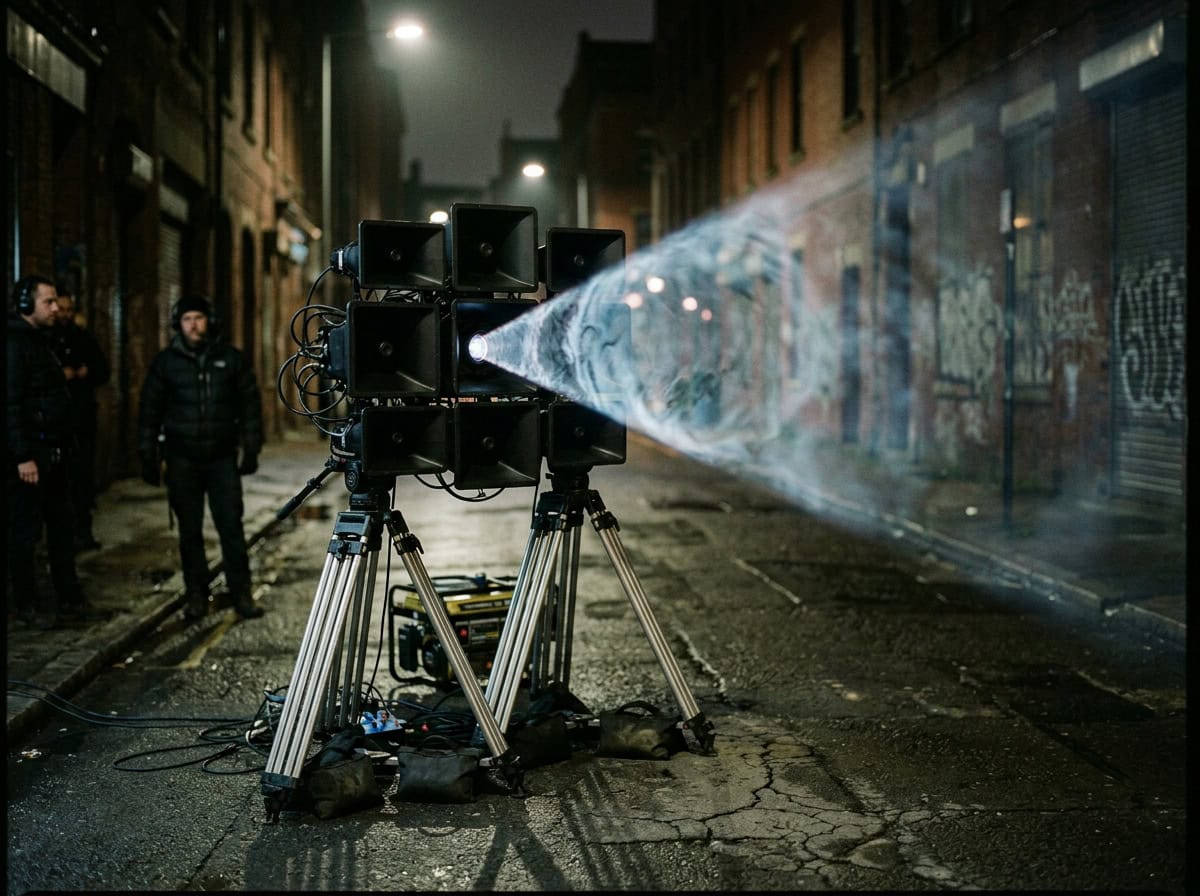
How do Long Range Acoustic Devices (LRADs) work against crowds? While sonic harassment has historical roots stretching back to the psychological warfare sirens of World War II and the covert directional broadcasts of the Cold War, modern LRADs operate on a completely different level. Visually, you can spot this non-active hardware by identifying large, flat hexagonal or circular dish arrays mounted on tripods or specialized police vehicles.
When activated, they project a tightly focused, high-decibel beam of sound operating at peak human auditory sensitivity to induce overwhelming physical pain and disorientation in a massive group. They do not scatter audio in all directions like a normal speaker setup; instead, they function more like an invisible acoustic laser pointer. Furthermore, some specialized devices deploy invisible zero-footprint deterrents like ultra-high frequencies that uniquely weaponize the auditory biology of younger demographics.

How LRADs Target Peak Human Sensitivity
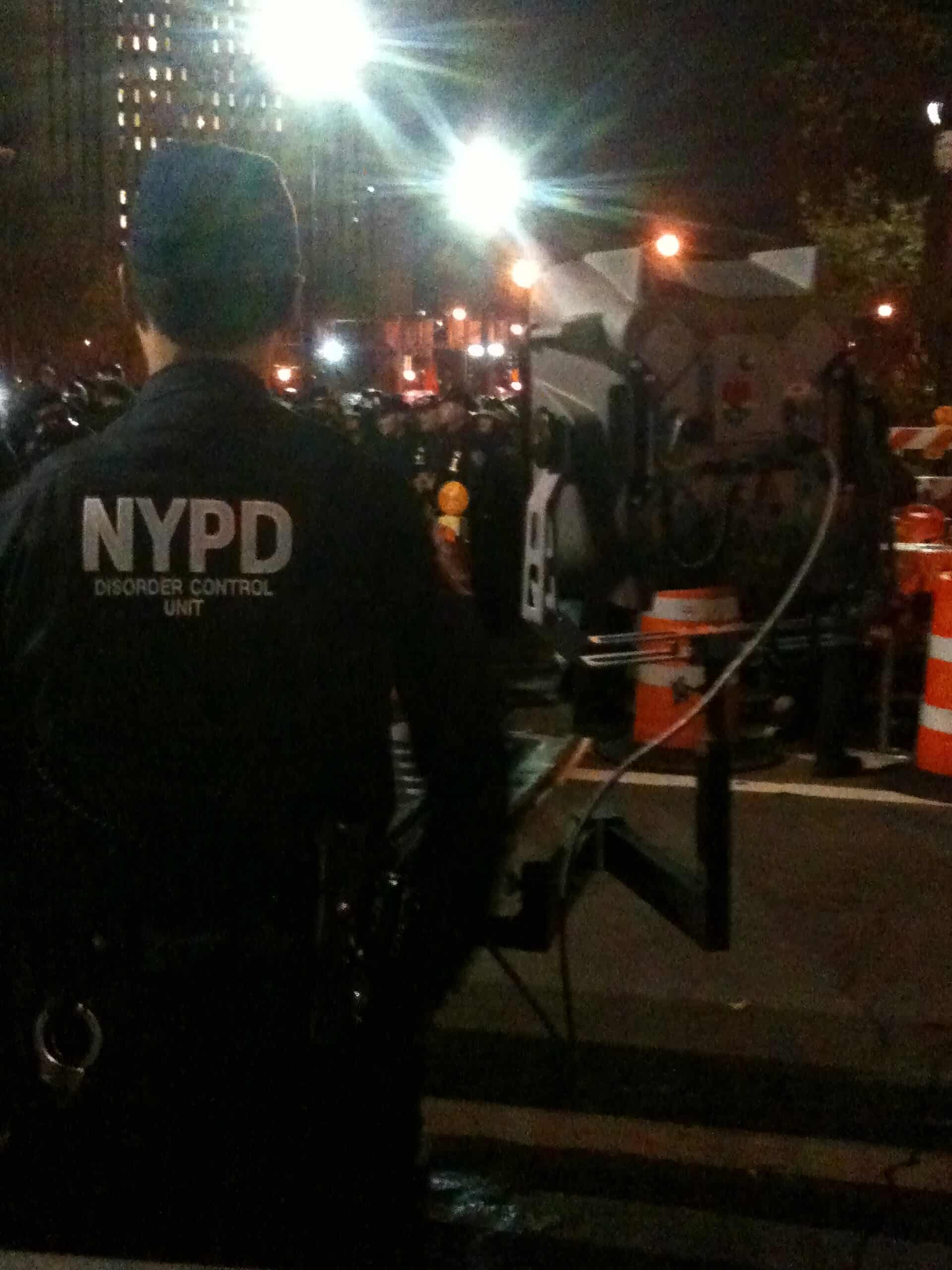
If you look at the hardware deployed by the New York City Police Department at the original Occupy Wall Street protests, you see exactly how the mechanics of auditory pain work. These systems project high-amplitude acoustic warnings directly at the peak sensitivity of human hearing, which naturally sits right in the 2–3 kHz range. When a sound cannon hits this exact frequency band at north of 130 decibels, the human ear physically cannot process the pressure.
Instead of just registering a loud alarm, the targeted crowd experiences immediate, sharp physiological anguish. It is honestly kind of elegant in a malicious way — exploiting the biological tuning of our inner ears to force massive crowd compliance without firing standard kinetic anti-personnel projectiles. Once you know what audible frequency is hitting your group, standard foam earplugs will be your first thought—but deploying them alone is a crucial mistake.

Identifying Invisible Ultra-high Frequency Threats
Sometimes the threat isn’t a glaring siren, but a covert demographic-targeting weapon weaponizing isolated pitches that older adults literally cannot hear. I was fascinated to learn about a commercial device called The Mosquito, which blasts a violently uncomfortable ultra-high frequency of restricted 19–20 kHz tones specifically to deter teenagers from loitering. Because the natural degradation of microscopic hair cells within the ear naturally desensitizes older adult hearing to those upper registers, only individuals under twenty generally feel the searing discomfort. If half your protest group suddenly complains of ear-splitting feedback while the older participants feel perfectly fine, you are facing a targeted ultrasonic deterrent. Identifying whether you are dealing with a broad-spectrum blast or a selectively tuned high-frequency tone dictates the exact evasive countermeasures you need to deploy.
How to Protect Yourself From Sonic Weapons With Dual-layer Gear
Do regular earplugs or noise-canceling headphones block sonic weapons? No, consumer noise-canceling headphones and standard foam earplugs are completely ineffective against the extreme acoustic pressure of a directed sound beam. A professional Long-Range Acoustic Device punches right through typical civilian audio gear and utilizes your skull architecture to bypass ear canal blocks.
Because intense sound waves travel straight through your facial bones via bone conduction, simple foam inserts fail to halt the kinetic transfer of acoustic energy. Basic hardware store earplugs simply cannot absorb the immense amplitude produced by professional-grade sound cannons. To actually survive these extreme pressures, you must construct a comprehensive dual-layer auditory shield. This requires pairing medical-grade, deeply inserted silicone plugs with thick, clamp-style industrial over-ear muffs to proactively disrupt kinetic vibrations before they vibrate your temporal bones.
Why Standard Foam Fails Against Sound Cannons
I see so many protest safety guides recommending cheap foam earplugs, which betrays a fundamental misunderstanding of extreme-decibel physics. Sound above 130 decibels doesn’t just enter through your ear canal; it travels directly into your inner ear through the surrounding bone structure. This biological phenomenon, known as bone conduction—which operates on the same acoustic principles that allow commercial divers to plainly hear boat engines miles away underwater—renders the standard Noise Reduction Rating of hardware store earplugs completely meaningless under heavy acoustic fire. Even if you have the highest-rated internal silicone inserts perfectly sealed in your canals, the sheer vibration of a Long-Range Acoustic Device wave will bypass the plug, vibrate your skull, and shred the delicate sensory structures within the organs of Corti inside your fluid-filled cochlea anyway. Basic foam absorbs essentially no energy at that amplitude. You absolutely cannot stop a military-grade acoustic weapon with a single internal barrier.
Constructing a Dual-layer Auditory Shield
To actually block intense sound pressure, you have to build a dual-layer acoustic shield that actively stops both air and bone transmission. Here is the exact, zero-budget blueprint you need to run. First, insert medical-grade, high-density silicone earplugs deep enough to seal the auditory canal completely tight. Second, cover your entire outer ear with tightly clamped, solid industrial safety muffs. This thick outer shell physically clamps down on the skull around your ear, significantly disrupting the kinetic vibration before it can heavily resonate through your temporal bones. This dual approach is the only way to genuinely protect your hearing from lasting damage on the street. However, even the thickest earmuffs won’t save you if you remain locked within the weapon’s direct line of fire.
LRAD 500X Evasion Tactics and Physical Barriers
What materials effectively block high-frequency and low-frequency sonic waves? Dense, heavy materials like solid concrete, thick brick walls, and packed earthworks successfully reflect sonic energy, while thin glass panels or lightweight sheet metal merely vibrate and transmit the acoustic energy straight through to you.
Surviving a directed attack requires immediately escaping the active blast cone through calculated lateral movement rather than running backward into the crosshairs. Once you step out of the beam’s direct line of sight, you must deliberately utilize the urban environment to your advantage. This means purposefully selecting massive environmental barriers with deeply mismatched acoustic impedance to create a physical defense. Relying on thin materials essentially turns your cover into a vibrating drumhead that amplifies the trauma, whereas massive concrete structures will actively bounce the debilitating waves safely away from your body.
Escaping the Blast Cone via Lateral Movement
Human instinct dictates that when a loud volumetric threat appears, you immediately turn and run straight away from it. Against a directed-energy acoustic array like the LRAD 500X, you must immediately escape its natively focused 30-degree cone of audible sound instead of running straight backward. Because these massive devices, frequently used in crowd control since the G20 Pittsburgh summit, operate like an acoustic laser, retreating directly away is mathematically the worst possible evasion strategy.
If you sprint backward in a panic, you are continuously running right down the center of the beam’s crosshairs, drastically extending your exposure to the agonizing output. Check out the math on this: stepping sideways at a sharp 90-degree lateral angle from the emitter completely sidesteps the active acoustic beam in just a few feet. Always move laterally to break the weapon’s acoustic line of sight.
Utilizing Matched Vs. Mismatched Acoustic Materials
Once you step laterally, your next core objective is putting the correct kind of heavy physical barrier between your body and the sound source. You specifically want to hide behind dense materials utilizing perfectly mismatched acoustic impedance, meaning heavy physical barriers like concrete road dividers or massive earth blocks that actively reflect the incoming sound waves. If you duck behind a thin glass bus shelter or a hollow aluminum street sign, the sound wave will effortlessly couple with the thin material, effectively turning it into a giant speaker cone that vibrates the kinetic energy right back into you. Knowing how to detect directed-energy weapons isn’t just about spotting the hardware; it’s about anticipating how your urban environment will dynamically react when the switch is flipped. Defending your ears stops the immediate pain, but low-frequency off-spectrum attacks introduce an entirely different biological danger.
Defending Against Extra-aural Bioeffects and Infrasound Attacks
What are the physical symptoms of a sonic weapon attack? Immediate physical symptoms include spontaneous ringing in the ears (tinnitus), extreme vestibular disorientation, unexplained deep dread, blurred vision, and deep nausea heavily linked to internal organ vibration. The most severe biological damages occur entirely outside the ear canal structure.
Covert infrasound pulses can actively match the biological resonance of human tissue, causing unpredictable phenomena like vibrating eyeballs and overwhelming psychological panic in large crowds. Beyond these terrifying visual and neurological distortions, extreme off-spectrum waves present severe physical risks to your internal cavities. High-intensity acoustic energy can seamlessly pass through flesh to sharply impact internal gas pockets, causing destructive vibroacoustic stimulation. To prevent severe tissue shearing and cardiovascular disruption during an invisible low-frequency attack, standard hearing protection is useless; putting massive environmental infrastructure between you and the emitter is your only defense.
Recognizing Low-frequency Resonance and Visual Distortion
If your vision suddenly blurs into a hazy mess and you feel an overwhelming sensation of inexplicable terror at a protest, you are not suffering a panic attack—you are likely being targeted by covert infrasound pulses. I was reading the case files of paranormal researcher Vic Tandy, who accidentally documented this exact phenomenon while attempting to debunk a supposedly haunted laboratory. He successfully discovered that a low infrasound frequency of exactly 18.9 Hz actively matched the natural resonant frequency of the human eye, directly causing the severe vibration of the eyeballs and generating haunting visual distortions. If you experience these bizarre neurological symptoms without an audible siren, identify the invisible low-frequency source and immediately retreat to solid environmental cover to break the wave.
Mitigating the Risk of Internal Tissue Damage
The real danger of low-frequency off-spectrum weapons deployed in chaotic environments, much like those utilized during the Ferguson unrest, is what they do to your delicate internal cavities. Extreme, sustained acoustic profiles generate violent extra-aural bioeffects, with the absolute worst-case scenario triggering deep ultrasound-induced tissue shearing inside the lung and liver layers. When heavy sound waves effortlessly pass through the physical body and impact gas-filled pockets, the resulting vibroacoustic stimulation violently disrupts cardiovascular function, frequently triggering severe cardiac arrhythmias like atrial flutter as the acoustic waves physically jar the Heart muscle. Standard ear protection provides absolutely zero defense against internal pneumatic resonance at these levels. The only effective mitigation is placing the thickest possible concrete infrastructure between your body and the active emitter to absorb the hit.
“When heavy sound waves effortlessly pass through the physical body and impact gas-filled pockets, the resulting vibroacoustic stimulation violently disrupts cardiovascular function, frequently triggering severe cardiac arrhythmias like atrial flutter as the acoustic waves physically jar the Heart muscle.”
Immediate Medical Triage for Acoustic Weapon Exposure
How do you treat the immediate medical aftermath of acoustic weapon exposure? First, immediately move the casualty completely out of the resonant path behind a heavy physical structure to stabilize their equilibrium, then actively monitor their breathing out of the pain zone, and securely document their symptoms for a professional audiological evaluation. Medical follow-up is not optional for inner-ear micro-tears.
Because a sustained acoustic barrage acts as a concussive traumatic force, proper triage requires systematically addressing profound disorientation, nausea, and severe vertigo. Responders must focus on physically grounding the patient while strictly protecting the compromised eardrum from further damage or counterproductive field remedies like water flushing. Securing post-incident neurological and audiological care is ultimately required to detect hidden fluid imbalances, treat undocumented soft tissue injuries, and initiate a formal medical recovery protocol for hidden internal damage.
I learned from reviewing the medical incident reports from the Dakota Access Pipeline protests that a direct, sustained acoustic blast acts exactly like an invisible physical concussion on the human body. If someone takes a direct hit from an active ultrasonic weapon or a heavy sound cannon strike, their vestibular equilibrium system will be entirely shot. Sit the casualty against a solid, non-vibrating surface and keep them completely grounded to halt the severe nausea and induced vertigo.

Do not let them flush their ears with water or violently insert anything into the canal to “stop the ringing.” Extreme acoustic pressure from these tools easily causes micro-tears in the tympanic membrane that cleanly invite nasty secondary infections. Once the participant stabilizes and the threat passes, they must see an audiologist. Internal tissue trauma and severe fluid imbalances in the inner ear often present hours later.
Final Preparations for Localized Sound Deployments
Surviving modern crowd control technologies boils down to respecting the raw physics of targeted sound and stripping away the sanitized marketing hype that frames these devices as mere “communication tools.” At GeekExtreme, we naturally prefer to look under the hood of tech—and when it comes to lethal or quasi-lethal acoustics, the math absolutely does not lie.
If you fundamentally want to safeguard your hearing and long-term neurological health, build your gear checklist strictly around dual-layering. Pack heavy, medical-grade silicone inner plugs and a tough set of clamped over-ear safety muffs. Write out your physical evasion plan long before you march: always step sharply laterally to break the targeting cone, and never just run straight backward in a panic.
Keep an incredibly sharp eye on your surroundings so you systematically know which concrete or solid earth barriers will actively reflect sound, rather than thin metals or weak glass that will just broadcast the pain at you. Finally, watch out for those bizarre invisible symptoms—shaking visual fields, deep nausea, crushing dread—that uniquely signal off-spectrum infrasound strikes. Mass panic and chaos are exactly what these devices are explicitly engineered to create, but solid gear and a cold understanding of the science render them drastically less effective.
Frequently Asked Questions
Are consumer noise-canceling headphones or basic foam earplugs worth using against an LRAD?
No, standard retail audio gear and basic hardware store earplugs are completely useless against military-grade sound cannons. Once an acoustic weapon hits 130 decibels, the sheer acoustic vibration bypasses your ear canal entirely and travels directly into your inner ear through your skull via bone conduction. You need a dual-layer setup combining deep-inserted medical silicone plugs with heavy industrial safety muffs to actively clamp the skull and disrupt those vibrations.
Why does running directly away from a sound cannon actually make the exposure worse?
Human instinct dictates sprinting straight away from a loud noise, but Long-Range Acoustic Devices (LRADs) operate like acoustic lasers rather than standard concert speakers. They project their pain-inducing payload in a highly concentrated, 30-degree targeted cone. If you panic and run straight backward, you stay trapped right down the center of the beam’s crosshairs; the only correct mathematical move is stepping laterally at a sharp 90-degree angle to break the line of sight.
How does ‘The Mosquito’ sonic weapon specifically target crowds of teenagers while older adults hear nothing?
The Mosquito blasts a violently uncomfortable ultra-high frequency in the 19–20 kHz range, which ruthlessly exploits the biological realities of human aging. As people get older, the microscopic hair cells inside their ears naturally degrade, permanently desensitizing them to extreme upper acoustic registers. This creates an ear-splitting deterrent for individuals under twenty, while older adults remain perfectly oblivious to the threat.
Why do low-frequency infrasound weapons cause blurred vision and a feeling of intense dread?
Infrasound weapons use ultra-low frequencies that physically vibrate your body’s internal biology rather than attacking your auditory processing. A frequency of exactly 18.9 Hz perfectly matches the natural resonant frequency of the human eye, literally vibrating your eyeballs to create severe visual distortion. Furthermore, these heavy off-spectrum waves pass right through the body to violently impact gas-filled cavities, triggering uncontrollable nausea, vertigo, and a localized neurological sense of inexplicable terror.
What is the difference between taking cover behind a thick concrete divider versus a glass bus shelter during a sonic attack?
It boils down to raw mass and a physics principle called mismatched acoustic impedance. Dense, heavy infrastructure like solid concrete blocks or packed earthworks will actively reflect destructive sound waves away from you. If you duck behind lightweight materials like thin glass shelters or hollow aluminum signs, the acoustic wave easily couples with the thin metal, essentially turning your hiding spot into a giant vibrating speaker cone.
Can I flush my ears with water to stop the severe ringing after taking a direct acoustic weapon hit?
Absolutely not, and doing so is incredibly dangerous. The extreme acoustic pressure from these devices acts like a localized internal concussion and frequently causes distinct micro-tears in the tympanic membrane. Flushing your ears with water or aggressively digging into the canal to relieve the tinnitus will almost guarantee a severe secondary infection in your newly shredded inner ear.

If you hear a word cover your ears and eyes.
So the actual take away from the video was that the suggestions of this article are pretty bad and the actual option is to use ROSS foam to reflect up to 50% back at the attacker and is the most effective if forced into the situation, audio canceling does nothing against the real attack.
What can a drone have attached to it to cause my stomach to rumble, feel heat in certain areas of my body at times, severe headaches, tired all the time, blurry vision, pressure in the ear, also makes metal roofs ping .