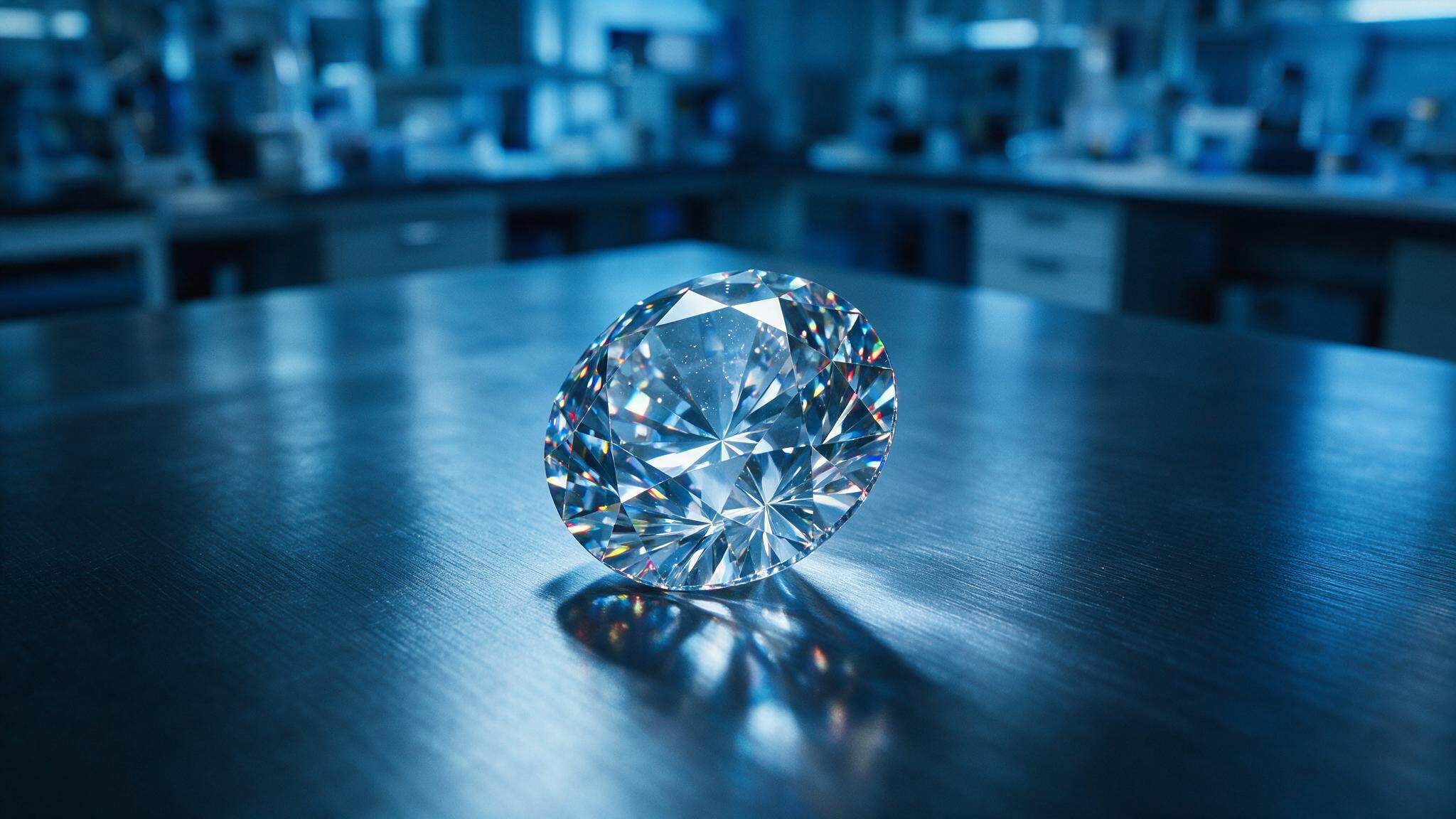
You’ve probably heard that lab-grown diamonds are “real diamonds,” but what does that actually mean? It means they’re made of the same stuff as the ones pulled out of the ground — pure carbon, crystallized in that same isotropic 3D lattice. Chemically, physically, optically identical. They’re not imitations like cubic zirconia or moissanite, which are different materials that look like diamond. Lab diamonds are diamond, made in a machine instead of the Earth’s mantle.
The regulatory landscape is divided. The FTC updated its Jewelry Guides in 2018 to remove the word “natural” from the definition of diamond, meaning lab-grown diamonds legally qualify as diamonds. But the World Jewellery Confederation (CIBJO) is going the other way — starting September 2026, they’ll eliminate “laboratory grown” and “laboratory created” from their Blue Book and mandate only “synthetic.” That’s the same term used for decades, but now it’s wrapped in a debate about whether it implies “fake.”
The material hasn’t changed; the labels keep shifting. In 2019, GIA changed its reports for lab-grown diamonds, no longer using the term “synthetic” on its grading reports and instead adopting “laboratory-grown.” Meanwhile, the U.S. Federal Trade Commission (FTC) had already updated its guidelines in 2018 to allow the term “laboratory-grown” as a clear descriptor.
Key Takeaways
Lab-grown diamonds are chemically, physically, and optically identical to natural diamonds — they’re real diamond, not simulants like cubic zirconia.
The two dominant manufacturing methods are HPHT (brute-force high pressure and temperature) and CVD (precision chemistry from gas plasma), each with distinct tradeoffs in size, color, and cost.
By early 2025, lab-grown diamond prices had dropped 74% since 2020, and a synthetic one-carat stone can be up to 73% cheaper than a natural diamond with the same specs.
Table of Contents
A Brief History of Synthetic Diamonds
Making diamonds in a lab took over 150 years of trying, failing, and incremental progress.
Early Attempts and False Starts
In 1797, English chemist Smithson Tennant burned a diamond and proved the gas produced was CO? — diamond is pure carbon. That opened the door to the idea that you could make diamond from other carbon sources.
Between 1879 and 1928, between 1879 and 1928, a parade of researchers claimed they’d done it: James Hannay, Ferdinand Moissan, Sir William Crookes, Otto Ruff, J. Willard Hershey. None of their results could be reproduced. Sir Charles Algernon Parsons spent 40 years trying to replicate those early claims, and by 1928 he officially concluded that no synthetic diamond had ever been made.
The Breakthrough That Stayed Secret
On February 16, 1953, in Stockholm, the Swedish company ASEA achieved the first reproducible synthetic diamond using their QUINTUS project. They used a bulky split-sphere press designed by Baltzar von Platen and Anders Kämpe, maintaining 8.4 GPa and 2,400°C for an hour. The diamonds were small and not gem quality, but they were real — and reproducible. But ASEA kept the results secret due to patent concerns.
Tracy Hall and the Commercial Revolution
On December 16, 1954, Tracy Hall at General Electric’s Schenectady Laboratories produced the first commercially successful synthetic diamond. Hall used a belt press — a hardened steel toroidal “belt” that could contain pressures above 10 GPa and temperatures over 2,000°C. The press used a pyrophyllite container where graphite was dissolved in molten nickel, cobalt, or iron. The largest diamond Hall produced was 0.15 mm across.
GE announced the achievement on February 15, 1955, and the world learned that synthetic diamonds were real. It took another 16 years, but in 1970 GE produced the first gem-quality synthetic diamonds, about 1 carat each. Those early gemstones were always yellow or brown because of nitrogen contamination. Colorless diamonds came later.
The HPHT Method: Recreating Earth’s Pressure
High-Pressure High-Temperature (HPHT) synthesis is the original method. It mimics the natural diamond formation process deep underground — extreme pressure and heat, but inside a machine.
Step-by-Step: How HPHT Works
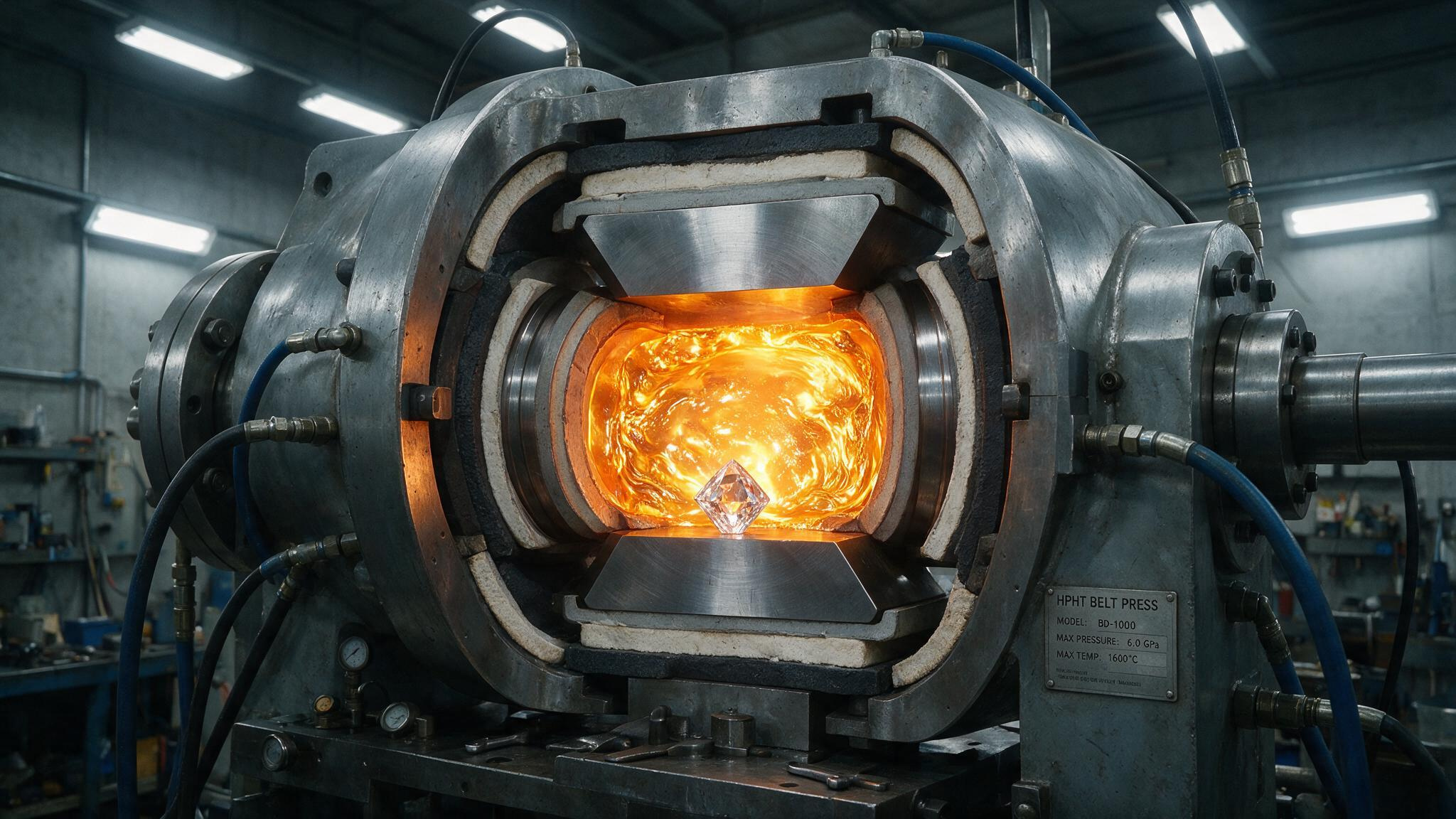
You start with a tiny diamond seed at the bottom of the press. That’s the foundation. Above it goes a high-purity carbon source, usually graphite. A metal solvent-catalyst — typically nickel, cobalt, or iron, sits in between. The press heats up past 1,400°C, melting the catalyst. The molten metal dissolves the graphite, then transports the carbon atoms to the seed, where they precipitate out as diamond crystal, layer by layer.
The sweet spot for growth is 5–6 GPa (about 730,000 psi) and 1,300–1,600°C. That’s enough to keep diamond stable while allowing the catalyst to work.
Three Press Designs, Three Tradeoffs
Not all HPHT presses are the same.
Belt press — Tracy Hall’s original design. Upper and lower anvils squeeze the sample cell from top and bottom, while a ring of pre-stressed steel bands (the “belt”) prevents the pressure from blowing out the sides. The anvils double as electrodes, so they push and heat simultaneously. Belt presses are still used today, scaled up from Hall’s original. They’re great for large-volume production.
Cubic press — Six anvils, one from each side, squeezing a cube-shaped volume simultaneously. This design is more compact than the belt press, and it reaches the required pressure and temperature faster. But it doesn’t scale up easily to larger volumes, it’s better for smaller batches. Manufacturers choose cubic presses when they need quick ramp-up times and are working with smaller stone sizes.
Split-sphere (BARS) press — The most compact, efficient, and economical of the three. At the center is a ceramic cylinder about 2 cm³, the synthesis capsule. It sits inside a cube of pyrophyllite ceramics that distributes the force evenly. Inner anvils made from cemented carbide do the actual pressing.
Eight steel outer anvils press on the octahedral cavity containing the inner assembly.
Color Control and Record Sizes
The color of an HPHT diamond depends on what trace elements are present — or absent. Nitrogen impurities produce yellow to brown colors (that’s why early lab diamonds always had that warm tint). Adding aluminum or titanium removes nitrogen, giving you colorless “white” stones. Add boron instead, and you get blue diamonds. Other colors like pink or green can be achieved after synthesis using irradiation.
In 2015, a 10.02-carat colorless HPHT diamond was produced. The largest uncut synthetic diamond as of 2021 was 150.42 carats, verified on November 16, 2021 — about the size of a walnut, while more modest offerings like 5 carat lab grown diamond engagement rings are also common. By 2025, synthetic diamonds up to 125 carats are possible.
The CVD Method: Chemical Vapor Deposition
Chemical Vapor Deposition (CVD) takes a different approach. Instead of squeezing carbon under immense pressure, you grow diamond from a gas mixture in a vacuum chamber at low pressure.
How CVD Works
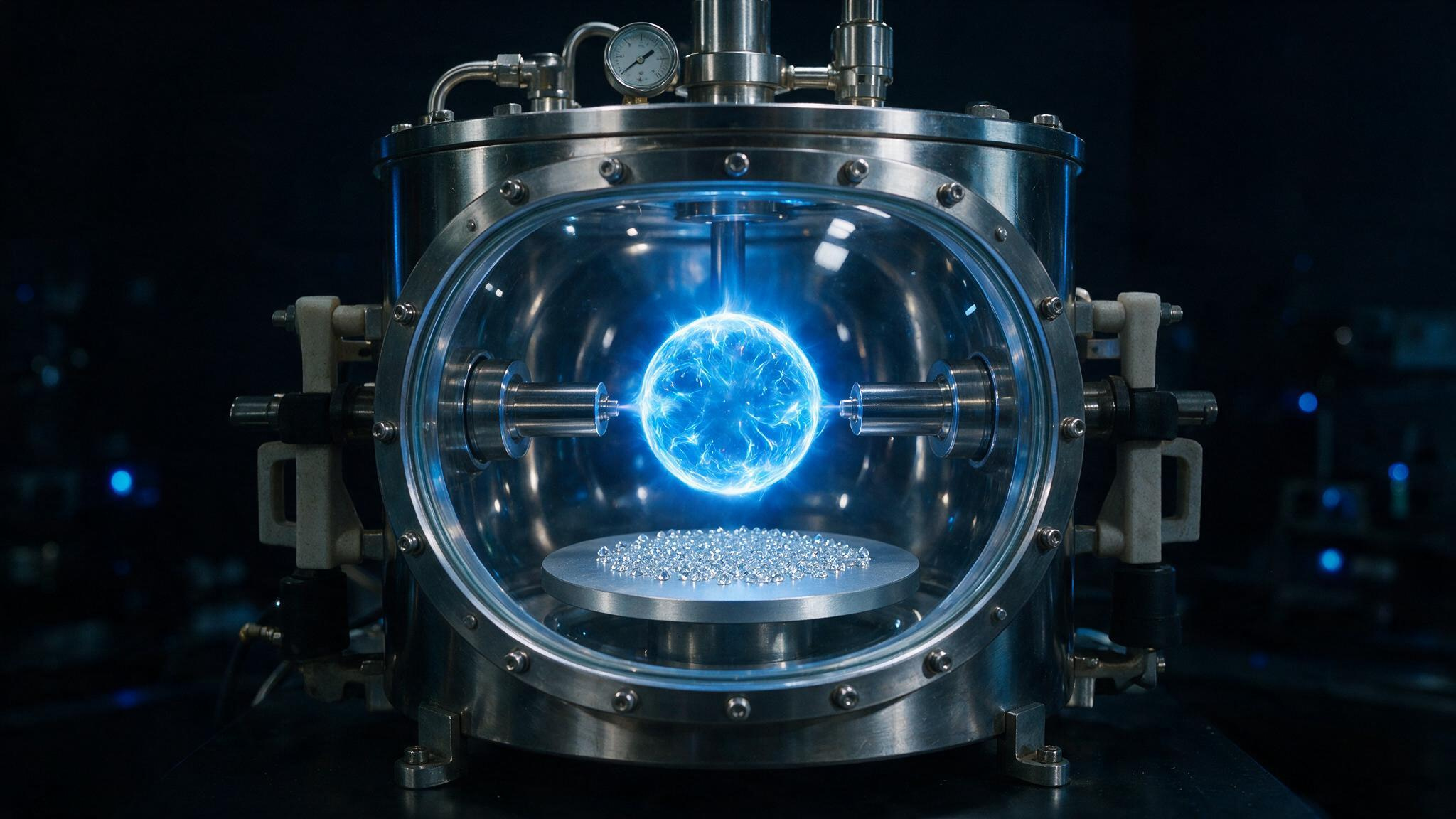
You start with a diamond seed — or more commonly, a seed disc holding 15 to 30 small diamond seeds. The seeds go into a vacuum chamber. Gases are fed in: typically 1% methane and 99% hydrogen. That tiny fraction of methane is the entire carbon source. The gas mixture is energized into a plasma, a glowing ball of ionized gas, using microwaves, a hot filament, an arc discharge, a laser, or an electron beam. The plasma breaks apart the gas molecules into reactive radicals.
The hydrogen selectively etches away any non-diamond carbon (graphite, amorphous carbon) that tries to form, while leaving the diamond structure intact. The carbon atoms from the methane deposit onto the substrate, building up the diamond crystal layer by layer. The whole process runs at under 27 kPa (about 3.9 psi)—no giant presses required, unlike the process to select gems ordered by Mohs hardness.
Post-Growth Treatment and Quality Concerns
CVD diamonds can emerge with brown undertones. To fix it, manufacturers use a post-growth HPHT treatment that improves the color. But there’s a tradeoff: that treatment can sometimes cause a milky or hazy appearance. Not all CVD diamonds need post-treatment, but many do, and the clarity can vary.
There’s also contamination risk. Silicon from chamber windows and boron from trace impurities can sneak into the crystal. The purity of the final product depends heavily on the quality of the vacuum system and the gas sources.
Size and Impurity Control
CVD’s big advantage is that it allows larger stones and finer control over impurities. Because you’re growing from a gas phase, you can adjust the chemistry mid-growth. Want to dope with boron for blue? Add a tiny bit of boron gas.
Want ultra-pure for electronics? Use ultra-high-purity methane and hydrogen.
The growth rate depends on the methane ratio, typically 1% of the gas mixture.
Other Ways to Make Diamonds
HPHT and CVD aren’t the only games in town.
Detonation Synthesis
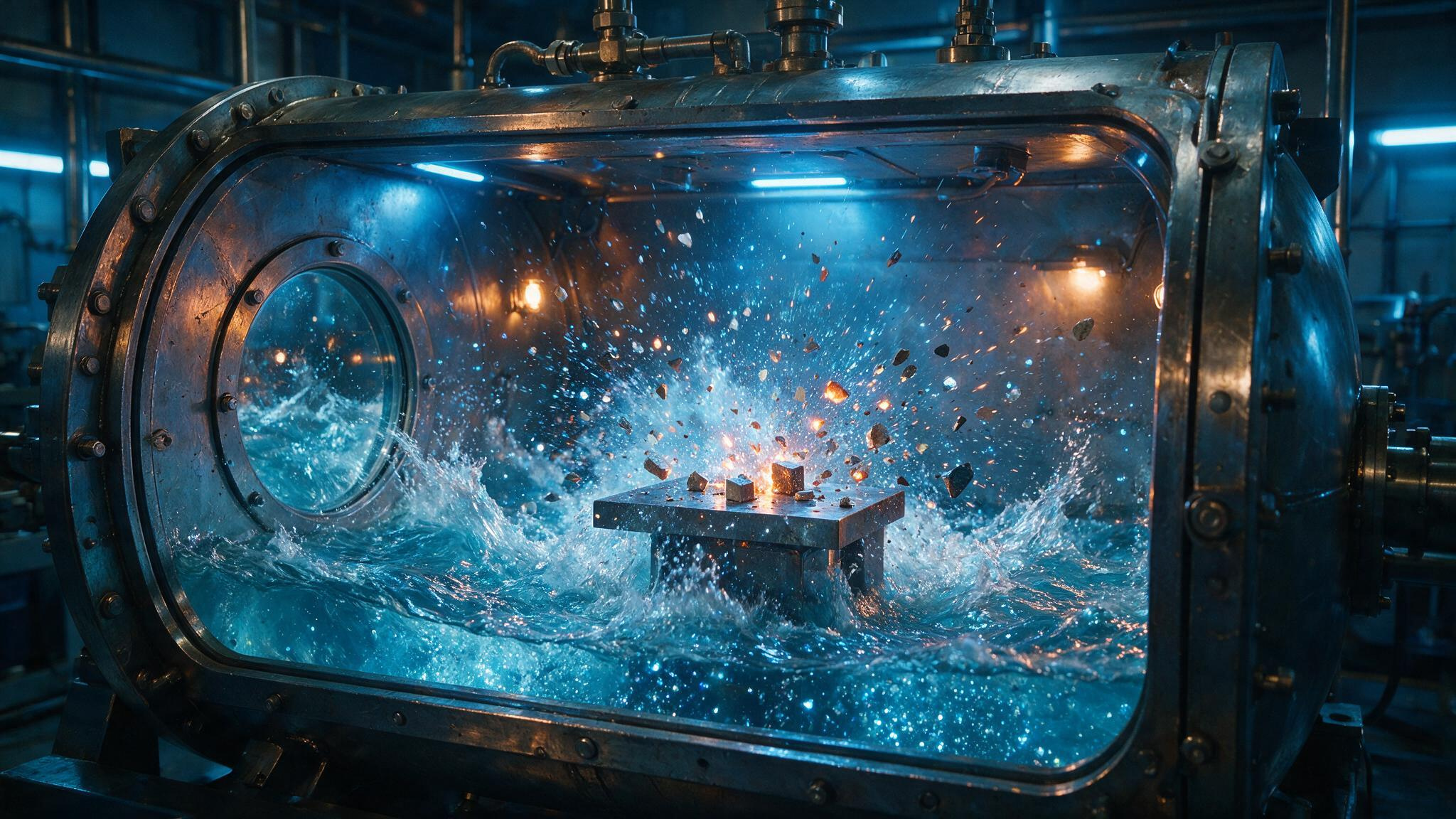
Detonate certain carbon-containing explosives in a metal chamber, and you get diamond nanocrystals about 5 nm in diameter — a few hundred atoms across. The explosion creates enough pressure and heat to convert the carbon in the explosives into diamond. The chamber is immersed in water to cool it rapidly, preventing the diamond from turning back into graphite. The product contains graphite and non-diamond carbon, so you have to boil it in hot nitric acid at 250°C for about a day to purify it.
The result is nanodiamonds used in polishing compounds. This method entered the market in the late 1990s and is produced primarily in China, Russia, and Belarus.
The Liquid Metal Method (2024)
In 2024, scientists announced a method that works at 1 atmosphere of pressure — no high-pressure press needed. They inject methane and hydrogen onto a liquid metal alloy (gallium, iron, nickel, and silicon) at about 1,025°C. The metal catalyzes the diamond formation. It’s a “seedless” process, diamond nucleates spontaneously in the liquid metal. A nucleus appears after about 15 minutes, and a continuous diamond film forms after about 150 minutes. It’s not commercially viable as of 2024, but if you can grow diamond at atmospheric pressure, the equipment requirements drop.
Ultrasound Cavitation
Use ultrasonic waves to create cavitation bubbles in a suspension of graphite in organic liquid at room temperature and atmospheric pressure. The bubbles collapse with enough force to form micron-sized diamond crystals. Yield is about 10% of the initial graphite weight. Cost is comparable to HPHT, but the crystal quality is worse. As of 2008, it had no industrial use — more of a lab curiosity.
The Peanut Butter Experiment (2014)
In 2014, a geoscientist at Bayerisches Geoinstitut in Germany put peanut butter in a multi-anvil press at 1.3 million atmospheres and over 4,000°F (2,200°C). After weeks of slow growth, they got a 2 mm diamond. The experiment wasn’t about making jewelry — it was to understand how carbon gets trapped inside the Earth. But it demonstrates that any carbon-rich material can be converted under extreme conditions. Peanut butter, apparently.
Memorial Diamonds
There’s a specialized sector of the synthetic diamond industry that converts human or animal remains into “memorial diamonds.” Carbon is isolated from cremated ashes or hair through high-temperature vacuum processing, purified, turned into graphite, and then grown via HPHT into a certified gemstone. Same process, different source material.
Properties and Applications: Beyond Jewelry
Synthetic diamonds have applications beyond jewelry.
Hardness
Some synthetic single-crystal diamonds and HPHT nanocrystalline diamonds can be harder than any known natural diamond. Hardness depends on purity, crystalline perfection, and orientation.
Thermal Conductivity
Single crystals of synthetic diamond enriched in carbon-12 (99.9% ¹²C) have the highest thermal conductivity of any known material: 30 W/cm·K at room temperature. That’s 7.5 times higher than copper. CVD diamond thermal conductivity can range from tens of W/m·K to over 2000 W/m·K depending on quality. Diamond is used as a heat spreader for high-power laser diodes, laser arrays, and high-power transistors.
Electronic and Optical Applications
Diamond has a band gap of 5.5 eV, electron mobility up to 4,500 cm²/(V·s) in single-crystal CVD, and demonstrated transistor frequencies of 50 GHz. It’s used in high-power switches, high-frequency transistors, and UV LEDs (235 nm). Diamond detectors for UV light and high-energy particles are used at research facilities like CERN. Optical windows in high-power CO? lasers and gyrotrons — diamond is transparent to those wavelengths and can handle the heat.
Industrial Dominance
98% of industrial-grade diamond demand is met by synthetic diamonds. Natural diamonds cannot compete on price or consistency. Synthetic diamonds are used in abrasives, cutting tools, diamond-tipped drill bits, saws, and polishing compounds. They’re in your dentist’s drill, the concrete saw on a construction site, and the heat sink in your high-power laser.
Quality, Grading, and Detection
Lab-grown diamonds are graded by the same 4 Cs (cut, color, clarity, carat) as natural diamonds, by the same labs — GIA, IGI, GSI. Every certified stone is laser-inscribed on its girdle with a report number and an indication that it’s lab-grown. The inscription is invisible to the naked eye but visible at 10x magnification.
Detection relies on the subtle differences in growth conditions. De Beers’ DiamondView tester uses UV fluorescence to detect trace impurities (nitrogen, nickel, etc.) that are characteristic of HPHT or CVD growth. Spectroscopic devices can identify growth patterns and trace elements. An electronic thermal probe can separate diamond from simulants in 2–3 seconds.
The industry challenge is the “melee” problem — small synthetic diamonds used in pavé settings have been found in jewelry parcels since 2013. Testing large quantities of small stones is costly and time-consuming. The Natural Diamond Council’s ASSURE 2.0 Program tests verification instruments to keep up.
Market Dynamics and Terminology
By early 2025, lab-grown diamond prices had dropped 74% since 2020. In April 2022, a synthetic one-carat round diamond was up to 73% cheaper than a natural diamond with the same specs.
Market share has grown from 0.28% of rough gem diamonds in 2013 to 17% of the jewelry market in 2023. Pandora announced in 2021 that it would stop using mined diamonds entirely and switch exclusively to lab-grown. Charles Abouchar, a prominent industry figure, has noted that some retailers charge a colored-stone commission on lab-grown diamonds, treating them more like gemstones than traditional diamonds.
The FTC says “synthetic” is fine as long as you don’t imply it’s not real. CIBJO will mandate “synthetic” exclusively from September 2026. Russia and the African Diamond Producers Association already require it, and the Russian government has pushed for stricter labeling standards. In India, the Bureau of Indian Standards (BIS) has also introduced guidelines for lab-grown diamonds to ensure consistent terminology. Designers like Stephanie Gottlieb are positioning lab-grown diamonds as affordable luxury — her Casual Carats line has 20 rings priced between $675 and $1,850, and the Lola collection includes 8 pieces from $1,065 to $7,750.
The Bottom Line
Lab-grown diamonds are chemically, physically, and optically identical to natural diamonds. HPHT is the brute-force method: high pressure, high temperature, molten metal catalysts. CVD is the precision chemistry method: gas plasma, low pressure, fine control. Both produce real diamonds, though CVD often requires post-growth treatment. Emerging methods like the liquid metal approach could change the landscape, but they’re not commercially viable yet.
Frequently Asked Questions
What is the downside of a lab grown diamond?
The main downside is the lack of resale value — lab-grown diamonds don’t hold value like natural ones, and some CVD stones can have a milky or hazy appearance if post-growth color treatment is done poorly. There’s also the “melee” problem where small synthetic diamonds in pave settings can be costly to detect and separate from natural stones in bulk parcels.
What’s the difference between HPHT and CVD lab-grown diamonds?
HPHT mimics Earth’s mantle using brute-force pressure (5-6 GPa) and heat (1,300-1,600°C) with a metal catalyst to crystallize carbon onto a seed. CVD uses a vacuum chamber with methane and hydrogen gas energized into plasma at low pressure (under 27 kPa) to deposit diamond layer by layer. HPHT produces better color control naturally; CVD allows larger stones but often needs post-growth treatment to fix brown undertones.
Can a jeweler tell if a diamond is lab-grown?
Yes, but not with the naked eye. Lab-grown diamonds are laser-inscribed on the girdle with a report number and lab-grown indication, visible at 10x magnification. Detection instruments like the DiamondView use UV fluorescence to identify growth patterns and trace elements (like nickel or nitrogen) that differ between HPHT and CVD stones.