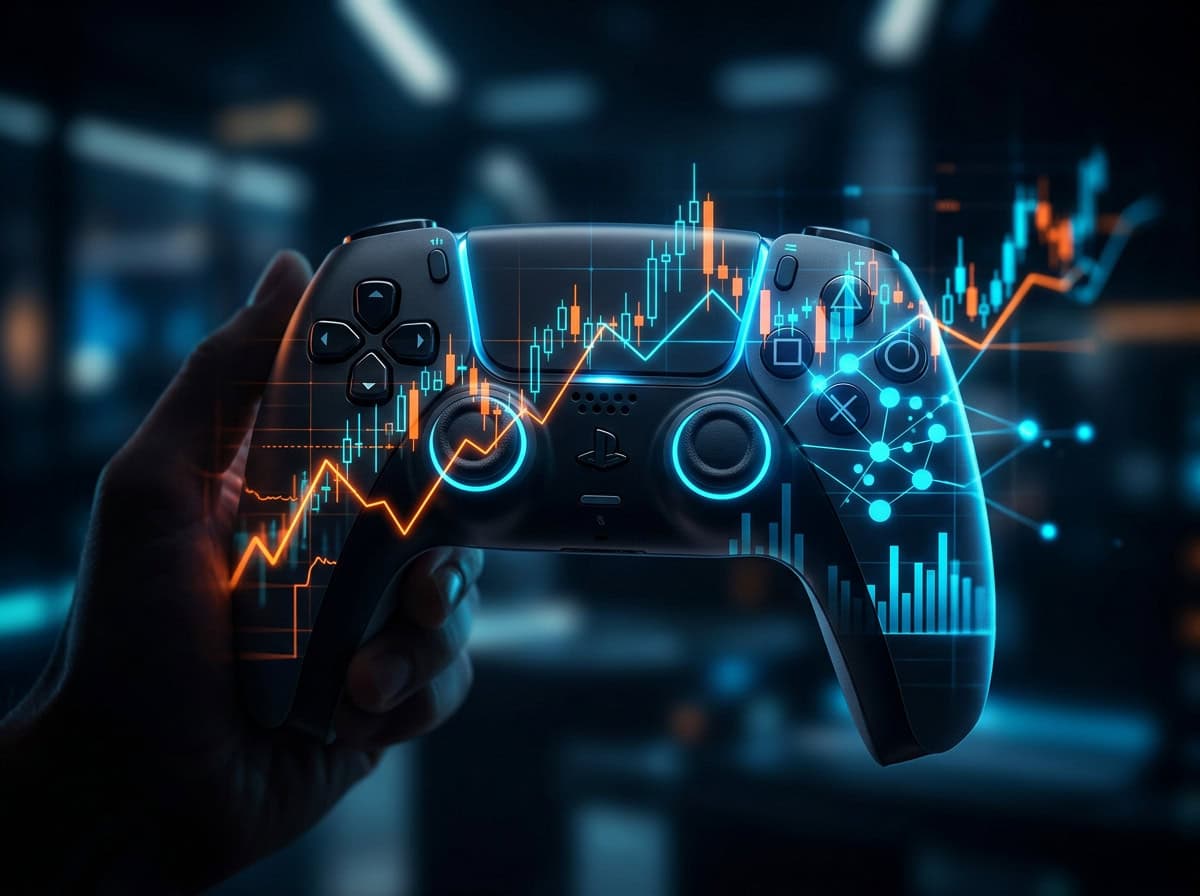
Playing video games fundamentally rewires your cognitive abilities, translating raw digital mastery into high-leverage professional success. If you want to understand what skills gamers naturally develop to thrive in the modern workplace, look past the screen. At GeekExtreme, our readers constantly note that gamers are often more logical thinkers than the average person, with better reflexes and fine motor skills.
We can actually trace this back to a recent industry debate. Take a query from a Reddit user named cgbr1 on the r/esports board, who asked what sets naturally talented players apart from the average gamer. The underlying truth is twofold. A select subset of players possesses innate neuromotor advantages that grant them an unnaturally high starting baseline in first-person shooters. However, the vast majority of professional competencies are built through highly deliberate, localized active practice.
Table of Contents
Why players process failure faster than non-gamers
Gamers spend roughly 80% of their actual playtime failing, a mechanic that forcefully rewires the brain’s psychological response to defeat. This continuous exposure to failure removes the ego from making mistakes and transforms errors into objective, actionable data points, building profound resilience to setbacks.
Anyone who has attempted to clear the notoriously difficult Water Temple in The Legend of Zelda: Ocarina of Time on the classic Nintendo 64 (N64) understands this brutal feedback loop. The game does not care if you feel frustrated. It simply resets the room, forcing you to deploy adaptive persistence to solve the spatial puzzle.
This instant feedback loop strips away the corporate paralysis that normally accompanies failure. When you remove the emotional panic associated with losing, you unlock the mental capacity to handle an overwhelming amount of information at once.
What are gamers good at? Processing dense live data
Modern titles force users to manage dynamic multi-tasking without maxing out their cognitive bandwidth. Modern gaming functions as a high-fidelity simulator for processing rapid, competing data streams without entering a panic state.
Video games have evolved from simple linear objectives to demanding digital dashboards. A player navigating the chaotic open-world environments of Grand Theft Auto must simultaneously process minimap geometry, resource counters, threat proximity, and incoming text prompts.
Keeping all these plates spinning under pressure constitutes genuine stress inoculation. This continuous cognitive load builds the emotional regulation required for high-stakes decision making in severe corporate crises.
Anticipating events with predictive modeling
Predictive modeling in digital environments relies on the human brain’s ability to instantly convert real-time visual stimuli into calculated forecasts. Rhythm and action games function as live trainers for pattern recognition, demanding that players ingest real-time visual cues and immediately execute complex predictive modeling. You are not just reacting to live data; you are anticipating the system’s next output sequence.
Titles like Just Dance force the brain to habituate to calculating physical outcomes and expected values on the fly. You can even see this baseline statistical processing when gamers interact with standard probability systems, like mapping odds in online roulette.
The underlying cognitive engine is identical in both scenarios. The brain learns to read an incoming data stream, identify the recurring structural pattern, and execute a decision before the window of opportunity closes.
How strategy games build systemic foresight
Complex strategy games act as a consequence-free virtual sandbox for calculated risk-taking. Titles like Minecraft perfectly illustrate this dynamic, demanding creative structural problem-solving by forcing users to engineer complex automated resource systems from basic block components. In these digital environments, Problem solving and imagination are naturally combined, allowing players to test hypotheses safely and efficiently. Strategy titles inherently bridge the gap between reacting to immediate mechanical threats and executing systemic foresight.
To see this mechanic in action, you only need to look at heavy strategy systems like StarCraft and Civilization. These titles mandate rigorous systemic foresight and strict resource management to achieve victory conditions that are hours away.
Creativity is a valuable asset in these titles, but a player executing a complex build order cannot just rely on pure instinct. They must successfully balance short-term survival against long-term economic scalability—a specific strategic balance eagerly sought after by corporate decision-makers.
Bridging the gap to enterprise business models
Transferring gaming insights to enterprise operations requires understanding how virtual economic limitations perfectly mirror real-world corporate financial viability. The simulated economies provided by these games heavily mimic the extreme volatility of tech startups. Failing safely in an isolated environment teaches players how to optimize limited runway before applying those precise lessons to expensive, physical global markets.
This exact strategic crossover is why modern industry analyses heavily emphasize the strategic management skills developed natively in-game. Notable upcoming December 2025 releases, such as Esports team sponsorship and revenue models case studies, directly outline how game-sense translates into board-level financial literacy. Industry statistics show that 65% of massive multiplayer guild leaders seamlessly adapt these digital resource management strategies directly to physical commerce.
Gamers inherently understand systemic limits because games strictly enforce them. If you overspend on early-game resources, your mid-game infrastructure collapses completely.
Mastering distributed team leadership remotely
Multiplayer environments natively cultivate the teamwork, emotional intelligence, and distributed leadership required to manage remote global operations. Gamers were effectively running sophisticated remote hybrid groups years before the corporate sector fully adopted the model.
High-level raid leaders and esports competitive captains cannot rely on physical proximity to build team cohesion and maintain a high-performing Team. Instead, they strictly leverage Social Communication Platforms like Discord and Twitch to coordinate complex global operations across multiple time zones.
Relying on basic hardware like required webcams and Bluetooth headsets, these leaders maintain morale while executing intricate tactical maneuvers purely over intense voice comms.

Filtering out bad communicators under fire
High-stress competitive environments naturally eliminate poor communicators by requiring precise, emotionless information synthesis to achieve a unified objective. Competitive multiplayer spaces organically filter out bad communicators because victory is impossible without operational synchronization. According to Melissa Fisher in a highly trafficked piece for Esports Tower, which amassed over 21,814 views, players either learn to synthesize feedback or fail the ranking climb entirely.
The Esports Tower platform focuses exclusively on team-based gaming to accelerate this lifelong skill acquisition. You cannot solo-carry an objective that requires three people to activate simultaneously.
Operating in digital lobbies requires navigating complex interpersonal friction. According to global survey data from Ditch the Label, over 57% of regular players actively develop transferable conflict-resolution abilities directly through managing toxic behavior in virtual spaces. Learning how to de-escalate a frustrated teammate, mitigate instances of Online Abuse, and enforce informal Anti-Bullying standards within a voice channel is essentially a masterclass in modern HR management and critical soft-skills application. Gamers execute this exact conflict-resolution workflow a dozen times a night.
Managing the modern esports branding ecosystem
Navigating the competitive esports landscape requires organizations to deploy comprehensive omnichannel marketing strategies that directly rival traditional corporate public relations. The structural ecosystem surrounding these competitive groups demands professional-grade media management just to remain viable. Players regularly cross-pollinate their digital branding across YouTube, Twitter, and Facebook to attract vital industry sponsorships.
This digital footprint frequently extends to Instagram, TikTok, and even LinkedIn for B2B industry networking. As outlined in the upcoming release The Winning Blueprint for esports team success, mastering this digital social infrastructure is as critical as raw mechanical skill. Market analysts report that leading teams now generate over 40% of their operational revenue exclusively through customized content creation and direct B2B sponsor activations.
This is also heavily expanded upon in Beyond the Arena: Building a Career in Esports Without Going Pro. Operating a high-level gaming group today requires the exact same digital fluency as running a boutique lifestyle marketing agency.
Refining physical precision and motor mapping
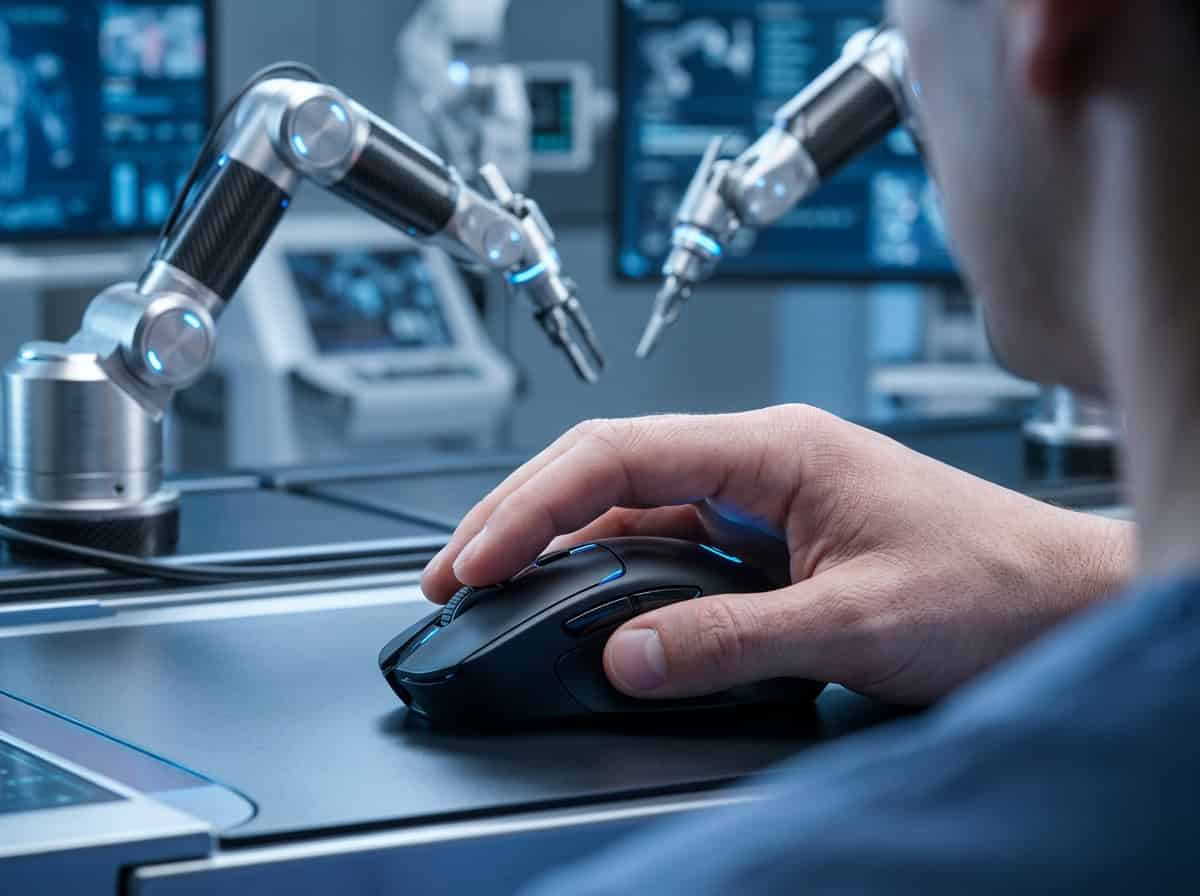
The exceptional fine motor coordination required to compete in modern competitive shooters directly translates to high-stakes physical precision fields like surgical robotics and drone piloting. First-person shooters mercilessly test and refine human reaction times down to the millisecond.
At the absolute highest tiers of competitive play in titles like Call of Duty, Overwatch 2, and Valorant, players operate near the total biological ceiling of human neuro-cognitive speed. These harsh environments require players to track fast-moving, erratic targets while making micro-adjustments to their aim.
The exact same level of physical discipline applies to the intense mechanical execution demands found in Fortnite, Rocket League, and NBA 2K.
Encoding thousands of hours of muscle memory
Achieving absolute physical mastery in digital environments requires neurologically converting conscious mechanical inputs into automated, subconscious bodily responses. The biological traits that provide certain players with early neuromotor advantages eventually hit a hard performance ceiling against coordinated opponents. Every top-tier semi-pro eventually must rely on deliberate, thousands-of-hours-deep muscle memory encoding.
This hyper-refined hand-eye synchronization effectively turns a standard desktop setup into a high-fidelity testing ground for operating heavy machinery. The brain learns exactly how much physical pressure translates to a specific digital outcome on a screen. Laboratory studies verify that elite performers consistently maintain manual output exceeding 400 precise actions per minute (APM) during matches.
When a surgeon uses remote manipulators to execute microscopic incisions, they are utilizing the exact same spatial translation pathways built by intense competitive gaming. The interface changes, but the neuro-mechanical requirement is identical.
“When a surgeon uses remote manipulators to execute microscopic incisions, they are utilizing the exact same spatial translation pathways built by intense competitive gaming.”
Translating gaming into career capital
Playing video games intrinsically builds the dynamic problem synthesis, rapid data analysis, and remote communication abilities necessary for high-level technical roles. It is entirely possible, and increasingly necessary, to formalize these digital attributes into a powerful professional advantage.
The outdated stereotype of the isolated, anti-social gamer simply does not align with the brutal collaborative mechanics of modern digital ecosystems. Surviving in a competitive lobby requires extreme forms of technical empathy and rapid feedback processing.
Do not hide your digital background when negotiating your professional bandwidth. If you want a deeper look at bridging that gap, explore how gaming improves career growth. The systems you interact with daily are highly sophisticated training platforms—you just need to communicate that leverage clearly.
Frequently Asked Questions
Why do gamers handle workplace failure better than non-gamers?
Gamers spend about 80% of their actual playtime failing, which forcefully rewires the brain’s psychological response to defeat. This continuous exposure strips the ego out of making mistakes, turning errors into objective data points rather than sources of emotional panic. It builds a profound resilience that directly translates into bypassing standard corporate paralysis when projects go sideways.
What is the difference between natural gaming talent and learned professional competency?
A small subset of players possess innate neuromotor advantages that give them an unnaturally high starting baseline, particularly in fast-paced shooters. However, you don’t need elite reflexes to build career-translating skills. The vast majority of professional competencies, like systemic foresight and remote team building, are built through deliberate, localized active practice within the game rather than biology.
How does open-world gameplay actually translate to corporate crisis management?
Navigating chaotic environments in titles like Grand Theft Auto forces the brain to process rapid, competing data streams without entering a panic state. Players must simultaneously manage minimap geometry, resource counters, proximity threats, and incoming prompts. Keeping all these plates spinning under pressure acts as genuine stress inoculation, building the exact emotional regulation needed for high-stakes corporate decisions.
How do strategy games like StarCraft mimic tech startup volatility?
Complex strategy titles mandate rigorous systemic foresight and strict resource management to achieve victory conditions that are entirely hours away. Games strictly enforce limits, meaning if you overspend on early-game resources, your mid-game infrastructure completely collapses. Failing safely in these digital economies teaches players how to optimize a limited runway before applying those lessons to expensive global markets.
Can I realistically count multiplayer raid leadership as remote management experience?
Absolutely, because managing a high-level digital raid precisely mirrors running distributed global business operations. Raid leaders cannot rely on physical proximity, forcing them to use platforms like Discord to coordinate complex tactical maneuvers across multiple time zones under high pressure. Navigating this interpersonal friction and managing frustrated teammates on voice comms is essentially a daily masterclass in modern HR management.
How do competitive shooters train you for fields like surgical robotics?
First-person shooters mercilessly test and refine human reaction times down to the millisecond, forcing players to track erratic targets with precise micro-adjustments. This creates thousands of hours of deep muscle memory encoding, teaching the brain exactly how physical pressure translates to a specific digital outcome. When a surgeon uses remote manipulators, they utilize the exact same spatial translation pathways built by intense competitive gaming.

This is nonsense. Gamers have 0 stakes and instant gratification. Nothing they do in their scripted digital world of bull has any real world applications. Gamers and unemployment are practically inexorable terms.