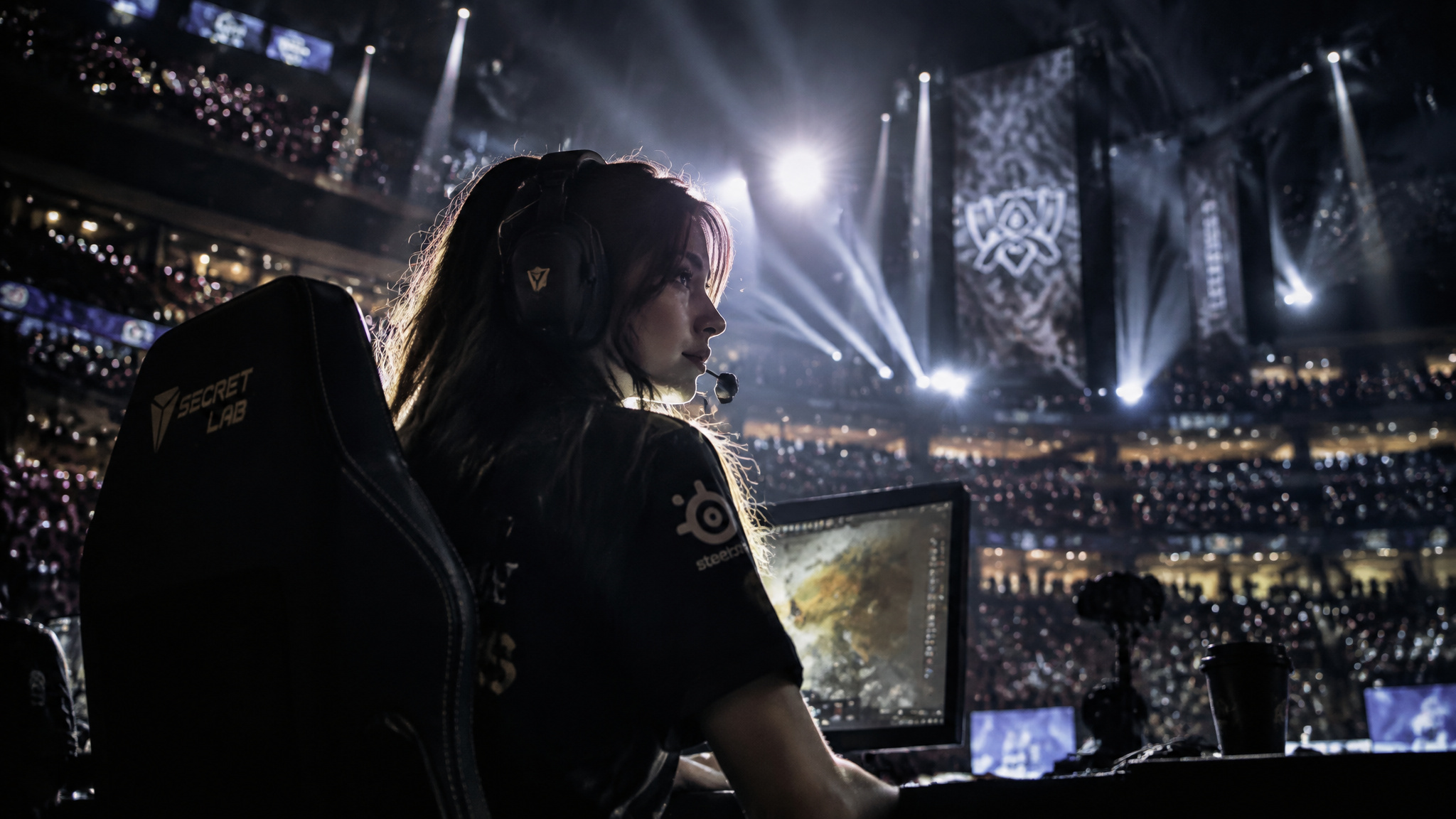
Which games do female pros actually compete in? I went looking for a straight answer and found it scattered across Valorant, Counter-Strike 2, League of Legends, StarCraft II, and Mobile Legends: Bang Bang, plus one stat that reframes the entire question. Where women’s scenes thrived or stalled tracks competitive architecture, open qualifiers and dedicated circuits versus franchise locks, not talent. So this is the match-record version, receipts included.
Key Takeaways
Women make up 39% of all players and the female player base has more than doubled since 2014, yet most coverage never defines what its participation numbers actually measure.
Open qualifiers and dedicated circuits built real women’s scenes in StarCraft II and Counter-Strike; League of Legends’ franchise locks left women’s teams nowhere to go.
Vaevictis Esports lost 34 straight matches as the LCL’s all-female team in 2019, and the failure mechanism was the segregated, publicity-driven setup, not the players.
Table of Contents
Female participation in esports: what the numbers say
39% of all players are female, and the female player base has more than doubled since 2014. Those two numbers arrive together from the same sourced block, and they do something no amount of “esports is for everyone” copy can do: they break the man’s-game default on contact. Nearly four in ten players. Doubled in a handful of years.That’s a measurement.
Now the part I kept tripping over while researching this piece. A second statistic, the “48% of gamers are girls” one, circulates alongside the 39% figure, and a lot of coverage quotes the two interchangeably without ever defining what either measures. They don’t measure the same thing.The sourced 39% figure tracks player participation in a defined population.
The 48% claim describes a broader, differently defined population, and I can’t verify it, so I’m not going to repeat it as fact. When two percentages get swapped freely in coverage, the number stops meaning anything. Scoping is the whole game here, so for the record:
- 39% of all players are female: the sourced figure, measuring player participation, paired with the since-2014 doubling that makes the trajectory concrete.
- “48% of gamers are girls”: a loosely circulated claim about a broader, differently defined population.
What the sourced numbers do support is a causal claim worth carrying carefully: rising participation is cited as the driver behind increased female presence in competitive leagues and tournaments. Cited, not settled. Participation feeding competitive presence is the plausible mechanism, and it’s the one the source draws, but correlation wearing a causation costume is a specialty of this beat, so I’ll keep the frame honest. The structural reading, which the rest of this article tests game by game, is that participation is necessary and insufficient. Thirty-nine percent of players gets you talent.Architecture decides whether that talent has anywhere to go.
What barriers do women face in professional esports?
The barriers are implicit bias, outdated stereotypes, and hostile online communities, plus organizers and sponsors overlooking women’s teams in favor of male squads, even strong ones, which also makes women’s tournaments genuinely hard to run. None of that is a rulebook.It’s ambient pressure plus an allocation problem, and the two compound.
Bias, stereotypes, and the daily background noise
The default professional conversation centers male players; that’s a coverage gap you notice the moment you actually look. Boys’-club culture and implicit bias are the background noise every profile in this article plays against, and it’s daily, not a one-off tournament-week problem. The sharpest cost shows up at the entry gate: some women skip tournaments entirely because they expect to be judged and unfairly critiqued.Some stays some, and the framing matters.
That’s not a confidence gap. It’s a rational read of an environment that has historically delivered exactly the treatment being anticipated.
The sponsor pipeline problem
The structural bug is that the teams exist while the organizer attention and sponsor money don’t flow to them.Sponsors and organizers defaulting to male squads means women’s rosters never accumulate competitive reps against strong opposition, so the visible skill gap is partly an artifact of the allocation decisions that created it. That’s a pipeline failure loop, and it’s exclusion by pipeline, not by rulebook. Hold onto that distinction, because the rulebook fact coming later collapses a lot of assumptions at once.
Female esports games: where women actually compete
The games with the most developed women’s circuits are Valorant, Mobile Legends: Bang Bang, and the Counter-Strike franchise, with StarCraft II as the historic open-integration case and League of Legends as the cautionary franchise-lock case.But the more useful reframe is this: stop asking which games have female pros and start asking which competitive structure works. Open qualifiers and dedicated circuits built scenes. Franchise locks starved them. Each title below is a person wired to a structure, because the structure is the actual variable.
StarCraft II: open individual competition and Scarlett
StarCraft II’s individual circuit is fully open, which means a player like Scarlett (Sasha Hostyn) never needed anyone’s permission slot to climb. Pro since 2012, first woman invited to South Korea’s GSL Code S, the tournament that matters most in that scene, and over $400,000 in career earnings. Three specifics, zero adjectives needed. Her results answered the people who doubted women could win at the top level, and they did the arguing without her having to deliver a single speech about it.Open individual competition is the cleanest structural test in esports, and she passed it for over a decade.
Counter-Strike: a sustained ecosystem with a 12-year hole
Counter-Strike has the longest-running women’s ecosystem in the piece, and sapphiRe (Heather Garozzo) is its plumbing made visible. She competed in Counter-Strike 1.6 for a decade, then moved into management with SK Gaming, Dignitas, and currently Vitality Female, which plays CS:GO, and she hosts gaming-culture podcasts on the side. The structural wrinkle: Intel Challenge Katowice 2019 was the first international event focused solely on female players since 2007.Do that math once with me.
Twelve years without a single international female-focused event. That gap is why the CS women’s scene had to rebuild from scratch, and dedicated circuits like the ESL Impact League are its modern continuation.
League of Legends: franchise locks and nowhere to go
Riot’s regional franchise leagues left women’s teams with no open-qualifier route.There was no door to knock on. For scale, the first LoL World Championship in 2011, hosted by Riot Games, drew a couple hundred spectators in the room against 200,000+ live viewers and a $100,000 prize pool, and player pay jumped from thousands to millions within a year. When the money gets to millions and entry runs exclusively through franchise slots, a women’s team’s only path in becomes whatever substitute a franchise holder improvises. The Vaevictis experiment in the next section is exactly what that substitution looked like.
Valorant and Mobile Legends: Bang Bang: the largest dedicated circuits
Valorant’s VCT Game Changers and the MLBB Women’s Invitational are the widely cited largest women’s circuits in esports, and there’s a focused profile of the Valorant Game Changers scene if you want the player-level detail. Honest limit, stated plainly: this article’s sources document the structural pattern through StarCraft II, Counter-Strike, and League of Legends, not Valorant or MLBB specifics. I’m not going to invent prize pools, viewership figures, or team names to fill the gap. The absence of fabricated statistics is the credibility move here, and I’d rather keep it.
Why Vaevictis’ all-female LCL roster failed
The all-female model failed because of how the team got there and who it played: segregated, publicity-driven scheduling, not a lack of female talent. The record below is absurd, and the absurdity belongs to the setup, not the roster.
How Vaevictis ended up all-female
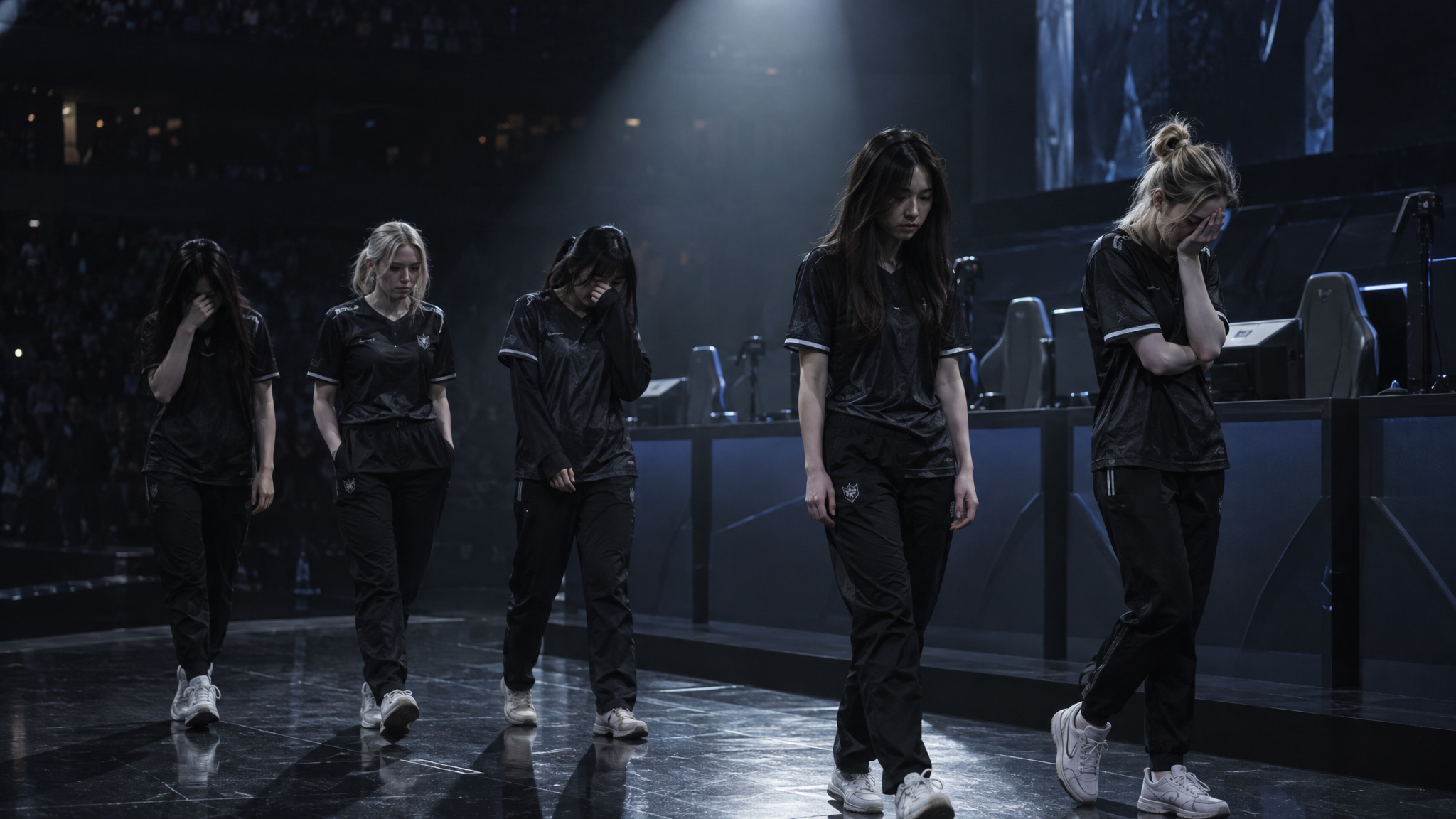
Vaevictis Esports was an all-male team in the LCL, Russia’s equivalent of the LCS. In 2018 the org dropped all its players and put its franchise slot up for sale. No buyer came.Fielding an all-female roster in 2019 was the only way left to participate, which made them the first all-female team in a Riot Games-organized tournament, born as an accidental, financially motivated publicity move rather than any development project. Keep that origin attached. It changes how you read every loss that follows.
The record: 34 straight losses
Debut, February 16, 2019: a 12-1 loss.Then a 52-2 kill-score loss to Vega Squadron that lasted 31 minutes and 37 seconds, which is the detail that makes it worse, a full-length game at that scoreline. The run became a subreddit meme, every match getting its own thread. On March 3, 2019, the fastest LCL defeat on record: 13 minutes.
Point at the math there, because an average League game runs about 30 minutes and surrender stays locked until 15, so those losses ended before the game even permitted giving up.The first enemy tower, the game’s core objective, fell in their 11th professional match. Yes, really. Their Instagram ran eleven consecutive loss graphics, and some of those posts drew genuinely encouraging underdog-supporter comments, which is the one warm note in the whole saga.
Final tally: 28 consecutive LCL losses, plus an 0-6 midsummer tournament, for 34 total.Riot Games Russia removed the team, which closed the loop by sending them to all-female tournaments. The video essay that dug into this saga has a bit about an alternate universe where Faker cries after losing to a player named “triggered.” Hypothetical, attributed, and somehow still a kinder script than the real season got.
Panda Cute and the segregated scheduling trap
Panda Cute, an all-female Hong Kong team sponsored by Razer, only ever played other female teams and never entered established leagues.Under that model, parity can’t be proven, because the open field is never faced. The gimmick was the failure mechanism, not female skill. Same bug, different continent.
How women actually reach pro esports rosters
Yes, women compete at esports’ professional level, and the proof is individual integration: the consistent pattern is a player earning the spot through ranked or open-competition performance first, with the signing following.Mayumi is the clean case, and she’s the reason the Vaevictis comparison is an evidence-based verdict rather than an opinion.
No rule ever barred women from the LCS
Here’s the rulebook check that collapses the “women aren’t allowed” misconception: no LCS rule ever barred women. Eligibility required only being over a country-specific age minimum. That’s it.No gender clause, no extra requirements, nothing readers assume existed, and that’s per the video on all-female LoL teams, which makes the point explicitly.
The absence of women in pro League of Legends stems from pipeline and opportunity, not rules. One video’s argument frames it as a skill-gap issue rather than a rules issue, and I’ll attribute it rather than endorse it as any statement about gender and ability. And to be equally clear, “no rule barred women” is not the same thing as the LCS being welcoming.The rulebook was neutral; the pipeline wasn’t.
Mayumi and the skill-first signing pattern
Mayumi, a Challenger-rank support player, was signed by a Brazilian CBLOL team, Brazil’s LCS equivalent, as its first-ever female player. Challenger rank is the credential that matters here: she earned the spot through the ranked ladder before any signing happened. Individual integration versus a gender-built roster, that’s the whole contrast with Vaevictis in one signing.On the “top 5 female gamers” question, my honest answer after this dig is three names with receipts, Scarlett, sapphiRe, and Mayumi, plus the structural reason the list stops there: the pipeline problem from earlier means the deep bench a real top-five ranking requires never got built. I’d rather give you three verified careers than pad a fake ranking.
Pipeline and pathways into women’s esports
The documented entry routes are initiatives like Girls Make Games, which builds self-confidence in young girls so they can join bigger teams for professional play, and streaming, where female streamers carve out reputations by challenging popular titles head-on or streaming alongside noted gamers, an entry route that exists entirely outside tournament brackets. Organizational and sponsorship support for gender diversity is also trending up, though that’s direction of travel, not a solved problem, and I’m not going to name commitments or dollar amounts the record doesn’t contain. One more honesty flag while we’re here: the claim that female players bring open communication and better strategic planning to teams is an assertion in the source, not a data-backed finding. If you’re mapping your own route in, the practical entry guide to local tournaments and women’s leagues covers the how-do-I-start side in detail.
Now apply this article’s structural test to all of it, because representation only matters if it feeds open-competition entry rather than building an audience for segregated play. That’s the difference between building talent and building segregated brackets, and it’s the one question worth asking of any initiative: does this move players into open competition, or only into women’s-only brackets?
One honesty flag before moving on. The source material asserts that female players bring open communication and better strategic planning to teams. It’s an assertion.There’s no hard data behind it, so treat it as an opinion until someone actually measures it, the same way I treated the 48% figure.
Where to watch women’s esports
The practical starting points are the named circuits: VCT Game Changers (Valorant), the ESL Impact League (CS2), and the MLBB Women’s Invitational (Mobile Legends: Bang Bang), plus org rosters already introduced here like Vitality Female, and female streamers as the lowest-friction entry point. Thunderpick’s esports hub is a reasonable place to find competitive gaming information and insights, and that’s a pointer, not a plug. The honest limit: no comprehensive, maintained directory of women’s circuit schedules exists. Search the three circuit names; that’s genuinely the best tool available.
Frequently Asked Questions
Are there any females in esports?
Yes, women compete at esports’ professional level, and the clearest proof is individual integration. StarCraft II’s Scarlett earned her spot through fully open competition, becoming the first woman invited to South Korea’s GSL Code S with over $400,000 in career earnings. Mayumi signed with a Brazilian CBLOL team after hitting Challenger rank on the ranked ladder. The pattern is consistent: performance first, signing second.
Why did all-female League of Legends teams like Vaevictis fail in the LCL?
The failure mechanism was the segregated, publicity-driven setup, not a lack of female talent. Vaevictis went all-female in 2019 only because the org couldn’t sell its franchise slot, then lost 34 straight matches under a scheduling model built for spectacle. The same bug appeared with Panda Cute, an all-female Hong Kong team that only ever played other female teams and never faced the open field, so parity could never be proven.
Is it better for female pros to join mixed teams or all-women esports teams?
The evidence favors individual integration into open competition. The consistent pattern among women who reached pro rosters is earning the spot through ranked or open-competition performance first, with the signing following. All-female rosters built as publicity stunts, like Vaevictis, or kept in segregated scheduling, like Panda Cute, failed because the structure never tested the players against the open field.