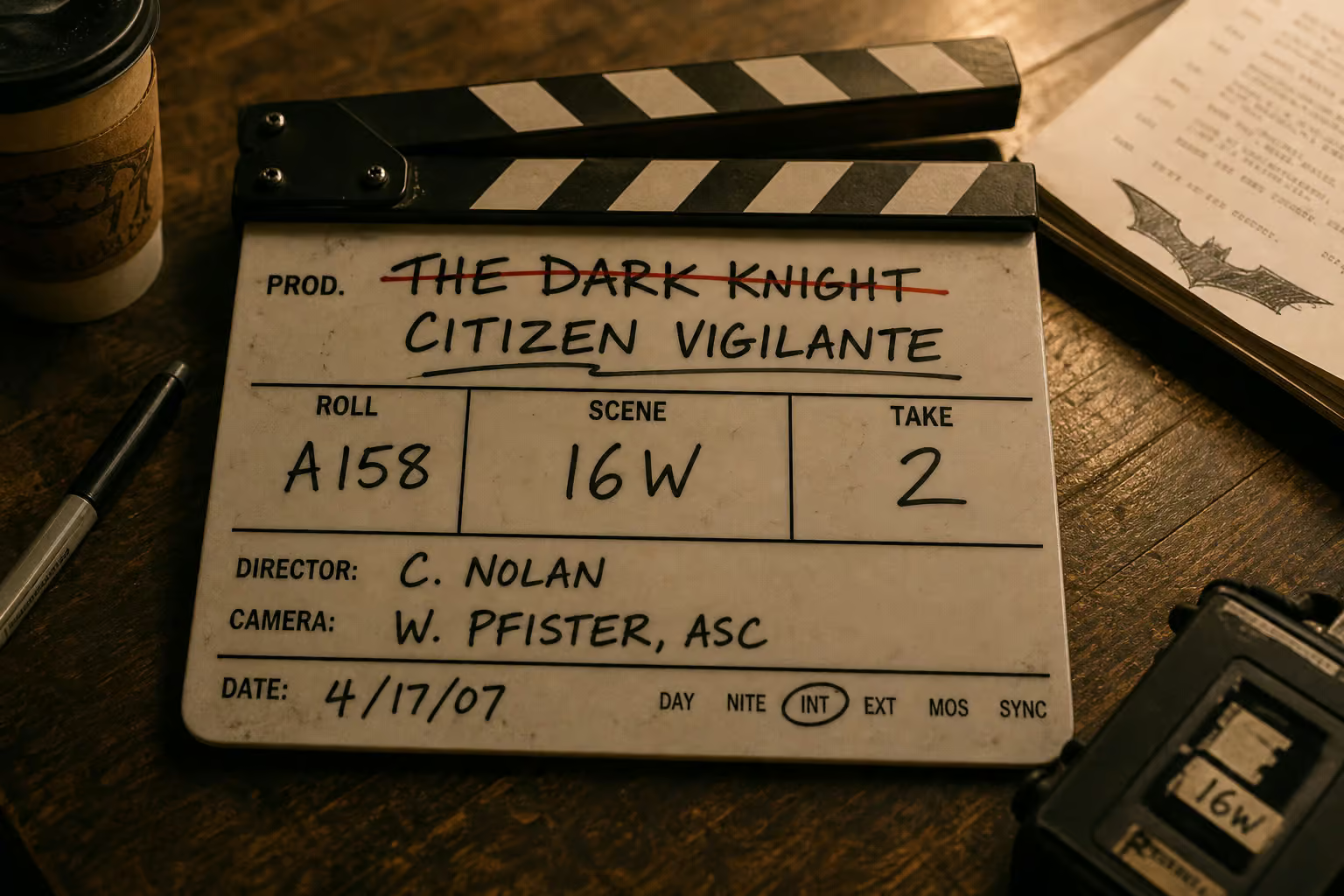
Here’s a movie that can’t decide what it wants to be called, let alone what score it deserves. Citizen Vigilante — originally announced as The Dark Knight until Warner Bros. lawyers had a word — landed on June 19, 2026, but the exact Citizen Vigilante release date is more complicated than that, with a day-and-date release that felt more like a dare than a premiere. Uwe Boll directing Armie Hammer in a vigilante revenge story about a 14-year-old rape victim? That’s already a lot.
But the ratings? They’re a different kind of mess.
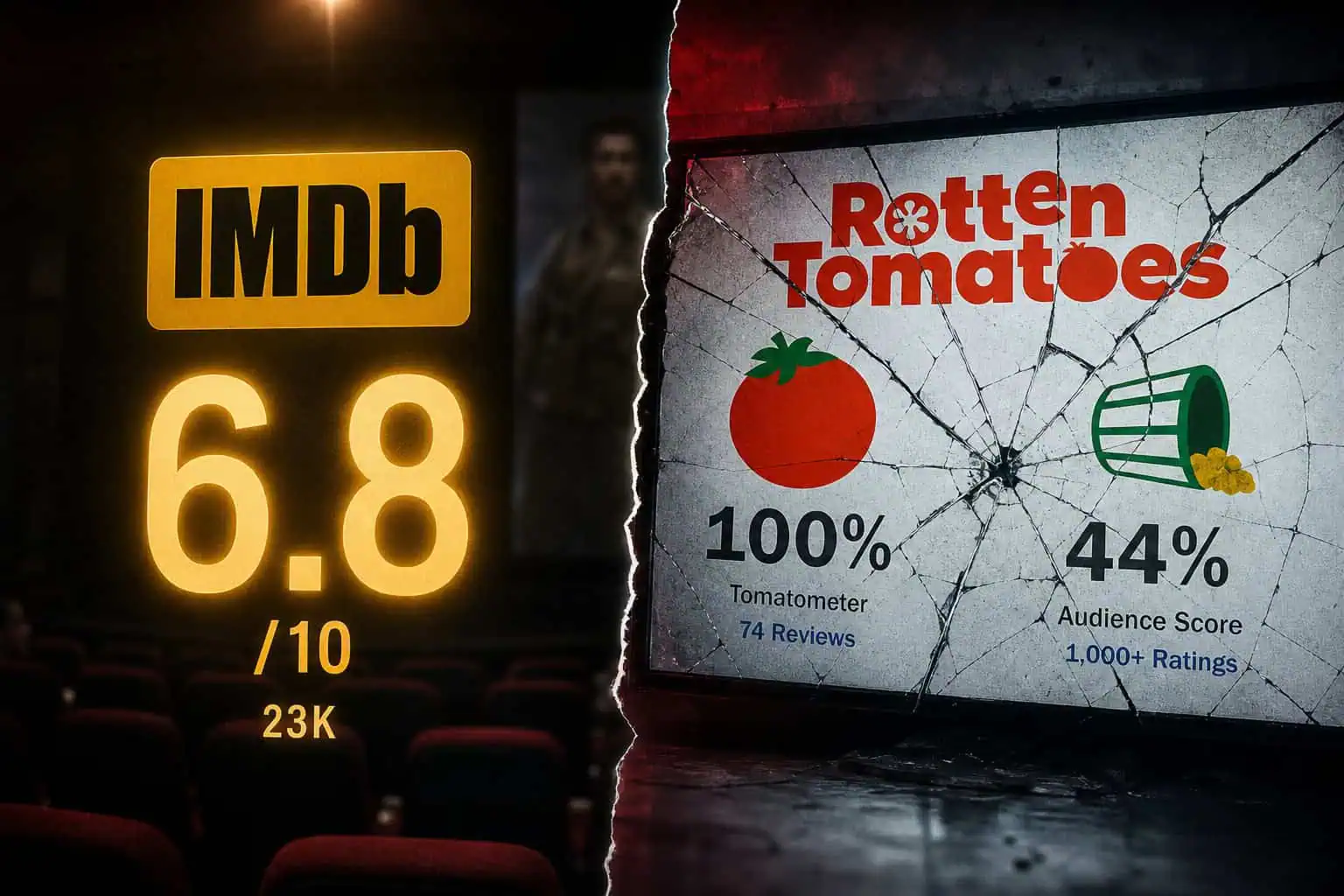
IMDb shows a 6.8/10 from 14,000 users. Rotten Tomatoes shows two scores: 100% and 44%, with no label telling you which is which. No Metacritic score at all. The numbers don’t just disagree — they’re having a fistfight in the comments section.
So what’s actually going on here? Let’s dig into the data and see what the gap reveals about the film, the audience, and the algorithms that try to make sense of both.
Key Takeaways
IMDb’s displayed 6.8 is a weighted score; the raw unweighted mean is 6.1 — a 0.7-point gap that signals heavy polarization and possible review-brigading.
Rotten Tomatoes shows a 100% and a 44% score, almost certainly a critic/audience split, but the page doesn’t label them — the 44% likely comes from critics (consistent with a negative Variety review), while the 100% reflects audience enthusiasm.
The original working title was The Dark Knight, positioning it as a serious Nolan-style vigilante story, but the forced rename to Citizen Vigilante ironically lowered its perceived ambition before anyone saw a frame.
Table of Contents
The Numbers at a Glance — IMDb 6.8, RT 100% vs 44%
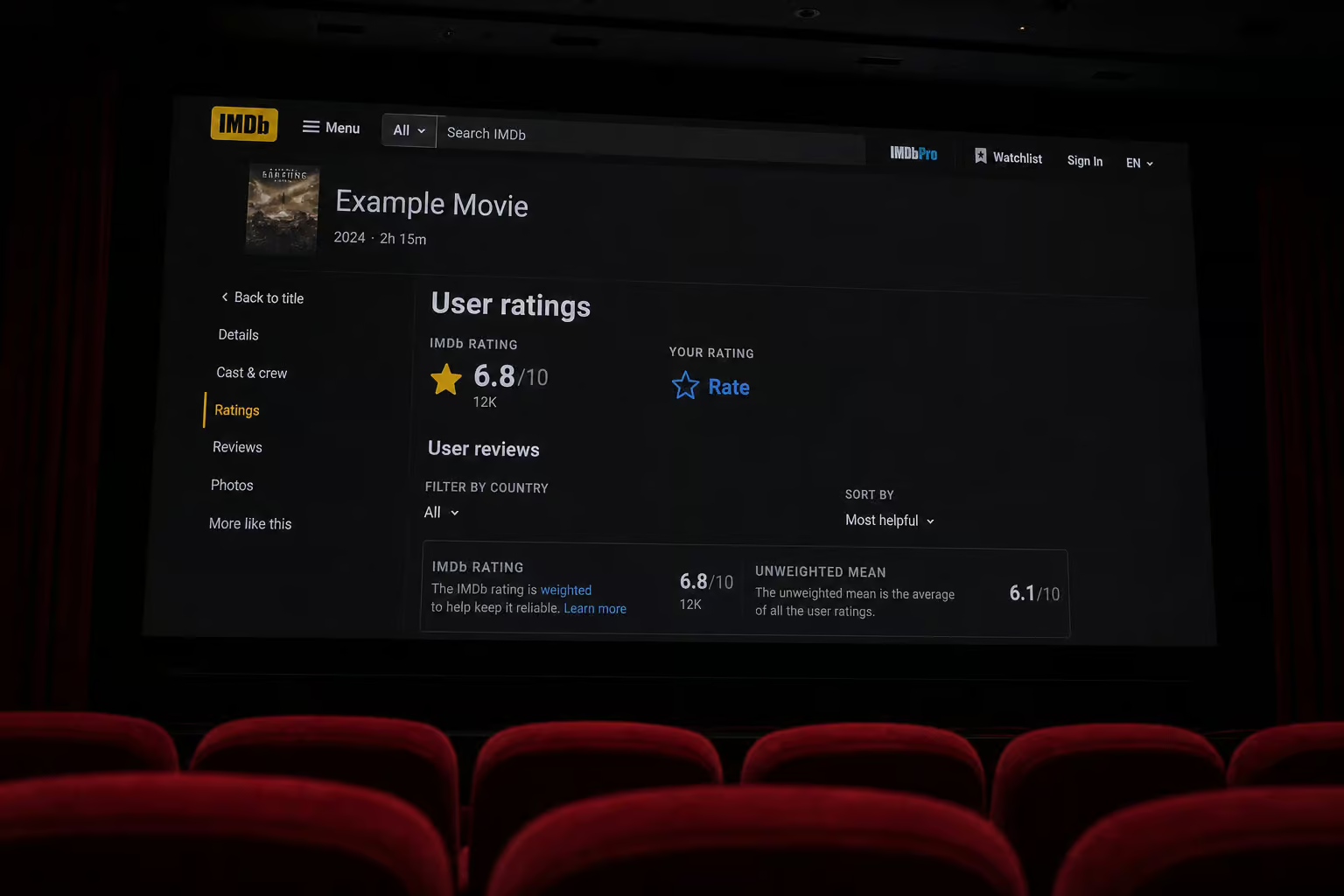
The first thing you notice on IMDb is the 6.8. That’s a 6.8 for a genre film with this much controversy — not a masterpiece, not a dumpster fire. But scroll down a bit and you’ll spot the unweighted mean: 6.1. That’s the raw average of every vote before IMDb’s algorithm starts weighting things.
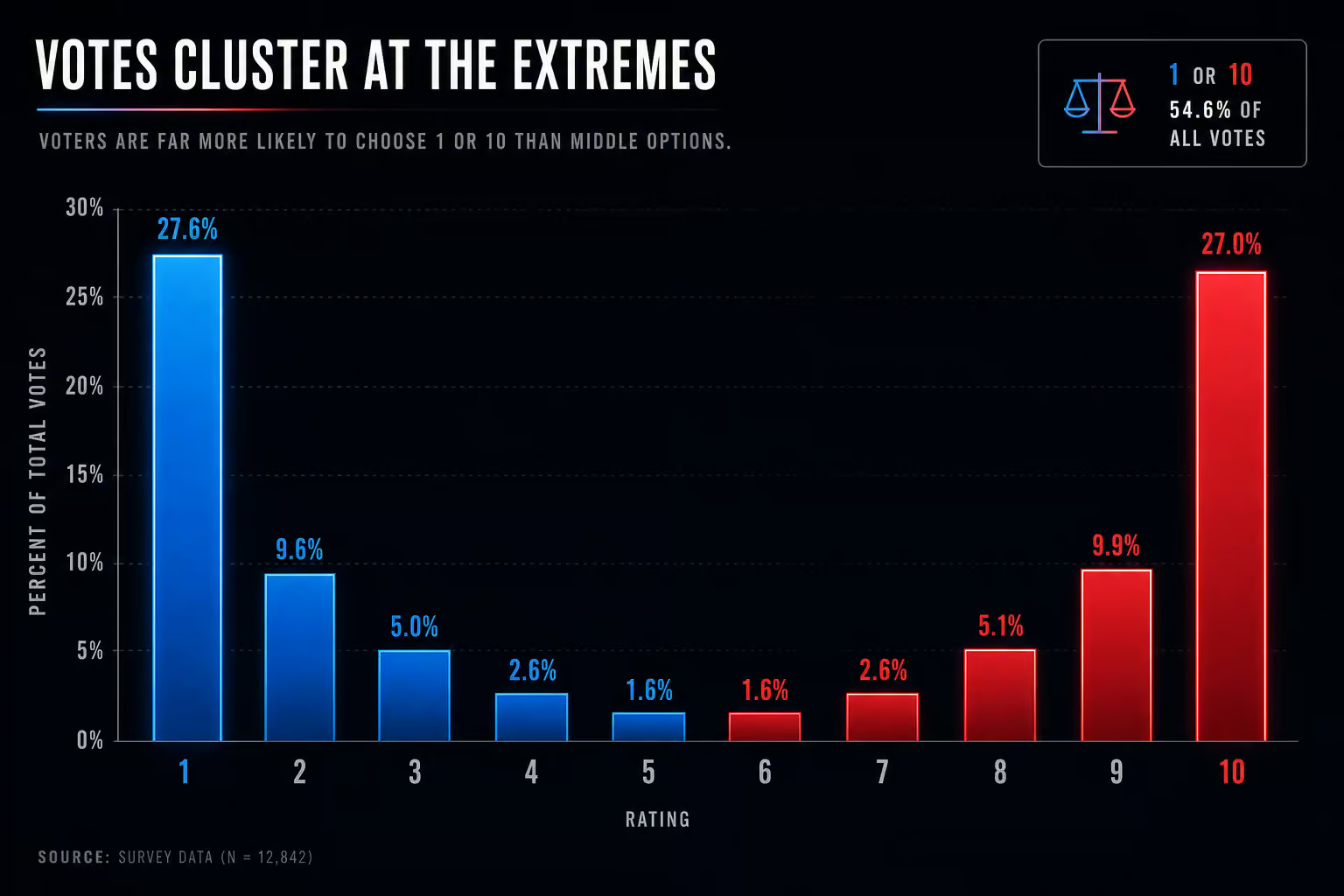
A 0.7-point gap is unusual. It means the distribution isn’t a nice bell curve around 6 or 7; it’s a bunch of 10s and a bunch of 1s pulling the raw number down, while the weighted score suppresses the extreme low votes.
Then there’s Rotten Tomatoes. The page lists two scores: 100% and 44%. No labels. No explanation.
One of them is almost certainly the critic score, the other the audience score — but which is which? The only professional review we have solid sourcing for is Variety, and it’s a takedown. That points to the 44% being the critic score. Meanwhile, user reviews on IMDb are heavily polarized but lean positive in volume, which would support the 100% as the audience score. But we’re inferring here — the RT page itself doesn’t say.
No Metacritic score exists, which is a gap you’d normally expect for a film with this much controversy. The picture is incomplete, and that’s part of the story.
The film itself: a man named Sanders (Hammer) takes justice into his own hands after a legal system fails a 14-year-old gang-rape victim. He becomes a social media star, clashes with police, and funds his crusade with rent from inherited properties. Directed by Uwe Boll. Action, Crime, Thriller on IMDb; Action, Mystery & Thriller, Crime on RT. Runtime 1h 29m. Not Rated by the MPAA.
The original Dark Knight title signals the film’s intended ambition — a serious, morally gray vigilante story in the Nolan vein. The forced rename to Citizen Vigilante changed the brand signal entirely. It sounds like a B-movie knockoff now, which is ironic because the content is anything but generic.
So the central question: how can a film have a 6.8 IMDb, a 6.1 unweighted mean, a 100% RT score, and a 44% RT score all at the same time? That’s the mystery we’re here to unpack.
The IMDb 6.8 Is a Mirage — Weighted vs. Unweighted Mean
The headline 6.8 looks fine. But it’s a statistical artifact, not a consensus. Let’s look under the hood.
How the Weighted System Works and Why the Gap Matters
IMDb doesn’t just average all votes. It uses a weighted algorithm that assigns different influence to votes based on the user’s voting history — the idea being to reduce the impact of bots, brigades, and one-off accounts. A user who votes on a wide range of films gets more weight than someone who only ever rates one movie a 1 or a 10. That’s standard practice, and it usually works fine.
But when the weighted score (6.8) is 0.7 points higher than the unweighted mean (6.1), it means the algorithm is suppressing a lot of low votes. That’s a red flag. It doesn’t prove review bombing — but it’s the pattern you’d expect if a coordinated campaign tried to tank the score, or if a passionate fanbase counter-bombed with 10s. Either way, the 6.8 doesn’t represent any single viewer’s experience. It’s a compromise between two warring factions.
What the Distribution Actually Looks Like
The 435 user reviews on IMDb tell the story. They cluster at the extremes. Take Hannah127’s 10/10 review: Not Your Average Action Thriller – Much Better. She defends the nonlinear structure as a deliberate mirror of societal fragmentation and argues Sanders is an antihero, not a hero.
Then there’s andre-mazeron’s 5/10: “An Important Message, Undermined by Flawed Execution.” That’s the rare middle-ground take — most reviews are either “this is a masterpiece” or “this is garbage.”
User motokosaran (10/10) explicitly calls out the unweighted mean vs. weighted score as evidence of review bombing, alleging IMDb complicity. That’s a user claim, not established fact, but it shows how aware the audience is of the data manipulation question.
The 13 critic reviews on IMDb are a tiny sample — statistically fragile. The 6.8 is a mirage. The real story is the war underneath.
The Rotten Tomatoes Mystery — 100% vs. 44%
If the IMDb gap is interesting, the RT split is a data anomaly. One film, two completely different scores. Let’s figure out which is which and what it means.
Which Score Is Which?
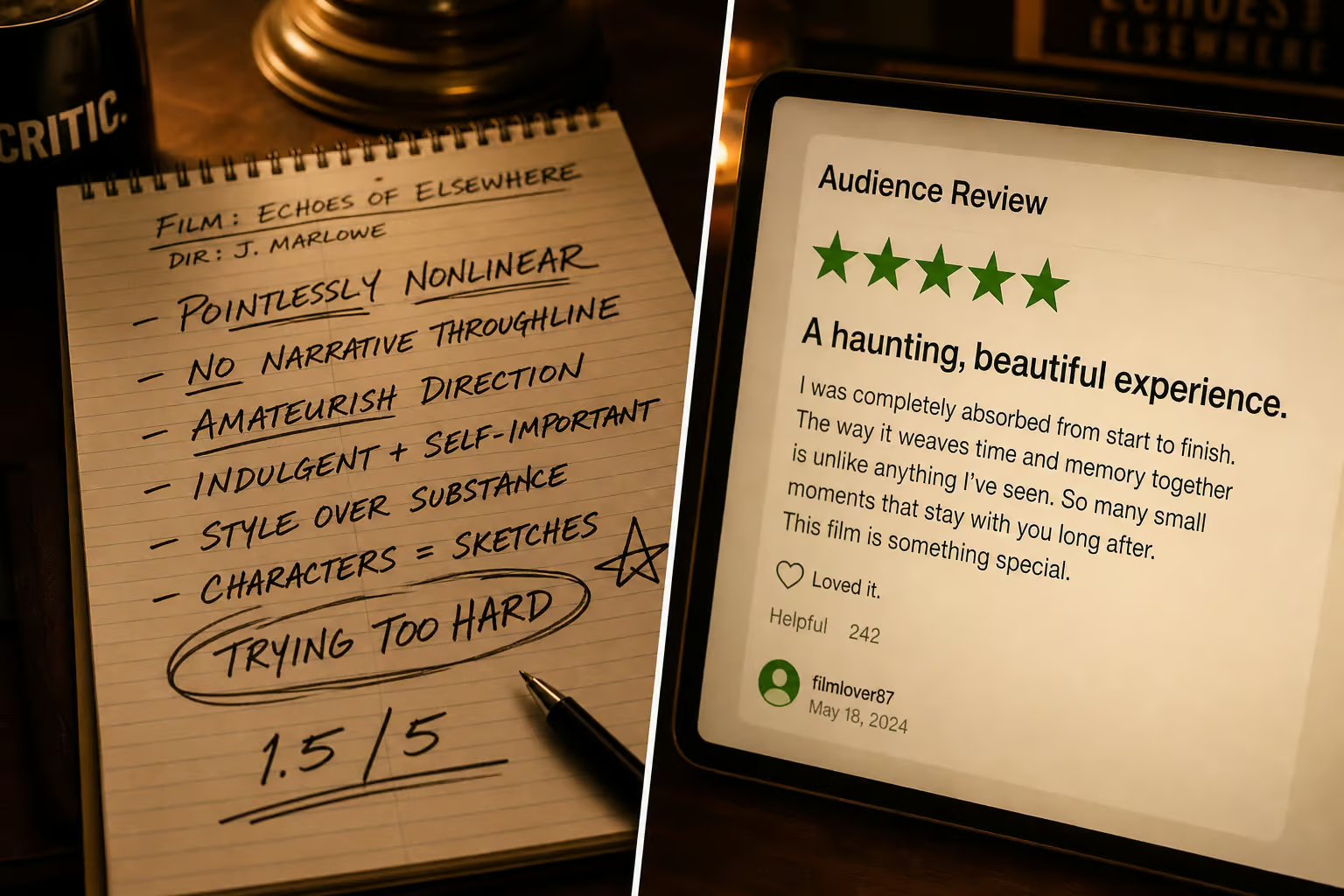
The RT page doesn’t label the scores. But we can piece it together. The only major critical review we have direct sourcing for is Variety, which calls the film “pointlessly nonlinear,” “padded with repetitive footage,” “amateurish,” and a “shameless exercise in ambulance-chasing.” That’s a negative review.
If the 44% is the critic score, it aligns perfectly with that take. The 100% would then be the audience score — and indeed, user reviews on IMDb show a notable number of 7-10 ratings, with many praising the message over the craft.
It’s not definitive, but it’s the most logical reading. The 44% is likely critics; the 100% is likely audiences.
What the Split Actually Means
A film with 100% audience and 44% critic scores cannot be a normal “bad movie.” Normal bad movies get low scores from both sides. This split signals that critics and audiences are evaluating the film on completely different rubrics.
Critics judge filmmaking craft: nonlinear structure, execution, production quality, pacing. Audiences judge the social message and the antihero narrative. The film is being graded on two separate report cards, and they’re not even in the same subject.
That’s the story here — not either number alone, but the fact that they’re so far apart. It tells you the film is a lightning rod, not a consensus pick.
The Critical Consensus — Why Professionals Panned It
The negative critical reception isn’t just “bad movie.” It’s specific, and it’s about exploitation and execution.
Variety’s Specific Criticisms
Variety’s review is the most detailed professional take we have. It calls the film pointlessly nonlinear — scenes jump around without clear purpose, and the structure feels like confusion rather than artistry. The footage is repetitive, with the same shots and situations replayed. Direction is amateurish.
The protagonist is described as xenophobic and entitled. And the whole thing is framed as a “shameless exercise in ambulance-chasing” — using real trauma (rape, violence) as a prop for a message the critic sees as opportunistic, a verdict echoed in a blunt Citizen Vigilante review that cuts through the hype.

The review also argues the film sabotages Armie Hammer’s comeback attempt, which is a meta-layer: the film’s controversy might hurt the actor more than help him.
The Exploitation Charge
A hooded black man kills a mother in front of her son in broad daylight. That’s the opening scene — deliberately shocking and racially charged. Later, Sanders stops a sexual encounter to scold her about mold on the wall, a tonal whiplash that critics see as clumsy, not clever.
The gang rape plotline is the core flashpoint. The film shows victim-blaming dialogue (Dehlia says women “dress wrong” and make boys “horny with mini skirts”), and the perpetrators are acquitted. Critics see it as crossing from provocation into exploitation — using real suffering to make a point that feels less like art and more like a political pamphlet.
The film ends with a dedication: rape victims in Europe who were betrayed by our legal system. That’s the thesis statement. Critics say it’s a message that deserves a better movie.
The Audience Defense — Why Some Call It a Masterpiece
The positive audience case is just as specific, and it uses a different evaluation framework.

Hannah127’s Argument — The Nonlinear Structure Is the Point
Hannah127’s 10/10 review is the most articulate defender take. She argues the nonlinear structure isn’t a mistake — it’s a deliberate mirror of societal fragmentation. The film doesn’t give you a clean timeline because the world it’s depicting doesn’t have one. Sanders is an antihero, not a hero; the film doesn’t endorse his actions, it presents them as a symptom of a broken system.
She also points out visual parallels between Sanders and Interpol Chief Henry (played by Costas Mandylor) — two sides of the same coin, both using violence to enforce their version of order. That’s the kind of detail defenders latch onto as evidence of intentional craft.
Other Defenders — A Range of Enthusiastic Support
EMalloryHardgrave (7/10) calls the film “Relevant, and dangerously prescient” — a stark warning of a dark future if institutions fail. istiphulamue (7/10) calls it “More Than Just a Movie,” acknowledging it’s not particularly entertaining but praising its message, even calling it a miracle it hasn’t been banned.
Common threads across positive reviews: Hammer’s performance is praised as nuanced; the willingness to tackle uncomfortable subjects is valued; technical flaws are seen as secondary or even intentional. Reddit forums show similar polarization, with threads defending the film’s message and others condemning its execution. To see spoiler-free and spoiler-filled fan theories and debates, the Citizen Vigilante Reddit discussion captures these hidden details. These reviewers are grading on a curve that prioritizes ideas over execution.
The Message — What Citizen Vigilante Is Actually Saying
Beyond the ratings, the film’s content is the real driver of the polarization. Let’s look at what it actually says.
The Core Confrontation
The central scene: Sanders confronts Ibrahim about his son Yusuf and friends who gang-raped a 14-year-old girl. The perpetrators were acquitted. Sanders accuses Yusuf of posting on social media that the victim deserved to be raped. Dehlia (a female character) defends the boys, saying women “dress wrong” and make boys horny with mini skirts, showing legs and breasts. Ibrahim says he teaches values from the Quran and their family.
Sanders’ response: “Why did you come to America/Europe if you believe women deserve rape due to dress code?”
That’s the film’s thesis in one line. It’s not subtle. It’s a direct challenge to cultural relativism and legal failure.
The Dedication and the Landlord-Vigilante Irony
The closing dedication — rape victims in Europe who were betrayed by our legal system, is the film’s stated purpose. It’s not a throwaway; it’s the whole point.
But there’s a contradiction that both sides notice: Sanders funds his vigilante justice with rent from inherited properties. He’s a landlord profiting from tenants while playing judge, jury, and executioner. Defenders see this as intentional complexity — the hero is flawed, the system is broken, nobody is pure. Critics see it as hypocritical amateurism, a detail that undermines the moral high ground the film tries to claim.
Online influencers in the film embrace Sanders while disregarding these complexities, which is itself a commentary on how social media simplifies moral questions.
Behind the Scenes — Production, Trivia, and the Lost “Dark Knight” Title
The production details add texture to the rating story. The film was originally produced in English.
The “Dark Knight” Title — Ambition as Legal Problem
The original title wasn’t just a cheeky reference. It positioned the film in the Nolan Dark Knight tradition — a serious, morally gray vigilante story. Warner Bros. objected to avoid confusion with their Batman property, and the title was changed. The forced rename to Citizen Vigilante ironically lowered its perceived ambition. It sounds like a straight-to-streaming knockoff now, which may have influenced how critics approached it.
Filmed in Zagreb — Budget and Location Context
Shot in Zagreb, Croatia, with a modest budget. Countries of origin: Croatia and Germany. Production companies Borvel film and Event Film Distribution are smaller players. Distributor Quiver Distribution is known for picking up controversial or niche titles. The modest budget explains some of the execution issues critics raise — but defenders would argue budget is irrelevant to the message.
The Vanishing Basket — A Small Error with Big Implications
There’s a continuity goof in the opening supermarket scene: a red shopping basket disappears between camera angles. It’s a small error, but it’s a concrete anchor for the criticism about rushed editing and low production standards. Eagle-eyed viewers will spot it.
Other trivia: the soundtrack features “Touched with Fire” by In the Nursery. The film is Not Rated by the MPAA, which is unusual for a theatrical release — likely because of the controversial content.
Final Verdict — Should You Watch It?
This isn’t a 6.8/10 movie. It’s a film where most viewers rate it either 10/10 or 1/10. The displayed scores obscure that reality. Your decision depends entirely on your tolerance for message-over-craft and controversial subject matter.
Watch If…
- You value provocative social commentary over polished execution.
- You’re curious about the gap between critic and audience reception.
- You want to see Armie Hammer’s return performance — even mixed reviewers praise his work.
- You can handle disturbing content: rape, violence, victim-blaming dialogue, nonlinear structure.
- You’re the kind of viewer who can appreciate a film’s ideas despite its technical flaws.
Skip If…
- Poor execution, amateur direction, or exploitative content will ruin your experience.
- You’re looking for a conventional action thriller.
- You’re sensitive to graphic sexual violence content.
- You want a film with clean craft and polished storytelling.
Where to Watch Citizen Vigilante
If you’ve decided to take the plunge, here’s the practical info:
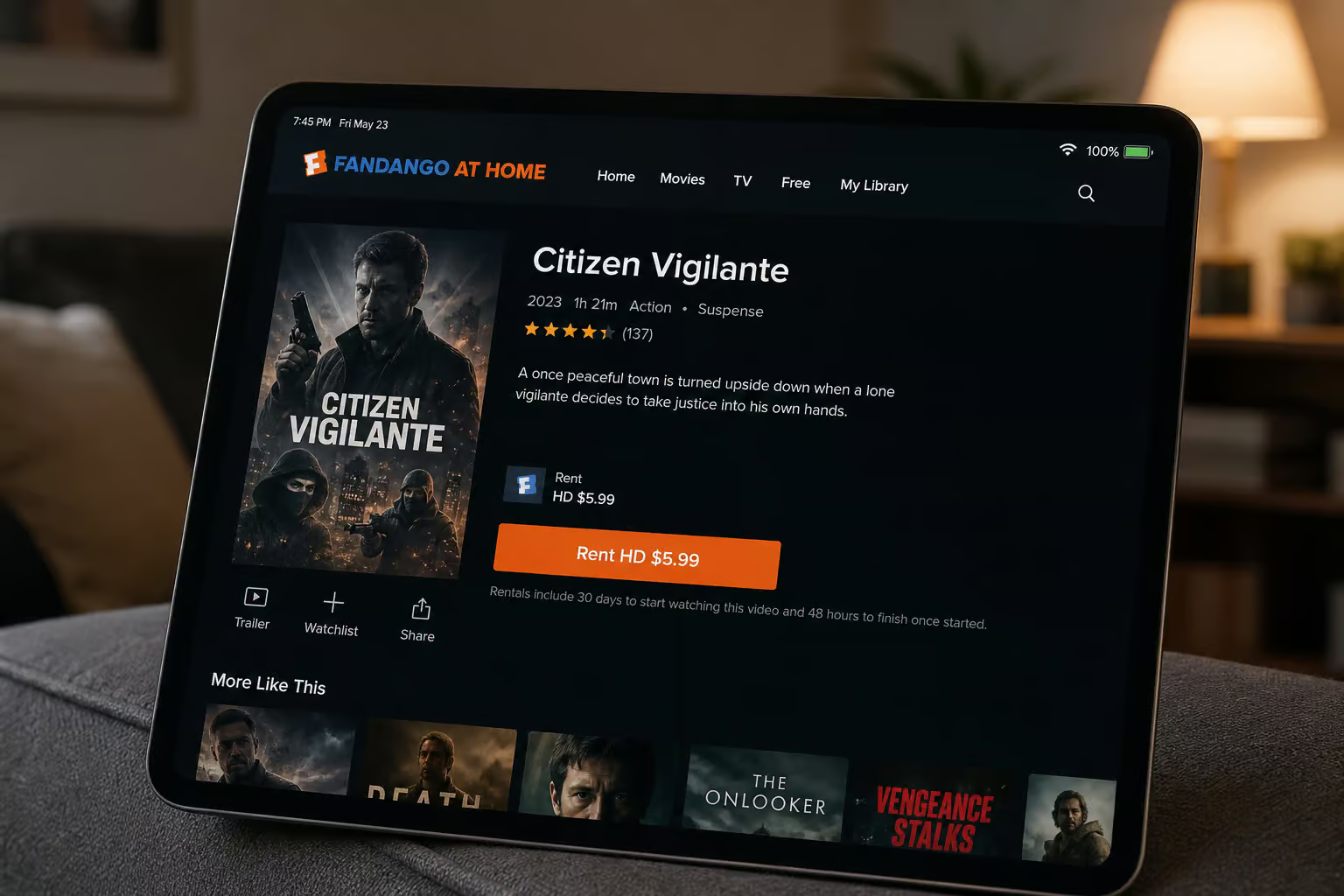
- Available on: Fandango at Home for rent or purchase.
- Release date: June 19, 2026 (limited theaters and streaming simultaneously).
- Runtime: 1h 29m.
- Rating: Not Rated.
- Director: Uwe Boll.
- Starring: Armie Hammer as Sanders.
- Distributor: Quiver Distribution.
That’s it. No streaming on Netflix or Prime as of now. Fandango at Home is the primary digital outlet.
The Bottom Line — How to Read the Citizen Vigilante Rating
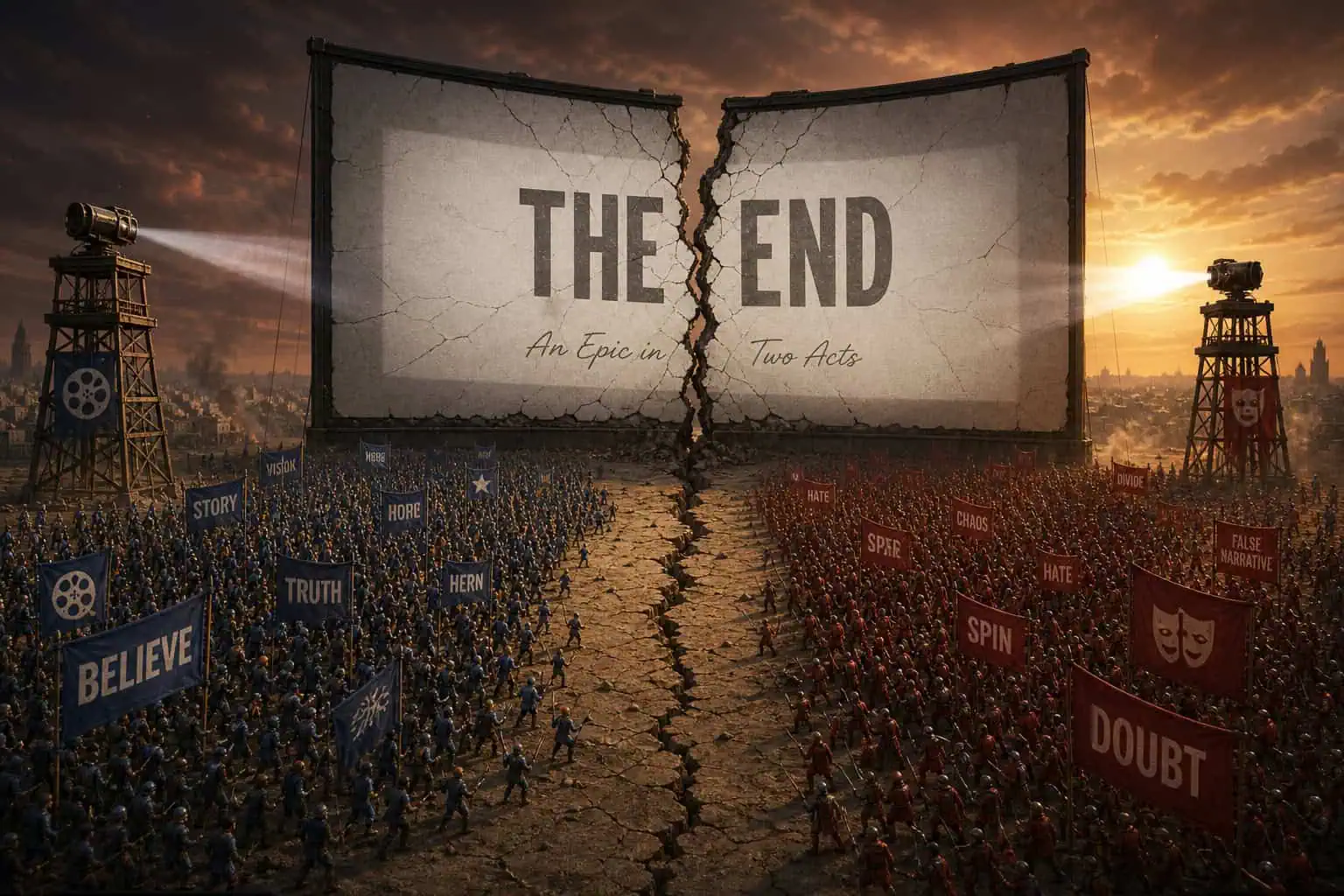
The real insight from all this data is that the film’s ratings can’t be read as a consensus. They must be read as a war between two camps.
The IMDb 6.8 is a weighted compromise that hides the true distribution. The 0.7-point gap between weighted and unweighted means is the story, not the headline. The RT split — 100% vs 44%, is more honest about the film’s reception than either number alone. It tells you that critics and audiences are watching different movies, or at least judging them by different standards.
The film is a polarization bomb, not a 6.8/10 movie. If you know yourself as a viewer — whether you prioritize craft or message, whether you can stomach the content, you’ll know whether this film is for you. The numbers won’t decide that for you. They just show you the battlefield.
Frequently Asked Questions
What is the movie A Vigilante about?
The film centers on a vigilante named Sanders who seeks justice after a 14-year-old girl is gang-raped and her attackers are acquitted. It explores themes of legal failure, cultural relativism, and the moral compromises of taking justice into your own hands, all wrapped in a nonlinear, controversial narrative.
Why is the Rotten Tomatoes score split between 100% and 44%?
The 44% is almost certainly the critic score, reflecting negative reviews like Variety’s takedown of the film as amateurish and exploitative. The 100% is the audience score, driven by viewers who prioritize the film’s social message over its technical execution. The split shows critics and audiences are judging the film on completely different rubrics.
Is Citizen Vigilante based on a true story?
The film is not explicitly based on a single true story, but it ends with a dedication to rape victims in Europe who were betrayed by their legal systems. The narrative uses fictional characters and events to dramatize real-world issues of institutional failure and vigilante justice, which is part of why it’s so polarizing.