
If you want to unwind without treating your screen time like a second job, dodging the exhausting grind of modern releases is essential. That is why casual gaming has become the ultimate cure for digital burnout. Players are actively seeking out low-stress, easy-to-play experiences to decompress, abandoning titles that demand relentless daily commitments. We are going to look at what actually defines this genre today, why the old stigma vanished, and where you can find high-quality sessions that respect your free time.
The massive appeal of lightweight play is not just about non-gamers trying to kill time on their morning commute. It is an active detox driven by veteran players who are completely fried by the current state of mainstream mechanics. The industry pushed massive time investments for so long that simple, immediate fun became a luxury. Now, the market has finally course-corrected.
Modern digital destinations like SpinBlitz online social casino have stepped in to fill this void early and often, proving that low-stakes sessions can still look and feel entirely premium. To understand how we arrived at this new golden age of lightweight web play, we first have to look backward at the original mechanics that defined the space.
Table of Contents
Defining casual gaming: A return to arcade DNA
Casual gaming is a category of play that prioritizes immediate accessibility, intuitive mechanics, and instant gratification over heavily delayed long-term progression. The goal is to strip away arbitrary friction, allowing a player to jump straight into the action without studying a tutorial or checking a wiki.
It is the equivalent of a great pop song: instantly recognizable and fundamentally satisfying.

The roots of this accessible design go back much further than smartphones. It is a direct resurrection of the industry’s original arcade DNA, where physical cabinet designers relied on a tightly tuned feedback loop to keep you engaged rather than a sprawling checklist of digital chores. Those arcade cabinets mastered moment-to-moment play by stripping away the narrative fluff to offer highly accessible sessions. You dropped a quarter, played hard for three minutes, and either won or lost on your own immediate merit. There was no fifty-hour campaign to slog through and no gear score preventing you from enjoying the core mechanics.
The mid-2010s “real gamer” trap
For a long time, the wider enthusiast community fiercely rejected this concept. If you weren’t grinding highly competitive ranked lobbies or sinking hundreds of hours into sprawling RPGs, you simply did not count as a legitimate player in the eyes of the community.
That exclusionary gatekeeping defined the mid-2010s. It pushed a lot of people into a weird cultural corner where they clearly enjoyed lightweight titles but felt a strange compulsion to justify or hide their habits. The core philosophy of immediate mechanical joy simply went underground while the major studios chased massive, cinematic experiences. But design philosophy alone was never going to be enough to revive the genre—it needed a frictionless delivery mechanism that matched its inherent speed.
How hardware evolution enabled frictionless play
Once mobile devices possessed the processing power to run more than just basic, sluggish iterations of falling blocks, the entire industry shifted gears. Technological leaps in mobile and PC hardware completely revolutionized distribution, allowing robust experiences to run natively on nearly any device.
Early iterations of Mobile app stores were undeniably rough. They were flooded with ugly, throwaway clones designed exclusively to exploit an emerging market, which gave the entire category a terrible reputation. But as base processing hardware matured, developers realized they could finally deliver mid-budget polish without forcing the user to commit to a massive, hard-drive-hogging download.
In the past, if you wanted high visual fidelity or complex underlying physics—like those found in the best American football video games—you needed a dedicated console or a heavily upgraded PC rig. Today, modernized web infrastructure—leveraging technologies like WebGL and significantly increased mobile RAM—allows browsers to render these mid-budget aesthetics seamlessly in an everyday application.
The power of zero-install access
The real technological breakthrough that turbocharged this era was the total elimination of installation time. Modern browser-based platforms offer a completely frictionless entry point that mirrors the instant gratification of the games themselves.
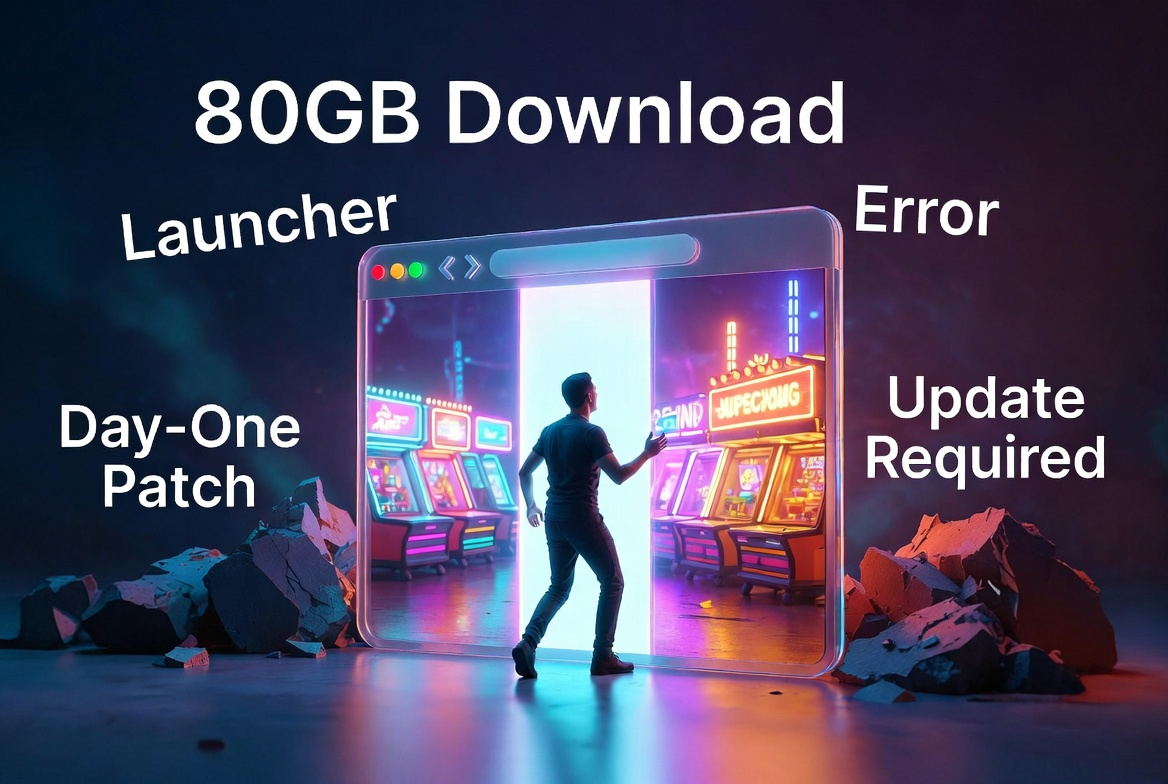
You click a link and immediately start playing. You bypass the massive day-one patch updates, the client launcher errors, and the endless loading screens that currently plague the traditional AAA console space.
No downloads. No waiting. Just pure, immediate execution.
The culture shift that ended gaming gatekeeping
Societal acceptance followed closely behind the technological upgrades. The old hierarchical borders of the global community dissolved rapidly because the gaming audience got dramatically bigger and more diverse.
When billions of people globally suddenly possess a highly capable gaming device in their pocket or backpack, the narrow definition of what constitutes a valid hobby completely evaporates. Rampant gatekeeping simply loses all cultural bite when the core enthusiast demographic is vastly outnumbered by people who just want to have immense fun for fifteen minutes during their lunch break. At the same time, massive content creators and streamers began regularly broadcasting their casual sessions completely unapologetically. When the biggest cultural tastemakers treat a simple, accessible title as legitimate entertainment rather than a guilty pleasure, the audience naturally follows suit.
Escaping the live-service treadmill
The most fascinating aspect of this cultural shift is that it was largely driven from the inside out. Traditional hardcore players actively fled their own ecosystems to seek refuge in low-stakes play.
Modern live-service games have become psychologically exhausting. When a developer systemically demands that you log in every single day to grind a seasonal battle pass just to unlock an arbitrary digital cosmetic, the hobby stops acting as an escape and starts functioning as an unpaid administrative job. After enduring your third straight season of relentless, high-pressure competitive matchmaking, a warm, no-pressure session looks incredibly appealing. There is a profound psychological satisfaction in reaching definitive closure at the end of a crisp, 10-minute casual session. This stands in stark contrast to the lingering anxiety generated by open-ended AAA gameplay loops that are specifically designed to never truly end.
“When a developer systemically demands that you log in every single day to grind a seasonal battle pass just to unlock an arbitrary digital cosmetic, the hobby stops acting as an escape and starts functioning as an unpaid administrative job.”
People are fiercely protecting their mental energy.
Where to find high-quality, stress-free games
Today’s lightweight ecosystem looks absolutely nothing like the chaotic wild west of the early 2010s. The baseline floor for visual and mechanical quality has risen drastically across the board.
As core technology advanced over the last decade, deliberate hardware improvements allowed independent developers to directly elevate the presentation quality of lightweight web titles. Instead of wading through heavily manipulated and uncurated mobile marketplaces, modern players are turning to dedicated social gaming hubs that offer highly curated libraries of interactive experiences. These structured, premier environments enforce strictly elevated standards, guaranteeing that what you play features excellent conceptual art direction, solid sound engineering, and highly thoughtful user interfaces. By specifically reducing mental friction, these thoughtful user interfaces ensure that high presentation quality directly supports the core goal of curing digital burnout.
That deliberate focus on user experience is exactly why specific entities like SpinBlitz online social casino thrive so predictably alongside larger digital platforms. They successfully package that old-school, pure pick-up-and-play mechanical energy into highly refined, premium modern interfaces. Competition among these browser portals is exceptionally fierce, forcing operators to compete aggressively on visual luxury and system stability to win over players.
Casual no longer equates to cheap. It equates to refined simplicity.
Embracing a balanced digital media diet
The exhaustive, cinematic, 100-hour gaming epic is a genuine marvel of modern software development, but it was never the ultimate, final peak of the medium. It was simply one evolutionary branch of a rapidly expanding tree.
The binary divide between a hardcore player and a casual time-killer is completely dead. Modern enthusiasts actively split their limited time between demanding, intense competitive shooters and genuinely lighthearted web iterations, effectively balancing their cognitive load throughout the week. The digital entertainment industry is finally circling back to its highly accessible, arcade-oriented roots, while strategically packing decades of technological upgrades into formats that actually respect your time.
Frequently Asked Questions
Why are veteran players suddenly experiencing “digital burnout”?
Modern mainstream and live-service games have essentially mutated into unpaid administrative jobs. Developers now demand daily logins, seasonal battle pass grinds, and massive time investments just to unlock digital cosmetics. Hardcore players are actively fleeing these exhausting ecosystems in favor of lightweight games to protect their mental energy.
What is the “live-service treadmill”?
It is the relentless, high-pressure cycle of updates, competitive matchmaking, and mandatory daily quests pushed by major AAA studios to keep players hooked. Instead of offering a fun escape, this treadmill forces players to treat gaming like a chore. Escaping this cycle is the primary reason the casual gaming market has seen a massive resurgence among traditional gamers.
How does zero-install gaming manage to deliver good graphics?
Massive technological leaps in mobile processors and modern web infrastructure mean robust, visually attractive games can now run natively in a browser. Developers no longer have to force users into a huge client download to achieve high visual fidelity or complex physics. You simply click a link and hit immediate, premium performance.
What’s the difference between modern casual gaming and early mobile app clones?
Early mobile app stores were heavily manipulated wild wests flooded with ugly, copy-paste cash grabs that gave casual gaming a terrible reputation. Today’s landscape is driven by dedicated, highly curated social hubs that enforce strict standards for conceptual art, audio engineering, and UI. Simply put, casual no longer equals cheap—it equals refined simplicity.
Are social casinos like SpinBlitz worth playing if I usually play console games?
Yes, especially if you need to decompress after an intense gaming session. Dedicated platforms like SpinBlitz package old-school, pick-up-and-play mechanics into a premium interface. They offer a luxurious, low-stakes palate cleanser that respects your time instead of demanding a fifty-hour commitment.
Can I still consider myself a “real gamer” if I only play lightweight web titles?
Absolutely, because the exclusionary gatekeeping of the mid-2010s is completely dead. The global gaming audience is now massive, and even massive streamers unapologetically broadcast low-stress browser games. Modern enthusiasts actively balance their digital diets between intense competitive titles and genuinely lighthearted casual play.