Ever asked yourself, “Are RTS games good for the brain?” You aren’t the only one wondering if your late-night gaming sessions count as a workout. Many gamers notice that real-time strategy games seem to boost things like working memory, spatial attention, and fast decision-making.
I dug into the latest research to see if the science backs up the feeling.
In this post, I’ll walk you through science-backed facts about how these strategic video games might level up your thinking processes and mental skills. Stick around, your mind could be on the verge of a big upgrade.
Key Takeaways
Real-time strategy (RTS) games like StarCraft II and Age of Empires improve key brain skills such as working memory, multitasking, decision speed, and strategic thinking. Studies in 2023 show players practicing deeper reflection and cognitive control after game training.
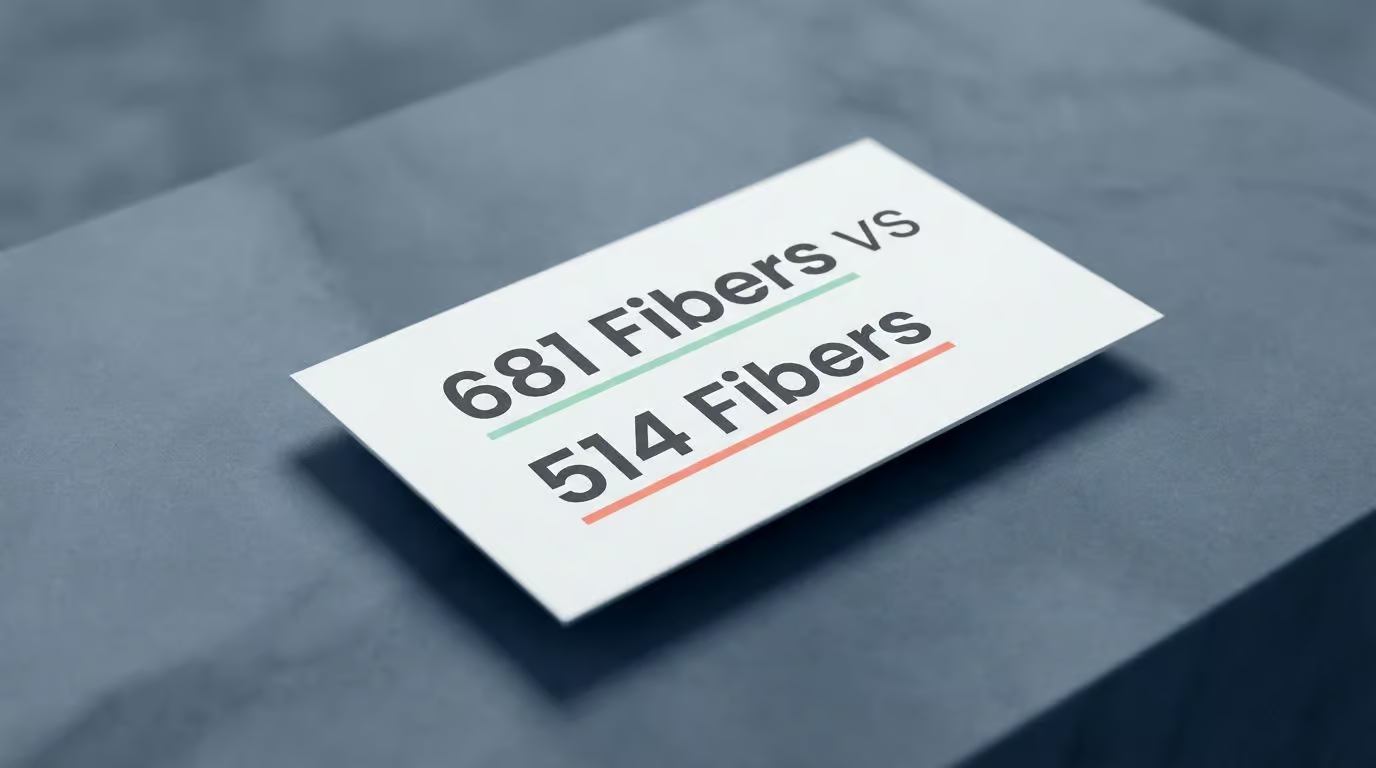
MRI and diffusion tensor imaging research proves RTS gamers have more white matter connections in occipital and parietal regions. They show up to 681 fibers versus 514 for non-video game players (nvgps). This boosts visual information processing, spatial awareness, and map tracking.
Playing RTS titles sharpens executive functions. A systematic review across thirteen studies found video game players outperformed non-gamers on tasks testing attention span and planning skills. They also excelled in flexible thinking and multitasking abilities measured by higher actions per minute (APM).
Too much RTS gaming can lead to cognitive overload or addiction. Prolonged sessions may cause fatigue or life problems. Many younger players with low self-esteem face increased risk for Internet Gaming Disorder (IGD), while balanced time limits support healthy benefits without burnout.
Cognitive gains from RTS play depend on age, prior gaming experience, personality type, and hours spent. AI opponents in new games now adapt tactics using player data to create richer challenges that further boost learning according to recent neuroscience labs findings.
Table of Contents
Cognitive Benefits of RTS Games
Your brain goes into overdrive with real-time strategy games. You have to juggle split-second decisions and selective attention like a pro eSports athlete. Watching players handle maps, resource clusters, and changing scenarios feels almost like seeing a scientist run multiple object tracking experiments in their head.
How do RTS games improve strategic thinking?
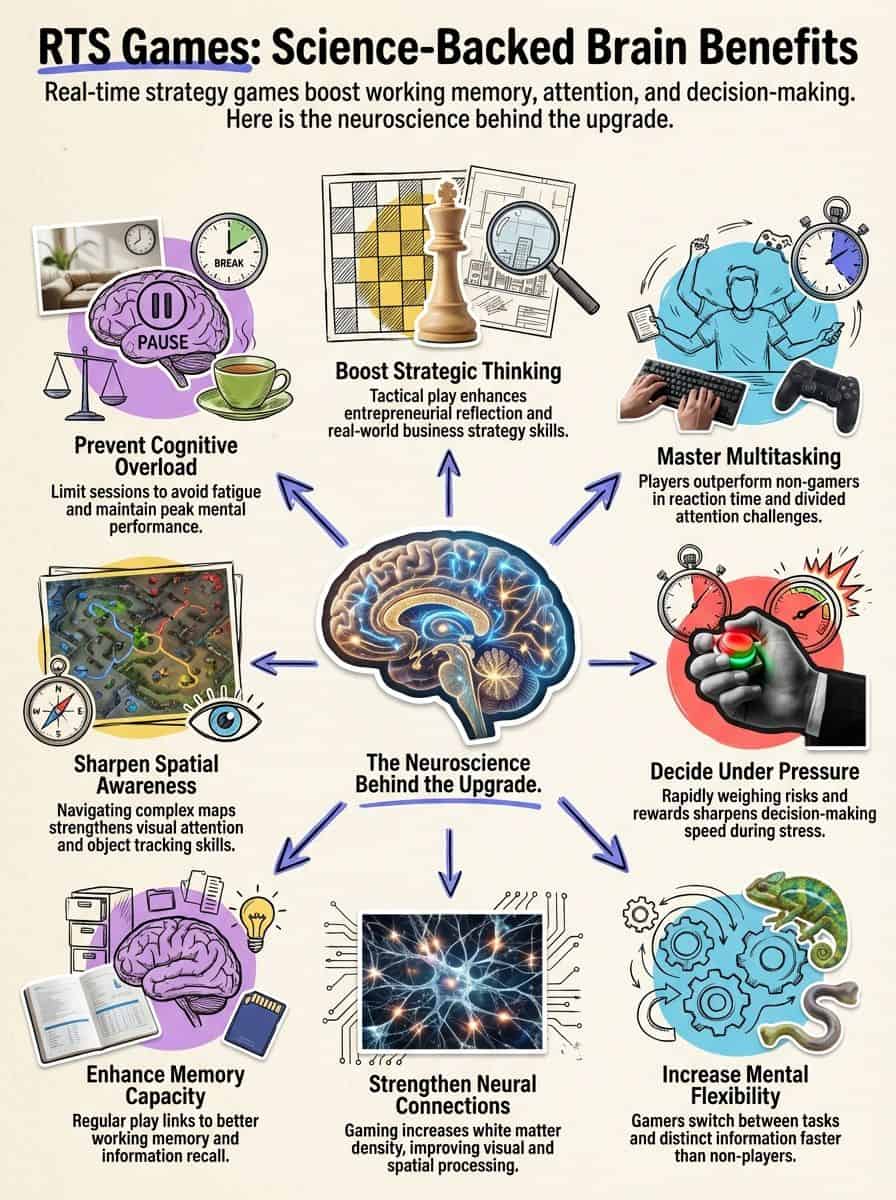
RTS or real-time strategy games shove you into busy situations where quick thinking wins. Players must juggle resources, manage armies, and scan maps all while watching several moving parts.
Every click matters. The enemy thinks too. The game StarCraft II stands out as a research favorite due to its dynamic environment and performance stats that scientists can measure with tools such as an mri scanner or diffusion tensors.

In one study from 2023 using innovation students, 53.3 percent practiced deeper reflection after playing these strategic games. This shows how tactical play spills over into entrepreneurial activities.
Predicting what rivals might do becomes second nature after just weeks of RTS practice. That is how players build up their cognitive control and decision-making speed. IBM found that about 40 percent of businesses use these kinds of digital battles for teaching workplace strategies. This is a sign this is serious brain training, not just fun and games.
Multiple object tracking keeps you sharp with your visual attention and selective focus always tested by rapid map changes or resource shifts in titles like Age of Empires or Command & Conquer series.
For those taking risks on platforms such as nitrowin.org, habits learned through quick calculations and set-shifting in video games often shape their mentality during real-money betting too.
Real-time strategy gaming isn’t only about clicking faster, said one researcher at the Nencki Institute of Experimental Biology, it’s about learning to see opportunities before anyone else does.
Can RTS games enhance multitasking skills?
Pulling off a win in StarCraft II or Age of Empires requires serious juggling. You must gather minerals, build armies, and issue orders at the same time. Your brain leaps from resource management to map analysis faster than a caffeinated squirrel dodging lasers.
Research finds that RTS players outperform non-video game players in reaction time tests and divided attention challenges. Actions per minute (APM), often reaching over 200 in skilled matches, turn into real metrics for multitasking efficiency.
You juggle action sequences without dropping a single ball. Trust me, I’ve had to order peasants around while fending off sneak attacks mid-bite on my sandwich.
Behavioral studies show links between playing these video games and improvements in core cognitive functions like visual information processing and control of attention. Unlike simple puzzle apps or massive online adventures where tasks are more linear or slower-paced, real-time strategy games throw dozens of variables at you every second.
Players learn to automate repetitive commands using hotkeys on their keyboards. This helps the mind handle complex tactical situations with less mental load over time. The science backs it up. Enhanced perception-action cycles measured by diffusion weighted imaging highlight changes even in parietal lobule activity linked to multitasking skills. The upgrades are not just digital but neural too!
What decision-making abilities do RTS games develop?
RTS games force players to make tough calls fast. You often have just seconds to weigh risks and rewards. Juggling unit production, resource management, and shifting priorities sharpens decision-making under pressure.
Gamers who play StarCraft II or Age of Empires constantly adapt their strategies as new threats appear on the map. This routine practice leads to better set shifting skills, highlighted in studies showing a positive correlation between RTS gameplay and cognitive processes like reaction times and problem-solving.
Players must sift through piles of visual information while handling several tasks at once. Think managing armies while building structures and keeping an eye on the enemy’s moves.
Every match is full of real-time “what if” moments. The brain flexes its gray matter, using areas such as the parietal cortex for planning and quick thinking. Flexible decision paths mean multiple optimal solutions exist. No single right answer dominates these digital battlegrounds, so adaptability grows with each game played.
How do RTS games increase cognitive flexibility?
Faster thinking comes from 40 hours of real-time strategy training. At least that is what the big StarCraft II meta-analysis found in 2023. Players switched between information and actions much faster than non-video game players (NVGPs).
Complex scenarios like those in SC-2 forced my brain to juggle resources, make split-second choices, and keep tabs on dynamic maps all at once. It is kind of like running six browser tabs with music playing and still passing a pop quiz.
Functional MRI scans showed neural networks in areas such as the prefrontal cortex kicking into high gear during gameplay. These networks control decision making and cognitive flexibility.
The right superior parietal cortex also lights up, showing clear changes after RTS gaming sessions. Pre- and post-game tests confirmed sharper switching skills even outside gaming tasks. This boost came not just from practice but direct changes deep in my mental hardware.
RTS games push your brain to pivot faster than a caffeinated squirrel dodging traffic.
Do RTS games help with memory and information retention?
RTS games train your brain to hold and recall information fast. Recent neuroimaging research proves that serious activation sparks in memory-related regions, like the parietal lobe and left precuneus, during real-time strategy matches.
These games flood players with constant updates on resources, enemy locations, and ongoing goals. Behavioral studies show that regular video game players outperform non-video game players at memory recall tasks after playing RTS titles.
A systematic review of 13 different experiments found a clear link between these games and better memory capacity in both kids and adults.
Players tackle mental challenges every match, from split-second decisions to managing multiple streams of visual information across complex digital maps. Think about scanning the minimap while planning resource allocation or reacting to surprise attacks. Your working memory gets a daily workout.
Advanced mri acquisition tools highlight shifts in white matter associated with improved cognitive function after repeated gameplay sessions. This points toward measurable brain plasticity over time.
As more older gamers jump into RTS arenas each year, scientists see promise for supporting attention span and long-term recall through consistent play. This is a concept with big implications for maintaining sharp minds as people age.
Neuroscience Behind RTS Games and the Brain
Spin-echo scans and diffusion gradient imaging give us a peek at how fast-paced RTS play shapes the human mind. Repetition time, along with analysis of variance in white matter and parietal areas, helps researchers spot changes in visual information processing after hours spent solving a problem on digital battlefields.
How does RTS gameplay change brain structure?
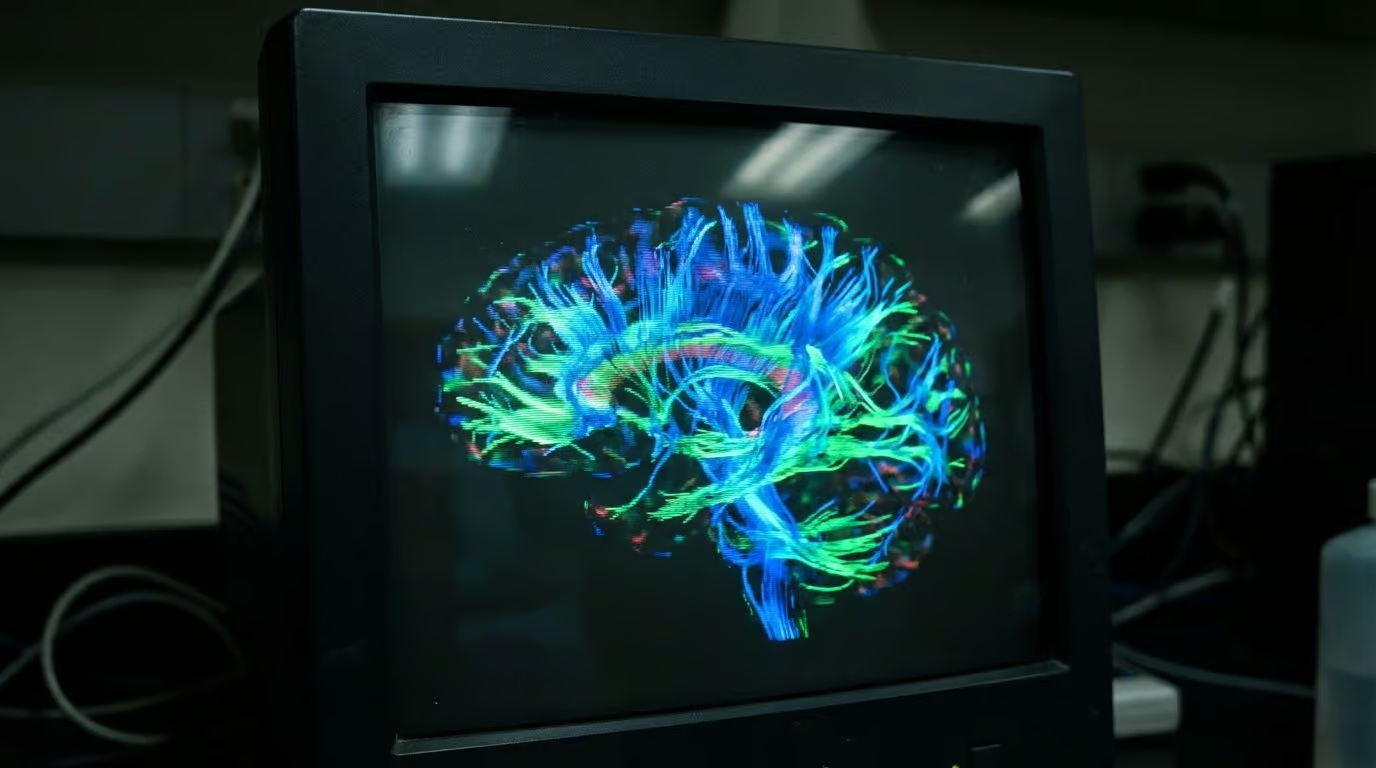
Diffusion tensor imaging shows long-term real-time strategy gaming can reshape neural highways. Geek fact: RTS players had 681 occipitoparietal fibers, compared to only 514 for non-video game players.
That is a whopping difference, with p values at .020, so no dice roll luck here. More white matter pops up between the occipital and parietal regions. This means stronger connections for visual information processing and spatial tasks.
Researchers found that these changes are local. Think city blocks upgrading their internet cables rather than rewiring an entire country. RTS experience bumps up local efficiency in the occipitoparietal subnetwork, which handles heavy lifting like visuospatial attention and map reading speed.
As play hours climb higher on StarCraft II or Age of Empires, network metrics keep improving. This is a clear sign of neuroplastic tweaks happening inside your head.
Your brain seems to level up its connection stats after countless matches.
These upgrades are not just skin-deep. DTI images revealed better axonal structure in motor and visual pathways among veterans of RTS battles. No wonder cognitive psychology nerds keep talking about diffusion gradient tech. They are mapping how games physically toughen our thinking hardware!
What improvements in functional connectivity come from RTS games?
RTS games boost local functional connectivity in important brain networks, like the central executive and default-mode systems. Game players show strong activation changes in the frontal and parietal lobes.
The prefrontal cortex lights up more during play, linking to improved brain plasticity. In 2023, research using magnetic resonance tools found higher nodal local efficiency among RTS video game players (VGPs) than non-video game players (NVGPs), especially in the left calcarine cortex, left cuneus, and left superior occipital gyrus (p=.039).
Efficiency scores climb within occipitoparietal subnetworks. This means quicker information transfer between close nodes for those intense real-time decisions. Greater cooperation pops up between visual processing areas and spatial attention centers. This is the backbone of every solid base defense or all-in rush strategy session.
Scientists track these gains with echo planar imaging techniques to spot sharper communication across bilateral primary and higher visual regions during gameplay. This kind of cognitive training pays off for rapid visual search tasks as well as classic stroop tasks linked with better reasoning skills.
Which brain regions related to reasoning and attention are affected by RTS games?
Long hours of real-time strategy (RTS) games can boost activity in your occipital and parietal regions. These areas help process visual information, track moving objects, and plan each move with pinpoint accuracy.
Functional magnetic resonance studies show that the left superior occipital gyrus, left cuneus, and left calcarine cortex are more efficient in players who spend time on these tasks.
If a gamer’s occipitoparietal pathways face disruption, spatial skills tank fast. That is not a great look for anyone eyeing first place.
Gray matter grows thicker in the right dorsolateral prefrontal cortex after intensive video game training too. That spot stands out as key for problem-solving and holding ideas in working memory. These are two big wins for any strategist at heart or mouse-clicker by choice.
Connections between frontal lobes and those hard-working occipital regions also get stronger over time. This teamwork lets players shift attention quickly from one threat to another without missing a beat.
Science says it: RTS gamers do not just “play” smarter. They think sharper because their brains keep building new roads every match.
Key Skills Developed Through RTS Games
RTS games sharpen your mind faster than a cup of coffee on test day. Players wrestle with resource juggling, mental maps, and split-second choices that push brainpower to the max. No t distribution needed.
Resource management
Snatching up minerals or gas and keeping an eye on population caps in real-time strategy classics like StarCraft II feels just like juggling a hundred fiery torches. Each match pushes your brain to the edge, forcing you to gather, allocate, and protect resources while planning out army composition.
Chasing high-level resource allocation means every second counts. Miss a beat, and someone else takes that win right from under your nose.
My own runs through Age of Empires turned into mini business simulations. I had to balance farming for food with training troops, all while scouting the map for new resources. Research even shows that efficient resource gathering inside these games has been inversely correlated with performance on tests like PRM.
Skills learned here carry over. Swapping between short-term needs (like saving your villagers from wolves) and long-term objectives (dominating late-game battles) builds habits useful in any workplace dealing with budgets or logistics.
Managing gold mines as if my life depended on it. Suddenly my spreadsheet at work looked a lot less scary.
Long-term planning and adaptability
RTS games push players to think five steps ahead. StarCraft II makes you predict not just the enemy’s next move, but their next ten moves. You spend a lot of time mapping out your own strategies and trying to guess what twists and turns might pop up later in each match.
If you only stick with one plan, you will get steamrolled quickly. Opponents love switching tactics on the fly, so your brain gets good at tossing old plans out the window and cooking up new ones under pressure.
Research shows changes in brain regions tied to long-term planning after repeated RTS play. The way you shuffle resources, adapt strategies mid-game using quick analysis of hazards or surprises. All this shapes your prefrontal cortex and posterior parietal cortex over time.
Even outside the game, I found myself brainstorming backup plans for school projects like a Zerg commander prepping for an unexpected Protoss rush. Every session feels like mental weightlifting that hammers home adaptability and future-focused thinking as core skills for any learner who wants stronger cognitive abilities or better processing speed. Or just to beat their friends at Age of Empires IV Friday night showdowns!
Quick reaction to dynamic scenarios
Speed is the name of the game for real-time strategy fans. StarCraft II and Age of Empires force players to react to sudden threats in seconds, not minutes. Rapid opponents test both reaction time and impulse control almost like a science lab for gamers’ brains.
Studies show video game players (vgps) beat non-video game players (nvgps) in contests that measure fast thinking and quick clicks.
My own brain feels wired after hectic ladder matches. Actions per minute climb above 200 with practice, pushing analysis of covariance results straight into high gear. Swapping from managing resources to launching attacks demands instant shifts in attention. This is a classic case of cognitive flexibility at work.
White matter adapts too. It routes information faster as you learn under stress, making each round a lesson in visual information processing and split-second decision-making. Even research using magnetic resonance imaging (mr) has linked these speed boosts to changes deep within occipital regions connected with perception-action cycles. This is a major plus for anyone chasing better cognitive performance while gaming hard.
Spatial awareness and map navigation
RTS gamers have more white matter links in the occipital and parietal zones of the brain. These connections help with visual information processing and allow faster tracking of map changes in real-time strategy games.
Research shows video game players outperform non-video game players at multiple object tracking, thanks to enhanced visuospatial attention. A study using magnetic resonance imaging found that RTS play changes the occipitoparietal loop, which deals with navigation and spatial awareness.
Games like StarCraft II require fast mental mapping, recall of enemy locations, and predicting movement across a digital battlefield. Players use tactics rooted in learning theory and cognitive psychology to spot threats on confusing maps or foggy battlegrounds.
Skills like risk-taking come into play when deciding to split forces or defend certain areas based on shifting visuals. This is a clear sign of how gaming shapes spatial abilities through constant analysis of covariance during high-stakes competition.
Shifting focus from map skills, let’s dig deeper into research studies on how these games train overall cognitive functions next.
Research Studies on RTS Games and Cognitive Functions
Brain scans using magnetic resonance show how real-time strategy gameplay can change gray matter structure and boost white matter pathways. Studies, often using analysis of covariance and permutation tests, link RTS training to higher cognitive performance in executive tasks.
What do studies say about brain plasticity and RTS games?
Researchers found clear evidence that real-time strategy games trigger brain plasticity in video game players. In a 2015 study, diffusion tensor imaging revealed structural changes after consistent StarCraft II play.
Weekly RTS gaming showed a positively correlated boost in white matter integrity, especially along motor and visual pathways. The occipital and parietal regions lit up with new connections. These are key for spatial and visual processing.
Scientists saw enhanced connectivity between occipitoparietal areas supporting better spatial cognition over time. These neuroplastic shifts matched improvements in attention, visuospatial skills, and even the ability to manage resources or information quickly.
Video game players who logged many hours had more pronounced effects than non-video game players, according to analysis of covariance tests. Now let’s dig into how these neural upgrades fuel executive functions during gameplay.
Is there evidence that RTS games improve executive functions?
A systematic review in 2023 looked at thirteen studies, and the answer is yes. RTS games do show real power for boosting executive functions. Scientists used fMRI scans to peek inside human brains before and after playing RTS titles.
They spotted changes in both frontal and parietal lobes, those areas linked with skills like attention, working memory, planning, and flexible thinking. Some studies used analysis of variance (ANOVA) to compare video game players against non-video game players.
The results? RTS fans came out on top when filtering distractions or juggling information fast.
Improvements did not just pop up in children or adults; every age group stepped up their cognitive performance after some serious gameplay hours. Behavioral tasks showed sharp advances in attentional control among groups that practiced with real-time strategy games versus those who skipped gaming sessions altogether.
These findings popped up across a variety of tools. From magnetic resonance scans to different kinds of computerized testing platforms, all point toward stronger executive function growth tied directly to regular playtime with complex strategy simulations like StarCraft II or Age of Empires.
All this leads us straight into how players handle multitasking challenges under pressure during typical RTS matches.
How do RTS players perform in multitasking tasks?
RTS game players handle multitasking with serious skill. In a 30-hour StarCraft II experiment, 22 participants showed sharp improvements after just ninety matches each, give or take eighteen replays per person.
Actions Per Minute (APM) shot up as training went on, while quick hotkey use and lower Perception Action Cycle (PAC) latency started popping up in the stats like magic tricks at a science fair.
Data tied higher APM to stronger white matter in the right cingulum and hippocampus regions of the brain, showing actual neural links to better cognitive flexibility.
Hotkeys were not just for show; strong use connected with increased FA in the right part of the internal capsule. This is the brain’s busy control center. These skill boosts reveal why RTS veterans stand out at juggling many tasks faster than non-video game players.
Researchers also saw that pre-training differences in white matter predicted who would master multitasking first once training began. Better multitaskers learn new tools and concepts quickly. This is a huge plus for complex learning environments where adaptation rules the strategy board.
Next up: how do RTS games compare to action titles for cognitive performance?
Comparison Between RTS Games and Other Game Genres
Every video game category trains your brain in its own quirks and flavors, but real-time strategy (RTS) games often push strategic thinking and planning into high gear. Curious about how RTS stacks up against action or simulation games for boosting mental skills? Keep reading, it gets interesting fast.
How do RTS games compare to action games for cognitive development?
RTS games and action video games each boost brain power, but in different ways. RTS players flex their strategic muscles, juggling long-term planning with quick shifts in tactics.
Think StarCraft II or Total War. These train resource management, multitasking, and map use while pushing for sharp decisions under pressure.
Studies using analysis of covariance show that RTS experts develop strong cognitive flexibility and better memory skills over time. Here is a quick breakdown:
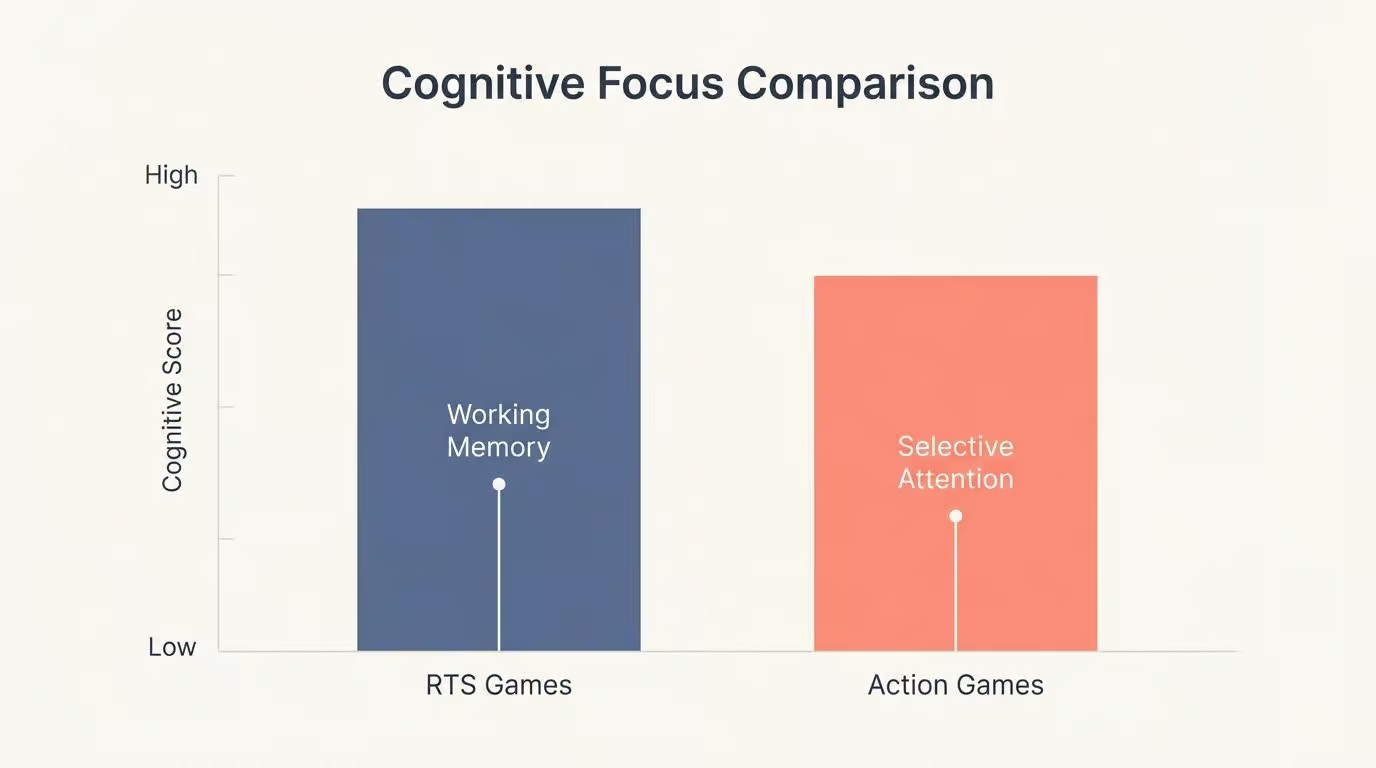
| Feature | RTS Games (e.g., StarCraft II) | Action Games (e.g., Overwatch) |
|---|---|---|
| Primary Skill | Strategic Planning & Resource Mgmt | Visual Reaction & Targeting |
| Cognitive Boost | Working Memory & Flexibility | Selective Attention & Speed |
| Pacing | Long-term tactics + bursts of speed | Constant high-speed reaction |
Action game fans, like those playing Call of Duty or Overwatch, sharpen visual selective attention fast. They spot targets quickly during rapid-fire tasks. Electrophysiological research proves they hit earlier P3 peak latencies. That is a marker for speedy information processing.
Both genres enhance attention span and working memory, yet the style differs. Real-time strategy (RTS) focuses on planning while action games hit hard on immediate reactions. You can see more comparisons across [various online gaming genres](https://www.geekextreme.com/different-kinds-of-online-games/), blending academic performance gains with perceptual learning perks from both styles.
Are RTS games better than puzzle games for problem-solving?
After discussing action video games and cognitive development, it is time to line up RTS games beside puzzle games for problem-solving power. RTS players often show strong adaptive decision-making skills, quick thinking in dynamic scenarios, and high cognitive flexibility.
Decision trees in StarCraft II can make your brain fry, but you soon learn to switch strategies on the fly.
Puzzle games shine at training response inhibition. This is basically stopping yourself before making a bad move. Studies from 2023 reveal only puzzle game groups improved this skill during four-week interventions when working memory was controlled.
Players using logical contradictions like those found in Sudoku or Portal boost their inhibition muscle best here. On the flip side, white matter analysis shows higher working memory links with great inhibition scores. This is seen a lot with veteran real-time strategy fans like myself who thrive under pressure but may not always win at chess-like logic puzzles.
Puzzle games land better results for inhibition training. Military trainers and ADHD researchers use them because of that edge. For adaptability though, nothing stretches your problem-solving skills across multiple choices quite like an intense RTS match at midnight with caffeine pulsing through your veins.
How do RTS games differ from simulation games in strategic thinking?
Real-time strategy games keep you on your toes, urging you to make split-second choices as enemies close in or resources dwindle. Simulation games aim for accuracy and detail, often mirroring real-world systems like city management or farming.
In StarCraft II, for example, my brain runs wild juggling base-building with sudden attacks; meanwhile, a round of SimCity lets me worry more about the next decade than the next minute.
RTS video game players show stronger visual information processing because they must scan ever-changing maps and react fast.
RTS titles challenge cognitive flexibility with rapid shifts in tactics while simulation genres ask you to stick to long-term planning over slow changes. Players develop sharp resource management skills under pressure in Age of Empires but enjoy less frantic pacing managing airports or hospitals in typical sim titles.
Both types boost problem-solving yet use different mental muscles. One thrives on urgency and quick thinking; the other rewards detailed analysis over time. Research points out that white matter connectivity improves faster through RTS gaming thanks to constant adaptation needs. So your occipital regions might get an extra workout here compared to traditional simulation play!
Potential Downsides of RTS Games
Even the smartest video game players may hit a wall with real-time strategy games. Rapid information overload and extra-long sessions can tangle your thoughts. Stick around to see how you can play smarter, not harder.
Can RTS games cause cognitive overload and fatigue?
RTS games ask a lot from your brain. Fast-paced action, constant decision-making, and heavy multitasking pile up quickly. Spend hours in one sitting and cognitive fatigue sets in, hitting reaction time and concentration hard.
Researchers studying video game players often spot mental tiredness after prolonged sessions, especially with competitive titles like StarCraft II or Total War. Your occipital regions might work overtime handling all that visual information processing.
Cognitive overload creeps in when the tasks outpace what your mind can juggle at once. Everyone’s limits differ. Some crash after an hour; others last much longer before losing focus or making mistakes.
Experts highlight white matter changes linked to intense gaming but say balance is key for positive effects without burnout. Signs such as slower responses or foggy thinking signal it is time to take a break if you want to keep sharp for those resource management showdowns coming next.
What are the risks of addiction from prolonged RTS gameplay?
Video game addiction can sneak in, much like a background process chewing up your computer’s RAM. Prolonged real-time strategy gaming shares traits with gambling and even substance use disorders.
Gamers sometimes stop caring for basic needs, retreat into social withdrawal, or get fixated on play sessions instead of daily life. Mobile and online games tempt players with quick rewards, making it easy to lose track of time.
Younger gamers with low self-esteem face a bigger risk for Internet Gaming Disorder (IGD). Mental health problems such as depression or anxiety may also tag along after too many late nights building armies.
Some people develop physical issues like carpal tunnel syndrome or back pain from long hours at the keyboard. Cognitive Behavioral Therapy (CBT) is one treatment option already used by specialists who help break the cycle of compulsive video game playing.
How does excessive RTS gaming affect mental health?
Cognitive overload and fatigue often follow addiction to real-time strategy games. Prolonged play sessions can make even simple daily tasks feel like fighting a boss battle without power-ups.
Many video game players reported higher feelings of loneliness and anxiety during the COVID-19 pandemic, especially those already dealing with mental health struggles. Social isolation sneaks in as players spend more hours online managing resources or building armies instead of connecting face-to-face, which may lead to emotional disturbances.
Some science points to drops in life satisfaction after too much time spent on these challenging games. In my own experience, losing track of time in an Age of Empires marathon led to skipping meals and ducking calls from friends. This caused stress levels to climb faster than an APM counter in a pro StarCraft II match.
Balanced play helps prevent problems. Self-monitoring and support from both friends and family matter just as much as the right hardware setup. Researchers urge more studies due to the strategic complexity behind these titles. Geeks should treat their brains kindly by setting boundaries around gaming habits while enjoying cognitive training perks RTS genres provide.
How to Maximize the Cognitive Benefits of RTS Games
Picking the right real-time strategy titles can sharpen thinking, but playing smart is just as key. Set good habits. Your brain will thank you for mixing up RTS play with other mental exercises and setting limits before losing track of time.
How to choose the right RTS games for brain training?
Pick RTS games that researchers have studied. StarCraft II stands out because science links it to better attentional control and cognitive skill development.
StarCraft II can boost working memory, decision speed, and strategic planning. This is backed by magnetic resonance imaging data on brain changes in video game players compared with non-video game players.
Age of Empires also challenges your resource management skills while making you multitask under pressure.
Choose games where you must adapt fast or juggle many actions at once. These mimic real-world mental demands tested in action real-time strategy gaming studies funded by the US Defense Advanced Research Projects Agency.
Dynamic environments use your occipital regions for visual information processing and help build white matter linked to executive function. Start with easy settings then ramp up complexity as your cognitive performance improves.
Games like Total War give measurable performance metrics so you can actually track progress using analysis of covariance (ANCOVA) from research frameworks. For a side-by-side view, compare other genres next to RTS for brain-boosting effects on multitasking and problem-solving.
What is the best way to balance RTS gaming with other mental activities?
Set a daily gaming limit. I keep my StarCraft II sessions to one hour, then switch gears and solve brain teasers or do quick math puzzles. This mix helps your brain grow in different areas, not just strategic thinking.
Try adding some physical tasks too. A brisk walk or stretching between RTS rounds works wonders for focus and mental energy.
Diverse activities sharpen your mind faster than playing only real-time strategy games. Social play boosts teamwork and communication skills missing from solo grinding. Keep an eye on how you feel. If you are tired or cranky, take that as a sign to step back for the day.
Blending video game genres with things like creative writing or learning new tech tools can make cognitive training stick longer without risking fatigue or boredom. That is a win-win worth repeating!
How can time limits prevent overuse of RTS games?
Time limits serve as a shield against the risks of addiction in real-time strategy games. By setting strict gaming hours, video game players cut down on chances of cognitive overload and fatigue.
Researchers have found that short, focused sessions support brain health without pushing the mind into unhealthy patterns. Built-in parental controls or digital timers can help both parents and gamers track these hours with ease.
A fixed schedule for playing helps keep healthy routines in place so daily life is not turned upside down by late-night battles or marathon matches. Consistent time management leads to better mental and physical health outcomes, according to studies from 2022 and 2023.
Frequent breaks restore peak cognitive performance, making each session more effective as brain training. No need to grind all night like a paladin chasing legendary loot! These strategies also boost self-awareness about habits while keeping RTS fun without letting it take over your day-to-day mentality.
Popular RTS Games Known for Cognitive Benefits
Some strategy games truly challenge your brain, keeping you on your toes with every move. Want to see real-time tactics mix with sharp visual information processing?
StarCraft II
StarCraft II keeps your brain busy with real-time strategy, not just fancy graphics. DeepMind picked SC2 for testing artificial intelligence because it is tough and feels like solving real-world problems.
You must gather minerals, build armies, and push buttons fast. Think 250 actions per minute or more if you want to keep up. During my first online match, I could barely juggle building units and scanning the map; seasoned video game players made multitasking look easy.
Scientists have tracked players using MRI and DTI scans. Results show that SC2 gamers enjoy better brain connectivity in areas hit hardest by aging. Recent studies highlight a drop in Brain Age Gaps after only short training periods compared to non-video game players.
High performers show sharper focus in occipital regions too, where visual information processing takes place right under your nose as you clutch the mouse at midnight trying not to lose another base rush.
Age of Empires series
Age of Empires isn’t just a classic strategy game; it rewires your brain. Extensive playtime links to improved white matter in the brain, especially in occipital regions that handle visual information processing.
Players spot enemy units faster, make sharper strategic decisions, and remember map layouts as easily as walking to their own fridge at midnight. Magnetic resonance imaging shows clear structural changes between Age of Empires players and those who avoid video games.
Science supports my own experience grinding through matches on late nights. My spatial awareness is better than ever, thanks to countless battles managing resources while keeping track of opponents’ sneaky moves.
Studies found video game players sharpen contrast sensitivity and selective attention with regular play, outperforming non-video game players when tested for quick reactions or memory retention. It is not magic, just real-time strategy improving cognitive performance behind the scenes.
Total War series
Stepping from the Age of Empires series, strategy fans often dive into the Total War series for a deeper challenge. These games blend real-time strategy with turn-based decision-making, testing both quick thinking and long-term planning.
Video game players in this genre must juggle armies, manage resources, maintain city growth, and react to changing maps at every turn. Each move could be a make-or-break moment for dozens of virtual units on huge battlefields.
Total War taps into cognitive training by forcing your brain to handle lots of visual information processing at once. It pushes spatial awareness and map reading skills to new heights as you scan large territories and decide troop movement under pressure.
This kind of gameplay works different white matter regions in your brain that relate to reasoning, attention, and memory retention. If you want a mental workout, and love epic clashes, the Total War series keeps those occipital regions busy while making every player feel like a mastermind general on the front lines of strategic thinking.
Command & Conquer series
Shifting from the epic battles in the Total War series, Command & Conquer brings action-packed real-time strategy to a new level. Researchers studied this franchise closely, with 31 male Real-Time Strategy Video Game Players (RTSVGPS) and 31 Non-Video Game Players (NVGPS).
Magnetic resonance imaging showed that those who played Command & Conquer had stronger white matter connectivity in key visual processing regions of their brains.
Players scored higher nodal local efficiency in the left calcarine cortex and left superior occipital gyrus. That means they could handle more visual information at once. Think about catching all enemy movements on screen while planning your next move.
The data gave even cooler news: More experience with these games led to better structural links for spatial processing. So if you’re deep into resource management or map navigation in Command & Conquer, science says you might be quietly training your brain’s cognitive flexibility and memory retention each time you play.
Future Research on RTS Games and Cognitive Development
Scientists keep finding new ways to use magnetic resonance imaging, like functional MRI, to see how real-time strategy games affect brain plasticity and cognitive training. This research might even show why some video game players improve visual information processing faster than others with different personalities or mentalities.
What are the long-term impacts of RTS games on brain health?
Long-term real-time strategy gaming may upgrade brain structure in cool ways. Video game players often show more white matter connections in the occipital and parietal regions than non-video game players.
These areas help with visual information processing, spatial awareness, and quick decision-making. Magnetic resonance imaging even shows structural changes that line up with how much time someone spends playing RTS games like StarCraft II or Age of Empires.
I’ve spent hours on these titles, and my split-second reactions feel sharper than ever.
Players who keep at it for months might see better local connectivity for cognitive training tasks, especially those needing fast choices under pressure. Specific gains happen in visuospatial skills, as seen by improved attention mechanisms during gameplay sessions lasting several weeks or longer.
The putamen lights up more under strain, giving a boost to executive functions over time according to published research from 2023 and before. While causality needs deeper study, data suggests many gamers walk away with stronger mentalities and new attitudes about problem-solving after years of real-time skirmishes. Everyone adapts differently based on their experience level and personality types.
How might AI and advanced game mechanics influence RTS games?
AI testing in RTS games now mimics tough real-world puzzles, which makes each match more like a brain workout. With smarter bots and tricky enemy tactics, I’ve seen how my own strategic thinking gets sharper every time I play Age of Empires or StarCraft II.
These advanced mechanics force video game players to juggle resources, control units fast, and plan new moves on the fly. Dynamic AI even adapts to your playstyle, pushing limits that keep both multitasking skills and decision-making abilities flexed.
Researchers say these upgrades can strengthen white matter pathways and improve visual information processing by targeting occipital regions linked to attention. Imagine facing an enemy that learns from you. It is like chess where the board changes with each move.
In my experience, this makes for richer cognitive training since no two matches feel alike. Studies hint that continued use of artificial intelligence could drive neuroplasticity gains and lift overall cognitive performance for regular RTS gamers compared with non-video game players. As someone who often tests these boundaries firsthand, balancing all those shifting demands is half the fun.
Why do cognitive benefits from RTS games vary among individuals?
Cognitive gains from RTS video games swing widely, thanks to differences in brain connectivity tied to visual and spatial abilities. White matter networks look different between video game players (vgps) and non-video game players (nvgps), especially in regions like the occipital lobes that process visuals fast.
Hours spent clicking around in real-time strategy matches seem linked to bigger changes. One player’s 2,000 hours might wire their pallidum, striatal, or subcortical routes better than someone clocking only a few sessions per month.
Magnetic resonance studies show more dense connections where quick map reading or resource management skills emerge. Still, most research finds only correlations, not direct proof, that gameplay sparks these neural upgrades.
Add factors like age, prior experience with other video game genres such as action games or puzzle games, formal learning background, even individual differences in cognitive training responses and you get a mixed bag of results across people.
Next up are the long-term effects of real-time strategy play on overall brain health.
How Will the Cognitive Landscape of RTS Games Evolve in 2025?
Expect real-time strategy titles to push cognitive training further in 2025. Developers will likely partner with neuroscience labs, using magnetic resonance imaging and big datasets, to study how white matter changes during gameplay.
Video game players (vgps) could see sharper occipital regions, stronger visual information processing, and improved multitasking over non-video game players (nvgps). AI opponents will learn your style using pearson correlation coefficients and adapt their tactics on the fly.
Adaptive difficulty may become a standard feature. This helps balance cognitive load and prevents fatigue or overload in long sessions. Next year, research might address the multiple comparison problem by analyzing thousands of hours across different video game genres.
Players could use new altmetric tracking tools to measure progress in spatial awareness or executive functions for games like StarCraft II or Age of Empires. Maybe even share results under a creative commons licence for more open science collaboration.
Gaming could soon blur lines between fun and serious cognitive psychology studies. All this while you command virtual armies from your chair.
People Also Ask
How do real-time strategy games affect the learning process in players?
Real-time strategy games like StarCraft act as a heavy workout for your learning process, requiring you to manage hundreds of units while adapting to enemy tactics in seconds. This intense mental juggling improves cognitive performance and flexibility, allowing seasoned video game players to process information far more efficiently than non-gamers.
Do RTS games change the brain’s white matter or occipital regions?
Yes, magnetic resonance studies indicate that frequent gaming strengthens white matter connections between the occipital regions and parietal lobes. These physical changes enhance visualization skills and explain why gamers can handle complex visual data streams without getting overwhelmed.
Can playing RTS titles serve as cognitive training?
Playing complex RTS titles serves as legitimate cognitive training because the relentless demand for split-second decisions strengthens your working memory and attention span.
Are there any connections between action video games or massively multiplayer online role-playing adventures and improved mental skills?
Action video games and massively multiplayer online role-playing titles train your brain to filter out irrelevant noise and lock onto targets, a concept deeply rooted in cognitive psychology. This heightened visual information processing capability transfers to real life, helping you spot details that others might miss.
What scientific methods back up claims about benefits from playing these types of video games?
Scientists validate these findings by running magnetic resonance scans on VGPs and NVGPs, ensuring data normality and checking for conditions like amblyopia. They build a conceptual model that accounts for every covariate and uses statistical tests for homoscedasticity and degrees of freedom to prove the results are statistically significant.
References
https://www.mdpi.com/2076-3417/12/11/5561
https://pmc.ncbi.nlm.nih.gov/articles/PMC7163005/
https://pmc.ncbi.nlm.nih.gov/articles/PMC3737212/
https://pmc.ncbi.nlm.nih.gov/articles/PMC6866322/
https://www.sciencedirect.com/science/article/pii/S0896627319308335
https://www.mdpi.com/2227-7102/15/10/1285
https://pmc.ncbi.nlm.nih.gov/articles/PMC10065366/
https://pmc.ncbi.nlm.nih.gov/articles/PMC8277305/
https://www.colorado.edu/asmagazine/2025/08/18/video-games-dont-rot-your-brain-they-train-it (2025-08-18)
https://www.nature.com/articles/s41467-025-64173-9
