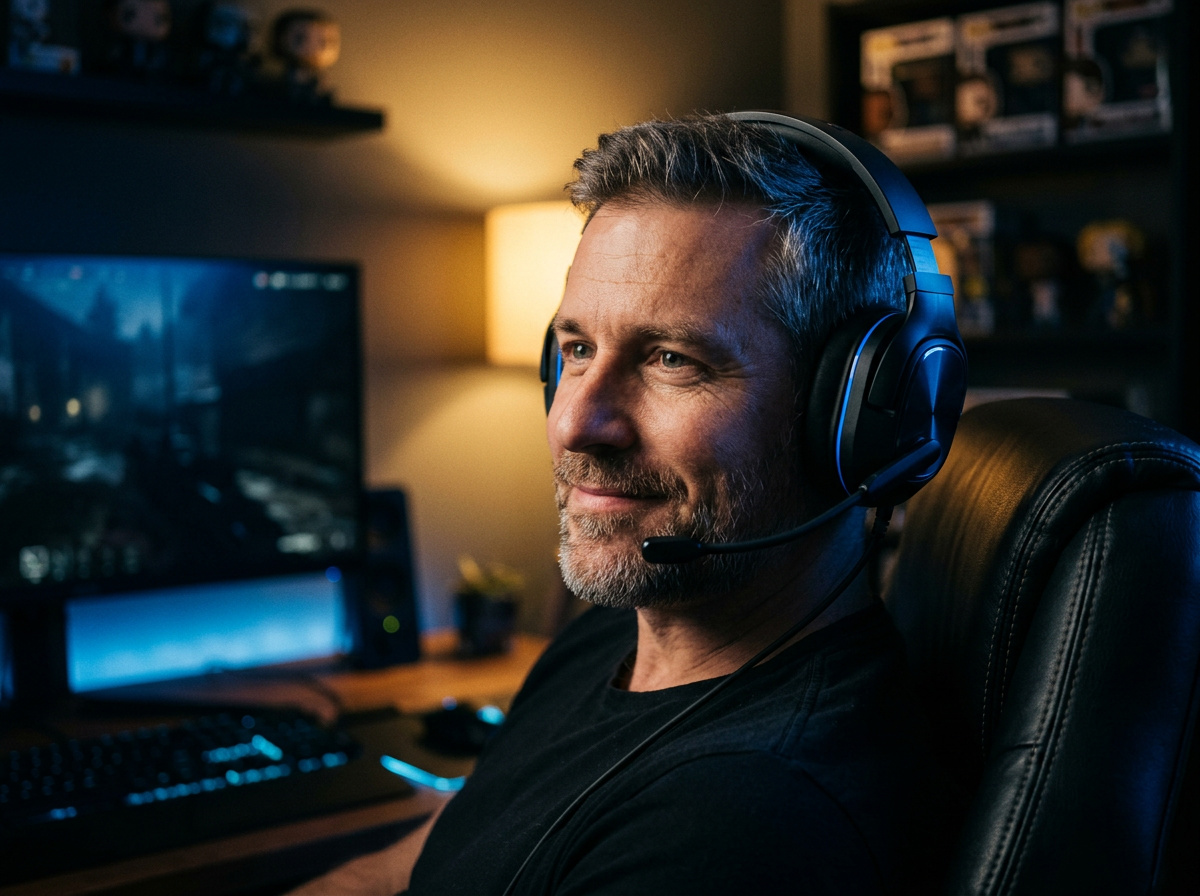
If you are a professional in your 30s or 40s logging onto a network to run a few matches with friends, you are probably looking for hard data to confirm this habit is normal. You want the raw metrics to prove playing video games as an adult is not a regressive phase, but a highly efficient tool for maintaining long-distance social connections. The short answer to the question do adults play video games? Absolutely. They dominate the entire digital ecosystem. Whether you fire up a complex multiplayer shooter with a dedicated squad or casually browse online slots to decompress, the baseline reality is the same: the global gaming infrastructure is largely driven and financed by adults.
For a working adult pushing 50, gaming provides a frictionless vector for staying in touch with friends who have moved to other states or countries over the past decade. The cultural prototype of the basement-dwelling teenager is an outdated anomaly. The actual data proves that lifelong gamers are carrying the hobby into midlife and beyond, making adult play the statistical standard. To understand the scale of this behavior, you have to bypass the cultural stigma and look directly at industry benchmarking.
Table of Contents
The demographic reality: what percentage of gamers are adults?
Look at the raw telemetry. Out of the roughly 205 million people making up the total US gamer population, adults hold the clear majority. We track these numbers using the Entertainment Software Association (ESA) because they pull the most accurate hardware and software use data. Analyzing this industry-standard benchmarking helps accurately map the demographic spread and dismantle persistent cultural myths.
When you look past the baseline noise and examine the active user profiles across major platforms, that information reveals a user base that completely eclipses the teenage bracket by tens of millions.
Adults over the age of 50 represent nearly a third of US gamers. ESA data confirms that 28% of the total market—over 57 million people—belong to this older bracket. The numbers hold up as age increases. Nearly half of Americans in their 60s and 70s play some form of PC, mobile, or console video game every single week. Even looking at users in their 80s, 36% actively maintain the hobby.
These numbers confirm that gaming is not an isolated subculture you age out of. It is an entrenched default behavior. Yet, despite adults owning the overwhelming majority of the physical hardware and active accounts on every major network, mainstream perception routinely fails to acknowledge the core user base.
The missing middle and the true average age of a gamer
Mainstream tech coverage operates on an outdated binary. Media narratives typically jump from teenager addiction metrics straight to seniors executing basic matching exercises on a tablet. They entirely skip the 30–50 demographic.
This cohort is the missing middle. Yet, it was this exact demographic that built the backbone of modern gaming culture in the late 90s and 2000s over patchy Internet connections. As a man in his late 40s who regularly boots up a console to stay in touch with friends across the country, I see this reality firsthand. Playing video games in midlife is not a cope. It is a cohort of tech-literate consumers aging naturally alongside their preferred communication medium.
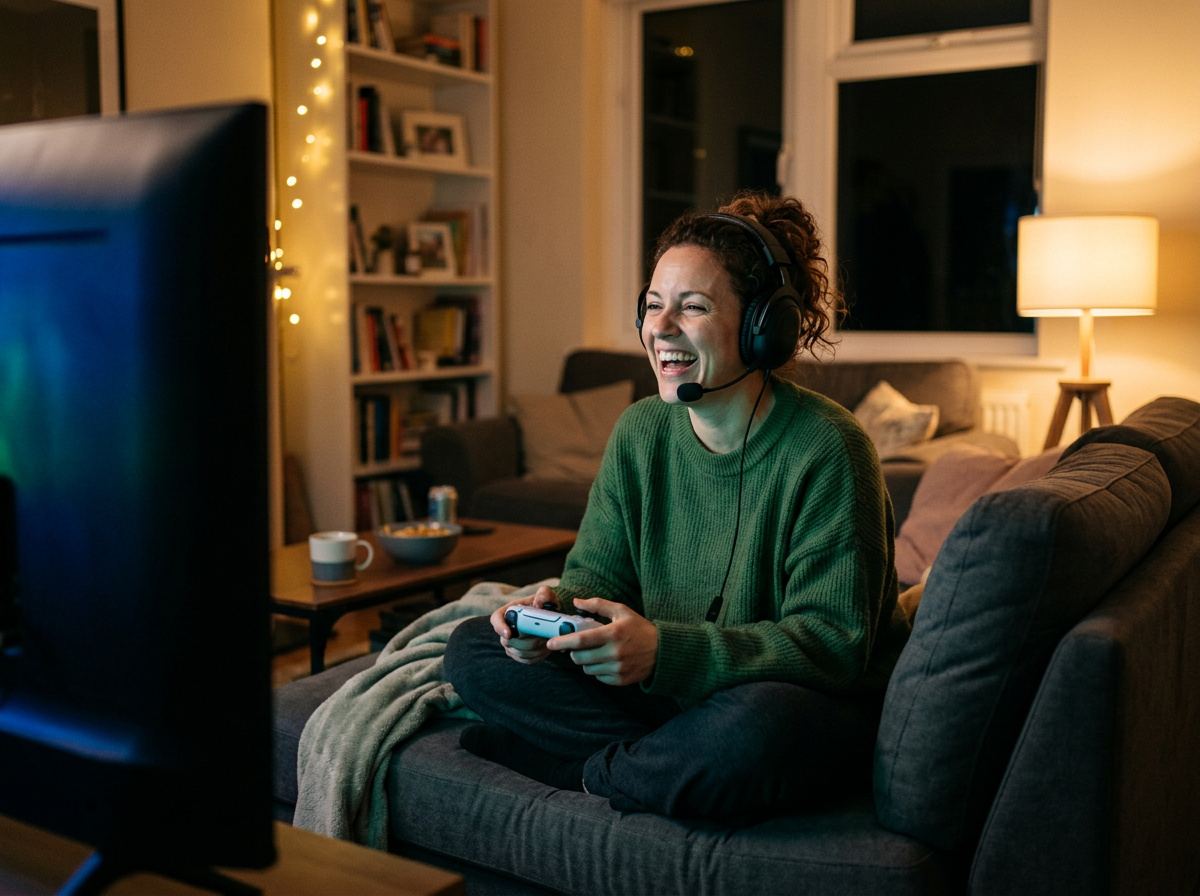
Because working adults largely play private matches from their own homes for the express purpose of maintaining an established friend group, their activity remains mostly invisible to the broader culture. They do not generate panic headlines regarding screen time, nor do they fit the novelty boxes assigned to different types of gamers by legacy news outlets. They simply log on, run an application like Destiny 2 or Helldivers 2, chat with their friends over high-speed voice servers, and log off. This creates a massive disconnect between the cultural idea of a gamer and the actual person holding the controller.
Why do adults play video games? Social and mental ROI
Physical third places—pubs, bowling alleys, community centers—fail to accommodate adults bound by demanding schedules, geographic spread, and exhaustion. Multiplayer environments function as the modern replacement, serving as the modern golf course. When separated by hundreds of miles, adults log into multiplayer platforms to secure the social stimulation that physical venues used to reliably provide.
Voice servers provide a high-bandwidth channel for organic bonding that asynchronous text messaging simply cannot match. You do not log into a server just to execute game mechanics; you log in to troubleshoot life, complain about work, and perform basic relationship maintenance while a shared secondary task keeps everyone engaged.
“You do not log into a server just to execute game mechanics; you log in to troubleshoot life, complain about work, and perform basic relationship maintenance while a shared secondary task keeps everyone engaged.”
AAA titles vs. clinical brain training
The software industry often attempts to sell older users on clinical, gamified logic puzzles designed purely for memory retention. While these focused brain training applications certainly maintain cognitive abilities by forcing users to engage their visual memory and pattern recognition, high-budget AAA releases offer a critically different, highly valuable return on investment.
The underlying mental impacts vary sharply by software architecture. Processing fast-paced mechanics requires intense neurological focus. Adrienne Matei outlines these structural differences in The Guardian’s “Well actually” column. Research notes that while excessive shooter deployment might carry slight neurological trade-offs regarding grey matter in the hippocampal region, actively mapping and navigating 3D open worlds builds it.
Optimizing game selection purely for grey matter density misses the system-level benefit of the medium. The profound human connection and immediate stress relief achieved through cooperative combat games neutralizes the severe mental toll of adult isolation. Loneliness is a thoroughly documented vector for severe cognitive decline and ailments like Alzheimer’s disease. The psychological ROI of actively talking and laughing with a squad for three hours offsets hypothetical metric variables.
Leveling up later: gaming in the golden years
The data scales cleanly into retirement. This older demographic actively rejects the stereotype of the technologically helpless senior, proving that maintaining an active digital presence yields massive cultural dividends.
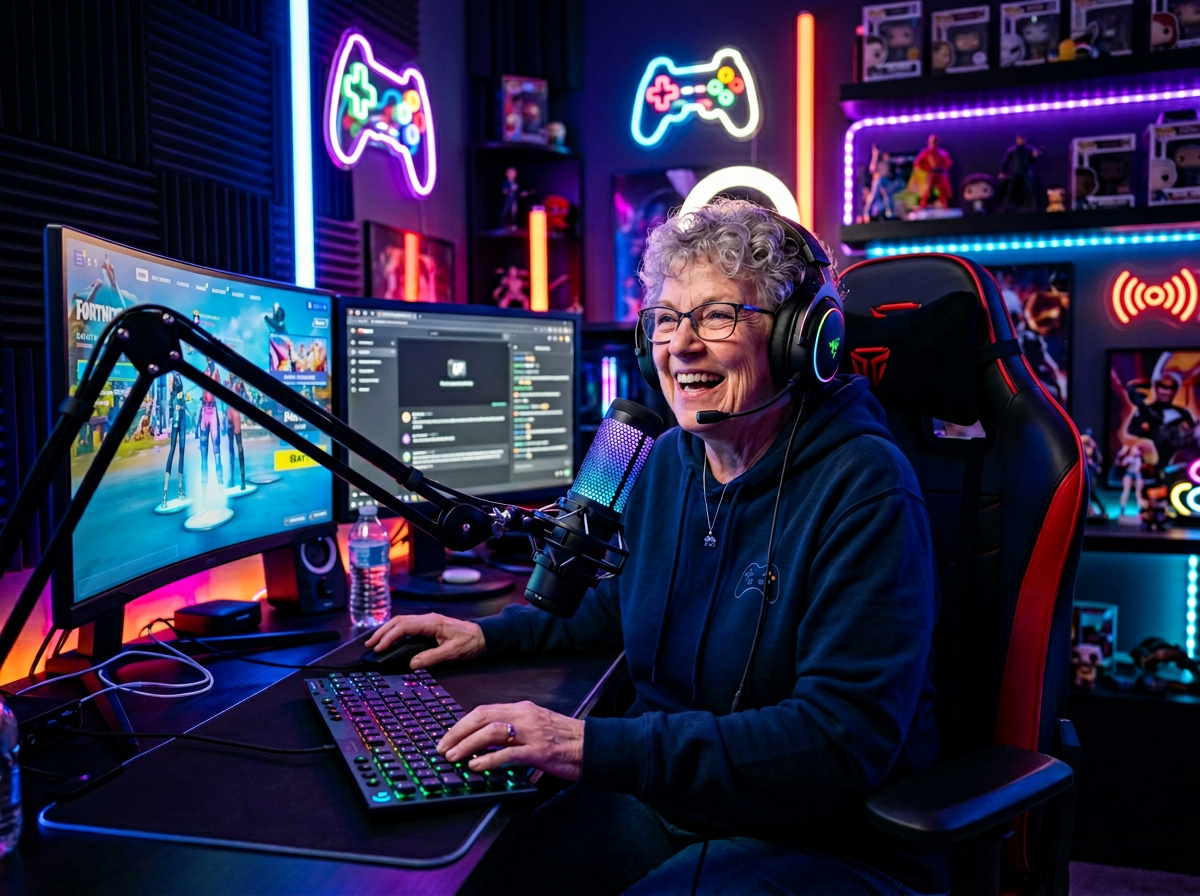
Consider Michelle Statham, a 60-year-old out of Washington state. Operating under the handle TacticalGramma, she runs daily Call of Duty broadcasts for six hours a day to more than 110,000 followers. Operating a Twitch stream while executing high framerate inputs allows her to interface directly with a multigenerational audience. She actively exchanges cultural data, even learning zoomer slang like “skibidi.” Her setup proves these systems function as powerful engines for cross-generational exchange.
Will, a 72-year-old retired navy veteran from Missouri, runs a similar protocol. Under the username GrndpaGaming, he broadcasts physics-heavy software like theHunter: Call of the Wild and Metalstorm. He streams his sessions to 1.4 million YouTube subscribers, clearly demonstrating that older adults can aggressively keep pace with modern network technology and build massive digital communities.
Compensating for the physical realities of play
Veteran players do not ignore the physical friction of aging; they engineer solutions around it. To offset the physical toll of sitting at a terminal, older users actively counterbalance their screen time. Statham, for example, pairs the sedentary nature of extended desktop sessions with the brutal 75 Hard physical regimen. Some users even integrate localized fitness games like VR Beat Saber or Ring Fit Adventure into their routines to actively maintain their baseline mobility and balance.
As physical decay compounds, the necessity for custom hardware spikes. To bypass joint pain, veteran players deploy adaptive controllers, voice-operated macros, and specialized 3D-printed keypads. There is an ongoing market tension here. While high-budget gaming companies push massive graphical limits in their software, they frequently lag on native accessibility tools. This forces a highly tech-literate senior base to drive third-party hardware innovation just to stay on the server.
The permanent era of the adult gamer
The industry telemetry permanently invalidates the notion that interactive digital media is a childhood phase. Adult gaming is a dominant, verified reality spanning from mid-career professionals running evening strikes to grandparents monetizing their bandwidth on dedicated broadcast servers.
Utilizing modern digital hardware to blow off steam, manage baseline anxiety, and preserve long-distance friendships is a highly rational adaptation to contemporary adult life. Booting up a session with friends in your 40s or beyond is not an act of clinging to your youth. It is a calculated demonstration of technological fluency and proactive system maintenance for your own mental wellness.
Log off the daily grind, verify your system updates, and confidently schedule your next online game night. The data confirms you are operating exactly within the norm.
Frequently Asked Questions
What percentage of video gamers are actually adults?
Adults make up the overwhelming majority of the roughly 205 million gamers in the United States. According to the Entertainment Software Association (ESA), people over 50 alone account for over 57 million players, representing 28% of the total market. Demographic data proves the hobby completely eclipses the teenage bracket, with nearly half of Americans in their 60s and 70s logging playtime every week.
Why does mainstream media ignore the 30-to-50-year-old gamer demographic?
Legacy media operates on an outdated binary, focusing exclusively on addicted teenagers or seniors solving basic tablet puzzles. Working adults in their 30s and 40s are the invisible ‘missing middle’ because their routine is highly privatized and unremarkable. They simply log on from home to chat with friends over high-speed voice servers and log off, failing to generate the sensational screen-time panic that drives headlines.
What is the difference between clinical brain training puzzles and AAA games for cognitive health?
Clinical gamified puzzles strictly isolate memory retention and basic pattern recognition. Navigating complex 3D open worlds in AAA titles provides structural neurological benefits, actively building grey matter in the hippocampus. More importantly, cooperative AAA combat games provide profound human connection, combating the adult loneliness that is heavily linked to severe cognitive decline.
How does multiplayer gaming replace traditional third places for working adults?
Physical venues like pubs or bowling alleys struggle to accommodate the exhaustion, brutal work schedules, and geographic spread of modern adults. Multiplayer voice servers have effectively stepped in to provide a frictionless, high-bandwidth environment for organic bonding. The game mechanics simply act as a shared secondary task to keep everyone engaged while friends catch up and troubleshoot daily life.
How do senior gamers compensate for the physical limitations and joint pain of aging?
Older veteran players routinely engineer custom physical setups to bypass bodily decay. They stay competitive by deploying adaptive controllers, voice-operated macros, and specialized 3D-printed keypads. Because major software studios frequently lag on native accessibility features, this highly tech-literate senior base is forced to drive third-party hardware innovation just to stay on the server.
Is it normal to play video games in your 40s to decompress?
Absolutely. Industry telemetry proves that lifelong gamers naturally carry the hobby into midlife, making adult play the entrenched statistical standard rather than an isolated subculture. Booting up a gaming session is a highly rational adaptation to adult life, used efficiently to manage daily anxiety and preserve long-distance friendships.