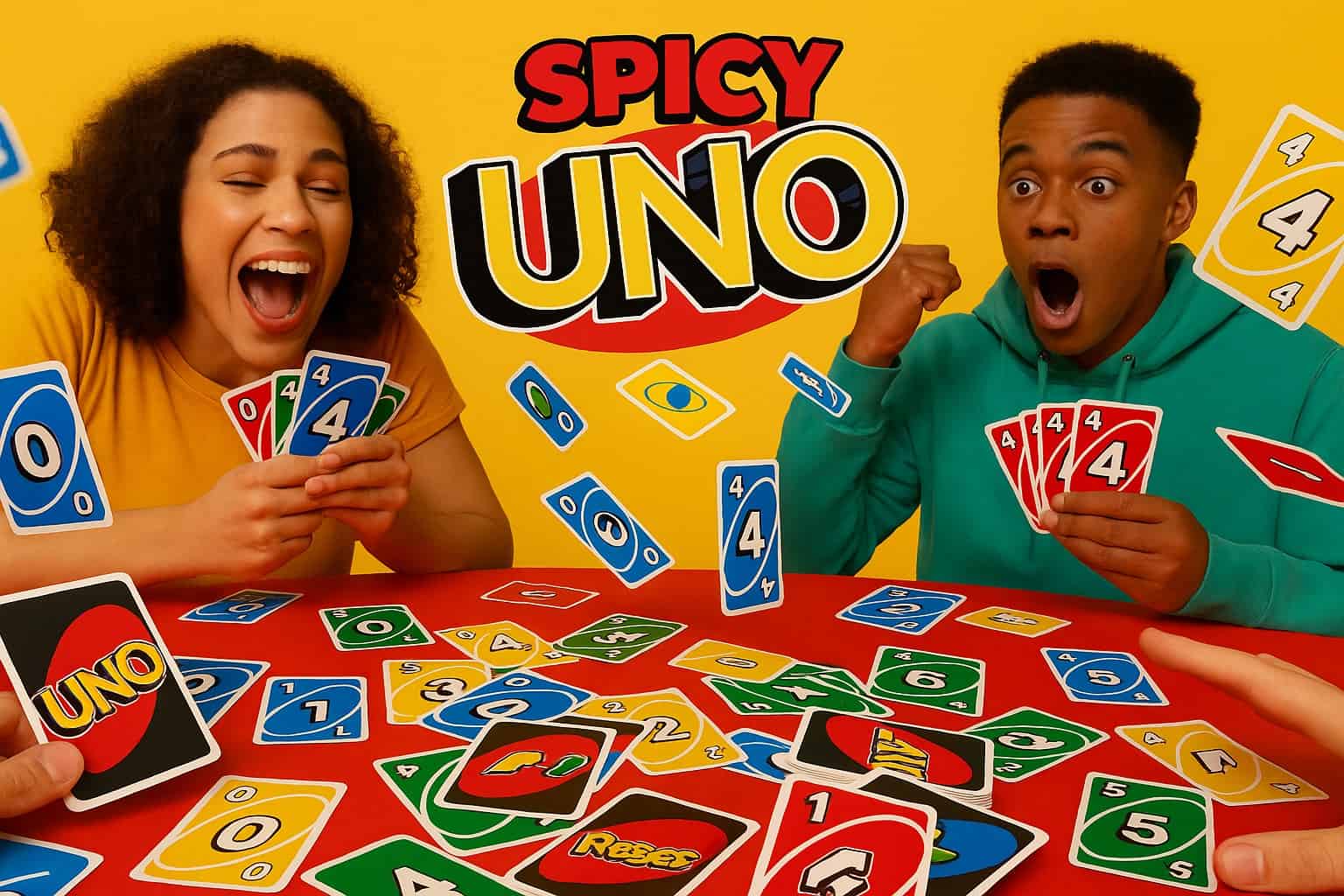
When I was a teenager, I used to go camping with friends, and they often wanted to play Uno. Why? Because they knew that I couldn’t stand it. I was too serious of a teenager to enjoy sitting passively in a circle, so the predictable pacing drove me crazy.
But over time, I learned to let loose and have fun with such a silly game—especially once I discovered the completely unhinged ruleset that forces everyone to actually pay attention. At GeekExtreme, we love breaking down how basic systems can be hacked to run faster and hit harder. This game does exactly that.
Key Takeaways
Playing a 6 card triggers a mandatory slap mechanic, where the last player to hit the center deck draws 2 cards.
Dropping a 7 card enforces a strict tactical silence across the board; anyone who makes a sound before the next 7 is drawn suffers a 1-card penalty.
The 0 card gives the player who drops it the immediate option to trade their entire hand with any other player at the table.
Table of Contents
What Exactly is Spicy Uno and How Does It Differ From the Classic Game?
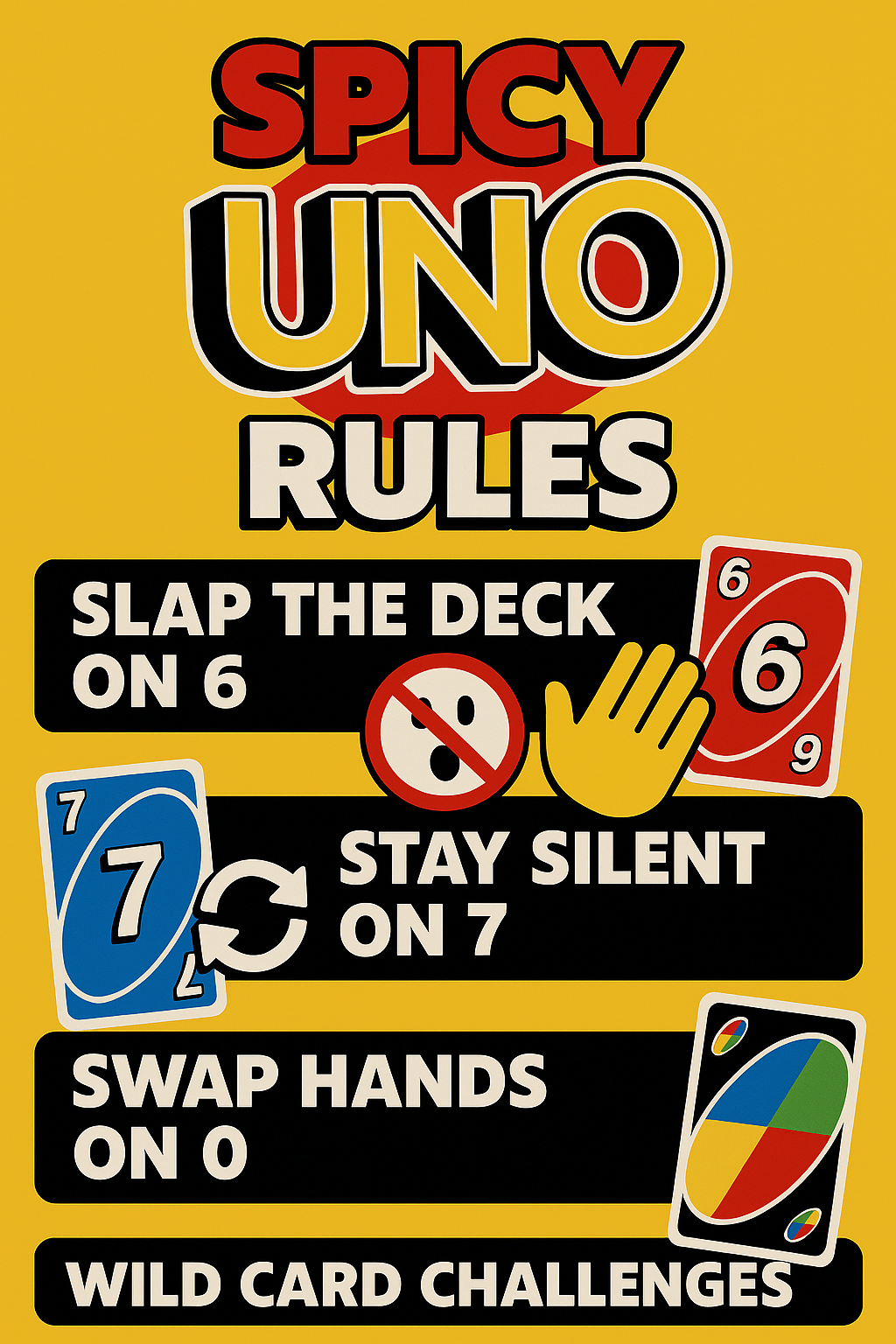
Spicy Uno is a fast-paced, highly interactive card game variation that differs from the classic version by introducing high-stakes reflexes, tactical silence, and the ability to steal opponents’ cards out of turn. Traditional play relies heavily on simple luck and waiting in a circle, which frequently leads to players zoning out between their turns. This alternative variant fixes that fundamental boredom by demanding constant situational awareness.
Your brain will legitimately lag the second it fails to process a rapid-fire rule change at the physical table. While the game still shares the standard Uno foundation, the introduction of cutthroat mechanics completely overrides standard etiquette. You are no longer just matching colors. You are actively scanning for opportunities to ruin your friend’s flawless winning streak.
This is not a strictly structured commercial release; it is a wildly popular grassroots mutation that bridges generational gaps, turning a friendly $5 deck of cards into an intense battleground. You might be wondering how much of the original game remains intact before the chaos ensues.
How Many Decks of Cards Do You Need to Set up a Game of Spicy Uno?
You need at least one commercial deck to set up a game of Spicy Uno, but pooling two to three standard Uno decks together is highly recommended to maintain the frequency of high-stakes action cards. If you play with a massive group, the statistical probability of drawing game-altering action cards drops significantly when limited to a single deck. Merging multiple decks solves this mathematical gap perfectly.
How Many Decks Should You Use?
Scaling up your deck count changes the meta entirely. For three to six players, two standard decks shuffled together hit the sweet spot. Anything beyond seven players really requires three full sets to keep the economy of penalty cards flowing efficiently. The more decks you add, the more unpredictable the exact numeral matches become, creating a volatile environment where anything can happen.
Because this is practically an open-source folk game, it goes by several regional names out in the wild. You will frequently hear it referred to as Wild Uno or Jungle Uno depending on what part of the country you are playing in.
The 7-card Base Framework
Despite the localized names, the core setup routine remains identical to what you already know. Once the dealer finishes and shuffles the mega-deck, they simply pass out exactly 7 cards to each person at the table. The foundational requirement to match a discard by either its printed color or its core number is totally untouched. You can even experiment with custom Uno iterations if the crowd allows it. But once those hands are dealt and the first card hits the table, the actual rotation is instantly thrown out the window.
How Does the Exact Match Rule Allow Players to Jump Out of Turn?
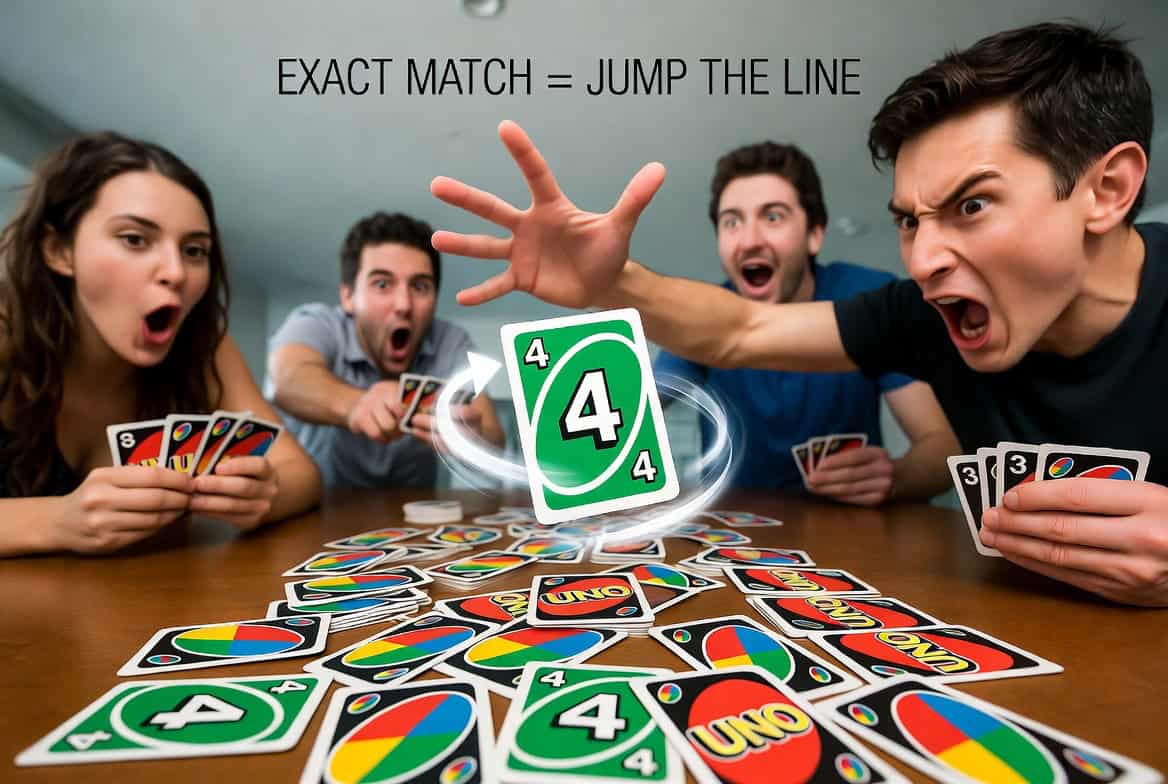
The exact match rule allows you to jump completely out of chronological order by throwing down a card that has the precise color and numeric equivalent of the top discard pile. If the current player drops a green 4, and you hold a green 4, you can legally slam yours on top of the pile before the next person in the circle even blinks.
Handling Exact Match Collisions
This specific exploit shifts the entire flow of the table. Usually, you are stuck in an endless cycle of passive waiting, but the threat of a sudden turn order disruption demands constant, nervous hyper-vigilance to execute an exact match effectively. You literally cannot look at your phone. If three people happen to hold the exact same exact match and attempt to drop it at the exact same millisecond, the physical card that hits the pile first resolves as the winner.
Simply put, the fastest hand dictates the new rotation. The chronological order resets immediately starting from the person whose card landed squarely on top of the discard pile. Speed matching isn’t the only time players will have to react fast to numbers.
Why Do Players Have to Slap the Deck When a 6 is Played?
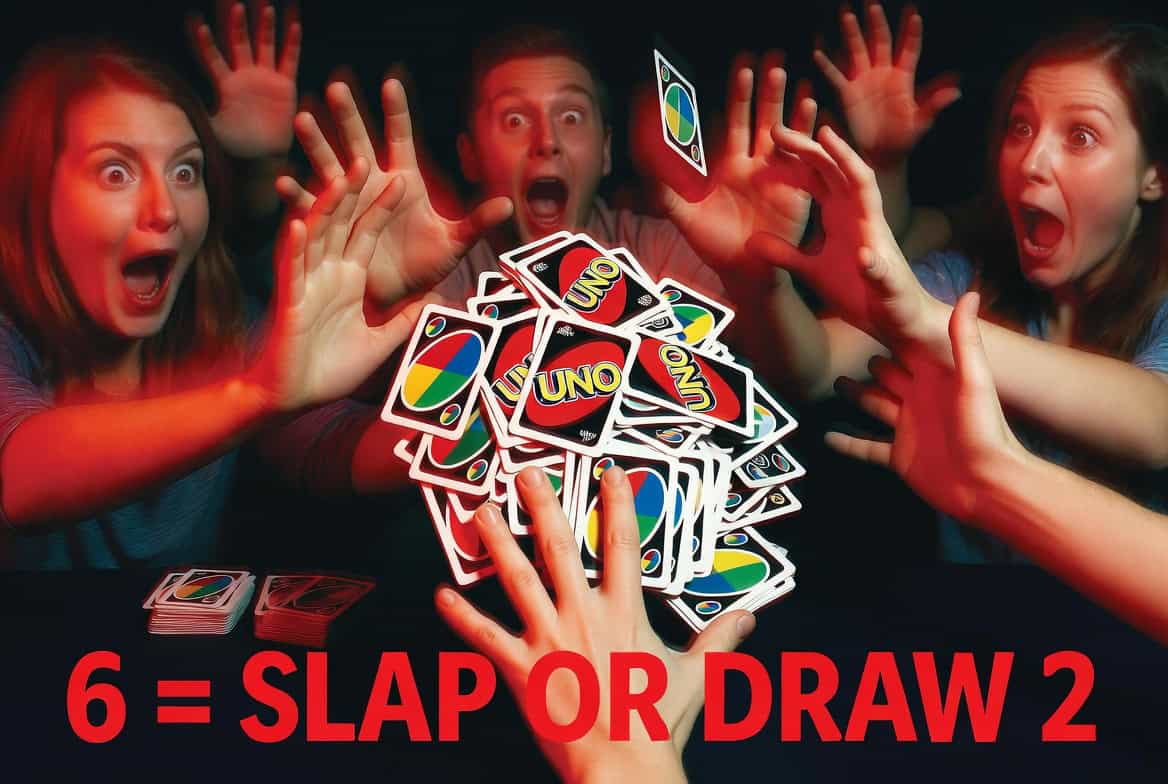
Players must physically slap the center deck when a 6 is played because the rule functions as a frantic physical reflex test, enforcing a rigid 2-card penalty for the slowest hand to react. It shifts the game from purely cognitive strategy into absolute physical panic.
The 6 Card Deck Slap
The split second a 6 of any color hits the discard surface, the gameplay pauses. Everyone at the table must slam their palm onto the center deck as fast as humanly possible, piling hands on top of each other. The last player—the one whose hand is awkwardly sitting on top of the physical pile—is penalized immediately. This specific slap mechanic brutally punishes anyone operating on autopilot, functioning as a guaranteed draw penalty for the slowest processor at the table.
The 7 Card Silence Mandate
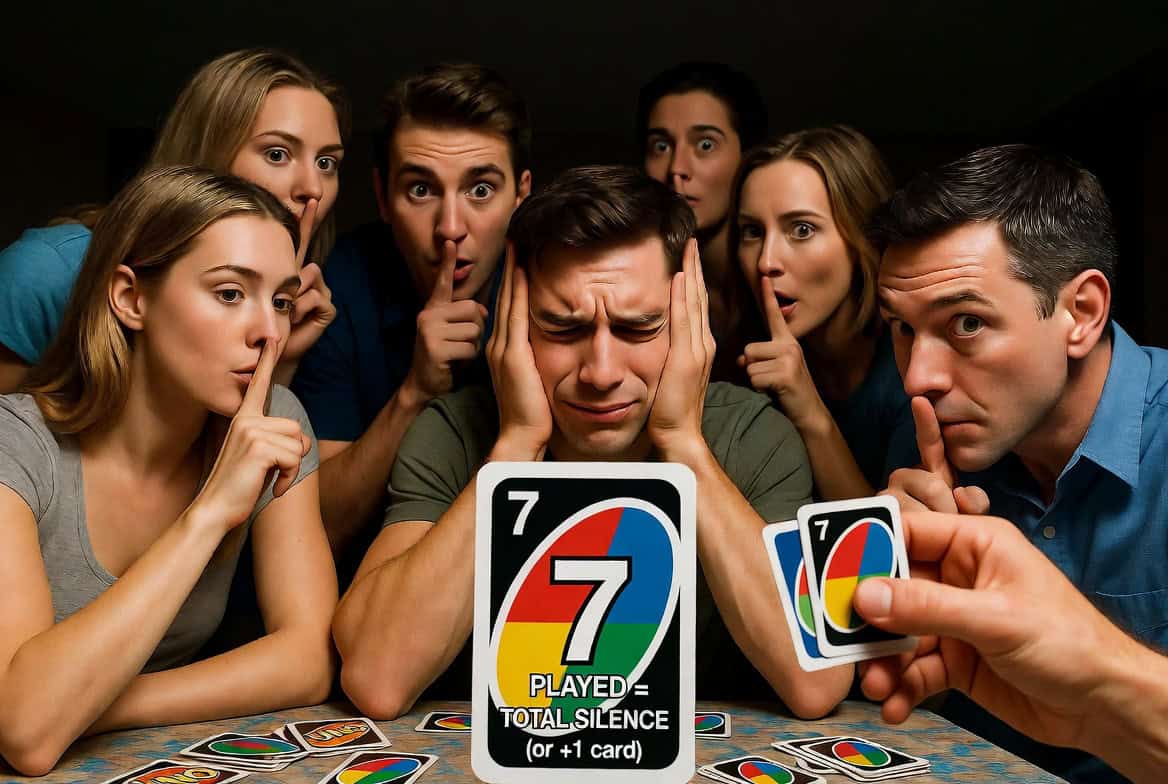
If the 6 requires a physical explosion, the 7 demands immediate acoustic stealth. The moment a 7 is played, total tactical silence is enforced across the board. If anyone speaks a single word, coughs loudly, or groans, they take a 1-card draw for breaking the quiet. There are no gentle warnings about this either; you just have to adapt instantly.
The mandated silence only breaks when the next 7 is successfully played. If you happen to be down to your last card during this silent phase, vocalizing your victory is illegal. Instead, you must deploy a raised finger to visually inform the table of your hand count. While those cards punish slow reflexes, other numbers are designed purely to punish success.
What Happens When Someone Plays a 0 or a 7 in the Spicy Version?
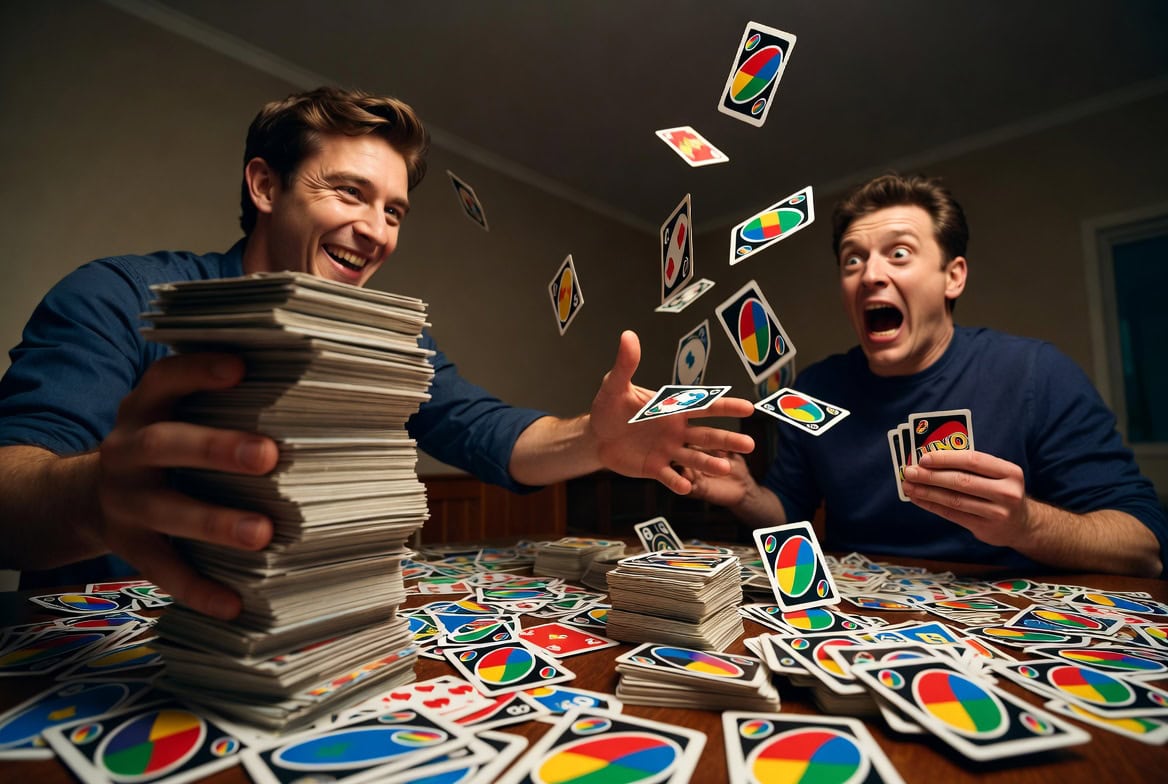
In the spicy version, playing a 0 allows you to forcibly swap hands with the winning player, while playing a 7 triggers a mandatory silence round where speaking earns you a penalty. The 0 is arguably the most dangerous card in the deck, acting as a tactical nuke against whoever happens to be leading the scoreboard at that exact moment.
“The 0 is arguably the most dangerous card in the deck, acting as a tactical nuke against whoever happens to be leading the scoreboard at that exact moment.”
If you are stuck holding ten terrible cards, successfully dropping a 0 card gives you the explicit right to initiate an immediate hand-swapping routine with the person sitting pretty with only one card left. You just hand them your massive stack and take their single card. It introduces an aggressive point-stealing economy to a game that normally only relies on isolating individual progress. It is entirely optional, but no one ever passes up the opportunity to decimate a smug opponent.
Just remember that if you steal a hand containing a single card, you must immediately indicate that you are on your final out, or you risk getting penalized. If stealing a hand feels ruthless, wait until the action card chains start building.
Can You Stack Draw 2 and Draw 4 Cards to Pass the Penalty to the Next Player?
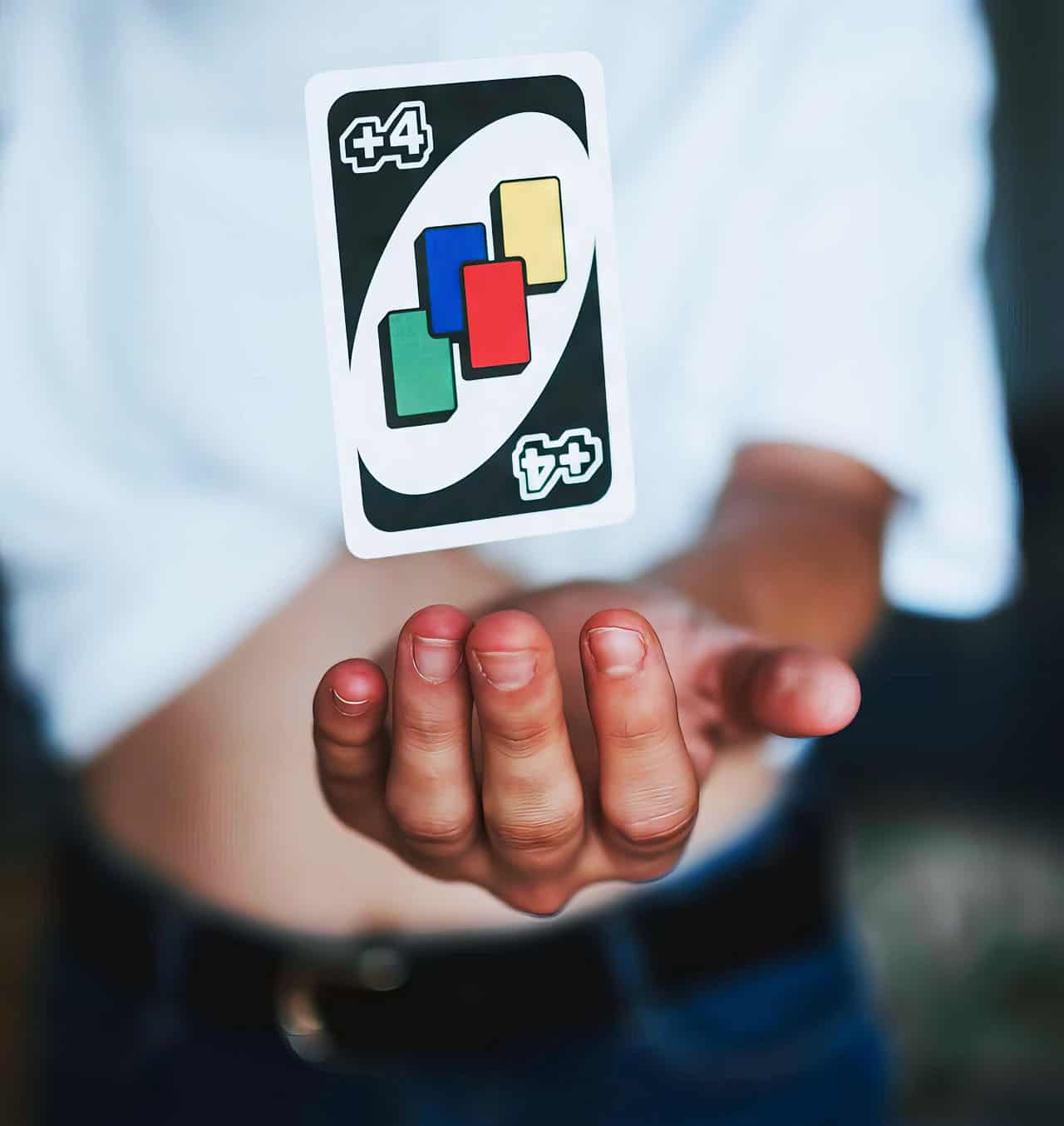
Yes, you can mathematically compound a draw penalty by stacking a matching +2 or +4 to force a massive draw sequence onto the subsequent player. If you are targeted by a penalty, you no longer have to just accept it—you can build a chain.
The Math of Cumulative Stacking
While official rules often block this, this variant thrives on cumulative stacking. If the person before you plays a Draw 2, you can drop your own Draw 2 to pass the damage. The next player is now staring down a 4-card deficit. If they also possess a matching penalty, they can drop it to skip their burden.
This math escalates terrifyingly. According to Amber from the Crazy Little Projects blog, tracking the math when four +2s are dropped sequentially results in an 8-card penalty for the unprepared victim sitting at the end of the line. The same terrifying math applies to the Wild Draw 4 card, capable of devastating a hand in a single rotation.
The Face-down Bluffing Mechanic
When staring down an 8-card draw sequence, a desperate player can ask the table for help. Anyone can offer them a single face-down card. This brilliantly introduces a bluffing mechanic that relies heavily on social deduction. You can offer the poor victim the exact +2 they need to survive the stack, or you can pass them a useless yellow 3 just to watch them crash.
Measuring your friends’ tells is crucial here because accepting a bad card guarantees you draw the entire penalty stack plus the useless card you just accepted. Sit back and watch the tabletop drama unfold as these cutthroat mechanics completely rewrite how game nights are remembered.
Is There an Official Rulebook for Spicy Uno or is It Based Completely on House Rules?
There is no official rulebook for Spicy Uno because it functions completely on community house rules that are constantly adapted and passed down via oral tradition. Families simply integrate new mechanics they observe at weekend parties or camping trips.
This organic, grassroots flexibility is exactly what gives the setup its charm. Amber from Crazy Little Projects was actually first taught this specific variant by family on a New Year’s Eve decompression trip in Utah, proving exactly how these mechanics travel and evolve across borders. Because it is a living game, players have developed an incredible finishing tradition. Whoever wins the ultimate hand takes a pen and permanently writes their name and the date directly onto their final winning card. This beautiful process of physical card signing intentionally defaces a mass-market product, transforming a cheap, disposable deck into an irreplaceable legacy artifact that maps a family’s chronological game history for decades to come.
Frequently Asked Questions
How many standard decks do I need to play Spicy Uno?
You should combine two to three standard Uno decks, especially for groups of three or more. Playing with just one deck ruins the game’s math by severely limiting the frequency of high-stakes action cards. Adding extra decks keeps the volatile penalty economy flowing and makes exact matches wildly unpredictable.
How does the exact match rule resolve if multiple people try to play at once?
If multiple players hold the precise color and number of the top discard, the first physical card to slam onto the pile wins the tie. Normal chronological turn order goes completely out the window during these collisions. The game’s rotation simply resets starting from the player who possessed the fastest hand.
Why do players suddenly slap the deck when a 6 is played?
Dropping a 6 transforms the matching game into a frantic physical reflex test where everyone must immediately slam their palm onto the center pile. The slowest person—whose hand sits awkwardly on top of the dogpile—receives a strict two-card penalty. It deliberately punishes any player caught operating on autopilot.
What’s the difference between playing a 0 and a 7 in this variant?
Dropping a 0 acts as a tactical nuke that gives you the option to forcefully swap your entire hand with anyone at the table, completely decimating whoever is currently winning. A 7 enforces absolute tactical silence across the board. If you cough, groan, or speak before the next 7 is drawn, you suffer a one-card penalty.
Can I stack Draw 2 and Wild Draw 4 cards to dodge a penalty?
Yes, while official Uno rules usually block this, the spicy variant thrives on cutthroat cumulative stacking. If you get hit with a Draw 2, you can drop a matching card to dodge the damage and pass a compounded four-card deficit to the next victim. This terrifying math continues until someone at the table runs out of matching cards to play.
What is the face-down bluffing mechanic used for?
When a player is staring down a massive stacked draw penalty, they can beg the rest of the table for a lifeline. Another player can offer them a single face-down card, which might be exactly what they need to pass the stack, or purely a useless bluff. If the desperate player accepts a bad card, they absorb the entire penalty chain plus the garbage card they just took.
Is there an official Spicy Uno rulebook I can buy?
No, it functions entirely as an open-source folk game passed around via community house rules and oral tradition. Because of its grassroots nature, you might also hear it called u003ca href=u0022https://www.google.com/search?q=%22Spicy+Uno%22+%22Wild+Uno%22+OR+%22Jungle+Uno%22u0022u003eWild Uno or Jungle Unou003c/au003e depending on your region. Instead of buying a specialized commercial set, players build their own legacy artifact by having the winner permanently sign and date their final winning card.

This article is a fantastic resource for anyone looking to take their UNO games to the next level! The Spicy UNO rules listed here add hilarious chaos and unexpected twists, turning a classic card game into an unforgettable party experience. I especially love the creative penalties—like the “Silent Treatment” rule or forcing players to swap hands—which keep everyone on their toes. The clear, step-by-step breakdown makes it easy to implement these wild variations, whether you’re playing with friends or family. It’s a perfect blend of nostalgia and fresh excitement. Highly recommend trying these rules for your next game night—just be prepared for laughter, (friendly) rivalries, and maybe a little revenge!
This Spicy Uno rules breakdown is an absolute game-changer for anyone looking to take their card nights to the next level! The clear, step-by-step explanations (especially for wild card twists and stacking rules) finally solve those heated ‘Wait, is that allowed?!’ debates that always seem to erupt.
I love how these variants balance chaos and strategy—the ‘Draw 2’ stacking loophole is brutal in the best way. Pro tip: Adding a ‘Spiciest Play of the Night’ trophy lean into the competitive fun. Two questions for fellow players:
House Rules: Does anyone ban certain combos (e.g., infinite reverses)?
Scaling Up: Any hacks for 8+ player madness beyond extra decks?
Perfect for fans of ‘Exploding Kittens’ who crave more interaction. Just don’t blame us when friendships are ‘accidentally’ tested!