
In sports, change is constant. Fans get used to new rules and strategies over time, but behind the scenes, teams are adopting artificial intelligence at a pace most people never see. The global AI in sports market is expected to surge from $8.9 billion in 2024 to over $27.6 billion by 2030, showing just how quickly this technology is becoming essential.
AI isn’t just about flashy new graphics on a broadcast. It’s about giving coaches, analysts, and medical staff the tools to make smarter decisions. They want to identify talent faster, create better game plans, prevent injuries, and make everything from travel to stadium operations run more smoothly. To see where the future is headed, you need to understand how AI revolutionizes sports from the ground up.
Key Takeaways
Exponential Market Growth: The sports AI market is projected to triple in size by 2030, growing from $8.9 billion to over $27.6 billion as technology becomes an essential competitive requirement.
Enhanced Performance and Strategy: AI transforms raw tracking data and video into “actionable intelligence,” allowing coaches to automate film study, simulate infinite game scenarios, and identify complex tactical patterns.
Proactive Health and Longevity: Teams are shifting from reactive to predictive medicine, using AI to monitor biomechanics and training loads to reduce injuries by over 60% and ensure safer return-to-play transitions.
Scientific Talent Identification: Recruitment is being revolutionized by AI platforms that find “hidden gems” and evaluate “football IQ,” allowing scouts to identify undervalued players who fit specific systems regardless of traditional stats.
Operational and Fan Excellence: Beyond the field, AI optimizes stadium logistics, assists officials with high-accuracy officiating (like VAR), and creates personalized broadcast experiences tailored to individual fan preferences.
Table of Contents
Key AI Innovations in Sports
1. Deeper, More Meaningful Data Tracking
Player tracking has been around for a while, but it used to be noisy and hard to interpret. Now, AI models take raw data, things like player location, speed, and acceleration, and turn it into actionable intelligence.
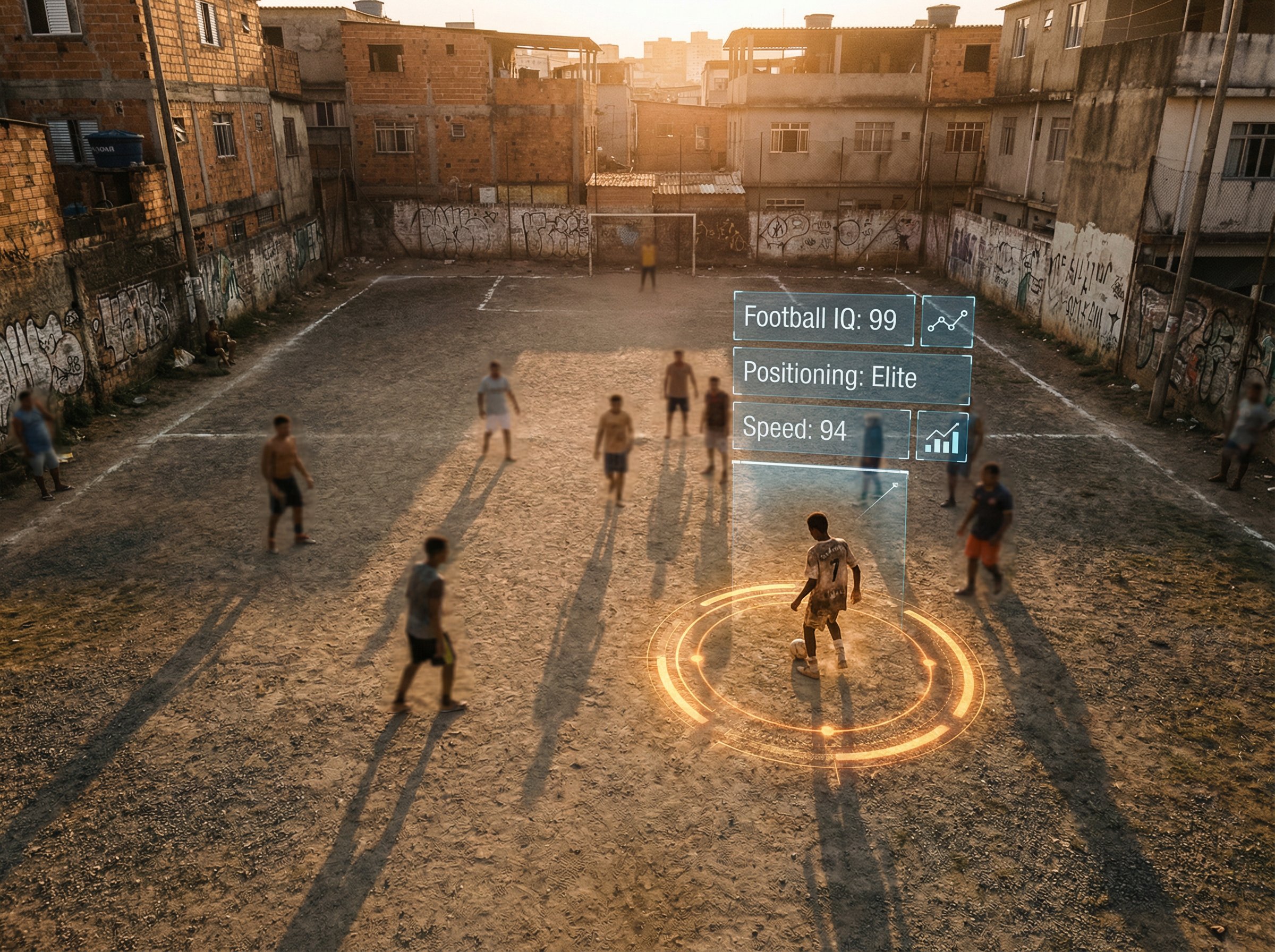
Systems from companies like Catapult Sports and Zebra Technologies can identify complex patterns that the human eye would miss. This includes things like an attacking player’s off-ball sprint that creates space or a defensive formation that consistently breaks down under pressure. It can even spot early signs of fatigue that might lead to a mistake late in the game.
2. Video Analysis That Goes Beyond Labels
Coaching staff used to spend countless hours manually tagging video clips. Now, AI platforms do the heavy lifting. Instead of just labeling events, AI can answer complex coaching questions almost instantly.
For example, a coach can ask the system to pull every instance where the team’s defensive press failed or when a specific player created a chance from the left side of the field. Tools like Hudl and Veo use AI to automatically record, tag key moments, and generate highlight reels, saving staff valuable time that can be better spent on planning and practice.
3. Finding Undervalued Talent with Early Scouting
Recruitment is a massive undertaking, with thousands of athletes playing in countless games. AI helps scouts cut through the noise. Platforms from companies like StatsBomb and SkillCorner analyze performance data to create shortlists of players who fit a club’s specific needs.
This technology is especially powerful for finding hidden gems. It can flag players who may not have eye-popping traditional stats but consistently make game-winning plays, like winning second balls or disrupting an opponent’s buildup. For instance, Liverpool uses AI to evaluate a player’s “football IQ” by analyzing their positioning and reaction times to see if they fit the team’s high-press system.
4. Preventing Injuries by Seeing Danger Early
Injury prevention is one of the most impactful areas for AI in sports. Instead of just reacting to injuries, teams can now predict them. Systems from companies like Zone7 analyze data from training loads, sleep patterns, and biomechanics to flag athletes who are at high risk.
This allows medical staff to intervene before an injury happens, perhaps by adjusting a workout or scheduling more rest. The results are impressive, with some soccer clubs reporting injury reductions of over 60%. The NFL has even partnered with AWS to create the “Digital Athlete,” a virtual model of each player to simulate how different plays affect their bodies and reduce risks like concussions.
5. A Smarter Path to Recovery and Return-to-Play
Deciding when an athlete is ready to return-to-play after an injury is a critical and difficult choice. AI provides objective data to support this decision, ensuring an athlete is truly ready for the demands of competition.
AI-driven systems monitor an athlete’s movements during rehabilitation, measuring things like joint load and mobility with incredible precision. It can compare a winger’s sprinting mechanics or a basketball guard’s cutting motion to their pre-injury baseline. This ensures that “cleared to play” means the athlete can perform their job at the highest level, not just survive for a few minutes on the field.
6. Simulating an Infinite Number of Game Scenarios
Coaches constantly test ideas, but you can only do so much in practice. AI allows teams to run thousands of simulations to see how different strategies might play out. These platforms use historical data and player tendencies to model game outcomes.
For example, a team could simulate how their defense will react to a certain offensive pressure or how the quality of a shot changes based on defensive positioning. Companies like Sportradar run tens of thousands of full-season simulations to project outcomes. While no simulation is perfect, it provides a data-driven way for staff to make tactical decisions without relying solely on gut feelings.
7. Assisting Officials and Improving Accuracy
Human error is a part of sports, but AI is helping reduce mistakes made by officials, leading to fairer outcomes. Technologies like the Video Assistant Referee (VAR) in soccer and Hawk-Eye in tennis use AI to track the ball and players with incredible accuracy.

These systems can instantly analyze close calls, like whether a ball crossed the goal line or if a player was offside. This support helps officials make the right call more often, reducing controversy and ensuring the game is decided by the athletes.
8. Personalized Broadcasts for Every Fan
In a world of short-form content, sports media has to adapt. AI helps create a more personalized and engaging viewing experience for every fan. It can automatically generate highlight packages based on your favorite players or teams and recommend content you’re likely to enjoy.
For example, during the Paris Olympics, Intel’s AI platform was used to automatically create highlight reels for different sports, tailored to what broadcasters knew their audiences wanted to see. This technology makes it easier for fans to follow the action they care about most.
9. Deeper Fan Engagement and Smarter Community Management
Building a strong connection with fans requires constant interaction. AI helps social media teams understand what content resonates with different fan groups and when the best time to post is.
AI-powered chatbots on platforms like Discord can answer fan questions 24/7, while other tools help moderate online communities to prevent spam and abuse. This creates a more positive and engaging environment where fans feel more connected to the team and each other.
10. Optimizing Logistics and Backstage Operations
A successful game day involves a mountain of behind-the-scenes work, from travel and facility management to security. AI is making these complex operations more efficient.
AI can help with everything from optimizing team travel schedules to managing crowd flow inside a stadium. For example, AI-powered systems can adjust ticket prices in real-time based on demand or predict maintenance needs for stadium equipment before it breaks down. These improvements save money and reduce stress for players, staff, and fans alike.
11. Creating Clearer Talent Development Pathways
Developing young talent requires patience and a long-term vision. AI provides objective data to help guide an athlete’s journey through academy and development programs.
It can track a player’s progress over time, pinpoint specific strengths and weaknesses, and help align their training with developmental goals. Mobile-first platforms like Athlete.ai are even making these tools more accessible, allowing young athletes to upload videos from their phones and get AI-driven feedback, helping them get noticed regardless of their location.
12. Building Ethical Guardrails for a New Era
As AI becomes more integrated into sports, it’s crucial for teams and leagues to establish clear rules around data privacy, consent, and ownership. Athletes and staff need to know how their data is being used and feel confident that it is secure.
AI can actually help enforce these standards. It can be used to audit who has access to sensitive data, flag any potential misuse, and ensure that the predictive models being used are fair and unbiased. Building these guardrails is essential for ensuring that these powerful new technologies are used responsibly and ethically.